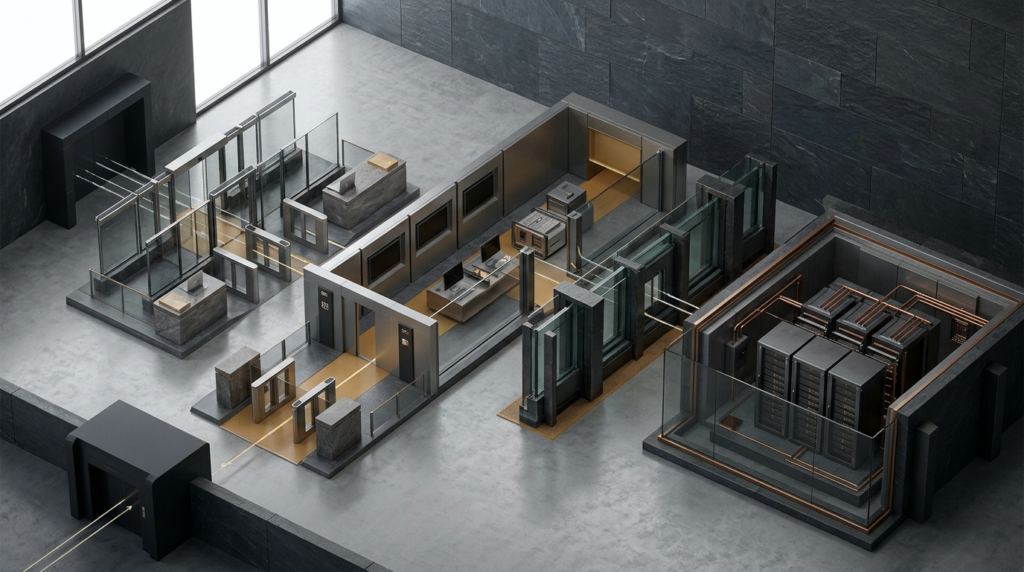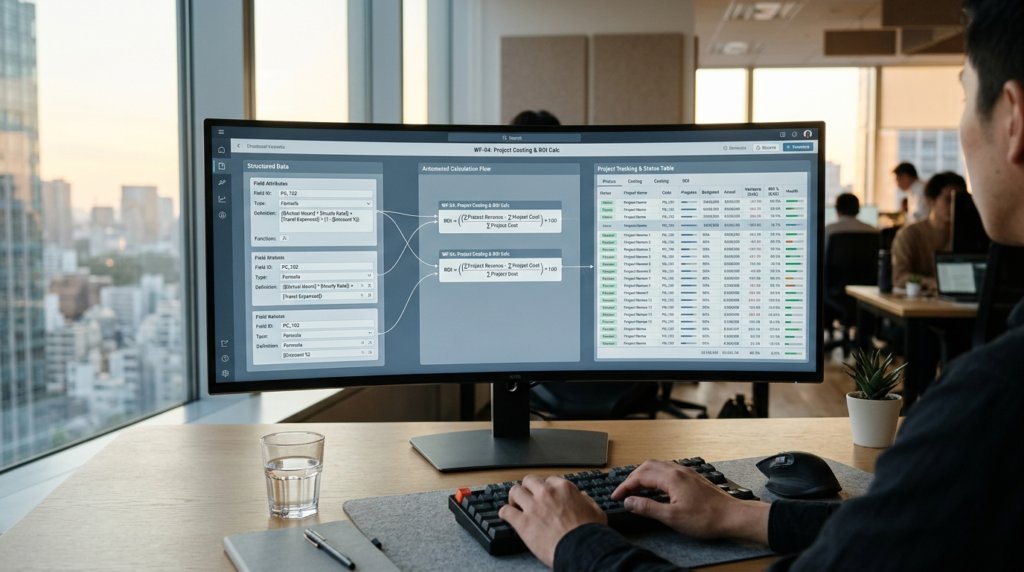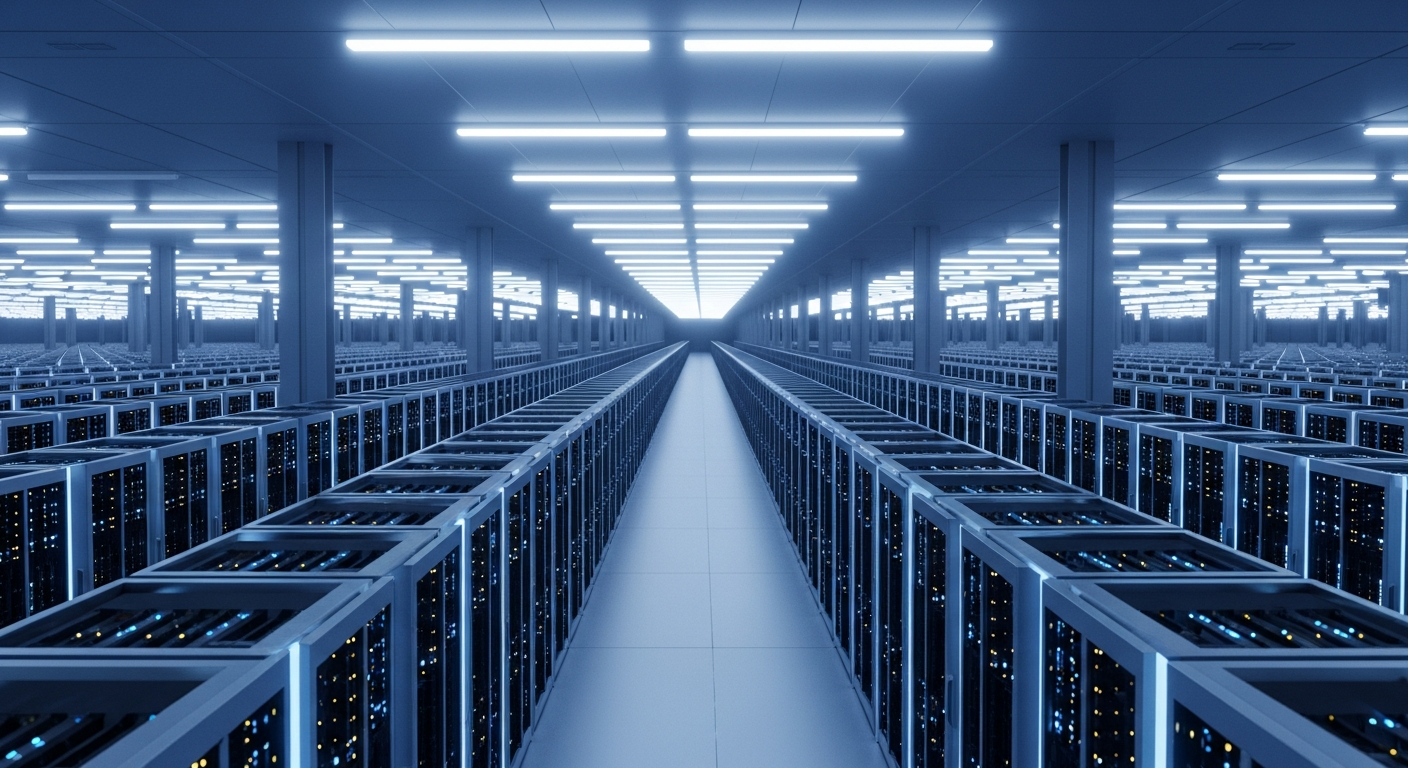
The Architectural Reality: Why Tokens Recycle but Data Compounds
For the past three years, the artificial intelligence infrastructure conversation has suffered from a severe case of tunnel vision. The industry has been entirely consumed by a compute obsession—specifically, the relentless pursuit of faster GPUs, wider memory bandwidth, and denser silicon clusters. This hyper-focus was entirely justified during the initial wave of large language model (LLM) training, where brute-force mathematics dictated the pace of innovation. But as we navigate through 2026, the center of gravity in AI is violently shifting from experimentation and training into production and inference at scale. And with that shift comes a harsh architectural reality: AI is no longer just a compute problem. It is a data problem.
As Western Digital CEO Irving Tan recently articulated following the company’s massive pivot to a 90% data center focus, “People tend to think of AI as a very compute-focused system. Actually, what is AI? AI is a data system”. This is not mere corporate posturing; it is a reflection of fundamental computer science. AI workflows are, by their very nature, perpetual data generators. While a training run produces static model weights, the act of inferencing—actually using the AI—produces a never-ending tsunami of outputs, system logs, user context, and complex vector embeddings.
The critical distinction lies in the lifecycle of the hardware. Compute and memory resources are cyclical and volatile. When an Nvidia GPU generates a token, the High Bandwidth Memory (HBM) utilized for that specific calculation is immediately flushed and reset for the next workload. A token expires, and the silicon moves on. Data, however, does not work that way. Once an AI generates an output or an embedding, that data persists. It compounds. It becomes the foundational raw material required for every future cycle of model refinement and personalization. Therefore, storage demand in the AI era is not tied to cyclical hardware refresh rates; it is a structural, continuously compounding curve.
Engineering Synthesis: The Physics of Exabyte-Scale AI
To understand why legacy data centers are buckling under the weight of modern AI, we must look at the engineering mechanics of how AI actually retrieves and processes information in 2026. We have moved far beyond simple, stateless chatbots. Today’s enterprise AI relies heavily on Retrieval-Augmented Generation (RAG). When an AI agent is queried, it doesn’t just rely on its static training weights; it actively searches massive vector databases to pull real-time, proprietary context before generating an answer.
These vector databases are far too massive to fit into volatile GPU memory or standard system RAM. They must live on persistent storage. But traditional file storage architectures, designed for human-speed access, simply cannot handle the concurrency, distribution, and continuous access patterns of modern AI workloads. As a result, the industry is rapidly abandoning legacy file systems in favor of Object Storage, which allows compute and storage resources to scale independently and can handle thousands of concurrent parallel requests without bottlenecking the GPUs.
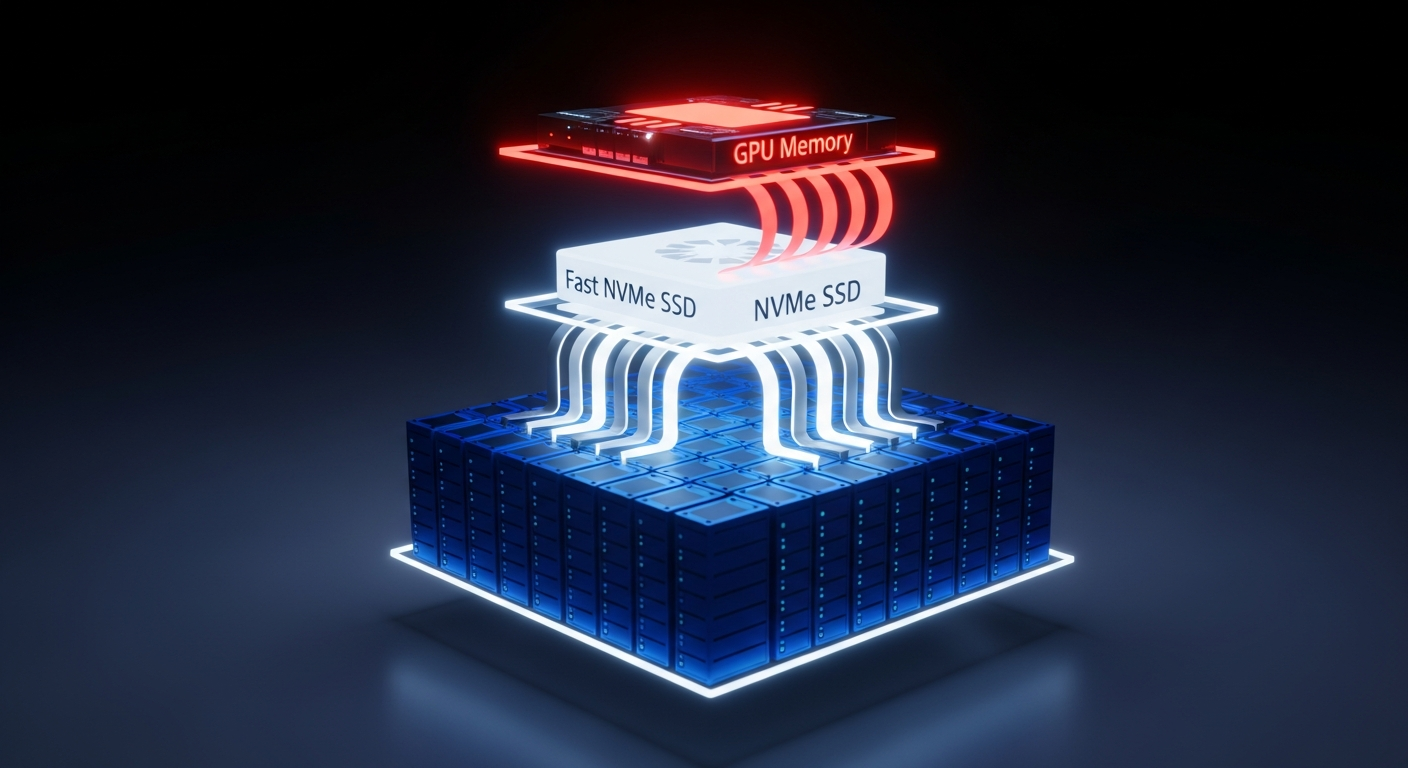
However, storing this compounding data economically requires a highly disciplined, tiered architecture. A well-designed AI data system in 2026 operates like a high-tech library. The “active tier”—housing the vector databases and real-time inference context—lives on ultra-fast, highly expensive NVMe Solid State Drives (SSDs). But as data ages from milliseconds to days, it must be aggressively tiered down to “warm” and “cold” storage to prevent total cost of ownership (TCO) from spiraling out of control. This is where the physics of modern hard disk drives (HDDs) come into play.
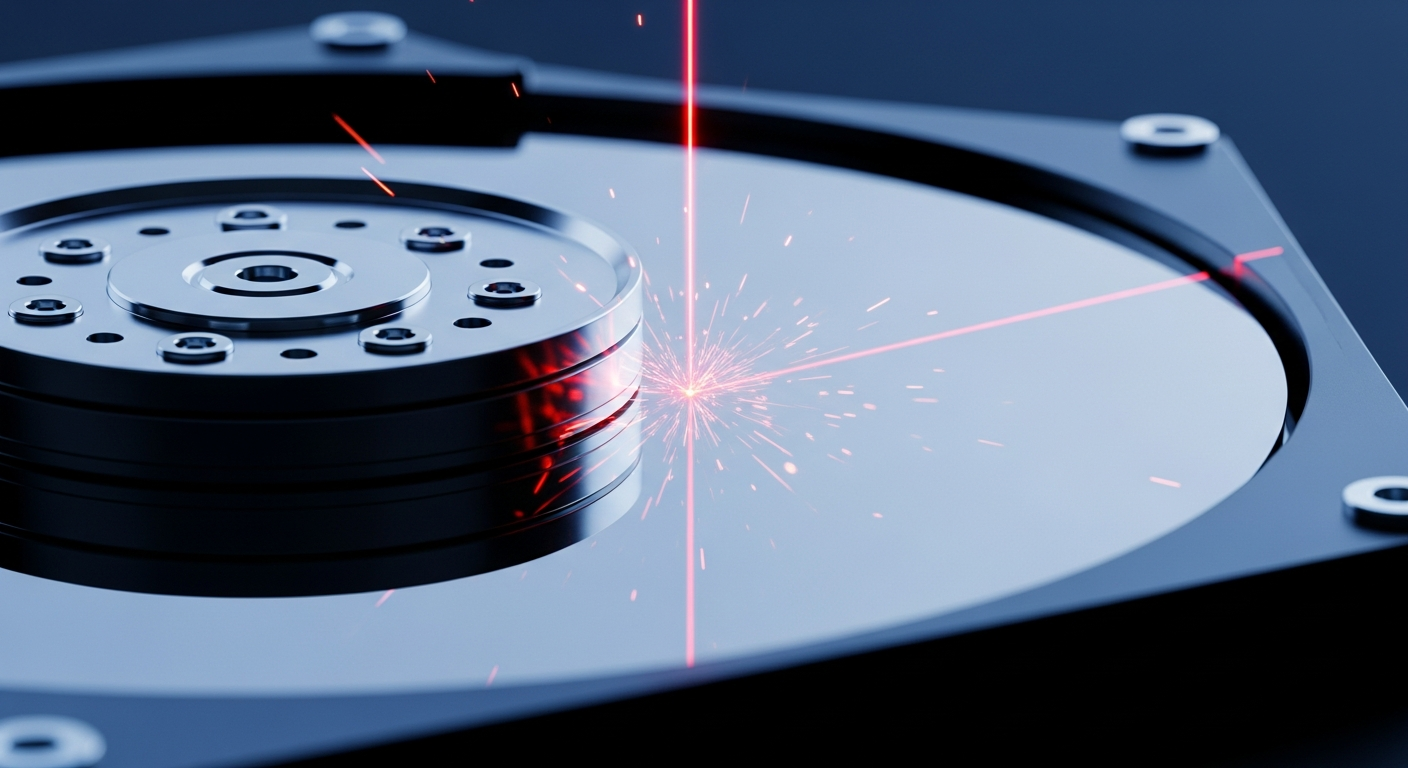
Despite the rise of flash memory, a staggering 80% of all cloud data is still stored on spinning hard drives. To meet the insatiable demand of AI, storage manufacturers are pushing the absolute boundaries of physics. Western Digital is currently qualifying 40TB UltraSMR ePMR (Energy-Assisted Perpendicular Magnetic Recording) drives, utilizing advanced energy assistance to cram unprecedented amounts of data onto magnetic platters. Meanwhile, Seagate has commercialized its Mozaic 4+ HAMR (Heat-Assisted Magnetic Recording) platform, delivering up to 44TB per drive. HAMR technology uses a microscopic laser to heat the disk platter to over 400 degrees Celsius for a nanosecond, making the medium receptive to magnetic changes before rapidly cooling, allowing for microscopic data tracks that were previously impossible.
Market Impact & Deployment: The Storage Supercycle
The financial implications of this architectural shift are staggering. Global AI infrastructure spending exceeded $250 billion in 2025, and while GPUs grabbed the headlines, storage and networking are now growing at a nearly identical clip. At Exabyte-scale (one million terabytes), economics stop being a mere operational line item and become the primary design constraint of the entire data center.
We are witnessing a massive divergence in how hyperscalers (like AWS, Google, and Microsoft) and enterprise CTOs deploy capital. The power grid is maxed out. Conventional 10-kilowatt (kW) server racks have been entirely replaced by 100-150kW racks to support AI chips, with projections hitting 1 megawatt per rack by the end of the decade. Because power is the ultimate bottleneck, storage density is paramount. Deploying a single 40TB hard drive consumes significantly less power and physical space than deploying two 20TB drives. This power-to-capacity ratio is driving a massive storage supercycle.
The market has aggressively priced in this reality. Seagate’s stock skyrocketed over 600% in the past year as Wall Street realized that AI-driven storage demand is no longer experimental, but structural. Western Digital has effectively sold out its high-capacity hard drive production for the entirety of 2026 as hyperscalers race to secure capacity. The battle lines are drawn: Western Digital is optimizing for current-cycle execution and nearline scale with its UltraSMR technology, while Seagate is betting the house on long-term areal density leadership through its laser-driven HAMR platform.
However, a Red Team audit of this storage-centric narrative reveals a critical caveat. While Western Digital and Seagate are correct that data compounds and storage is vital, their marketing subtly downplays the ongoing, astronomical costs of the compute layer. Claiming “AI is a data system, not a compute system” is a false dichotomy. Without Nvidia’s Blackwell or Rubin GPUs processing the inference, those 40TB hard drives are nothing more than highly efficient digital filing cabinets. Furthermore, the real bottleneck for real-time AI inference isn’t the cold storage capacity provided by HDDs, but the throughput of the flash storage layer. If the NVMe SSDs cannot feed data to the GPUs fast enough, the multi-million dollar compute cluster sits idle. Therefore, true AI infrastructure requires a symbiotic, perfectly balanced relationship between compute, flash memory, and high-capacity magnetic storage.
The Consumer Translation: When AI Remembers Everything
For the everyday consumer, the esoteric battle over exabyte-scale data center architecture translates into a profound shift in how we interact with technology. 2026 is the year of “Agentic AI”—artificial intelligence that doesn’t just answer questions, but takes autonomous action on your behalf.
Early iterations of generative AI were largely stateless. You opened a chat, asked a question, got an answer, and closed the window. The AI forgot you existed the moment the session ended. But an AI agent that can book your flights, manage your calendar, draft your emails in your specific tone of voice, and anticipate your needs must be stateful. It must remember everything. Every interaction, every preference, every correction you’ve ever made is vectorized and stored in a massive database.
This is why the data is compounding so aggressively. Your personal AI is building a high-fidelity digital twin of your life, stored across tiered architectures in hyperscale data centers. The benefit to the consumer is a frictionless, highly personalized digital experience that feels genuinely intelligent rather than just algorithmic. The AI actually “knows” you.
But this convenience comes with a massive, hidden cost. The energy required to store, cool, and continuously access the compounding data of billions of users is staggering. Furthermore, the privacy implications are monumental. If your entire digital life—your thoughts, your schedules, your financial habits—is stored as an embedding in a cloud vector database, the security of that storage tier becomes the most critical consumer protection issue of the decade. The shift from compute to storage means that the tech giants are no longer just processing your data; they are hoarding it indefinitely to fuel the next generation of intelligence.
TechNode HQ Verdict: Pros, Cons & Usability
- Pro (Engineering): The transition to tiered Object Storage and ultra-high-density HAMR/ePMR drives allows data centers to scale capacity independently of compute, drastically lowering the cost-per-terabyte and power consumption at the exabyte scale.
- Pro (Consumer): Persistent, compounding data storage enables true Agentic AI. Consumers finally get personalized, stateful digital assistants that remember context across years of interactions, eliminating the need to constantly re-prompt the AI.
- Con: The “Storage First” narrative pushed by HDD manufacturers masks the severe latency bottlenecks inherent in spinning disks. If the flash (NVMe) tier is not perfectly optimized, GPUs will still sit idle waiting for data, destroying ROI.
- Con: The sheer volume of compounding data creates an unprecedented cybersecurity and privacy attack surface. Retaining every AI interaction indefinitely requires massive compliance and encryption overhead.
Enterprise Usability: CTOs and enterprise architects must immediately audit their AI infrastructure pipelines. If you are treating storage as a cyclical afterthought proportional to your GPU deployment, you are bleeding capital. Deploy a strict, software-defined tiered storage architecture today: NVMe Object Storage for active RAG vector databases, and 30TB+ high-capacity HDDs for logging and historical context. Do not buy GPUs until your data pipeline can feed them without latency.
Everyday Usability: Consumers should embrace the personalized power of stateful AI agents, but with strict data hygiene. Understand that every prompt you enter is now being stored indefinitely to build your digital context. Utilize local, on-device AI for highly sensitive tasks, and reserve cloud-based Agentic AI for general productivity and workflow automation.
Sources & Citations:
Original Claim via: Western Digital Blog
Official Handle: @westerndigital
Topics Explored: AI Infrastructure, Exabyte Storage, Data Centers, Inference Economics, Western Digital
Live Fact-Checking via Google Search Grounding:,,,,,,,,,,.