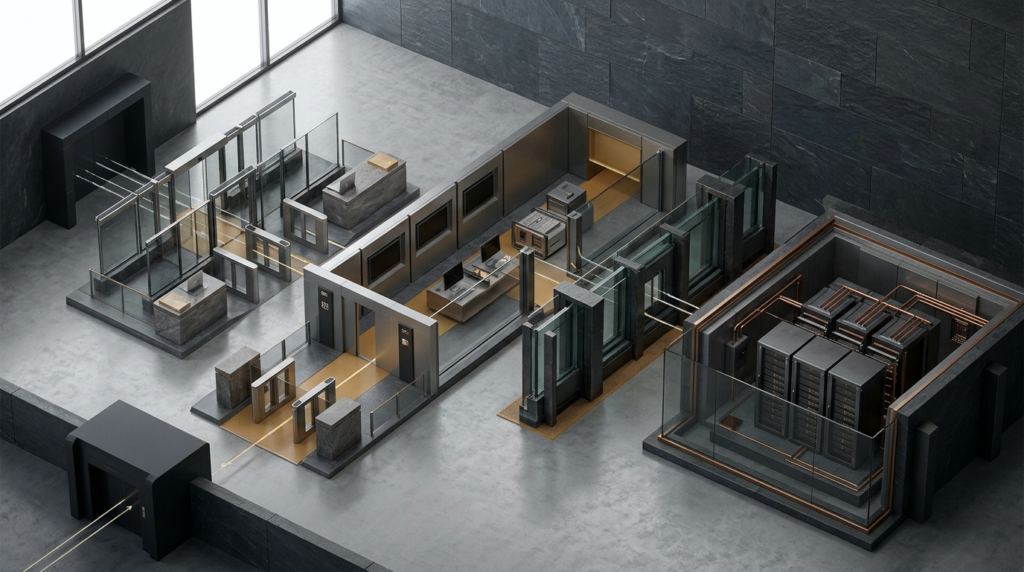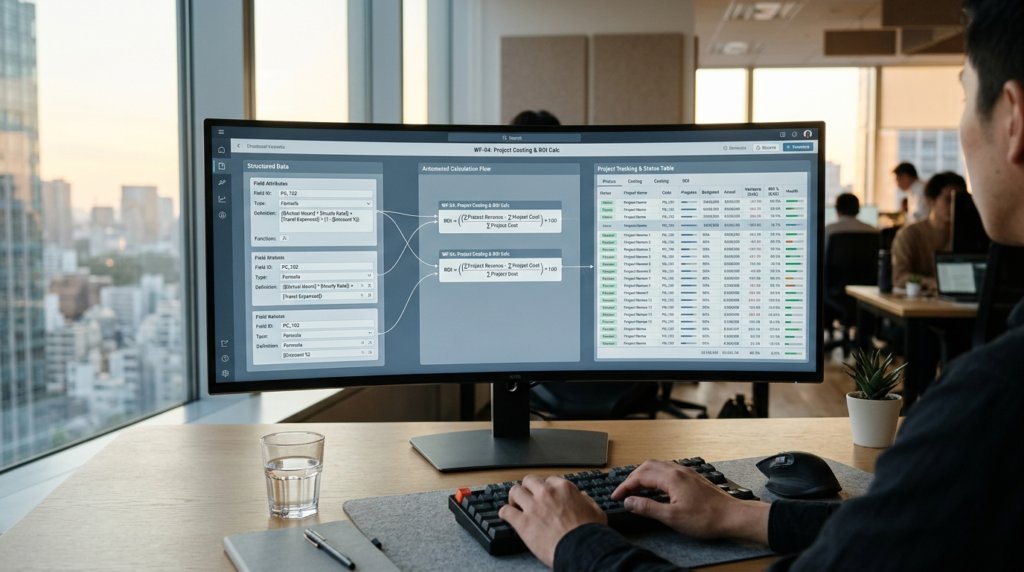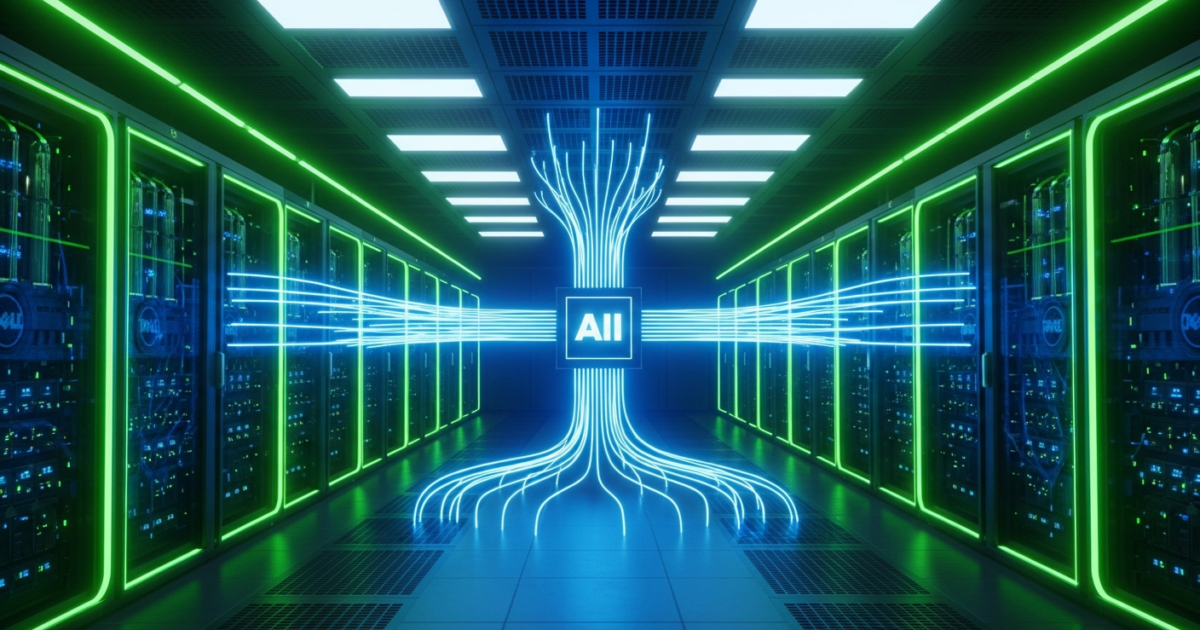
The enterprise artificial intelligence gold rush of the mid-2020s was defined by a singular, frantic objective: acquire compute. Organizations stockpiled graphics processing units (GPUs) with the assumption that raw processing power would naturally translate into transformative business outcomes. By May 2026, that assumption has violently collided with reality. The primary bottleneck in modern enterprise IT is no longer silicon; it is data. Specifically, the chaotic, fragmented, and unstructured data that comprises the vast majority of enterprise knowledge.
As organizations push to convert AI ambition into defensible business results, many are discovering that infrastructure alone is insufficient. The real challenge lies in reconciling decades of fragmented enterprise data into actionable intelligence. This exact friction point took center stage at Dell Technologies World 2026, where Dell Technologies Inc. and Nvidia Corp. unveiled a massive expansion of their joint AI Data Platform. The message from Dell CEO Michael Dell and Nvidia CEO Jensen Huang was unequivocal: the era of AI experimentation is over. The era of execution—powered by highly orchestrated data pipelines and autonomous agents—has arrived.
But moving from pilot purgatory to production scale requires more than just plugging a server into a wall. It requires a fundamental re-architecting of how data is ingested, curated, and fed into the compute layer. TechNode HQ has analyzed the latest hardware and software deployments from the Dell-Nvidia alliance to understand exactly how they are attempting to cure enterprise data chaos.
The Architectural Reality: Re-Engineering the Data Pipeline
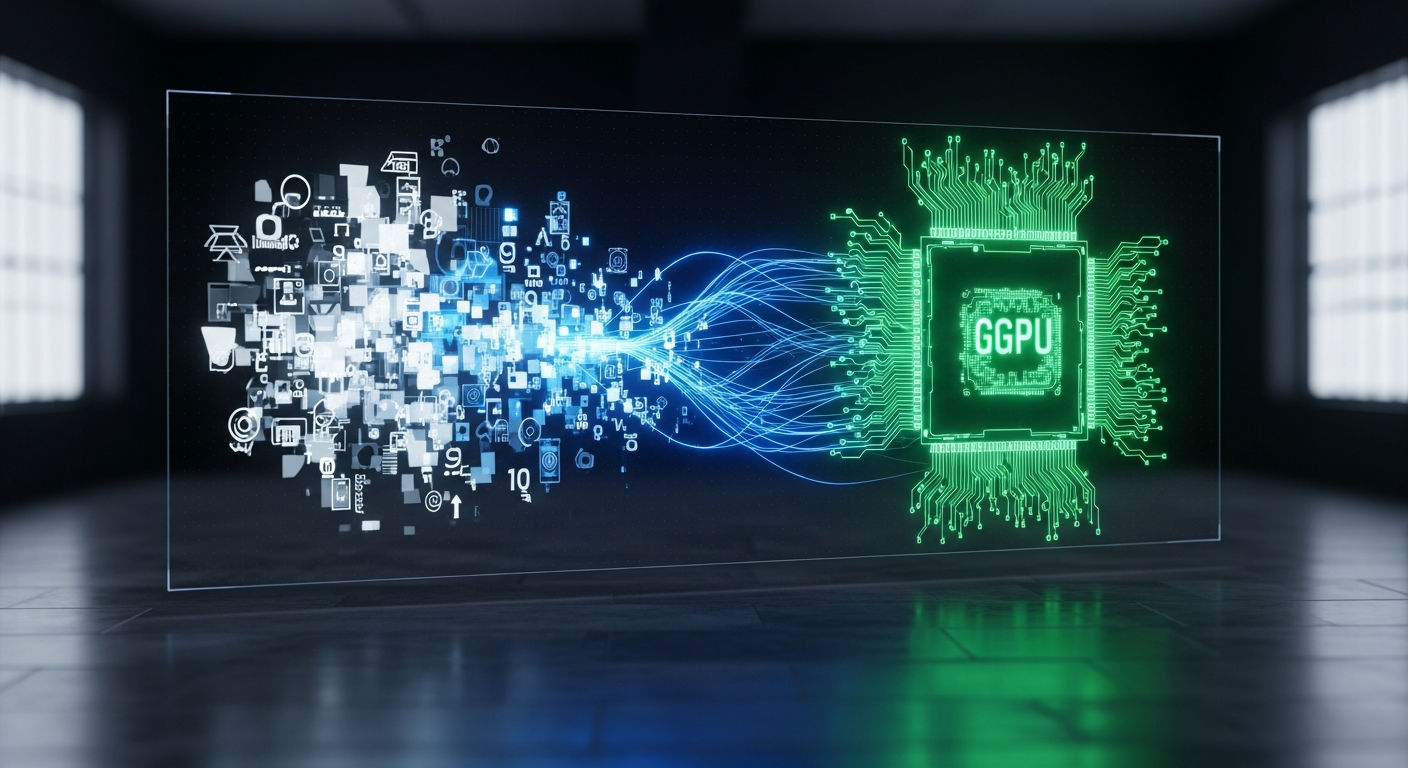
Enterprise data today is spread across countless systems of record. It exists in legacy databases, cloud object storage, and edge devices. More critically, over 80% of this information exists as unstructured data—PDFs, emails, video files, telemetry logs, and raw text that lacks a predefined data model. Before an enterprise can scale AI, this data must be tagged, indexed, and fed into AI pipelines.
“Resolving the data problem requires a lot of the work, not just at the storage level, but data ingest, data curation, orchestrating the entire data pipeline—that’s really the focus to make sure that data gets fed into the GPUs,” explained Varun Chhabra, Senior Vice President of Product Marketing at Dell. “That intelligence and business context, which is really what data is, makes the AI outcomes more powerful.”
To achieve this, Dell and Nvidia have engineered a full-stack blueprint that fundamentally alters the traditional storage paradigm. The newly expanded Dell AI Data Platform is built on a modular architecture where data transformation, data engines, and storage engines work in concert to keep GPUs saturated with data, rather than sitting idle waiting for I/O operations to complete.
Hardware Evolution: The Vera Rubin NVL72 and ObjectScale X7700
At the compute layer, Dell introduced the PowerEdge XE9812, a system built entirely around the new NVIDIA Vera Rubin NVL72 architecture. This represents a monumental leap in processing efficiency, delivering up to a 10x lower cost-per-token compared to the previous generation’s NVIDIA Blackwell architecture. This system is designed specifically for massive-scale inferencing, utilizing 100% direct liquid-cooled compute nodes to manage the extreme thermal output of next-generation silicon.
However, the compute is only as good as the data feeding it. On the storage front, Dell unveiled the ObjectScale X7700 appliance. This object storage engine introduces support for massive 245TB all-flash drives, effectively tripling flash density and delivering up to 45% more performance than previous iterations. This extreme density is required to house the petabytes of data necessary for training and fine-tuning frontier models on-premises.
Software Orchestration: Starburst and NVIDIA OpenShell
The true magic of the Dell-Nvidia partnership lies in the software layer—specifically, how the platform handles GPU orchestration and data preparation. Dell’s enhanced Data Orchestration Engine can now index billions of unstructured files and pull them into governed pipelines with unprecedented speed, resulting in up to 12x faster vector indexing and a 19x faster time to first token.
Furthermore, Dell has integrated Starburst analytics directly into the AI Data Platform. By leveraging NVIDIA CUDA-X libraries (including cuDF for structured data and cuVS for unstructured data), the platform delivers up to six times faster SQL database query performance on Blackwell GPUs, and three times faster performance on the new NVIDIA Vera CPUs. The Vera CPUs, featured in the new PowerEdge M9822 and R9822 servers, are purpose-built for sequential workloads, completing complex tasks 50% faster than traditional x86 processors.
To secure this entire ecosystem, Dell has rolled out support for NVIDIA OpenShell across the entire Dell AI Factory. OpenShell acts as a secure runtime for the development and deployment of autonomous agents, ensuring that corporate privacy policies and governance are enforced at the infrastructure layer, from deskside workstations up to massive data center racks.
Market Impact & Deployment: Escaping Pilot Purgatory

The financial stakes surrounding enterprise AI infrastructure are staggering. According to projections shared at Dell Technologies World, worldwide AI infrastructure spending is expected to reach $3-4 trillion by 2030, with token consumption projected to grow by 3,400% in the same window. Yet, despite this massive capital influx, many enterprises have struggled to realize a return on investment (ROI).
Rajesh Rajamaran, Vice President and Chief Technology Officer of Dell Storage, noted that building an AI-ready foundation requires technologies that can connect distributed data and create context. “There’s a lot of technology that we have put together, and we work with a lot of partners,” Rajamaran said. “We believe that as data is important—data is not in one place—which means we have to bring together all forms of data.”
The market is responding aggressively to this full-stack approach. Dell confirmed that over 5,000 enterprises are already deploying the Dell AI Factory with NVIDIA. Early adopters include heavyweights like Eli Lilly and Company, Honeywell, Samsung, and Bank of America.
For highly regulated industries, the appeal is obvious. Bank of America is utilizing the Starburst, NVIDIA, and Dell combination to drive AI analytics under strict governance and regulatory requirements. By keeping data on-premises and utilizing NVIDIA OpenShell for secure runtimes, financial institutions can leverage the power of large language models without exposing proprietary financial data to public cloud vulnerabilities.
Similarly, in the life sciences sector, Eli Lilly is utilizing the infrastructure to accelerate drug discovery. Diogo Rau, Executive Vice President and Chief Information and Digital Officer at Lilly, emphasized that deploying AI infrastructure at scale is the key to delivering cutting-edge science. By rapidly indexing unstructured clinical trial data and cross-referencing it with global medical research, the time required to identify viable drug candidates is drastically reduced.
The ultimate market impact of the Dell AI Data Platform is the democratization of agentic AI. By collapsing the complexity of stitching together storage, curation, and orchestration, Dell is allowing enterprises to focus on operational AI outcomes rather than IT plumbing.
The Consumer Translation: The Era of “Useful AI”
For the average consumer, the intricacies of vector indexing, liquid-cooled server racks, and Vera Rubin GPUs are entirely invisible. However, the downstream effects of this architectural shift will fundamentally alter how the public interacts with digital services, healthcare, and financial institutions.
Over the past few years, consumers have grown accustomed to AI in the form of chatbots—systems that can generate text, summarize emails, or create images. While impressive, these systems are often plagued by “hallucinations” (making up facts) because they are not grounded in real-time, proprietary data. Furthermore, they are largely passive; they wait for a prompt and return an answer.
The infrastructure Dell and Nvidia are deploying enables the shift to autonomous agents. An AI agent does not just answer a question; it executes a multi-step workflow to solve a problem.
Consider a consumer interacting with their bank’s customer service to resolve a complex issue, such as a disputed international charge combined with a request to restructure a personal loan. Today, this requires speaking to multiple human representatives, waiting on hold, and allowing the bank days to process the unstructured data (receipts, past statements, credit reports).
With an enterprise AI factory powering the bank’s backend, an autonomous agent can instantly ingest the consumer’s unstructured data, cross-reference it with the bank’s structured financial databases using GPU-accelerated SQL queries, enforce regulatory compliance via NVIDIA OpenShell, and execute the loan restructuring and fraud resolution in a matter of seconds. The AI is no longer just a conversational interface; it is an active participant in the business process.
In healthcare, this translates to hyper-personalized medicine. When a patient visits a specialist, an AI agent can instantly analyze their entire lifetime of unstructured medical records, compare it against the latest global clinical trials (like those processed by Eli Lilly), and provide the doctor with a highly accurate, data-backed treatment plan before the patient even sits on the examination table. The end of fragmented enterprise data means the beginning of truly intelligent, frictionless consumer experiences.
TechNode HQ Verdict: Pros, Cons & Usability
- Pro (Engineering): The integration of NVIDIA Vera CPUs and the Vera Rubin NVL72 architecture delivers a massive leap in efficiency, offering up to a 10x reduction in cost-per-token for massive-scale inferencing while accelerating sequential agentic workloads by 50%.
- Pro (Consumer): Grounding AI models in real-time, orchestrated enterprise data drastically reduces AI hallucinations, allowing for the deployment of autonomous agents that can execute complex, real-world tasks in finance, healthcare, and customer service instantly.
- Con: The deep integration of Dell hardware, Starburst analytics, and NVIDIA software (like OpenShell and CUDA-X) creates a formidable vendor lock-in ecosystem. Enterprises committing to this stack will find it highly complex and costly to migrate to alternative silicon (such as AMD) in the future.
- Con: Extreme Capital Expenditure (CapEx). Deploying liquid-cooled PowerEdge XE9812 racks and ObjectScale X7700 appliances with 245TB all-flash drives requires massive upfront investment and significant data center retrofitting for power and thermal management.
Enterprise Usability: For CTOs and CIOs at Fortune 500 companies, particularly those in regulated industries (finance, healthcare, defense), the Dell AI Data Platform is a highly recommended deployment. If your organization is stuck in “pilot purgatory” because your GPUs are starved by legacy data silos, this end-to-end architecture solves the ingestion and orchestration bottleneck. However, IT leaders must model the TCO carefully, ensuring that the 10x reduction in token costs offsets the massive initial CapEx required for liquid-cooled infrastructure.
Everyday Usability: While consumers cannot “buy” this infrastructure, they should actively seek out and favor services from institutions that deploy agentic AI. As enterprises upgrade their backends to utilize these real-time data pipelines, consumers will experience a massive leap in service quality—moving away from frustrating, generic chatbots toward highly personalized, instant problem resolution.
Sources & Citations:
Original Claim via: siliconangle
Official Handle: @siliconangle
Live Search Grounding: Dell Technologies World 2026 Keynote Announcements (May 18-19, 2026)
Topics Explored: Enterprise AI, Data Orchestration, Nvidia Vera Rubin, Dell AI Factory, Agentic AI