The Architectural Shift: From Dumb Sensors to Edge AI Compute Nodes
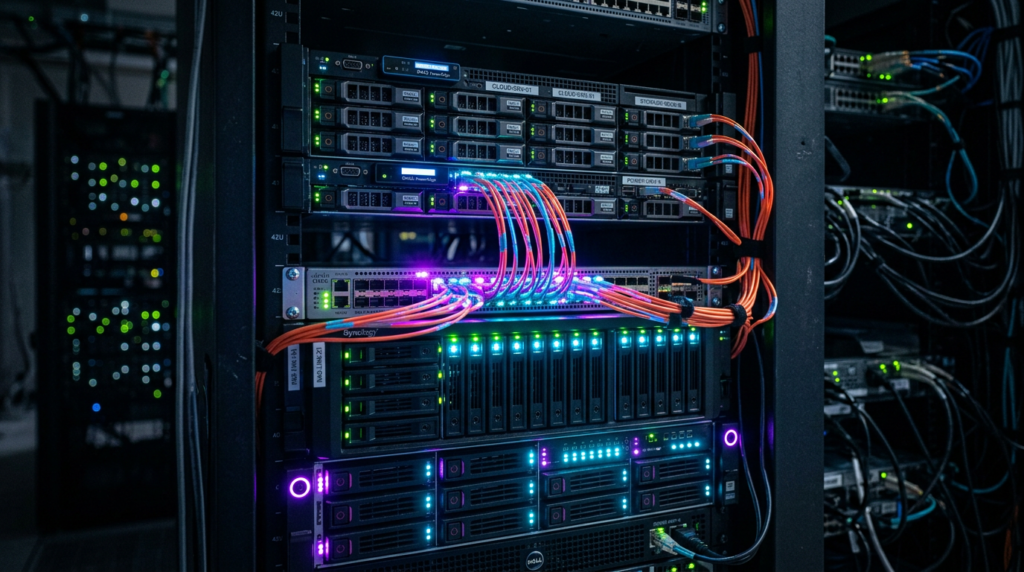
The year is 2026, and the definition of an “indoor security camera” has fundamentally fractured. We are no longer discussing mere optical sensors that blindly stream compressed video feeds to a centralized cloud server. Instead, the modern indoor surveillance market has evolved into a complex ecosystem of distributed edge computing, where devices are equipped with dedicated Neural Processing Units (NPUs), dual-lens arrays, and local inference engines. As an Enterprise Infrastructure Analyst, looking at the current landscape—dominated by players like TP-Link, Google, Arlo, and Aqara—reveals a fascinating architectural war between closed-loop cloud dependency and open-protocol edge autonomy.
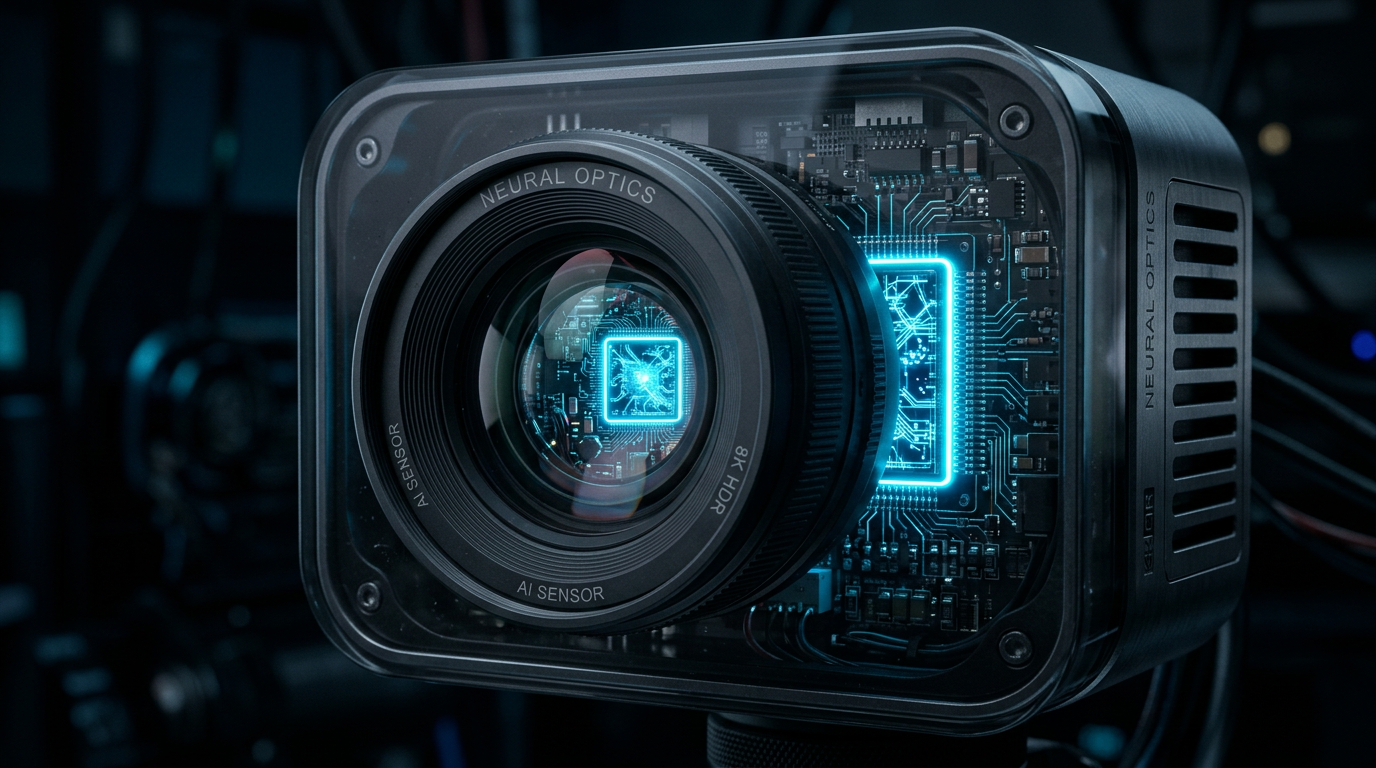
At the heart of this shift is the migration of artificial intelligence from the cloud to the edge. Historically, features like person, pet, and vehicle detection required the camera to upload raw footage to a remote server, where a machine learning model would analyze the frames and push a notification back to the user’s device. This architecture was plagued by latency, high bandwidth consumption, and severe privacy implications. Today, devices like the highly disruptive TP-Link Tapo C120 and the Aqara Camera Hub G350 are performing this computational heavy lifting locally. By integrating lightweight AI models directly onto the camera’s silicon, these devices can execute real-time object classification without ever pinging an external server.
This edge-first approach is not merely a consumer convenience; it is a profound shift in network topology. When a $36 camera like the Tapo C120 can offer highly accurate smart detection natively, it commoditizes the very features that legacy brands have traditionally used to justify exorbitant monthly subscription fees. Furthermore, the inclusion of the Real-Time Streaming Protocol (RTSP) in budget-friendly edge devices is a massive victory for data sovereignty. RTSP is an open network control protocol designed for use in entertainment and communications systems to control streaming media servers. In the context of security, RTSP support means a camera is not locked into a proprietary app ecosystem. Enterprise users, prosumers, and privacy advocates can route these video feeds directly into a local Network Video Recorder (NVR), third-party software like Blue Iris, or a Synology Network Attached Storage (NAS) drive. This effectively transforms a cheap consumer gadget into a scalable, enterprise-grade surveillance node.
However, the hardware arms race has also introduced a dangerous marketing illusion: the myth of the 4K panacea. Manufacturers are increasingly slapping “4K Resolution” badges on their boxes to drive sales, but a deeper technical audit reveals a critical bottleneck. Cameras like the Aqara G350 and the Eufy Indoor Cam S350 boast massive 4K sensors, but their internal image signal processors (ISPs) and thermal constraints force them to cap the frame rate at a sluggish 15 to 20 frames per second (fps). In the realm of security, frame rate is arguably more vital than raw pixel count. A 4K image at 15 fps will result in severe motion blur if an intruder is running across the room, rendering facial identification impossible. Conversely, the Google Nest Cam Indoor (3rd Gen) opts for a 2K resolution but maintains a fluid 30 fps with High Dynamic Range (HDR). By prioritizing temporal resolution (frame rate) and dynamic range over spatial resolution (pixel count), Google delivers a vastly superior evidentiary tool, proving that intelligent sensor tuning trumps raw megapixel marketing.
Enterprise Market Impact & Total Cost of Ownership (TCO)

To understand the 2026 security camera market, one must look past the initial retail price and analyze the Total Cost of Ownership (TCO). We are witnessing the aggressive SaaSification (Software as a Service) of consumer hardware. Manufacturers are increasingly adopting the razor-and-blades business model, selling the physical camera at or near cost, only to trap the user in a perpetual, high-margin cloud subscription. For enterprise IT leaders and savvy consumers alike, this shift requires a rigorous financial audit before deployment.
Take the Arlo Essential Indoor Camera (2nd Gen) and the Google Nest Cam as prime examples. The hardware itself is relatively affordable—ranging from $40 to $100. However, both ecosystems are functionally crippled without a subscription. Arlo demands $10 per month ($120 annually) just to unlock cloud storage, accurate subject detection, and animated alerts. Google is even more aggressive; while the base Nest Aware subscription costs $10 per month, accessing the advanced Gemini AI features—which provide highly descriptive, multimodal alerts like “person walks out of gate”—requires the Home Premium Advanced tier at a staggering $20 per month. Over a standard three-year hardware lifecycle, a $100 Google Nest Cam actually costs the user $820. This is a classic enterprise vendor lock-in strategy applied to the living room.
In stark contrast, the local-storage vanguard offers a radically different TCO equation. Cameras supporting high-capacity microSD cards or NAS integration require a higher initial Capital Expenditure (CAPEX) but virtually zero Operational Expenditure (OPEX). However, the economics of local storage have recently been disrupted by macroeconomic supply chain factors. The global AI chip shortage has severely constrained NAND flash memory production, causing the prices of high-endurance microSD cards to skyrocket. A 256GB SanDisk High Endurance card, essential for continuous loop recording, can now cost upwards of $60. Despite this upfront cost, the ROI (Return on Investment) of a local storage setup eclipses a cloud subscription within the first eight months of deployment.
Beyond pure financials, enterprise risk management principles must be applied to these deployments. The geopolitical landscape of hardware manufacturing cannot be ignored. TP-Link, despite producing the technically superior and highly affordable Tapo C120, has seen its router business come under intense investigation by the US government over alleged links to China. Similarly, Lorex was previously owned by Dahua—a company banned by the US government—before being sold to a Taiwanese firm. For consumers, this might seem like distant political theater, but for anyone deploying these cameras in a home office handling sensitive corporate data, it is a critical security vulnerability. Furthermore, domestic data policies are equally fraught. Ring’s controversial decision to reintroduce policies enabling local law enforcement to request footage directly from users transforms a private security device into a potential node for state surveillance. When evaluating TCO, one must factor in the cost of data privacy and the potential for corporate or state overreach.
The Consumer Reality: What This Means for You
Translating this dense architectural and economic landscape into everyday consumer reality reveals a minefield of choices. Inviting an internet-connected lens and microphone into your most private spaces is not a decision to be taken lightly. The modern consumer must navigate a complex matrix of privacy controls, smart home interoperability, and the creeping integration of generative AI.
Privacy is the paramount concern. While software-based “sleep modes” are common, they require the user to trust that the underlying code hasn’t been compromised. This is why physical privacy shutters—like the one found on the Arlo Essential or the automated lens-rolling mechanism on the Aqara G350 and TP-Link Tapo C225—are critical. A physical barrier provides undeniable, analog proof that the camera is blind. Furthermore, the implementation of mandatory Two-Factor Authentication (2FA), preferably via biometric face or fingerprint scans, is no longer a luxury; it is a baseline requirement to prevent credential stuffing attacks that lead to unauthorized live-feed access.
The most jarring consumer development in 2026 is the introduction of Visual Language Models (VLMs) into the living room. The Psync Camera Genie S represents the bleeding edge of this trend. By integrating GPT-enabled multimodal AI, this camera abandons generic “Motion Detected” alerts in favor of highly descriptive, synthesized text. It uploads frames to a secure server, runs inference, and pushes notifications like, “A person is standing in a dark room, holding a baby, and looking at the camera.” While occasionally inaccurate or unintentionally hilarious, this technology previews a future where our homes possess semantic understanding. However, it also means that highly detailed, text-based logs of your daily life are being generated and stored on a remote server. The convenience of knowing exactly what is happening in your home must be weighed against the dystopian reality of an AI constantly narrating your private life.
On the interoperability front, the consumer smart home is finally beginning to defragment, thanks to the widespread adoption of the Matter and Thread protocols. The Aqara Camera Hub G350 is a masterclass in this integration. By acting as a Matter controller and a Zigbee 3.0 hub, the camera ceases to be a standalone peripheral and becomes the central nervous system of the smart home. It can bridge disparate sensors, smart locks, and lighting systems, allowing them to communicate locally without relying on a cloud server. However, walled gardens still exist. Apple’s HomeKit Secure Video, while offering excellent end-to-end encryption and local processing via an Apple TV or HomePod, artificially limits video resolution to 1080p. Consumers must choose between the high-resolution, open-protocol freedom of RTSP/Matter and the secure, but heavily restricted, walled garden of Apple’s ecosystem.
The Industry Ripple Effect
The strategic maneuvers of 2026 are forcing a massive industry-wide ripple effect. As hardware becomes increasingly commoditized—proven by the fact that a $36 TP-Link camera can go toe-to-toe with a $100 Google Nest camera in terms of raw image quality—the battleground has shifted entirely to software, AI, and ecosystem lock-in. We are witnessing the dawn of AI-as-a-Service (AIaaS) in the consumer surveillance sector.
Google’s integration of its Gemini AI into the Nest ecosystem is a clear indicator of where the industry is heading. By offering conversational queries like, “Who opened the back door last night?” or “Did a package arrive today?”, Google is attempting to transition the security camera from a passive recording device into an active, conversational security guard. This forces competitors like Amazon (owning both Ring and Blink) to accelerate the integration of their own Large Language Models (LLMs) into their hardware. The result is an arms race that will inevitably drive up the cost of premium subscriptions, as the compute power required to run multimodal LLM inference on millions of video feeds is astronomically expensive.
Simultaneously, this push toward expensive cloud AI is creating a massive vacuum at the bottom of the market, which agile companies like Wyze, Eufy, and Aqara are rushing to fill. By doubling down on Edge AI—putting the processing power directly on the camera’s NPU—these companies are offering 80% of the functionality of a Google or Arlo system with zero monthly fees. This is forcing a bifurcation in the market: premium, cloud-dependent AI ecosystems for those willing to pay a monthly tithe, and highly capable, edge-processed hardware for the technically literate prosumer.
Ultimately, the indoor security camera market is a microcosm of the broader enterprise IT landscape. The debates over Edge vs. Cloud compute, open standards (Matter/RTSP) vs. proprietary ecosystems, and CAPEX vs. OPEX financial models are playing out in millions of living rooms worldwide. As we move further into the decade, the cameras that succeed will not be the ones with the highest megapixel count, but the ones that offer the most intelligent, secure, and economically viable balance of local processing and cloud connectivity.
TechNode HQ Verdict: Pros, Cons & Usability
- Pro (Engineering): The widespread adoption of local Neural Processing Units (NPUs) and RTSP support allows for zero-latency object detection and seamless integration into enterprise-grade local NAS environments, bypassing cloud dependency entirely.
- Pro (Consumer): The integration of Matter and Thread protocols transforms cameras into central smart home hubs, allowing for complex, localized automation without the need for multiple proprietary bridges.
- Con: The deceptive marketing of “4K Resolution” on devices bottlenecked at 15-20 fps results in severe motion blur, making lower-resolution 30 fps cameras vastly superior for actual security identification.
- Con: The aggressive SaaSification of hardware means that essential features—like rich notifications and video history—are increasingly trapped behind $10-$20 monthly paywalls, drastically inflating the Total Cost of Ownership.
Enterprise Usability: For IT professionals, CTOs, and prosumers deploying hardware in sensitive environments (home offices, SMBs), cloud-dependent models like Ring and Nest should be avoided due to data sovereignty risks and high OPEX. Deploy edge-first devices like the TP-Link Tapo C120 or Aqara G350, utilize their RTSP capabilities, and route all telemetry and video feeds directly into an isolated, locally hosted Synology NAS or Blue Iris NVR setup. Ensure the devices are placed on a segregated IoT VLAN to mitigate lateral network movement in the event of a hardware compromise.
Everyday Usability: For the general public, the decision comes down to budget and privacy tolerance. If you want plug-and-play convenience and don’t mind paying $120+ a year, the Google Nest Cam offers the most polished AI experience. However, if you want to avoid the “Subscription Trap,” invest in a camera with a physical privacy shutter and local microSD storage. Always change default passwords, enable biometric Two-Factor Authentication, and be highly skeptical of any brand offering “free” cloud storage, as it is almost always a precursor to a future paywall.
Sources & Citations:
Original Technical Breakdown via: wired
Official Handle: @wired
Topics Explored: Edge Computing, IoT Security, Smart Home Infrastructure, Cloud Storage, AI Surveillance