The Viral Catalyst and the Silicon Truth
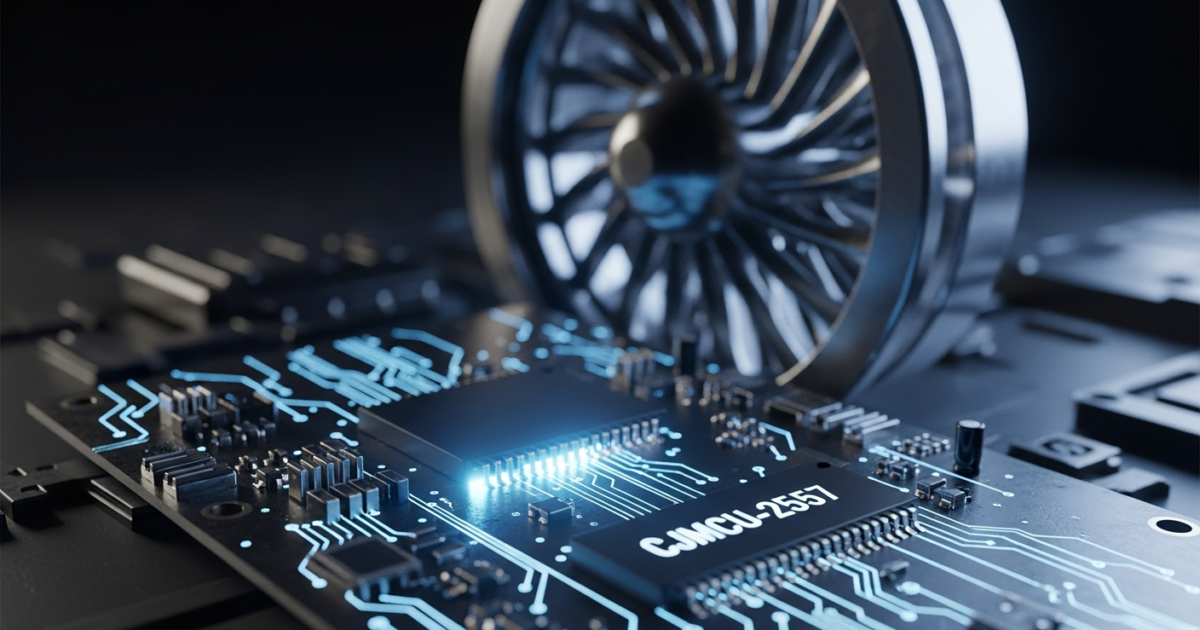
In the relentless pursuit of sustainable power, innovation often arrives dressed as absurdity. Recently, a Spanish DIY hardware enthusiast known as “Flamethrower” captured the internet’s attention by transforming a standard issue hamster wheel into a functional smartphone and smartwatch charger. While the mainstream media was quick to frame this as a quirky, dystopian realization of animal labor, veteran hardware analysts recognize a much deeper narrative at play. The true star of this viral stunt is not the rodent, but the silicon enabling the feat: the CJMCU-2557 energy-harvesting module.
The engineering hurdle Flamethrower faced is a fundamental law of electromagnetism. Standard 5V DC motors, when used in reverse as generators, require immense rotational velocity to produce usable voltage. As the creator correctly noted, spinning a standard motor at the 10,000 RPM required to achieve a modern 15-watt charging speed would physically melt the components. The kinetic output of a 150-gram Syrian hamster is erratic, low-torque, and low-velocity. To bridge the gap between micro-kinetic energy and a lithium-ion battery cell, the system required a highly specialized intermediary.
Enter the realm of nano-power management. By utilizing the CJMCU-2557—a breakout board built around the formidable Texas Instruments BQ25570 IC—the project inadvertently demonstrated the exact technological architecture currently revolutionizing Industrial IoT (IIoT) and Edge Computing. What works for a hamster wheel in a bedroom is currently being deployed by enterprise CTOs to power thousands of battery-free sensors across smart factories, oil pipelines, and structural health monitoring systems.
The Architectural Reality: Dissecting the BQ25570
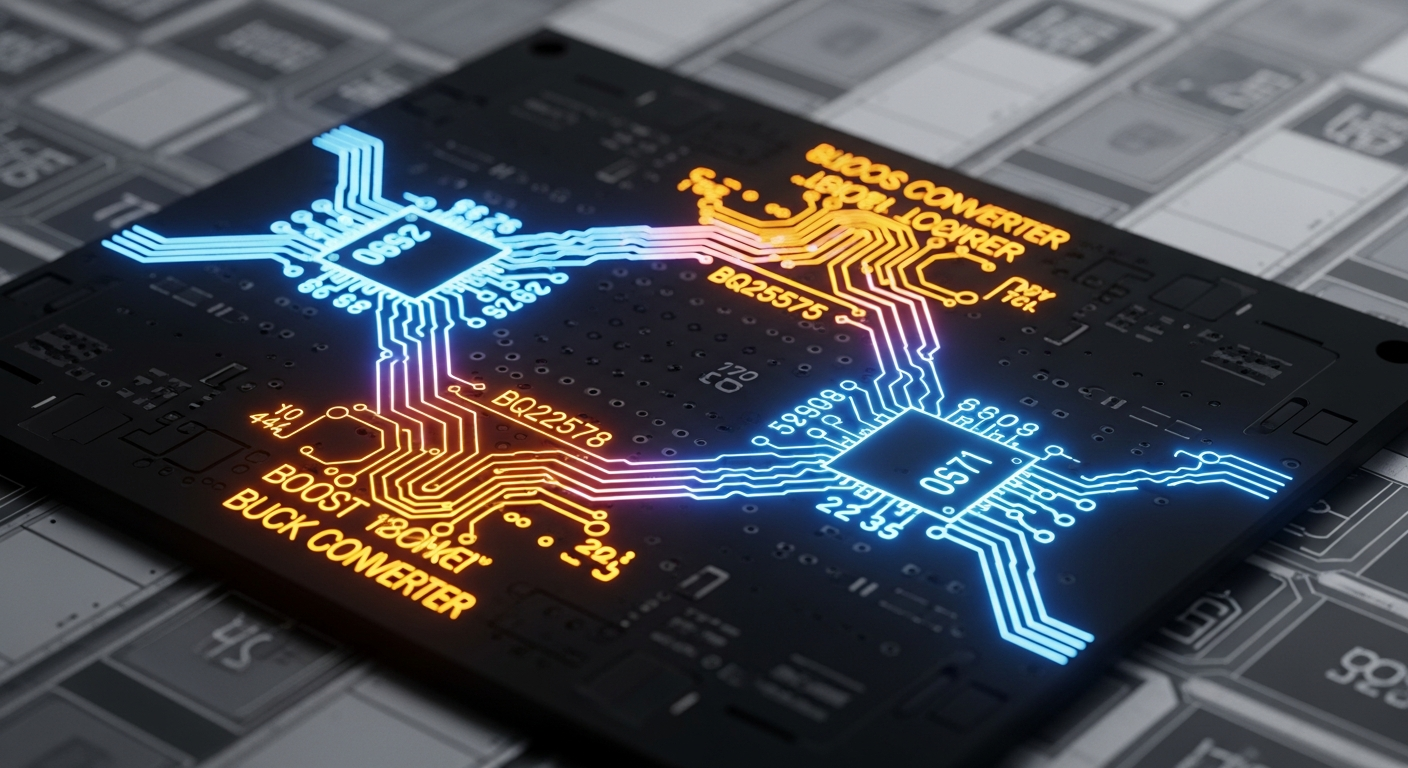
To understand why this technology is a cornerstone of modern edge infrastructure, we must audit the silicon. The Texas Instruments BQ25570 is not a simple voltage regulator; it is a highly integrated energy harvesting nano-power management solution designed specifically to extract microwatts (µW) to milliwatts (mW) of power from high-impedance DC sources.
When dealing with ambient energy—be it a small photovoltaic cell, a thermoelectric generator (TEG), or a kinetic electromagnetic harvester—the voltage output is often microscopic and highly variable. Traditional power management ICs (PMICs) require a relatively high voltage just to turn on, rendering them useless for micro-generation. The BQ25570, however, features an ultra-low power DC-DC boost converter capable of a “cold-start” at a mere 330 millivolts (mV). Once the chip wakes up, it can continuously harvest energy from input voltages as low as 100 mV.
Furthermore, the chip employs a programmable Maximum Power Point Tracking (MPPT) sampling network. Because the internal resistance of a kinetic generator fluctuates based on speed and load, the MPPT algorithm dynamically adjusts the current draw to ensure the maximum possible power is extracted without collapsing the source voltage. It operates with a staggering full operating quiescent current of just 488 nanoamps (nA), meaning the chip consumes virtually zero power to keep itself awake.
Once the energy is boosted and stored in a capacitor or a single-cell lithium-ion battery, the BQ25570 utilizes its integrated nano-power buck converter to step the voltage back down to a clean, regulated rail (typically 1.8V or 3.3V) to power microcontrollers and BLE (Bluetooth Low Energy) radios. It is a masterclass in mixed-signal semiconductor engineering, allowing erratic, garbage-tier energy inputs to be refined into enterprise-grade power stability.
Red Team Audit: Debunking the “One Amp” Myth
While the application of the BQ25570 is sound, a rigorous technical audit of the creator’s claims reveals a significant discrepancy. In the source interview, Flamethrower stated: “I did a very rough calculation and the current generated might be like around an amp when the fella is running.”
As a veteran infrastructure analyst, I must flag this as a physical and architectural impossibility. Let us examine the physics. One ampere of current at a standard USB charging voltage of 5V equates to 5 Watts of power. A Syrian hamster weighs approximately 150 grams. To generate 5 Watts of sustained mechanical power, the rodent would need a power-to-weight ratio exceeding that of elite human Tour de France cyclists.
More importantly, the silicon itself forbids this output. The Texas Instruments BQ25570 datasheet explicitly states that its integrated buck converter supports a peak output current of up to 110 mA (typical). If the system were truly pushing 1 Amp into the battery, it would instantly bypass the chip’s thermal and current limits, resulting in catastrophic failure of the IC.
What likely occurred is a measurement error common in DIY electronics. The creator likely measured a transient short-circuit current spike directly across the raw DC motor terminals using a multimeter, rather than measuring the regulated, sustained charging current entering the lithium-ion cell. In reality, the sustained output is likely hovering between 10 mA and 50 mA—perfectly adequate for trickle-charging a smartwatch over several days, but mathematically incapable of filling a 3,000 mAh smartphone battery in a single night. Factual density matters, especially when evaluating the scalability of power systems.
Market Impact & Deployment: The Enterprise IoT Revolution

Moving beyond the consumer novelty, the deployment of nano-power harvesting is solving one of the most expensive bottlenecks in modern IT infrastructure: the battery replacement cycle. As enterprises scale their IoT deployments to tens of thousands of sensors per facility, the Total Cost of Ownership (TCO) becomes dominated not by the cost of the sensors, but by the labor required to replace their batteries.
Kinetic Energy Harvesting (KEH) is now a mature, Tier-1 enterprise solution. Companies like Perpetuum and EnOcean have built massive businesses by replacing batteries with kinetic and thermal harvesters. In the railway industry, wireless sensor nodes attached to train bogies harvest the kinetic vibration of the tracks to power continuous structural health monitoring, transmitting data via sub-GHz radio networks. In smart buildings, HVAC sensors and light switches are powered entirely by the mechanical kinetic energy of a human pressing the button, utilizing piezoelectric transducers and chips identical in function to the BQ25570.
By implementing energy harvesting, enterprise CTOs are achieving “deploy and forget” architectures. The initial CapEx of a BQ25570-based sensor is marginally higher than a standard battery-powered node, but the OpEx drops to zero. When multiplied across a mesh network of 50,000 edge devices in a manufacturing plant, the ROI is realized in less than 18 months. The hamster wheel is simply a biological proxy for the vibrating chassis of an industrial CNC machine.
The Consumer Translation: The End of Battery Anxiety
For the worldwide public, the maturation of nano-power harvesting signals a fundamental shift in how we interact with consumer electronics. We are entering the era of ambient computing, where devices draw their lifeblood from the environment rather than a wall outlet.
In the wearable sector, the integration of kinetic and thermal energy harvesters means that fitness trackers and smartwatches will soon be powered by the swing of your arm and the heat of your wrist. While we are not yet at the point where a high-drain device like an Apple Vision Pro or a flagship smartphone can be powered entirely by ambient energy, low-power peripherals are already making the leap.
Logitech and other peripheral manufacturers are heavily researching solar and kinetic integration. Smart home ecosystems are transitioning to battery-free window sensors, door locks, and temperature gauges. The psychological burden of “battery anxiety”—the constant need to monitor and charge dozens of household devices—will gradually disappear as our gadgets learn to scavenge the micro-energy we leave behind in our daily lives.
TechNode HQ Verdict: Pros, Cons & Usability
- Pro (Engineering): The TI BQ25570 offers an industry-leading 330mV cold-start voltage and 488nA quiescent current, enabling true battery-free edge architectures from garbage-tier energy sources.
- Pro (Consumer): Eliminates the environmental waste of disposable lithium cells and removes the psychological friction of constant device charging for low-power wearables.
- Con: Severe current limitations. The 110mA peak output of the buck converter means this technology is strictly limited to low-power microcontrollers and BLE radios, incapable of powering high-drain cellular or Wi-Fi modules.
- Con: High impedance source matching requires complex, programmable MPPT tuning, increasing the engineering overhead during the initial hardware design phase.
Enterprise Usability: Immediate deployment recommended. CTOs managing large-scale Industrial IoT, structural health monitoring, or smart building infrastructure should mandate energy-harvesting PMICs in their next hardware refresh to eliminate battery replacement OpEx.
Everyday Usability: Consumers should actively seek out smart home peripherals (like EnOcean switches) and wearables that advertise battery-free or self-charging capabilities, though they should remain highly skeptical of any DIY claims suggesting ambient energy can rapidly charge a modern smartphone.