Key takeaways
- A $14.2M renovation failed within 24 hours due to fundamental hydrological engineering oversights.
- The $1.7M ozone nanobubbler system was overwhelmed by dormant supply lines and stagnant water.
- Manual chemical remediation with hydrogen peroxide is now driving up uncalculated OpEx costs.
- The no-bid contract utilized vendors with golf course experience, not civic water infrastructure.
- The crisis highlights the danger of applying superficial UI fixes to legacy hardware systems.
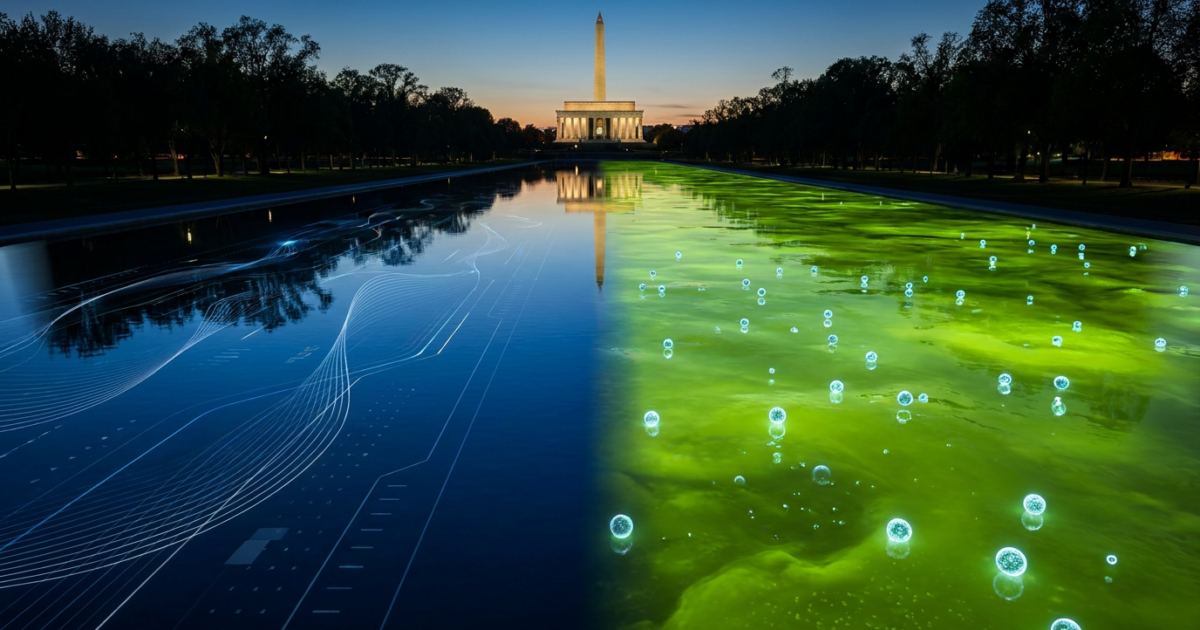
Just days after the completion of a highly publicized, $14.2 million federal renovation, the Lincoln Memorial Reflecting Pool has suffered a catastrophic biological system failure. Intended to transform the century-old monument’s water to a pristine “American flag blue” in time for the United States’ 250th anniversary on July 4, 2026, the project has instead triggered the Reflecting Pool algae crisis. Within 24 hours of refilling the basin, a massive green algae bloom coated the surface, forcing National Park Service (NPS) crews into emergency manual remediation.
The administration has publicly blamed dormant supply lines and residual buildup for the sudden bloom. However, a deeper technical audit reveals a classic infrastructure anti-pattern: applying a superficial, high-tech patch to a fundamentally broken legacy architecture. By relying on a no-bid contract awarded to firms with experience in private golf courses rather than large-scale civic hydrology, the project ignored the physical realities of a 6.75-million-gallon open-air bioreactor. The result is a masterclass in how poorly scoped technical deployments can instantly collapse under real-world loads.
The Architectural Reality of the Reflecting Pool Algae Crisis
To understand why the technology failed, one must first understand the extreme physical constraints of the deployment environment. Constructed in 1922 on unstable, marshy soil dredged from the Potomac River, the Reflecting Pool is a notoriously hostile hydrological system. It spans 2,000 feet in length but maintains a depth of merely 18 to 30 inches. This massive surface-area-to-volume ratio, combined with zero natural water flow, turns the pool into a giant solar incubator during the sweltering Washington, D.C. summer.
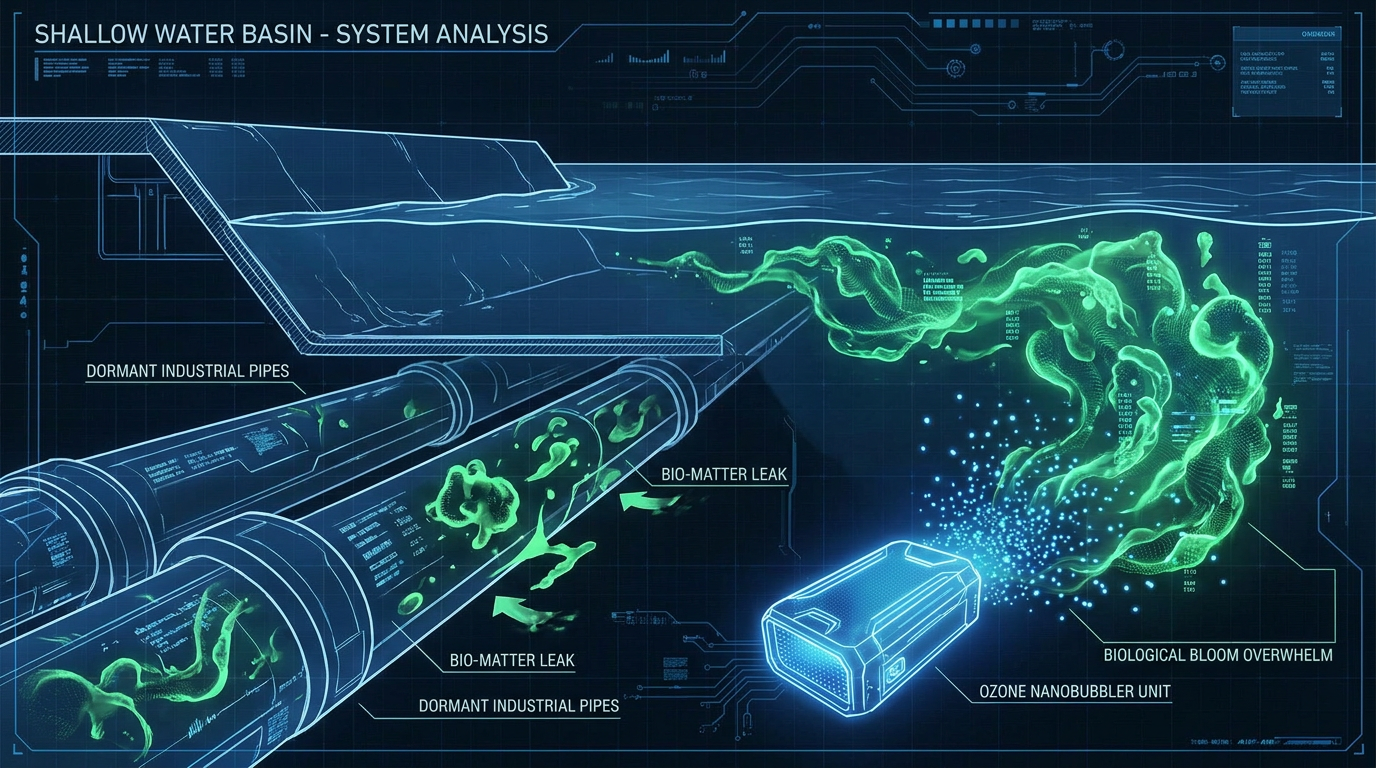
The centerpiece of the 2026 renovation’s tech stack was a $1.7 million “ozone nanobubbler filtration system,” reportedly installed by Ohio-based Greenwater Services. In theory, nanobubble technology is highly advanced. Unlike traditional aeration systems that produce large bubbles that quickly rise and burst, nanobubblers generate microscopic gas cavities (typically under 200 nanometers in diameter). Because they lack the buoyancy to break the surface tension, these bubbles remain suspended in the water column for months. When injected with ozone (O3), they act as microscopic chemical warheads, oxidizing organic matter and destroying algae cell walls upon contact.
The nanobubbler hardware, much like experimental hardware and silicon, requires a highly controlled environment to function at peak efficiency. The Reflecting Pool is the exact opposite of a controlled environment. When the system was activated, it flushed water through supply lines that had sat completely dormant for the eight-week construction phase. This injected a massive, concentrated biological load of residual algae directly into the stagnant basin. The oxidation capacity of the nanobubblers was instantly overwhelmed by the sheer volume of organic matter, rendering the $1.7 million investment effectively useless against the initial surge.
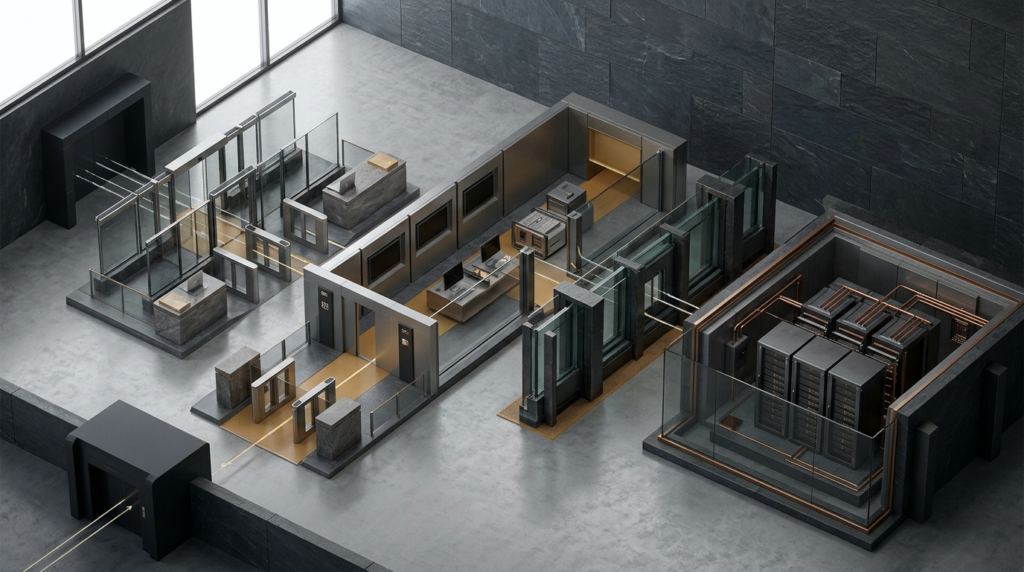
The Executive Abstraction: Think of the Reflecting Pool as a legacy, on-premise data center. The administration applied a sleek new user interface (the blue industrial pool surface) and installed a single, high-end cooling fan (the nanobubblers), but completely ignored the fact that the server racks are sitting in a flooded, unventilated basement. The surface looks modern, but the underlying infrastructure is fundamentally broken, leading to an immediate, catastrophic system crash.
Market Impact & Deployment: The Procurement Bottleneck
When evaluating large-scale civic projects, the procurement principles are identical to enterprise IT deployments: vendor lock-in, misaligned expertise, and poorly scoped requirements inevitably lead to catastrophic system failures. The $14.2 million renovation was executed under a rapid, no-bid contract. Reports indicate the primary contractors had extensive experience waterproofing private golf course water features, but lacked the specialized engineering background required for a 6.75-million-gallon estuarine basin.
This misalignment of expertise resulted in a severe miscalculation of Total Cost of Ownership (TCO). The administration focused heavily on Capital Expenditure (CapEx)—spending millions to seal the pool’s historic leaks with an industrial-grade filament installed by Atlantic Industrial Coatings, and purchasing the nanobubbler hardware. However, they entirely failed to model the Operational Expenditure (OpEx) required to maintain the system when the hardware failed.
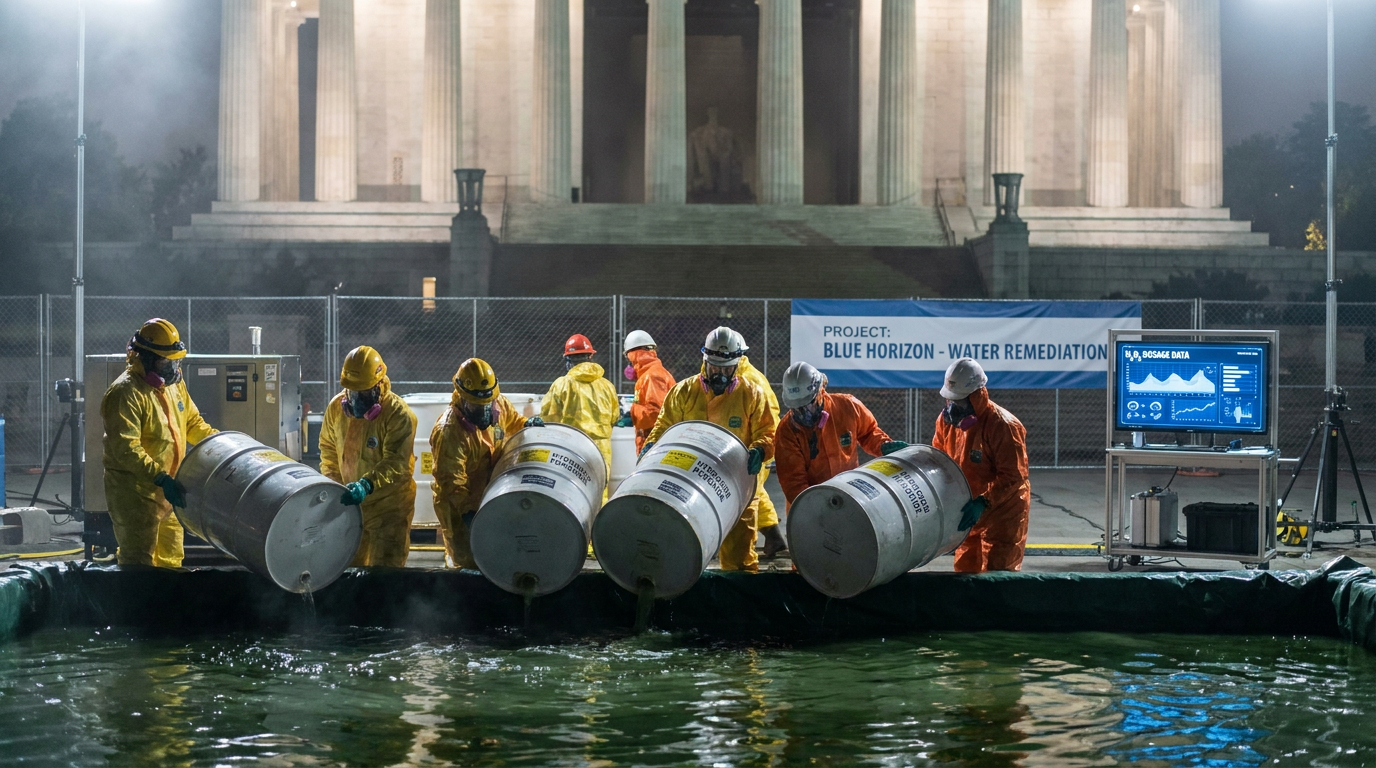
Today, the OpEx is spiraling out of control. Because the automated filtration system failed to prevent the bloom, the NPS has been forced to deploy manual labor. Workers in hip-waders are currently skimming the pool by hand and dumping large, unmetered quantities of industrial hydrogen peroxide and Induclor (a commercial chlorine compound) directly into the water. This brute-force chemical remediation is the hydrological equivalent of manually rebooting servers every hour because the automated load balancer crashed. It is unsustainable, expensive, and highly damaging to the surrounding ecosystem.
Furthermore, the political fallout highlights the dangers of technical hubris. The current administration heavily criticized the Obama administration’s $34 million renovation (completed in 2012), which also struggled with algae blooms. Yet, by rushing a $14.2 million “fix” in just eight weeks without addressing the core flow dynamics, the new deployment has suffered the exact same fate, proving that physics and biology do not respond to political mandates.
The Consumer Translation: Aesthetics vs. Environmental Reality
For the millions of tourists and citizens arriving in Washington, D.C. for the nation’s 250th anniversary, the technical failures translate into a stark visual disappointment. The promise of an “American flag blue” monument has been replaced by a murky, toxic-looking green swamp. But the consumer impact goes beyond mere aesthetics; it touches on public health and environmental stewardship.
The Reflecting Pool is an open-air system that interacts with local wildlife, including local waterfowl and insects. The emergency dumping of hydrogen peroxide—while generally considered a milder, more environmentally friendly oxidizer than raw bleach—is still a harsh chemical shock to the local micro-environment. When combined with Induclor, the chemical cocktail required to forcefully kill a 6.75-million-gallon algae bloom creates off-gassing and chemical byproducts that are far from the pristine, natural image the National Mall is supposed to project.
Moreover, the water sourcing itself remains a point of contention. The pool historically draws from the nearby Tidal Basin, which is naturally rich in algae and organic matter. During high-bloom periods, the system is supposed to switch to municipal drinking water. Managing these water supply lines requires the same redundancy and load-balancing planning seen in modern networking and cloud architectures. The failure to properly flush and sanitize these lines before the grand reopening was a critical operational error that directly impacted the end-user experience—in this case, the American public.
Cross-Industry Ramifications: When Edge Cases Become the Norm
The failure of the Reflecting Pool’s nanobubble system serves as a vital case study for several adjacent industries grappling with climate change and rising global temperatures. As former University of North Carolina professor Hans Paerl noted, hotter-than-normal weather creates a “perfect storm” for algae. This is not an isolated incident; it is a preview of the thermal load challenges facing global infrastructure.
1. Municipal Water Management: Cities globally are investing in nanobubble technology to purify drinking water reservoirs without relying on heavy chlorination. The D.C. failure proves that nanobubblers cannot act as a standalone silver bullet; they must be integrated into a holistic system that includes proper flow dynamics and pre-filtration.
2. Large-Scale HVAC & Cooling Towers: Enterprise data centers and commercial real estate rely on massive cooling towers, which are highly susceptible to algae and legionella blooms. Facility managers watching the Reflecting Pool crisis should take note: dormant pipes are the enemy of clean water systems. Failing to flush lines after maintenance will overwhelm even the most expensive chemical or ozone treatments.
3. Commercial Aquaculture: The farming of fish and seafood relies heavily on dissolved oxygen management. While nanobubblers are revolutionizing this space by keeping oxygen levels high, the Reflecting Pool incident demonstrates the strict volumetric limits of the technology. If the biological load outpaces the oxidation rate, the system collapses exponentially.
Frequently Asked Questions
Q1: What caused the Reflecting Pool algae crisis?
A1: The bloom was triggered by stagnant water, high summer temperatures, and residual algae flushed from supply lines that sat dormant for eight weeks during the $14.2M renovation.
Q2: How much did the ozone nanobubbler system cost?
A2: The Trump administration spent approximately $1.7 million on the state-of-the-art ozone nanobubbler filtration system, which ultimately failed to prevent the immediate algae bloom.
Q3: What chemicals are being used to clean the pool?
A3: National Park Service crews are manually dumping large quantities of hydrogen peroxide and Induclor (a commercial chlorine compound) to shock the water and kill the algae.
Q4: How deep is the Lincoln Memorial Reflecting Pool?
A4: The pool is a highly challenging hydrological environment, measuring 2,000 feet long but only 18 to 30 inches deep, holding roughly 6.75 million gallons of water.
TechNode HQ Verdict: Pros, Cons & Usability
- Pro (Engineering): Ozone nanobubble technology is theoretically sound and reduces the need for harsh, continuous chlorination when scaled properly.
- Pro (Consumer): The underlying structural leaks (which previously lost up to 16 million gallons annually) appear to have been sealed by the new industrial filament.
- Con: The $1.7M filtration hardware was deployed without addressing the fundamental lack of water flow, rendering it useless against high biological loads.
- Con: The reliance on a no-bid contract with vendors lacking civic hydrology experience led to a catastrophic miscalculation of operational maintenance costs.
Enterprise Usability: For CTOs and infrastructure managers, this is a textbook warning against “shiny object syndrome.” Do not purchase high-end hardware (like nanobubblers) to fix a problem that requires fundamental architectural redesign (like water flow and pipe routing). Always model your OpEx for when the automated systems fail.
Everyday Usability: For the public visiting the National Mall, expect ongoing closures, chemical smells, and visual inconsistencies as crews battle the biology of the pool manually. The “American flag blue” aesthetic is currently offline.