Key takeaways
- Cisco Catalyst SD-WAN Manager is under active exploitation by threat group UAT-8616.
- Attackers chain authentication bypasses with arbitrary file writes to gain root access.
- CISA added CVE-2026-20262 to the KEV catalog with a two-week federal patching deadline.
- Administrators should run the “request admin-tech” CLI command to preserve critical forensic logs before upgrading.
- No workarounds exist; immediate software upgrades are required to secure the SD-WAN control plane.
The Architectural Reality of the Cisco SD-WAN Vulnerabilities

Enterprises are rushing to secure their networks as a series of active exploit chains targeting Cisco SD-WAN vulnerabilities have bypassed traditional security perimeters. The security landscape was shaken by the disclosure of CVE-2026-20262, an arbitrary file write vulnerability in the web user interface (UI) of Cisco Catalyst SD-WAN Manager (formerly known as vManage). This security vulnerability is a directory traversal flaw (CWE-22) caused by the software’s failure to properly validate user-supplied input during the file upload process. By sending a crafted HTTP request to an affected API endpoint, an authenticated attacker with low-privileged credentials can write or overwrite any file on the underlying operating system. This capability can subsequently be leveraged to escalate privileges to root, giving the attacker total administrative control over the central management console of the overlay network.
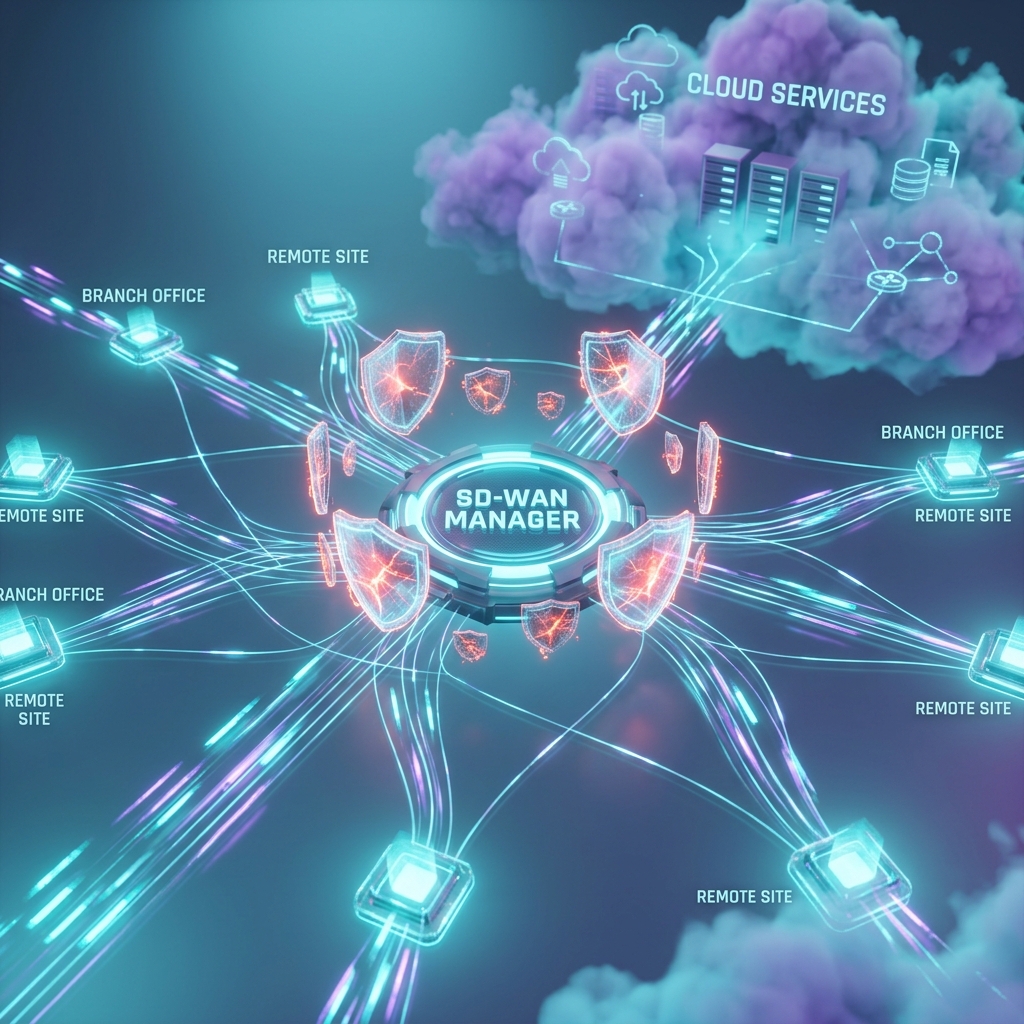
Understanding the underlying SD-WAN architecture is critical to realizing why this vulnerability presents such an extreme risk. In a modern enterprise network, the control plane is separated from the data plane to allow for centralized orchestration and scalability. The Catalyst SD-WAN Manager acts as the single point of control, distributing configuration templates, localized routing policies, and cryptographic keys to the entire fleet of virtual and physical devices. If an attacker achieves root access on this host, they gain the keys to the kingdom. They can intercept control connections, tamper with localized routing tables, and distribute malicious updates globally.
The severity of CVE-2026-20262 is amplified when viewed in tandem with CVE-2026-20245, a command injection vulnerability in the command-line interface (CLI) of Catalyst SD-WAN Manager, SD-WAN Controller, and SD-WAN Validator. Boasting a CVSS score of 7.8, this flaw allows an attacker with netadmin privileges to execute arbitrary commands at the root OS level due to improper escaping of user input. Because CVE-2026-20245 requires netadmin privileges and CVE-2026-20262 requires at least a lower-privileged user account, threat actors have begun executing complex multi-stage attacks. They chain these vulnerabilities with critical authentication bypass bugs, such as CVE-2026-20182 (a vdaemon handshake flaw with a maximum CVSS score of 10.0) or CVE-2026-20127 (a NETCONF interface bypass), to gain initial administrative access without credentials and then escalate to root command execution.
Market Impact & Deployment
The active exploitation of these security flaws has triggered a significant response across the cybersecurity industry and federal agencies. On June 15, 2026, the U.S. Cybersecurity and Infrastructure Security Agency (CISA) officially added CVE-2026-20262 to its Known Exploited Vulnerabilities (KEV) Catalog, citing evidence of active exploitation in the wild. This designation mandates that all federal civilian executive branch agencies apply the vendor-provided patches within a strict two-week deadline, ending June 29, 2026. This marks the eighth Cisco SD-WAN bug to be cataloged in the KEV list in 2026 alone, highlighting a targeted effort by advanced persistent threat (APT) groups to compromise enterprise WAN backbones.
Security researchers tracking the threat campaign under the identifier UAT-8616 have observed attackers successfully using these chained exploits to push unauthorized configuration changes from compromised SD-WAN Managers to distant edge routers. By altering the configuration templates, attackers can divert confidential corporate traffic through rogue nodes, execute middleman attacks, or completely sever connectivity to branch offices. The potential financial fallout of such an incident is staggering, with network downtime costing large enterprises upwards of thousands of dollars per minute, not including the astronomical costs associated with forensic investigation and system rebuilding.
For organizations deploying Catalyst SD-WAN Manager, immediate action is required. Cisco has confirmed there are no viable workarounds for CVE-2026-20262 or CVE-2026-20245. Administrators must update to the latest fixed software versions released by Cisco. However, before executing the upgrade, it is vital to execute a structured diagnostic process. Admins should run the CLI command request admin-tech on all affected control components to collect system snapshots and safeguard volatile log files. Furthermore, they must review system logs, specifically within /var/log/scripts.log, for directory traversal strings or unusual API queries that indicate prior exploitation. Integrating these audits into the corporate remediation workflow ensures that any lingering persistence mechanisms are detected and eradicated during the patching process.
The Consumer Translation
While the average consumer does not directly interact with Cisco SD-WAN controllers or enterprise routers, the security of these devices directly impacts daily life. When a consumer uses an ATM to withdraw cash, checks out at a grocery store, accesses a digital health portal, or flies on a commercial aircraft, their data is routed over enterprise WAN infrastructures. A large-scale compromise of Cisco SD-WAN systems can disrupt these essential services globally. A threat actor controlling an SD-WAN control plane could easily trigger massive outages in banking applications, shut down point-of-sale terminals at retail chains, or halt distribution networks in global supply chains.
To understand the systemic risk, consider this analogy. Imagine Cisco Catalyst SD-WAN Manager as the central railway control room for a country’s entire high-speed train network. The edge routers are the individual trains and local stations. The vulnerabilities CVE-2026-20262 and CVE-2026-20245 are equivalent to a security loophole that allows a low-level maintenance worker to smuggle a master key card into the control room. Once inside, they can modify the schedule, change rail alignments, and direct trains to wrong destinations or cause them to collide. SECuring this central control room is not just about protecting the building itself; it is about preventing a catastrophic transportation disaster that affects millions of everyday passengers.
The impact of this campaign crosses multiple critical sectors:
- Retail and E-commerce: Attackers can disrupt store networks, disabling point-of-sale systems and costing businesses millions in lost sales during peak operational hours.
- Financial Services: Compromising communication links between branch banks and core servers can cause transactional delays and expose sensitive customer financial transfers to interception.
- Healthcare: Medical databases, patient telemetry, and telemedicine networks rely on stable SD-WAN tunnels; disruptions can delay emergency patient care or compromise digital medical records.
Frequently Asked Questions
What is CVE-2026-20262 and how is it exploited?
CVE-2026-20262 is an arbitrary file write vulnerability in Cisco Catalyst SD-WAN Manager’s web UI caused by a directory traversal flaw. Attackers with low-privileged credentials can send a crafted HTTP request to overwrite or write arbitrary files, which can then be used to escalate privileges to root.
How are threat actors chaining vulnerabilities in this campaign?
Threat actor group UAT-8616 bypasses authentication using critical flaws like CVE-2026-20182 or CVE-2026-20127 to gain administrative access. Once authenticated, they exploit privilege escalation bugs like CVE-2026-20245 or CVE-2026-20262 to execute arbitrary commands and write malicious files with root privileges.
What components are affected by these security flaws?
CVE-2026-20262 affects the Catalyst SD-WAN Manager, whereas the command injection flaw CVE-2026-20245 affects the SD-WAN Manager, SD-WAN Controller, and SD-WAN Validator components. These flaws impact on-premise, cloud, and government FedRAMP deployments.
What immediate forensic steps should administrators take before patching?
Cisco recommends administrators run the “request admin-tech” CLI command to capture system snapshots and safeguard log files. They should also inspect “/var/log/scripts.log” for indicators of compromise and monitor for unauthorized configuration changes.
TechNode HQ Verdict: Pros, Cons & Usability
- Pro (Engineering): The patched Cisco releases fully resolve the file upload validation logic and CLI command escaping, closing the traversal vectors.
- Pro (Consumer): Swift remediation by enterprise administrators prevents network outages, safeguarding retail payments and digital banking transactions.
- Con: The medium CVSS score of 6.5 for CVE-2026-20262 masks its true critical danger when chained with auth bypasses in active campaigns.
- Con: Collecting the necessary diagnostic forensic logs via CLI before applying updates increases the overall time to patch in massive topologies.
Enterprise Usability: CTOs and Network Administrators must prioritize applying these upgrades immediately. Before executing the patch, run request admin-tech to ensure vital log files are preserved, and inspect logs for active compromise signs.
Everyday Usability: Everyday consumers do not need to take direct action, but they should remain alert to potential operational disruptions in online retail or banking apps if local providers experience network maintenance delays.