Key takeaways
- Dell’s AI Factory with NVIDIA has rapidly scaled to over 5,000 enterprise customers.
- The new PowerEdge XE9812 supports 144 Vera Rubin GPUs per rack, lowering token costs by 10x.
- Dell PowerRack systems deploy in just 6.5 hours, integrating compute, networking, and storage.
- The PowerCool CDU C7000 delivers 220kW of liquid cooling capacity for extreme-density AI.
- Dell Deskside Agentic AI shifts continuous inference from the cloud to localized workstations.
The Architectural Reality of On-Premises AI Infrastructure
The era of cloud-first artificial intelligence experimentation has officially concluded. At Dell Technologies World 2026 in Las Vegas, the enterprise narrative fundamentally shifted from renting intelligence to owning it. Driven by spiraling public cloud API costs, stringent data sovereignty mandates, and the relentless rise of continuous, agent-driven workloads, the demand for robust On-Premises AI Infrastructure has reached a fever pitch. Dell’s response is a massive, highly integrated hardware and software ecosystem designed to directly challenge the hyperscaler monopoly, proving that the future of enterprise AI computing will be measured in localized efficiency and strict data control.
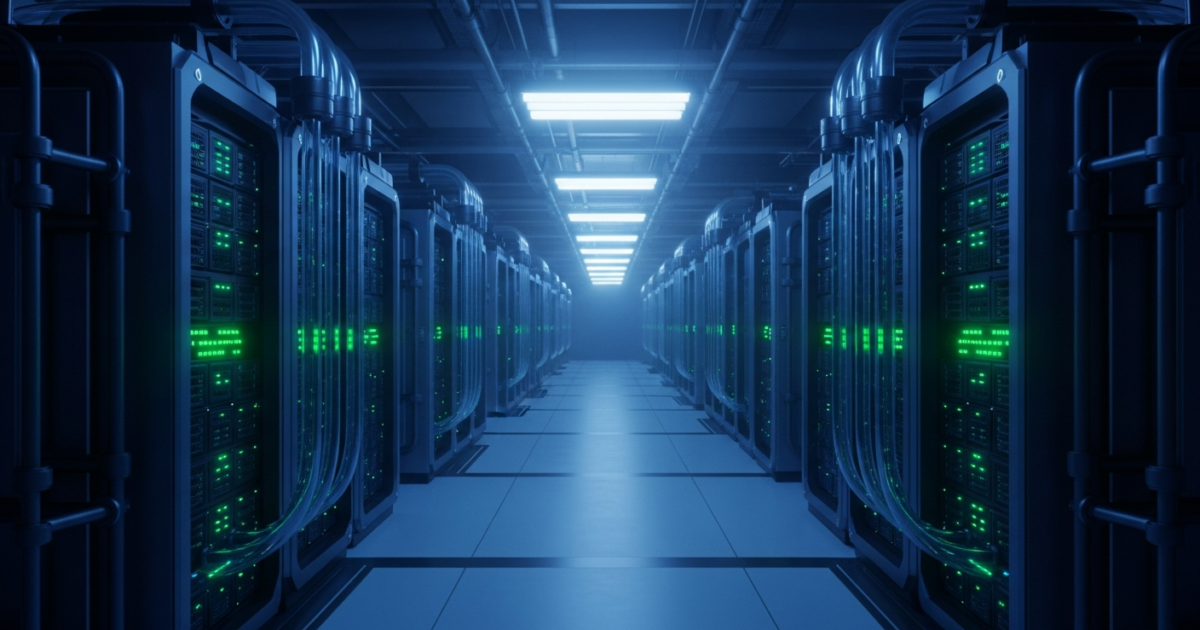
At the heart of this pivot is the staggering growth of the Dell AI Factory with NVIDIA, which has rapidly scaled to over 5,000 enterprise customers [1]. This is not merely a collection of servers; it is a fundamental reimagining of how data centers are architected. Dell unveiled its most aggressive single-event infrastructure rollout to date, heavily optimized for extreme-scale AI workloads and the integration of NVIDIA Vera Rubin silicon [3]. The centerpiece of this rollout is the new Dell PowerRack family. Available in both standard 19-inch and high-density 21-inch configurations, the PowerRack is a turnkey, rack-scale system that integrates compute, networking, storage, and thermal management into a single, cohesive unit.
The engineering marvel within the PowerRack is the PowerEdge XE9812 server. Designed specifically to house NVIDIA’s Vera Rubin NVL72 and NVL144 architectures, these systems support an astonishing 144 GPUs per rack [4]. This density is not just for show; it is the mathematical foundation of Dell’s claim that this new architecture delivers up to a 10x lower cost per token compared to previous generations [3]. By localizing the compute and eliminating the latency and bandwidth bottlenecks associated with distributed cloud clusters, enterprises can achieve unprecedented inference throughput.
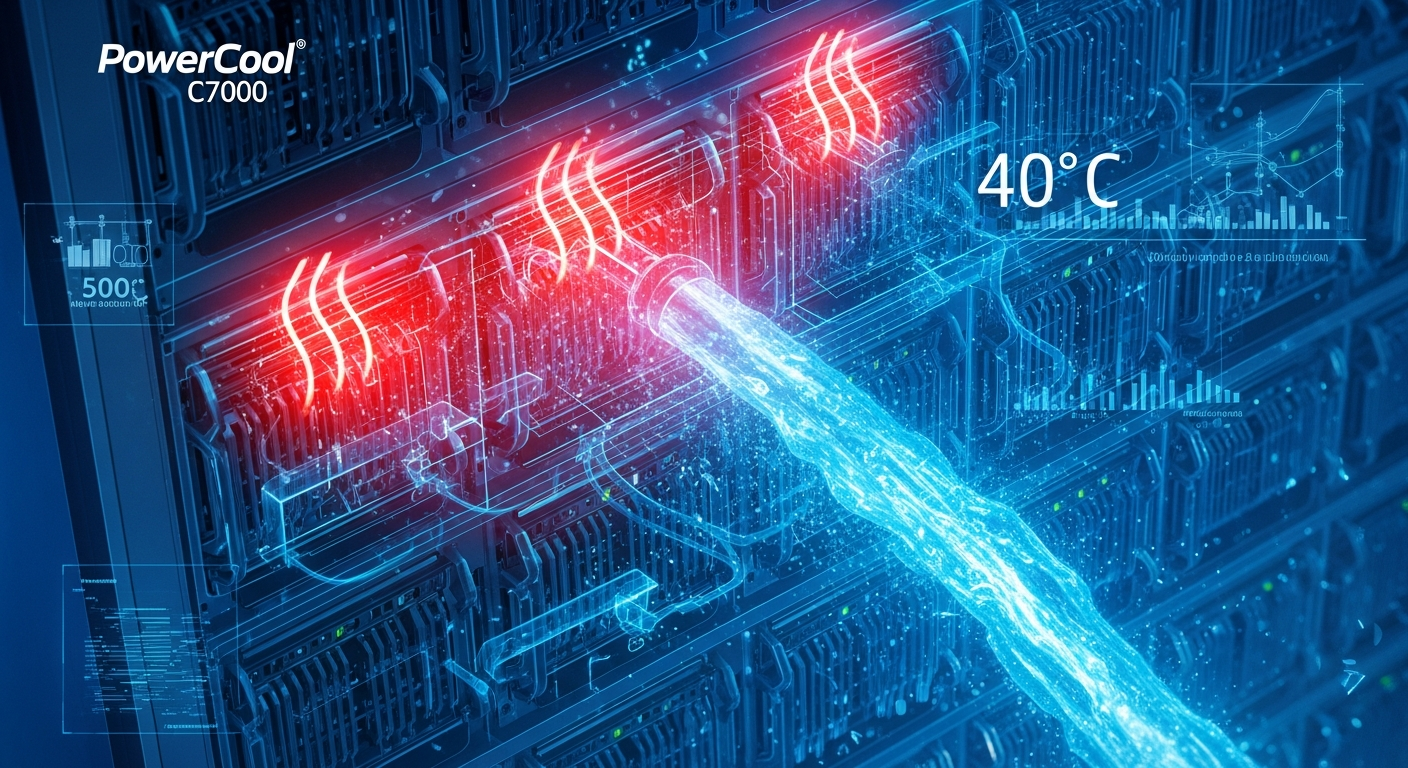
However, housing 144 next-generation GPUs in a single rack introduces a terrifying physics problem: heat. To prevent these silicon behemoths from melting through the data center floor, Dell introduced the PowerCool CDU C7000. This 4U rackmount cooling distribution unit is a masterpiece of thermal engineering, designed to dissipate upwards of 220 kilowatts of heat [9]. Remarkably, the C7000 can handle relatively warm water intake temperatures, supporting facility water as high as 40°C. This dramatically reduces the need for energy-intensive mechanical chillers, allowing enterprises to deploy extreme-density AI infrastructure in facilities that were previously considered thermally inadequate.
Market Impact & Deployment: The Economics of Sovereign AI
The shift toward rack-scale infrastructure is not driven by a mere preference for hardware ownership; it is a financial imperative. As AI transitions from simple, prompt-based chatbots to continuous, autonomous agents, the “cost per token” metric has become the ultimate arbiter of enterprise IT budgets. Paying a hyperscaler for every API call made by an autonomous agent that runs 24/7 is economically ruinous. Dell’s masterplan capitalizes on this reality, offering a capital expenditure (CapEx) model that heavily undercuts the long-term operational expenditure (OpEx) of cloud-based AI.
Dell claims that a fully integrated PowerRack can go from delivery dock to running live AI and HPC workloads in just 6.5 hours [5]. While this metric likely assumes a perfectly pre-staged facility with existing liquid cooling loops and massive power delivery overhead, it underscores Dell’s commitment to reducing the time-to-value for on-premises deployments. This rapid deployment is facilitated by the fact that the PowerRack is essentially sold as a single, pre-validated system, eliminating the weeks of bespoke rack integration and troubleshooting that traditionally plague high-performance computing rollouts.
Beyond compute, the economics of sovereign AI rely heavily on data gravity. Moving petabytes of proprietary enterprise data to the cloud for model fine-tuning is both a security risk and a logistical nightmare. To address this, Dell has completely overhauled its storage and networking fabric. The networking configuration within the PowerRack employs eight of Dell’s PowerSwitch SN6600-LD units—a branded iteration of NVIDIA’s Spectrum SN6600-LD Ethernet switch. This setup provides over 800Tb/sec of switching capacity for east-west traffic, ensuring that the 144 GPUs are never starved for data.
On the storage front, Dell introduced the PowerRack for Exascale Storage, a monstrous 10+ PB storage rack capable of housing solid-state drives as large as 245TB each. Furthermore, Dell has enhanced the flexibility of its underlying storage architecture by adding block storage (PowerFlex) to its existing support for file storage (PowerScale) and object storage (ObjectScale). This unified approach ensures that regardless of how an enterprise structures its training data, the infrastructure can ingest and serve it at the speeds required by frontier models.
Crucially, hardware is useless without the models to run on it. Dell announced a sweeping series of partnerships under its Dell AI Ecosystem Program, securing commitments from OpenAI, Palantir, SpaceXAI, Google, Reflection, and Mistral AI to make their frontier models available for on-premises deployment. This allows enterprises to leverage the world’s most advanced AI reasoning capabilities without ever exposing their proprietary data to the model creators. However, the glaring absence of Anthropic from this list remains a significant question mark that enterprise buyers will undoubtedly scrutinize.
The Consumer Translation: Deskside Agentic AI
While the PowerRack dominates the data center, Dell is making an equally aggressive play for the edge and the enterprise desktop. The concept of agentic AI models—systems that can autonomously plan, execute, and iterate on complex tasks—is moving out of the cloud and onto the local workstation. Dell’s new platform, dubbed the Dell Deskside Agentic AI, represents a paradigm shift in how developers, researchers, and power users interact with artificial intelligence [2].
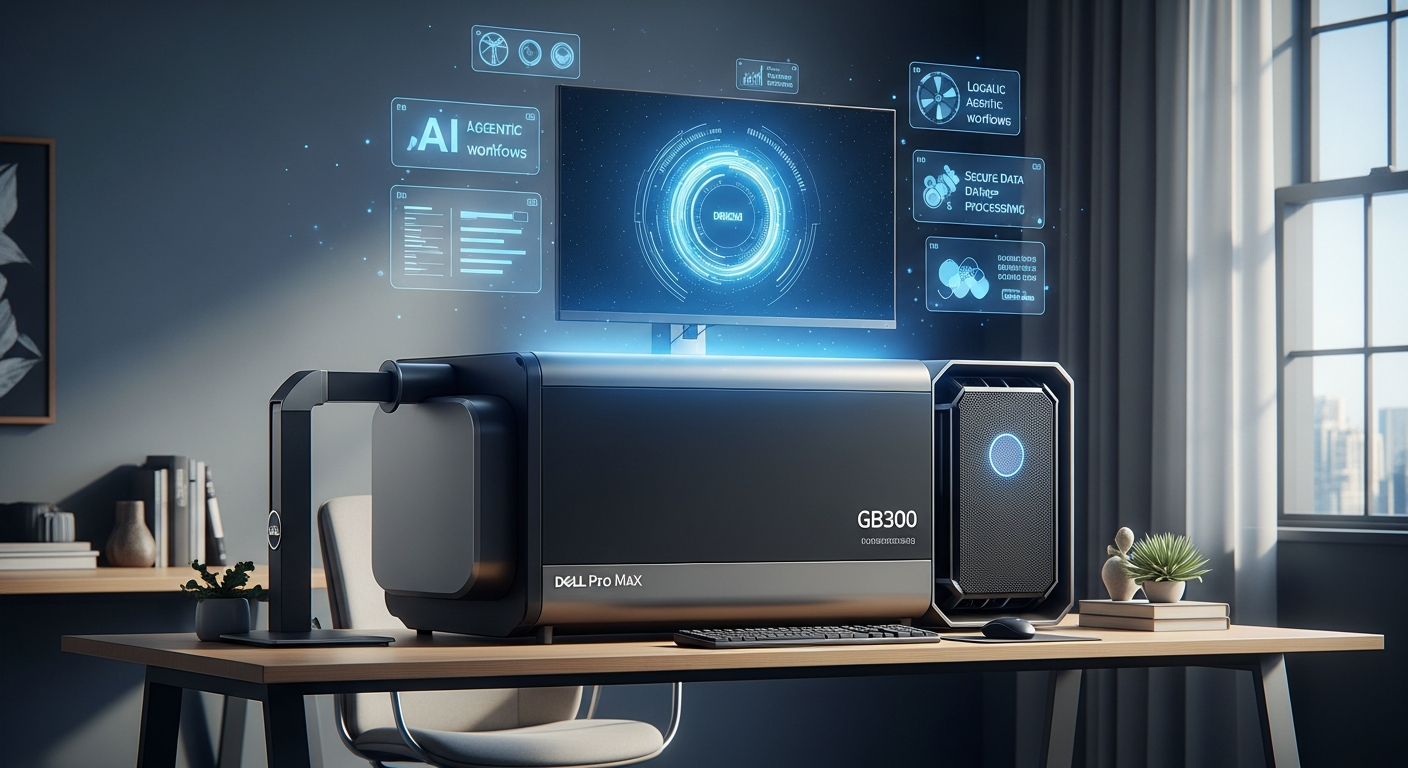
The hardware lineup for this initiative is formidable. It ranges from small form factor systems like the Dell Pro Max with GB10 to the absolute pinnacle of workstation computing: the Dell Pro Max with GB300. The GB300, essentially a localized DGX Station, represents the absolute limit of what can be powered by a standard North American electrical circuit. These machines are not designed for casual computing; they are localized AI factories built to run massive, unquantized models with zero latency.
The software stack powering this localized revolution is heavily reliant on NVIDIA’s ecosystem. Dell has implemented a stack based around NVIDIA’s NemoClaw, integrating the OpenShell runtime with advanced Nemotron models. This allows users to run complex, multi-step agentic workflows—such as automated code generation, deep scientific research, and localized financial modeling—entirely on their local machine.
The implications for data privacy and corporate security are profound. By running agentic AI locally, sensitive intellectual property, legal documents, and proprietary source code never traverse the public internet. Furthermore, it completely insulates the user from the unpredictable latency spikes and API rate limits that frequently plague cloud-based AI services. Dell is betting heavily that the future of enterprise productivity lies in giving every power user their own, sovereign AI agent, securely confined within the physical walls of the office.
The Future of the Dell AI Factory
The announcements at Dell Technologies World 2026 paint a clear picture of the next decade of enterprise computing. The initial gold rush of generative AI was defined by cloud hyperscalers renting out access to massive, centralized clusters. The next phase—the era of agentic, continuous AI—will be defined by decentralization, sovereignty, and extreme hardware optimization.
Dell’s strategy is comprehensive. By controlling the entire stack—from the 220kW liquid-cooled data center racks to the GB300-powered deskside workstations—Dell is positioning itself not just as an OEM, but as the primary architect of the sovereign AI revolution. The integration of NVIDIA’s Vera Rubin architecture, combined with the massive 800Tb/sec networking fabrics and exascale storage solutions, proves that on-premises infrastructure can now match, and in terms of cost-per-token, exceed the capabilities of the public cloud.
As enterprises awaken to the financial realities of continuous AI workloads, the demand for predictable, secure, and highly optimized local infrastructure will only accelerate. Dell’s 2026 masterplan is a bold declaration that the data center is not dead; it has simply been waiting for the right workload to bring it back to the center of the technological universe.
TechNode HQ Verdict: Pros, Cons & Usability
- Pro (Engineering): The PowerCool CDU C7000’s ability to dissipate 220kW of heat using 40°C warm water intake is a monumental achievement in thermal management, enabling unprecedented GPU density.
- Pro (Consumer): Deskside Agentic AI workstations completely eliminate cloud API latency and ensure absolute data privacy for sensitive corporate workflows.
- Con: The claimed 6.5-hour deployment time for a PowerRack is highly optimistic and ignores the massive facility upgrades (power delivery, structural floor reinforcement) required for 220kW racks.
- Con: The notable absence of Anthropic from Dell’s frontier model partnership list limits options for enterprises heavily invested in the Claude ecosystem.
Enterprise Usability: For CTOs managing continuous, high-volume AI inference workloads, the transition to Dell’s PowerRack infrastructure is a financial necessity. The 10x reduction in cost-per-token will quickly offset the massive initial CapEx, provided the enterprise has the physical facility capable of supporting the extreme power and liquid cooling requirements.
Everyday Usability: For individual developers, researchers, and creative professionals, the Dell Pro Max with GB300 represents the ultimate localized workstation. If your daily workflows involve sensitive data or require continuous, unmetered access to agentic AI models, investing in localized hardware is now a superior alternative to paying perpetual cloud subscription fees.