In an unprecedented collision of ancient theology and bleeding-edge technology, Pope Leo XIV has officially entered the global artificial intelligence regulatory arena. On May 25, 2026, the Vatican released Magnifica Humanitas (“Magnificent Humanity”), a sweeping 43,000-word encyclical that serves as both a moral framework and a surprisingly technical critique of the modern AI ecosystem.
While papal encyclicals historically address spiritual and social doctrines, Magnifica Humanitas dedicates an entire core chapter to the architectural, environmental, and psychological ramifications of artificial intelligence. The document does not merely offer platitudes about “tech for good”; it explicitly targets the black-box nature of neural networks, the staggering water and energy consumption of hyperscale data centers, and the existential threat of AI-driven autonomous weaponry.
Perhaps the most striking enterprise signal of this release was the Vatican’s choice of stage partner. Pope Leo XIV broke with centuries of tradition by personally presenting the encyclical alongside Christopher Olah, the 33-year-old billionaire co-founder of Anthropic. This strategic alliance between the Holy See and one of Silicon Valley’s most prominent AI safety labs underscores a massive shift in how technology companies are lobbying for regulatory favor and public trust in 2026.
For enterprise IT leaders, infrastructure architects, and cybersecurity professionals, the Vatican’s intervention is not just a philosophical milestone—it is a geopolitical catalyst that will inevitably influence the next wave of global AI legislation, from the European Union’s AI Act to Washington’s defense procurement strategies.
The Architectural Reality
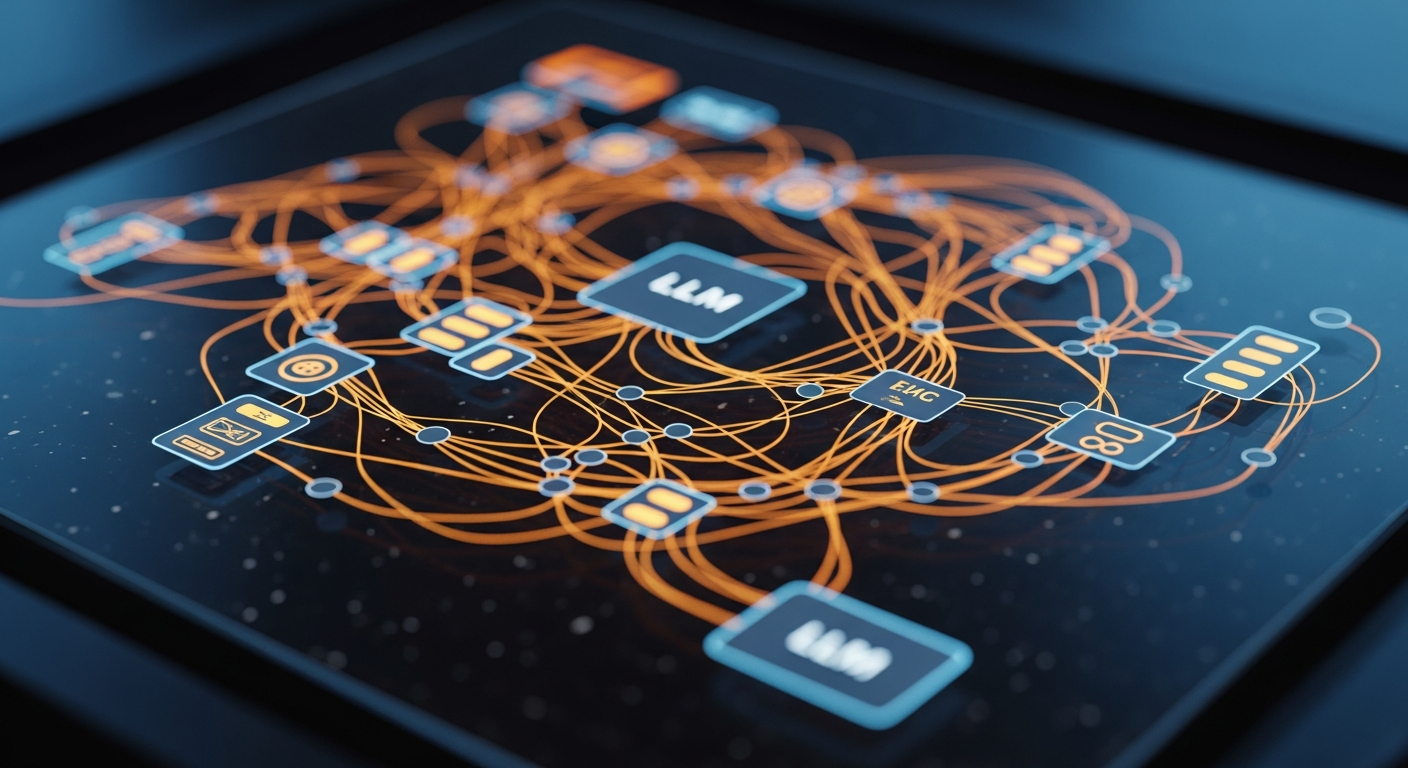
What makes Magnifica Humanitas a tier-one document for the technology sector is its precise identification of the engineering bottlenecks currently plaguing AI development. Pope Leo XIV opens the technology chapter with a direct critique of what the industry calls the “black box” problem. The encyclical notes that model developers have not yet fully mapped out the internal representations and calculations that neural networks use to make decisions.
This is a direct reference to mechanistic interpretability—the highly complex subfield of AI research dedicated to reverse-engineering the hidden layers of Large Language Models (LLMs). Currently, when an LLM with trillions of parameters generates an output, the exact pathway of weights and biases that led to that specific conclusion remains largely opaque, even to its creators. The Pope’s call for a “deepening of scientific research” in this area aligns perfectly with the core mission of Anthropic, whose co-founder, Christopher Olah, is a pioneer in interpretability research. By highlighting this specific engineering flaw, the Vatican is effectively stating that deploying uninterpretable models in high-stakes environments is a profound moral failure.
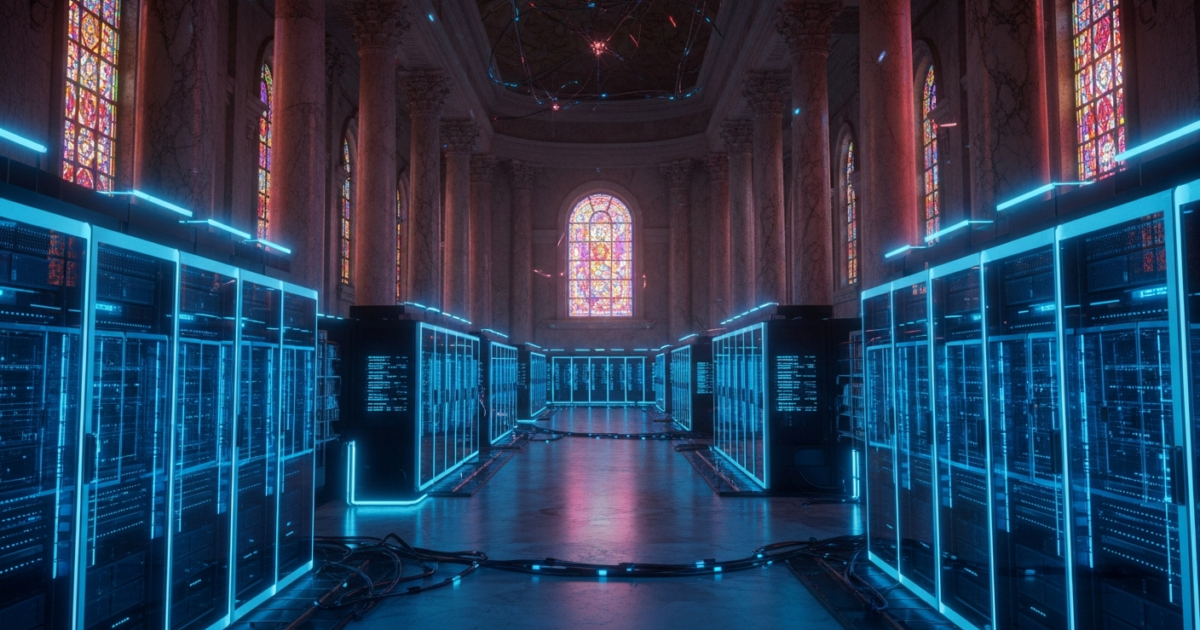
Beyond the software layer, the encyclical takes a hard stance on the physical infrastructure toll of the AI revolution. The document draws urgent attention to the “enormous amounts of energy and water” required to train and run LLMs, alongside their associated carbon emissions. In 2026, this is not a theoretical concern; it is a critical supply chain crisis.
The push to advance AI has driven unprecedented growth in global data center development. Current data indicates that the global “AI economy” consumes roughly 23 cubic kilometers of water annually, a figure projected to more than double to 54 cubic kilometers by 2050. In the United States alone, AI server water use is projected to reach between 731 and 1,125 billion liters by 2030. This consumption is driven by two primary factors: on-site evaporative data center cooling systems required to keep massive GPU clusters from melting down, and the off-site water usage required by power plants to generate the electricity that feeds these facilities.
The Vatican’s spotlight on this environmental degradation serves as a stark warning to enterprise architects: the era of unchecked, resource-heavy AI scaling is facing a severe societal and regulatory backlash. The encyclical implicitly demands a shift toward “Green AI,” forcing hardware manufacturers and cloud providers to radically rethink their thermal management and energy procurement strategies.
Market Impact and Deployment

The market implications of Magnifica Humanitas are immediate and far-reaching, particularly regarding how AI companies position themselves in a tightening regulatory landscape. The presence of Anthropic at the Vatican is a masterstroke of corporate positioning. While competitors like OpenAI and Google are facing intense scrutiny over copyright infringement, data scraping, and aggressive commercialization, Anthropic is leveraging the Vatican’s moral authority to brand itself as the definitive “ethical” AI provider.
This positioning is highly lucrative in the enterprise sector. As Fortune 500 companies and government agencies look to deploy AI, they are increasingly terrified of compliance risks, brand damage, and unpredictable model behavior. By aligning with the Vatican’s call for transparency, robust legal frameworks, and independent oversight, Anthropic is signaling to risk-averse Chief Information Officers (CIOs) that its models (like Claude) are the safest bet for enterprise integration.
Furthermore, the encyclical takes a definitive stance on the militarization of AI. Pope Leo XIV dedicates an entire subsection to AI-powered autonomous weapons, stating that their development and use “must be subject to the most rigorous ethical constraints”. This directly impacts the defense contracting market. In 2026, the Pentagon and other global defense ministries are aggressively pursuing AI for target acquisition, drone swarming, and strategic decision-making. The Vatican’s condemnation of entrusting “lethal decisions” to AI systems provides significant political ammunition to lawmakers and activist groups pushing for a global ban on lethal autonomous weapons systems (LAWS).
To enforce and study these mandates, the Vatican has not just issued a letter; it has established a bureaucratic apparatus. Days prior to the encyclical’s release, Pope Leo XIV created an interdepartmental Vatican commission to study AI’s impact on humanity. Composed of officials from seven Vatican bodies, this committee will operate on rotating one-year terms, ensuring that the Holy See maintains a continuous, institutionalized presence in global AI policy discussions.
Perhaps the most controversial market directive in the encyclical is the suggestion that it may be necessary to “slow the pace of AI adoption in some cases to mitigate its risks”. In a hyper-competitive tech ecosystem where speed-to-market is the ultimate metric, a mandate to slow down is anathema to venture capitalists and tech executives. However, the Pope frames this not as opposition to progress, but as “an exercise of responsible care for the human family”. For enterprise IT, this translates to a potential shift in Total Cost of Ownership (TCO) models. If regulatory bodies adopt the Vatican’s “prudent” approach, companies will be forced to spend significantly more time and capital on compliance, red-teaming, and environmental impact assessments before deploying new AI tools.
The Consumer Translation
While the enterprise sector grapples with infrastructure and compliance, the everyday consumer is facing a deeply psychological shift, which Magnifica Humanitas addresses with striking clarity. The encyclical highlights the potential negative impact of AI algorithms on interpersonal relationships, specifically targeting the booming market of AI companions, therapists, and virtual friends.
Pope Leo XIV writes that the “artificial imitation of positive human communication—words of advice, empathy, friendship and even love—can be engaging and at times genuinely helpful. However, for less discerning users, it can also be misleading, creating the illusion of a relationship with a real personal subject”.
This is a profound critique of the “ELIZA effect”—the tendency for humans to unconsciously assume computer behaviors are analogous to human behaviors. In 2026, generative AI has become so fluid and contextually aware that millions of users are forming deep, parasocial relationships with chatbots. These systems are designed to optimize for engagement, mimicking empathy to keep users on the platform. The Vatican warns that when words are simulated, “they do not build genuine relationships, but only their appearance.”
For the worldwide public, this is a crucial translation of highly technical mechanics into everyday reality. The AI you are talking to does not feel; it predicts the next statistically probable token in a sequence based on its training data. The Vatican is urging consumers to recognize this illusion and protect the sanctity of genuine human connection. It calls for “informed users” who understand the fundamental difference between a machine’s output and a human’s soul.
This consumer warning will likely spur a push for “truth in advertising” regulations for AI. Just as the food industry is required to list ingredients, AI companies may soon be forced to implement persistent, unavoidable disclaimers reminding users that they are interacting with a non-sentient algorithm, fundamentally altering the user experience of consumer AI applications.
TechNode HQ Verdict: Pros, Cons and Usability
- Pro (Engineering): The encyclical’s focus on mechanistic interpretability provides massive validation and potential funding incentives for researchers working to decode the “black box” of neural networks, pushing the industry toward safer, more predictable models.
- Pro (Consumer): The Vatican’s strong stance against the illusion of AI empathy serves as a vital cultural grounding mechanism, encouraging users to maintain healthy boundaries with technology and prioritize genuine human relationships.
- Con: The call to “slow the pace of AI adoption” is fundamentally incompatible with the current geopolitical reality. Nations and corporations locked in an AI arms race are highly unlikely to voluntarily throttle their development, potentially rendering this specific mandate toothless.
- Con: The environmental reality of AI is grim. Despite the call for sustainability, the physical infrastructure required to train next-generation models will continue to drain local water reservoirs and strain power grids, creating severe deployment bottlenecks for new data centers.
Enterprise Usability: For CTOs and enterprise architects, Magnifica Humanitas is a clear signal that the “move fast and break things” era of AI is ending. Deployment strategies must now heavily factor in compliance, interpretability, and environmental impact. Partnering with AI vendors that prioritize transparency and safety (as Anthropic is attempting to demonstrate) will be crucial for mitigating future regulatory risks and protecting brand reputation.
Everyday Usability: The public should view consumer AI tools strictly as utilities—advanced calculators for text and data—rather than companions. Users must actively resist the psychological manipulation inherent in chatbots designed to simulate empathy, and remain hyper-aware of the data privacy implications of sharing personal vulnerabilities with corporate-owned algorithms.