The Architectural Reality: When Silicon Outpaces Physics
In the relentless pursuit of technological supremacy, even the most formidable titans occasionally hit a wall built not of market forces, but of fundamental physics. For Apple, that wall weighs exactly 1.3 pounds and costs $3,499 [1]. After failing to reignite consumer and enterprise interest with the late October 2025 release of the M5-powered Vision Pro, mounting reports indicate that Apple is effectively sunsetting its most ambitious hardware project in a decade [1]. The era of the heavy, isolated Spatial Computing headset is drawing to a close, making way for a leaner, AI-driven future.
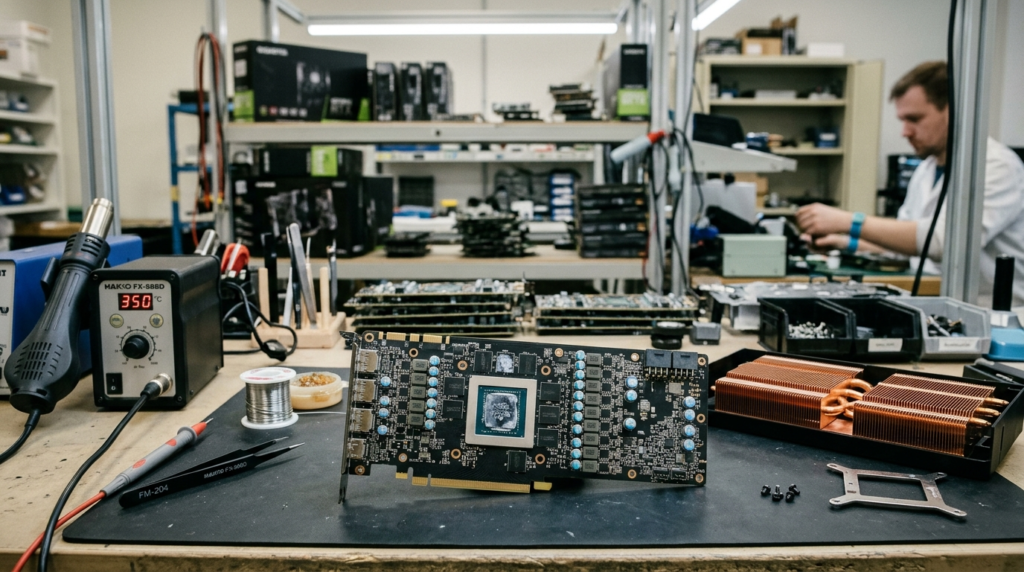
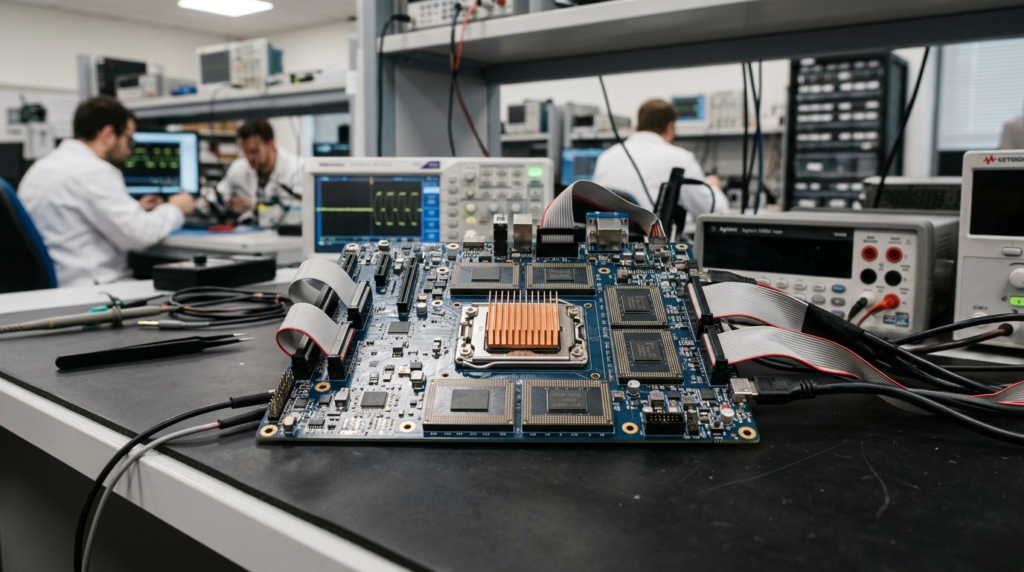
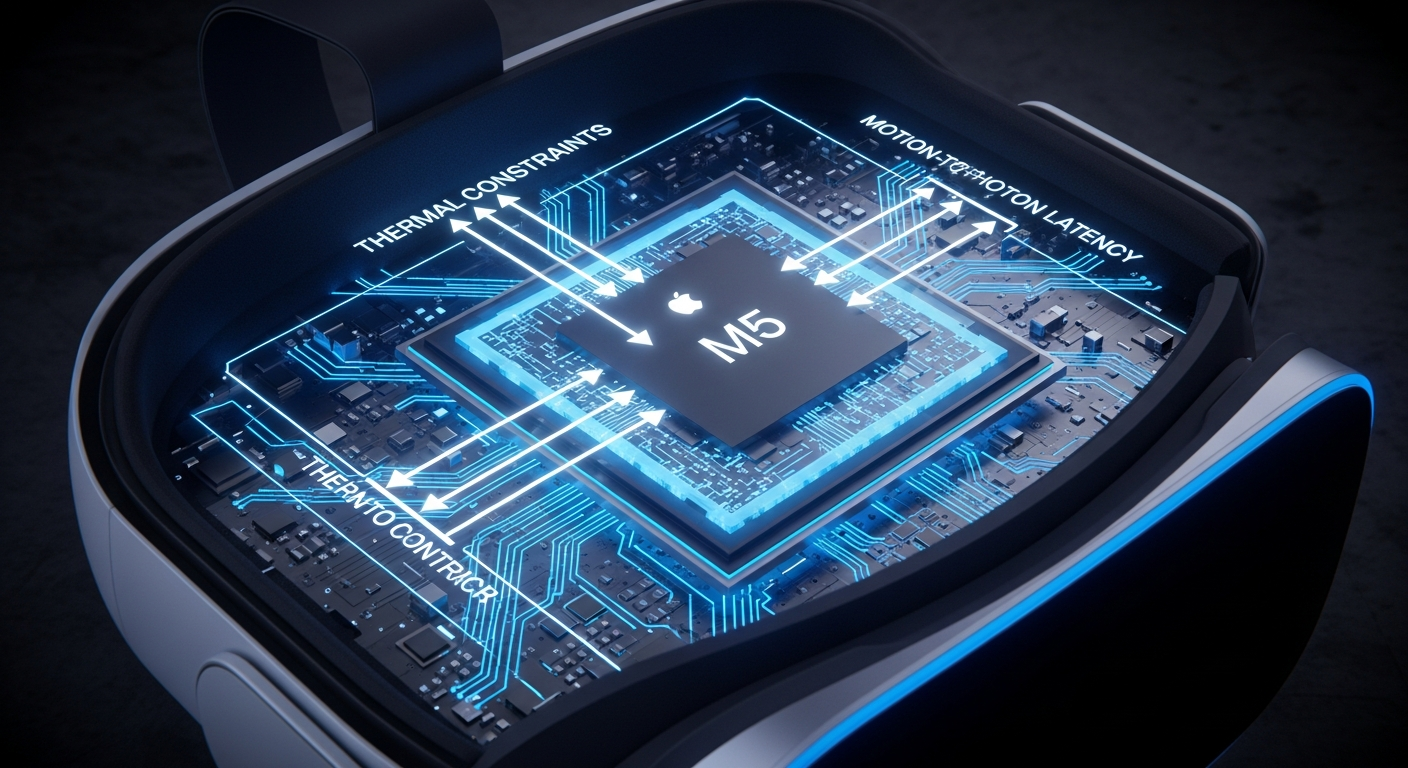
To understand the purported demise of the Vision Pro, one must first dissect the engineering marvel—and ultimate trap—of the M5 refresh. Launched in late 2025, the updated headset was a masterclass in silicon engineering. The integration of the M5 chip delivered a blistering 120Hz refresh rate and a 10% increase in rendered pixels, pushing the dual micro-OLED displays to the absolute bleeding edge of visual fidelity [1]. Apple even redesigned the headband, adding an upper strap in a desperate bid to distribute the device’s cumbersome weight [1].
Yet, these iterative upgrades failed to solve the core architectural paradox of the device. Housing a desktop-class silicon chip, active cooling fans, and dense optical arrays on a user’s face creates an insurmountable ergonomic bottleneck. At 1.3 pounds, the Vision Pro is noticeably heavier than its direct competitors; the Meta Quest 3 weighs in at 1.1 pounds, and the Samsung Galaxy XR sits at 1.2 pounds [2]. In the realm of head-mounted displays, mere ounces dictate the difference between immersive utility and physical exhaustion. Furthermore, the headset failed to resolve the vergence-accommodation conflict—a persistent optical issue in VR where the distance the eyes focus on a screen mismatches the simulated distance of the virtual objects, leading to eye strain during prolonged use [3].
Despite generating over $2 billion in gross hardware revenue from approximately 600,000 units sold since its initial February 2024 launch, the Vision Pro is widely considered a commercial failure by Apple’s astronomical standards [1]. The company, which moves hundreds of millions of iPhones annually, reportedly experienced an unusually high percentage of returns for the headset, far exceeding any other modern Apple product [1]. The hardware was flawless in its execution, but deeply flawed in its conception.
The Leadership Shift: John Ternus and the Engineering-First Mandate
The pivot away from the Vision Pro cannot be fully understood without examining the seismic leadership changes currently underway in Cupertino. On April 20, 2026, Apple announced that John Ternus, the Senior Vice President of Hardware Engineering, will succeed Tim Cook as CEO on September 1, 2026 [4]. Ternus is a mechanical engineer by trade—a University of Pennsylvania graduate who began his career designing virtual reality headsets at Virtual Research Systems before joining Apple in 2001 [5].
Ternus’s ascension marks a critical shift from Cook’s operations-driven strategy to a product- and engineering-first model [6]. According to Bloomberg’s Mark Gurman, Ternus has historically held a firm stance against the Vision Pro as a viable mass-market product [1]. His engineering pragmatism seems to have catalyzed the dismantling of the Vision Products Group. In early 2025, Apple reportedly broke up the dedicated Vision team, reassigning the bulk of its software engineers to Siri and its hardware engineers to the development of lightweight smart glasses [1].
This reallocation of talent is a strategic masterstroke disguised as a retreat. Ternus, who famously spearheaded the Mac’s highly successful transition from Intel to proprietary Apple Silicon, understands that the future of Apple lies in Private AI [6]. By moving the Vision Pro’s software team to Siri, Apple is injecting advanced spatial awareness and contextual processing into its core AI assistant. The goal is no longer to trap the user in a virtual world, but to overlay intelligent, privacy-centric AI onto the real world via unobtrusive hardware.
Market Impact & Deployment: The Enterprise ROI Failure
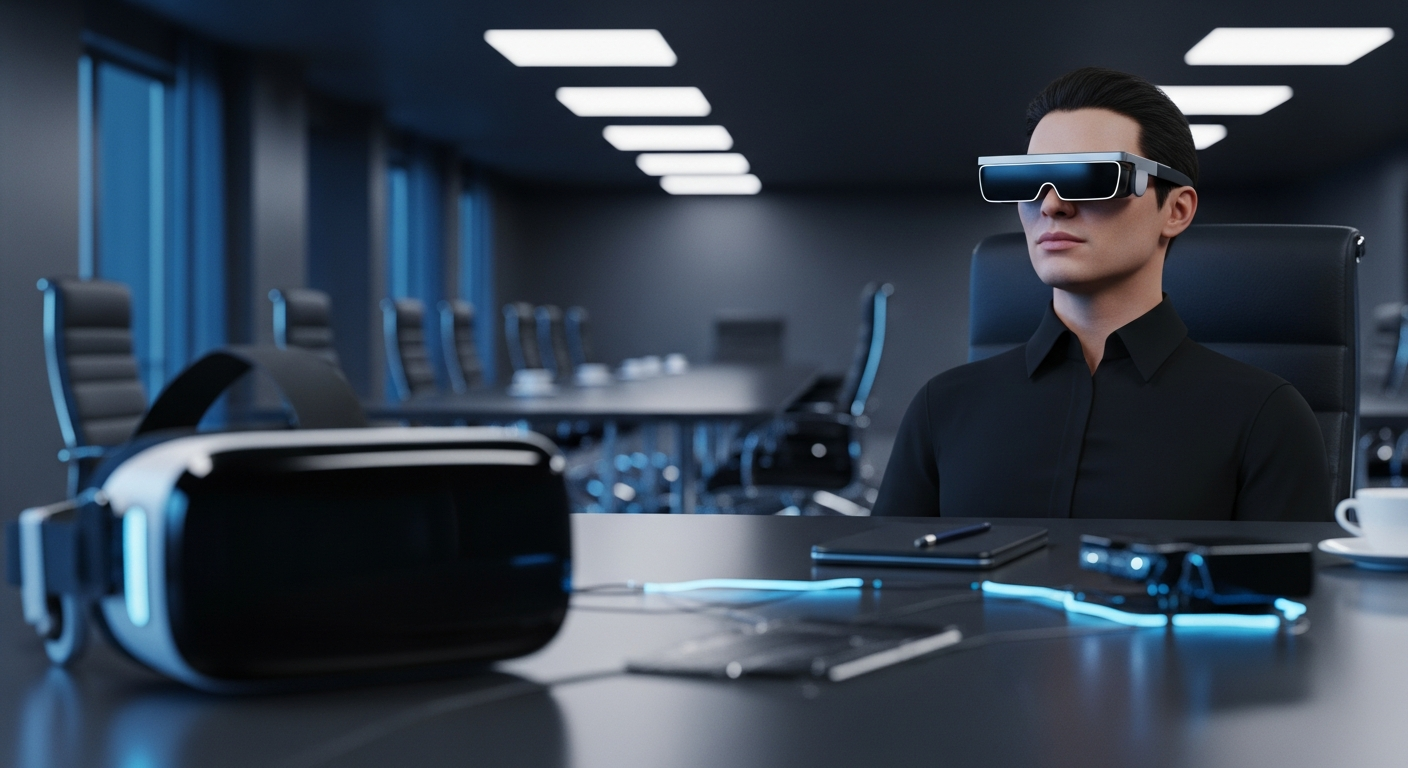
From an Enterprise IT perspective, the Vision Pro was always a difficult deployment to justify. When Apple initially pitched the device, it leaned heavily into productivity and virtual collaboration. However, the Total Cost of Ownership (TCO) for a fleet of $3,499 headsets is staggering, especially when factored against the actual utility provided.
Chief Technology Officers and IT procurement heads quickly realized that the Vision Pro offered no tangible advantage for standard corporate communications that couldn’t be achieved via a significantly cheaper webcam on a Microsoft Teams or Zoom call. The friction of donning a 1.3-pound headset, managing its external battery pack, and navigating a closed ecosystem (often described by users as being locked down like an iPad rather than open like a Mac) made it a non-starter for daily enterprise workflows [3].
Furthermore, the developer ecosystem failed to materialize. While the hardware provided a pristine canvas, major software players like Netflix, YouTube, and Spotify famously balked at creating dedicated native apps for the platform [7]. Without a “killer app” to drive enterprise adoption—such as a revolutionary 3D CAD modeling suite or a universally adopted virtual boardroom—the Vision Pro was relegated to the status of a high-priced executive toy rather than a foundational IT asset.
The Consumer Translation: Salvaging the IP
So, what does this mean for the everyday consumer? Has Apple truly “given up” on spatial computing? The short answer is no; they are simply changing the delivery mechanism.
While the dedicated Vision Pro headset may be winding down, the underlying intellectual property is actively being salvaged and integrated into Apple’s broader ecosystem. Recent job board postings confirm that Apple is aggressively hiring to expand VisionOS technology to iOS and macOS [1]. One specific posting noted that technology originally developed to help VisionOS achieve its critical Motion-to-Photon Latency targets is now being ported to iPhones and Macs [1].
Motion-to-photon latency—the time it takes for a user’s physical movement to be reflected on a display—is the holy grail of AR and VR. By bringing this ultra-low latency tracking to the iPhone and Mac, Apple is laying the groundwork for a robust Augmented Reality ecosystem that doesn’t require a $3,500 ski mask. Consumers can expect future iPhones to possess unprecedented spatial awareness, capable of mapping rooms, tracking objects, and rendering AR overlays with zero perceptible lag.
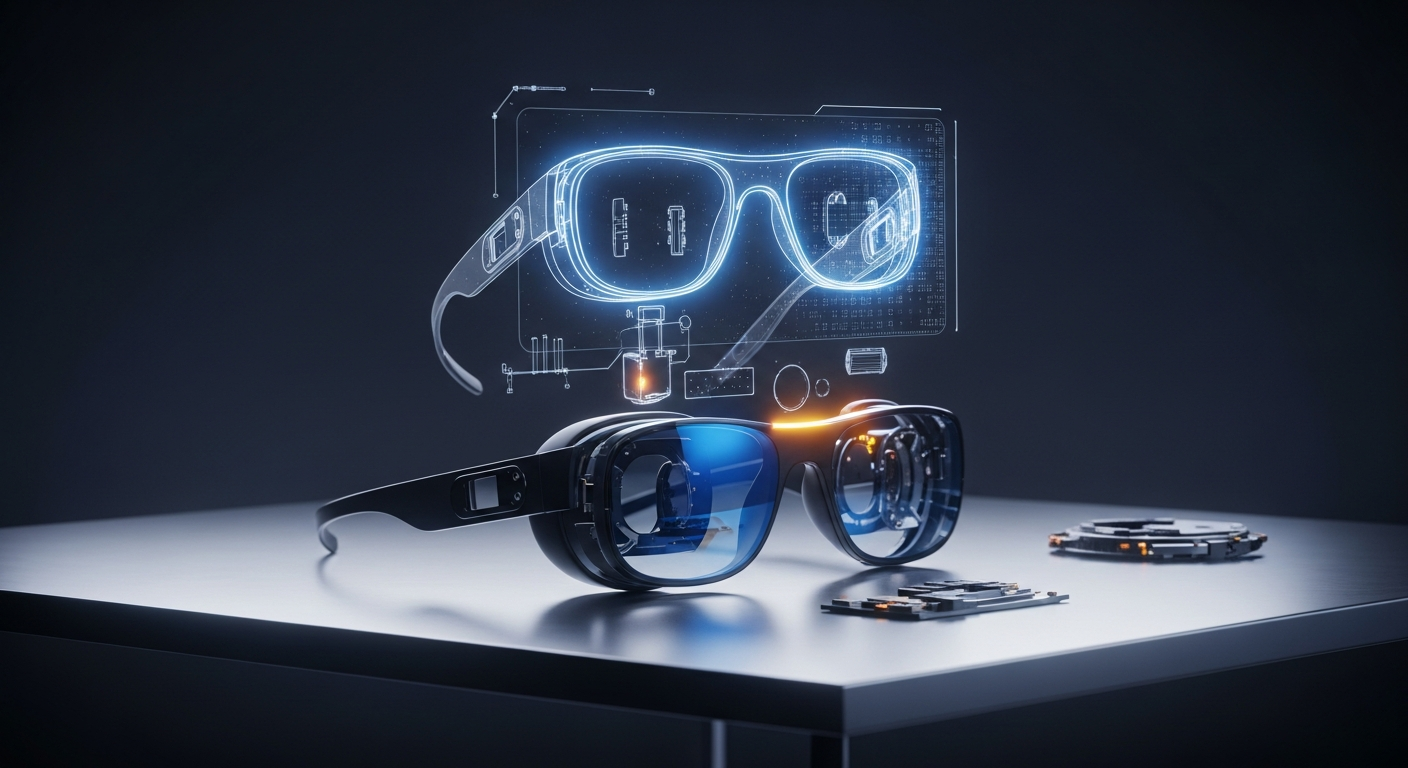
Ultimately, the death of the Vision Pro paves the way for Apple’s true endgame: smart glasses. By shedding the heavy micro-OLED displays and desktop-class processors, Apple’s hardware teams are now freed to focus on a lightweight, streamlined AR wearable. These future glasses will likely act as a passive display, offloading the heavy computational lifting to the iPhone in the user’s pocket, seamlessly integrated with a newly supercharged, spatially-aware Siri.
TechNode HQ Verdict: Pros, Cons & Usability
- Pro (Engineering): The M5 chip’s ability to drive dual micro-OLED displays at 120Hz with near-zero motion-to-photon latency remains an unmatched feat of silicon engineering.
- Pro (Consumer): The cannibalization of VisionOS IP means everyday consumers will soon see massive upgrades to AR capabilities and spatial awareness natively integrated into standard iPhones and Macs.
- Con: The insurmountable physical bottleneck of a 1.3-pound headset caused severe ergonomic issues, including neck strain and the unaddressed vergence-accommodation conflict.
- Con: At $3,499, the Total Cost of Ownership for enterprise deployment was impossible to justify without a native suite of killer productivity applications.
Enterprise Usability: For CTOs and IT managers, the Vision Pro should be officially classified as end-of-life experimental hardware. Do not allocate budget for fleet deployments. Instead, redirect enterprise hardware investments toward the upcoming M-series Mac refreshes and prepare infrastructure for Apple’s impending “Private AI” integrations under John Ternus’s new leadership.
Everyday Usability: The public should absolutely avoid purchasing the Vision Pro at this stage. It is a first-generation prototype that has reached a developmental dead end. Consumers interested in Apple’s spatial computing vision should wait for the heavily rumored lightweight smart glasses, which will offer a fraction of the weight and a significantly lower barrier to entry.
Sources & Citations:
[1] Original Claim via: tomshardware
[2] Meta Quest 3 and Samsung Galaxy XR weight comparisons via inkl / TechRadar industry reports.
[3] Vergence-accommodation conflict and user ecosystem feedback via r/virtualreality.
[4] John Ternus CEO announcement via The Daily Pennsylvanian & TradingKey.
[5] John Ternus engineering background via Wikipedia & CNA.
[6] Apple Silicon and Private AI strategy via TradingKey.
[7] Developer ecosystem adoption rates via Tom’s Hardware.
Official Handle: @tomshardware
Topics Explored: Apple Vision Pro, Spatial Computing, Apple M5 Chip, Smart Glasses, John Ternus