
The Architectural Reality
In the unforgiving landscape of modern enterprise infrastructure, a single oversight can unravel millions of dollars in perimeter defenses. On May 20, 2026, Grafana Labs—the powerhouse behind the industry-standard open-source analytics and visualization platform—confirmed a sobering reality: their recent source code breach was not the result of a sophisticated zero-day exploit against their core architecture, but rather a catastrophic failure in basic cryptographic hygiene. A single GitHub workflow token, missed during an emergency rotation protocol, handed threat actors the keys to the kingdom.
To understand the gravity of this breach, we must dissect the anatomy of the initial vector. The incident did not begin with Grafana; it began upstream on May 11, 2026, with a highly coordinated supply-chain attack against TanStack, a widely utilized open-source framework for building web applications. Between 19:20 and 19:26 UTC, a financially motivated threat cluster known as TeamPCP executed a masterclass in pipeline exploitation. They published 84 malicious versions across 42 @tanstack/* npm packages.
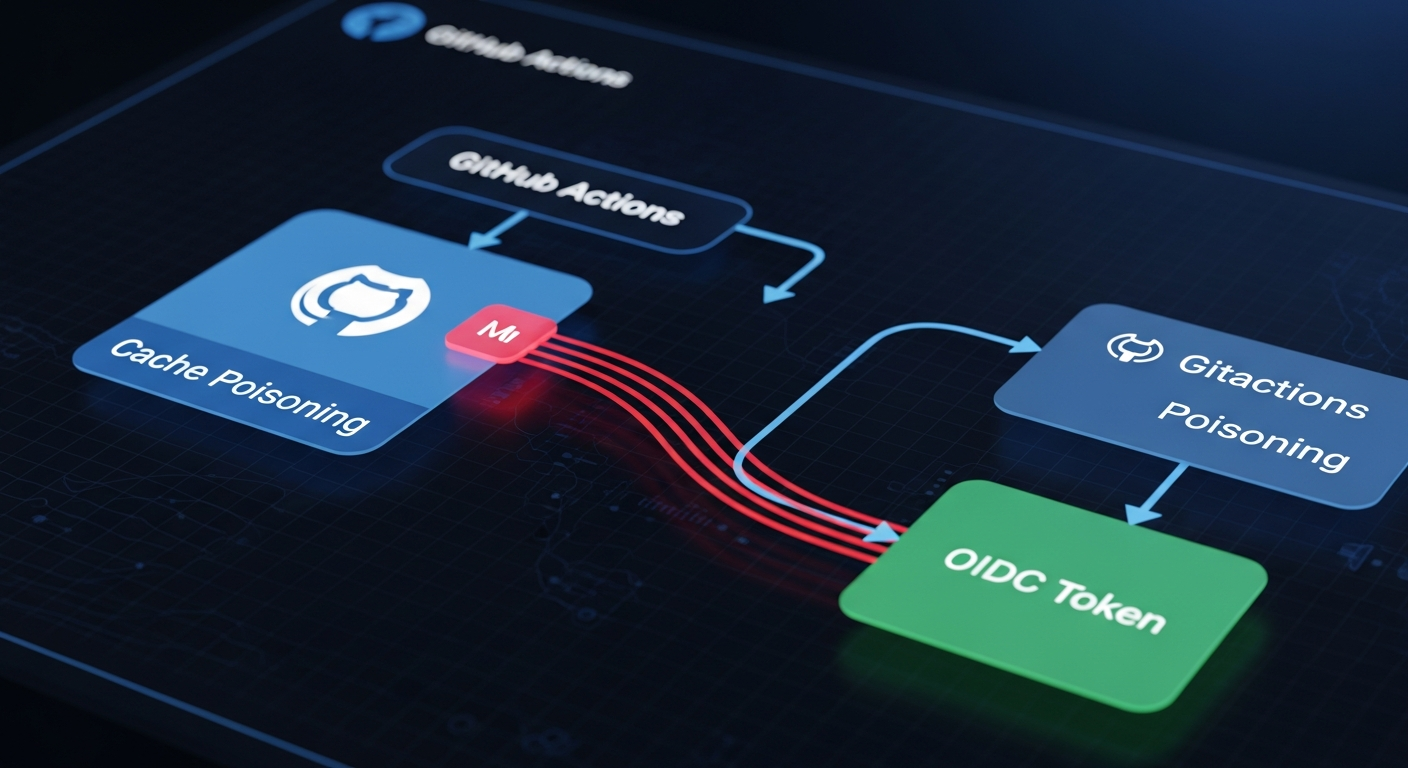
The mechanics of this compromise represent a paradigm shift in how we view the CI/CD pipeline. TeamPCP did not steal npm credentials directly. Instead, they weaponized the continuous integration environment itself. By creating a renamed fork of the TanStack Router repository and opening a seemingly innocuous pull request, the attackers triggered a pull_request_target workflow. This allowed them to execute GitHub Actions cache poisoning across the fork-to-base trust boundary. Once the poisoned cache was restored during legitimate release workflows, the attackers achieved runtime memory extraction of an OIDC token directly from the GitHub Actions runner process.
This is where Grafana entered the blast radius. When the malicious TanStack npm package was published, Grafana’s automated CI/CD workflows consumed it as a standard dependency update. Upon execution of the npm install command, the package resolved a malicious optionalDependencies entry, fetching an orphaned payload commit that executed a 2.3MB obfuscated JavaScript file known as the Mini Shai-Hulud worm. This payload is a potent, self-propagating credential stealer designed to harvest tokens from AWS, GCP, Kubernetes, HashiCorp Vault, and GitHub.
Grafana’s internal security telemetry detected the malicious activity on May 11, prompting an immediate incident response protocol. The security team initiated a mass rotation of GitHub workflow tokens to sever the attackers’ access. However, in the chaotic fog of incident response, one token was missed. This orphaned credential, still possessing valid authorization, allowed TeamPCP to bypass all external security controls and seamlessly access Grafana’s private GitHub repositories.
The architectural lesson here is brutal: manual or semi-automated secrets management is fundamentally incompatible with the speed and scale of modern CI/CD environments. If an organization cannot deterministically inventory, revoke, and reissue 100% of its cryptographic tokens within seconds, it is operating under a false sense of security. The Mini Shai-Hulud campaign achieved a critical security first by compromising packages with valid SLSA (Supply-chain Levels for Software Artifacts) Build Level 3 provenance attestations, proving that process integrity controls can be entirely defeated by runtime memory extraction.
Market Impact & Deployment

The fallout from the missed token at Grafana is merely one chapter in a much larger, industry-wide crisis. The Mini Shai-Hulud worm did not discriminate. Because the malware was designed to self-propagate by backdooring every npm package the victim had write access to, the infection spread exponentially. By the end of May 11, the compromise had expanded to over 160 npm and PyPI packages, affecting an estimated 518 million cumulative downloads.
The blast radius engulfed Tier-1 technology companies. OpenAI was forced to isolate systems, revoke user sessions, and rotate credentials after discovering the malware had compromised internal source code repositories containing signing certificates for their iOS, macOS, and Windows products. Mistral AI, UiPath, and OpenSearch were similarly breached, forcing a frantic, industry-wide credential rotation effort.
For Grafana, the missed token resulted in the exfiltration of their proprietary source code, internal operational information, and business contact names and email addresses. On May 16, 2026, TeamPCP issued an extortion demand, threatening to leak the stolen codebase. Grafana, adhering to FBI guidance and recognizing that paying a ransom offers zero guarantee of data destruction, rightfully refused the demand. While Grafana has assured the public that no customer production systems or Grafana Cloud platforms were compromised, and that the codebase itself was not maliciously modified, the theft of source code provides threat actors with a pristine roadmap to hunt for future zero-day vulnerabilities.
The market impact escalated dramatically on May 12, 2026, when TeamPCP open-sourced the Shai-Hulud 3.0 offensive framework. Publishing the modular TypeScript/Bun toolkit on GitHub under an MIT License, the threat actors released the exact mechanisms for CI cache-poisoning, OIDC token extraction, and encrypted data exfiltration. To pour gasoline on the fire, they launched a $1,000 Monero contest on a BreachForums clone, challenging affiliates to conduct the largest supply chain attack using their code.
This transforms the threat landscape from a targeted campaign by a single actor into a decentralized, platform-based operation. The Total Cost of Ownership (TCO) for enterprise software development has now permanently increased. Chief Information Security Officers (CISOs) can no longer rely on static vulnerability scanners or basic software composition analysis (SCA) tools. The deployment of dynamic, ephemeral credentialing systems, isolated runner environments, and runtime memory protection within CI/CD pipelines is no longer optional—it is a baseline requirement for survival.
The Consumer Translation
For the everyday consumer, the intricacies of GitHub Actions, npm registries, and OIDC tokens are entirely abstracted. However, the consequences of the Grafana breach and the broader Mini Shai-Hulud campaign will inevitably ripple down to the public in highly tangible ways.
First, consider the theft of Grafana’s business contact information. While this is not consumer production data, it includes the names and email addresses of enterprise clients who use Grafana to monitor their own critical infrastructure. This data is pure gold for spear-phishing campaigns. If a threat actor can successfully impersonate a Grafana engineer and trick a downstream client into installing a “security patch,” the resulting breach could compromise the very services consumers rely on daily—from banking applications to healthcare portals.
Second, the compromise of signing certificates at companies like OpenAI highlights a terrifying reality for end-users. Signing certificates are the digital wax seals that tell your operating system (like macOS or Windows) that an application update is legitimate and safe to install. When these certificates are exposed to threat actors, the fundamental trust mechanism of software updates is broken. Consumers could be tricked into downloading malicious updates that their devices inherently trust, leading to silent, devastating compromises of personal data.
Finally, the open-sourcing of the Shai-Hulud worm means that the barrier to entry for conducting catastrophic supply chain attacks has dropped to zero. We are entering an era where copycat hackers, armed with enterprise-grade offensive frameworks, will target smaller, less secure open-source projects. These projects often serve as the hidden building blocks for consumer applications. The abstraction of enterprise risk is fading; the fragility of the software supply chain is now a direct threat to consumer privacy and digital safety.
TechNode HQ Verdict: Pros, Cons & Usability
- Pro (Engineering): The incident has forced a rapid, industry-wide maturation of CI/CD security, accelerating the adoption of ephemeral, short-lived credentials and stricter fork-to-base trust boundary enforcements in GitHub Actions.
- Pro (Consumer): The transparency from companies like Grafana and OpenAI in disclosing these breaches allows the broader cybersecurity community to build better defensive tools, ultimately resulting in more resilient consumer software over the long term.
- Con: The defeat of SLSA Build Level 3 provenance attestations reveals a massive blind spot in current process integrity controls, proving that cryptographic signatures cannot protect against runtime memory extraction.
- Con: The open-sourcing of the Shai-Hulud 3.0 framework guarantees an incoming tsunami of highly sophisticated, decentralized supply chain attacks that most mid-market companies are entirely unequipped to defend against.
Enterprise Usability: For CTOs and infrastructure leaders, the immediate directive is clear: audit your CI/CD pipelines today. Transition entirely to ephemeral OIDC tokens, eliminate long-lived static credentials, and implement strict network isolation for your GitHub Actions runners. Furthermore, assume breach. Your incident response plan must include automated, deterministic token revocation that does not rely on human memory or manual spreadsheets. If you are using TanStack or any of the 160+ compromised packages, treat your environment as fully compromised until a forensic audit proves otherwise.
Everyday Usability: For the general public, no immediate action is required regarding Grafana, as their codebase was not modified and customer production systems remain secure. However, users of OpenAI applications (particularly on macOS) must ensure they have updated their software past the June 12, 2026 deadline to invalidate any potentially compromised signing certificates. Moving forward, consumers must remain hyper-vigilant against highly targeted phishing emails that masquerade as urgent software updates or vendor communications.
Sources & Citations:
Original Claim via: bleepingcomputer
Official Handle: @bleepingcomputer
Topics Explored: Grafana Breach, TanStack Supply Chain, Mini Shai-Hulud, GitHub Security, CI/CD Pipeline