The Architectural Reality
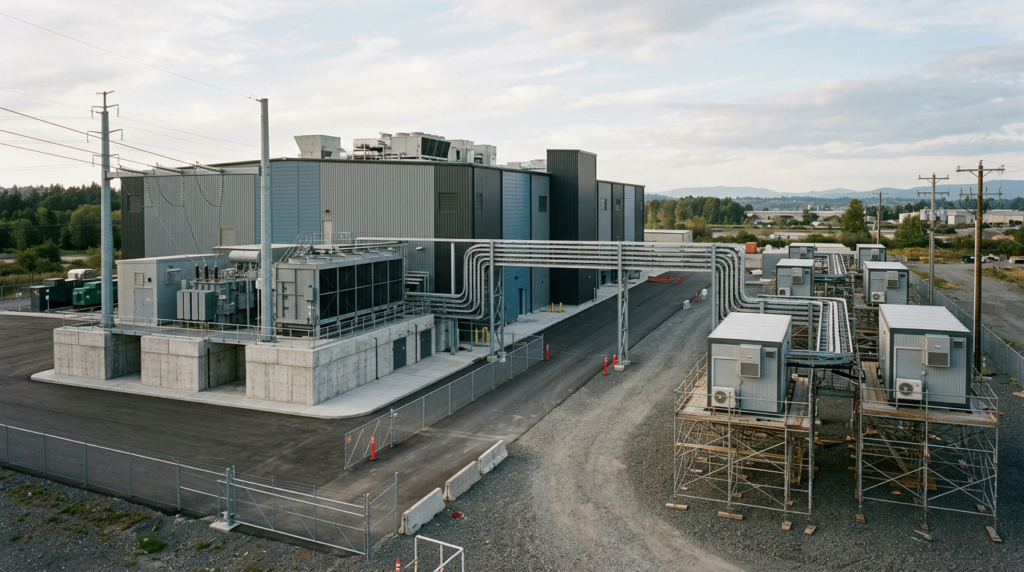
OpenAI has officially abandoned its ambitious $500 billion “Stargate” joint venture, pivoting away from first-party data center ownership in favor of bilateral compute leases. Originally pitched in early 2025 as a monolithic infrastructure partnership with Oracle and SoftBank, Stargate has been quietly downgraded to an “umbrella term” for OpenAI’s broader distributed compute architecture. Live market data confirms that the startup has halted its UK data center rollout and scrapped the expansion of its flagship Abilene, Texas campus due to financing disputes and reliability issues with operator Crusoe. In Narvik, Norway, Microsoft has stepped in to assume the lease from developer Nscale, relegating OpenAI to a tenant rather than an owner. This marks a definitive retreat from heavy physical infrastructure CapEx toward a flexible, albeit dependent, OpEx model.
Market Impact & Deployment
While initial reports vaguely cited “restrictive regulations” for these project pauses, the reality is entirely financial. In March 2026, OpenAI secured a historic $110 billion funding round, pushing its valuation to $840 billion. However, this is not traditional venture capital; it is a circular supply chain deal. Amazon ($50B), Nvidia ($30B), and SoftBank ($30B) are funding OpenAI so the startup can purchase their respective hardware and cloud services. Despite this massive influx of capital, OpenAI’s cash burn is so aggressive—targeting $600 billion in total compute spend through 2030—that analysts project a potential cash-out by mid-2027. By abandoning first-party data centers, OpenAI avoids the crippling bottlenecks of real estate and power grid acquisition, but permanently cements its reliance on legacy hyperscalers.
The Consumer Translation
For the everyday user and enterprise client, this pivot ensures that the development of frontier models won’t be derailed by construction delays or zoning disputes. By leasing compute, OpenAI guarantees immediate access to processing power. However, it also means the AI ecosystem remains highly centralized. OpenAI is not building an independent physical empire; it is renting space inside the existing walled gardens of Microsoft, Amazon, and Oracle. If the circular financing loop falters, the cost of AI access will inevitably trickle down to the consumer.
TechNode HQ Verdict: Pros, Cons & Usability
- Pro (Engineering): Immediate access to scalable compute without the friction of physical infrastructure management.
- Pro (Consumer): Uninterrupted rollout of next-generation AI features and enterprise agents.
- Con: Extreme reliance on vendor financing creates a fragile, circular economic loop.
- Con: Loss of sovereign hardware control leaves OpenAI vulnerable to hyperscaler pricing leverage.
Enterprise Usability: CTOs should view OpenAI’s API stability as secure in the short term (12-18 months) due to the $110B cash injection, but must architect multi-model redundancies to hedge against OpenAI’s long-term infrastructure dependency.
Everyday Usability: Consumers can confidently invest in OpenAI’s premium tiers today, as the shift to leased compute guarantees near-term performance scaling.
Sources & Citations:
Original Claim via: tomshardware
Official Handle: @tomshardware
Topics Explored: OpenAI, Stargate, Cloud Computing, AI Infrastructure, Hyperscalers