The Architectural Shift
In the relentless pursuit of enterprise productivity, the technology sector has historically designed its infrastructure for the ideal worker: the hyper-connected, always-on, cognitively resilient employee. Unified Communications as a Service (UCaaS) platforms, synchronous video conferencing, and rapid-fire collaboration tools have become the bedrock of the modern corporate technology stack. However, this architecture inherently alienates a massive, untapped demographic. Recently, Lenovo, in partnership with the Japanese non-profit organization Sodateage Net, unveiled a pilot program aimed at reintegrating NEET (Not in Education, Employment, or Training) young adults into society. While the public relations narrative focuses heavily on the emotional resonance of “empathy” and “inclusive pathways,” the underlying implications for enterprise IT architecture are profound and warrant a rigorous technical dissection.
The initiative leverages what Lenovo describes as “technology-enabled, low-pressure opportunities”—specifically, short-term tasks and creative activities supported through online platforms. To a Senior Enterprise Infrastructure Analyst, this seemingly innocuous phrase signals a radical departure from traditional corporate network design. Deploying a secure, scalable platform for a vulnerable demographic operating outside the traditional corporate perimeter requires a masterclass in modern network architecture. We are no longer talking about standard Virtual Private Networks (VPNs) deployed to company-issued laptops. We are looking at the necessity of frictionless, zero-trust environments deployed on unmanaged, potentially compromised personal devices.
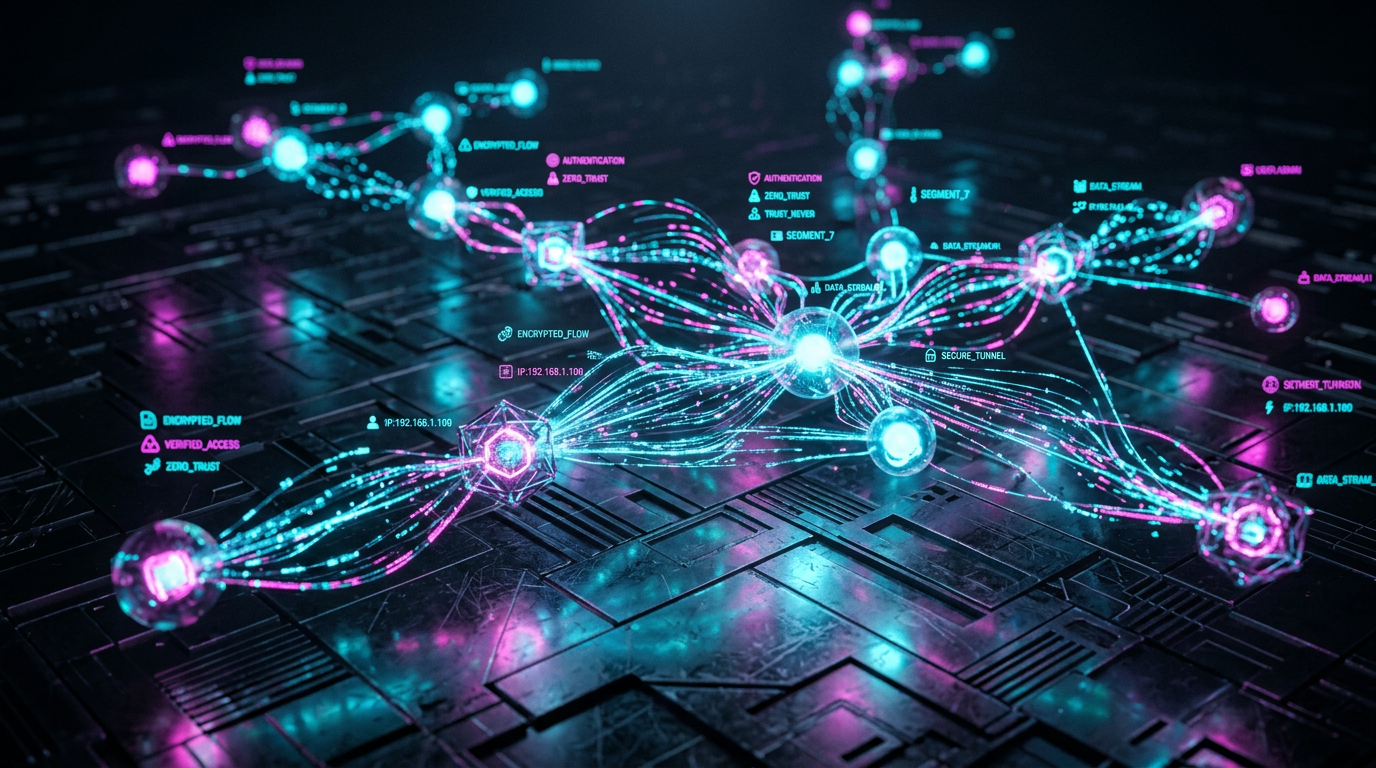
To facilitate “low-pressure” digital engagement, the underlying infrastructure must completely abstract the complexity of enterprise security away from the end-user. This requires a robust implementation of Zero Trust Network Access (ZTNA) coupled with Desktop-as-a-Service (DaaS) or Virtual Desktop Infrastructure (VDI). When a socially anxious or neurodivergent user logs in to perform a micro-task, any friction—be it a complex multi-factor authentication loop, a lagging VPN client, or a confusing user interface—can trigger a psychological barrier that results in immediate abandonment. Therefore, the architectural shift demands identity-aware proxies that authenticate the user and device posture in the background, granting least-privilege access to a highly sandboxed, browser-based workspace. The compute load is entirely offloaded to the cloud, ensuring that the user’s local hardware limitations do not impede their ability to participate.
Furthermore, the shift toward “short-term tasks” necessitates a fundamental rewiring of how enterprise software handles asynchronous communication. The modern corporate stack is heavily biased toward synchronous engagement—the immediate ping of a Slack message, the sudden incoming Teams call. For individuals suffering from severe social isolation or school refusal, synchronous communication is a high-anxiety trigger. The architectural solution is the deployment of API-driven, headless task management systems. These systems decouple the work from the real-time presence of the worker. Tasks are queued, assigned, and submitted via asynchronous RESTful APIs, allowing the user to engage with the data layer without ever having to interface with the high-pressure presentation layer of traditional corporate communication tools. This is not merely a software tweak; it is a fundamental re-architecting of the OSI model’s application layer to prioritize cognitive accessibility over raw, real-time speed.
Lenovo’s broader corporate strategy, which heavily emphasizes Artificial Intelligence, plays a silent but critical role in this architectural evolution. While the PR piece highlights a physical “Non-Selling Coffee Shop” as a milestone, the true scalability of this initiative relies on AI-mediated workload distribution. Machine learning algorithms can analyze a user’s interaction patterns, task completion rates, and even micro-hesitations in UI navigation to dynamically adjust the complexity and volume of the tasks presented to them. If the system detects an increase in error rates or a drop in engagement—potential indicators of cognitive overload or anxiety—the AI can automatically throttle the workflow, offering simpler tasks or suggesting a break. This represents the pinnacle of adaptive enterprise architecture: a system that dynamically molds its infrastructure to the psychological state of the user, rather than forcing the user to conform to the rigid demands of the system.
Enterprise Market Impact & TCO

To understand the true gravity of this technological shift, one must look beyond the localized CSR (Corporate Social Responsibility) narrative and examine the macro-economic realities of the global labor market. Japan, the epicenter of the Lenovo and Sodateage Net partnership, is currently facing a demographic time bomb. With a rapidly aging population and a shrinking workforce, the country is experiencing acute labor shortages across nearly every sector. Concurrently, Japan has a significant NEET population—hundreds of thousands of young adults who are entirely disconnected from the economic engine. This is not just a Japanese phenomenon; from the “quiet quitting” trends in the West to the rising rates of youth unemployment globally, the traditional corporate structure is failing to capture a massive segment of potential human capital.
From an enterprise perspective, the Total Cost of Ownership (TCO) of building and maintaining inclusive, micro-tasking IT infrastructure must be weighed against the catastrophic economic cost of labor stagnation. Traditionally, Chief Information Officers (CIOs) and Chief Technology Officers (CTOs) calculate TCO based on hardware procurement, software licensing, cloud compute costs, and IT support overhead. However, the calculus changes dramatically when IT infrastructure becomes the primary vehicle for labor acquisition. If an enterprise can deploy a secure, asynchronous DaaS environment that successfully onboards even 5% of a previously inaccessible demographic, the return on investment (ROI) is astronomical. These individuals can handle vital, high-volume, low-complexity tasks—data annotation for AI models, quality assurance testing, localized content moderation—freeing up the traditional workforce for high-level strategic initiatives.
Furthermore, we must analyze the financial impact of ESG (Environmental, Social, and Governance) mandates on enterprise valuation. In the modern financial ecosystem, institutional investors are increasingly tying capital allocation to a corporation’s ESG performance. Lenovo’s “Transformation Grants” and its partnership with Sodateage Net are not merely philanthropic endeavors; they are strategic investments in the “Social” pillar of ESG. By proving that their technology stack can facilitate societal reintegration and digital inclusion, Lenovo enhances its corporate valuation, lowers its cost of capital, and secures a competitive advantage in government and public sector procurement contracts, which increasingly require strict adherence to diversity and inclusion metrics.
However, the deployment of such infrastructure is not without its financial bottlenecks. The hidden costs lie in the bespoke development required to adapt off-the-shelf enterprise software for neurodivergent or highly anxious users. Standard enterprise licenses for platforms like Microsoft 365 or Google Workspace are designed for the traditional worker. Stripping these platforms down to their bare, asynchronous essentials, building custom API bridges to micro-tasking portals, and implementing the necessary background ZTNA security protocols requires significant upfront capital expenditure (CapEx) in software engineering and UX/UI design. The enterprise must also factor in the ongoing operational expenditure (OpEx) of the AI compute required to dynamically monitor and adjust the cognitive load of the platform. Yet, as the global talent shortage intensifies, the cost of *not* building these inclusive architectures will far outweigh the initial investment.
Ultimately, the enterprise market impact of this shift redefines the role of the IT department. IT is no longer merely a cost center responsible for keeping the servers running and the laptops secure. By architecting platforms that can safely and effectively integrate marginalized populations into the workforce, the IT department becomes a primary driver of human capital expansion and corporate revenue generation. The technology stack itself becomes the ultimate HR tool, bypassing traditional, bias-heavy recruitment processes in favor of secure, skill-based, low-pressure digital onboarding.
The Consumer Reality: What This Means for You
While the architectural overhauls and macro-economic TCO calculations occur in the sterile environments of enterprise data centers and corporate boardrooms, the trickle-down effect of this technology fundamentally alters the everyday consumer reality. For the general public, the narrative surrounding technology and mental health has been overwhelmingly negative for the past decade. The modern internet—characterized by the algorithmic outrage of social media, the relentless pinging of corporate communication tools, and the high-stakes visibility of the digital gig economy—is a well-documented driver of anxiety, depression, and social isolation. The Lenovo and Sodateage Net initiative represents a vital counter-narrative: the use of enterprise-grade technology to actively repair the psychological damage inflicted by the digital age.
For the average consumer, particularly those who have felt alienated by the traditional workforce, this technological shift democratizes access to economic participation. Consider the traditional barrier to entry for employment: crafting a resume, enduring a highly stressful, synchronous job interview, and navigating the complex social dynamics of a physical office or a high-pressure Zoom environment. For an individual suffering from severe social anxiety, agoraphobia, or recovering from trauma, these steps are not just difficult; they are insurmountable walls. The consumer reality of Lenovo’s “low-pressure online platforms” is the complete demolition of these walls. It allows an individual to take their “first step” in a completely sandboxed, digitally secure environment where the stakes are incredibly low, and the threat of public failure is non-existent.
This translates to the rise of the “micro-gig” economy, but one fundamentally different from the exploitative nature of traditional ride-sharing or delivery apps. Instead of high-stress, algorithmically punishing work, consumers will have access to platforms that offer asynchronous, bite-sized tasks that can be completed entirely on their own terms. A user might log in, complete 15 minutes of data categorization, and log out, without ever having to speak to a manager or coordinate with a team. This gradual, tech-enabled exposure allows users to build confidence, establish a routine, and generate income at a pace dictated entirely by their own psychological readiness. It transforms the computer screen from a window of overwhelming societal pressure into a safe, controlled portal for gradual reintegration.
The physical manifestation of this concept, highlighted in the Lenovo PR piece as the “Non-Selling Coffee Shop,” serves as a powerful metaphor for the future of consumer tech interactions. In this physical space, the goal was not productivity or profit, but connection and confidence-building. As this ethos bleeds into consumer software, we will see a shift in User Experience (UX) design. Consumer applications will increasingly feature “low-stimulation” modes, stripping away gamified notifications, urgent red badges, and infinite scrolls in favor of calm, minimalist interfaces designed to reduce cognitive load. The technology will stop demanding the user’s immediate attention and start respecting the user’s mental bandwidth.
Furthermore, this shift impacts the families and support systems of marginalized individuals. The burden of care for NEET youth or adults with severe social anxiety often falls heavily on parents and social workers. By providing a tangible, technology-driven pathway to independence, these platforms alleviate the immense emotional and financial strain on families. It provides counselors and support staff with concrete, modern tools to offer their clients, shifting the conversation from “How do we force you into a traditional job?” to “How can we use this platform to help you contribute on your own terms?” The consumer reality is a profound restoration of dignity, facilitated by the very technology that once threatened to leave them behind.
The Industry Ripple Effect
When a Tier-1 global technology leader like Lenovo publicly aligns its enterprise infrastructure capabilities with a profound social issue like the NEET crisis, it sends a shockwave through the competitive landscape. The technology industry operates on a paradigm of rapid mimicry and one-upmanship. Dell, HP, Apple, and Microsoft cannot afford to cede the narrative of “empathetic technology” to a primary competitor. Consequently, the Lenovo/Sodateage Net partnership will act as a catalyst, forcing the entire industry to re-evaluate their product roadmaps and corporate social responsibility initiatives, moving beyond superficial greenwashing into deep, architectural inclusion.
Microsoft is perhaps the most uniquely positioned to react to this ripple effect. With its absolute dominance in the enterprise productivity space via Microsoft 365 and Teams, the company will face increasing pressure to build native, low-pressure, asynchronous pathways into its flagship products. We can expect to see Microsoft accelerate the development of “inclusive modes” within Windows and Office, utilizing their massive investments in OpenAI to create AI-driven task mediators that sit between the anxious worker and the demanding corporate network. If Lenovo is providing the hardware and the initial platform grants, Microsoft will be forced to ensure its software ecosystem is equally accommodating to the invisible workforce.
Hardware competitors like Dell and HP will likely respond by expanding their own ESG-driven enterprise solutions. The battleground will shift from purely focusing on processing power and battery life to “Accessibility as a Service” (AaaS). We will see a surge in enterprise hardware designed specifically for neurodivergent users—laptops with built-in biometric sensors that monitor stress levels and automatically adjust screen refresh rates, color temperatures, and notification settings to prevent sensory overload. The procurement conversations between these hardware giants and Fortune 500 CIOs will increasingly feature metrics on how their devices support diverse cognitive profiles, making inclusion a hard, competitive spec rather than a soft marketing bullet point.
Furthermore, this movement will severely disrupt the Human Resources Technology (HR Tech) sector. Platforms like Workday, SAP SuccessFactors, and even LinkedIn are built on the traditional paradigms of resumes, continuous employment history, and synchronous networking. As enterprise IT proves that marginalized, non-traditional workers can be successfully integrated via micro-tasking platforms, the HR Tech industry will be forced to adapt. We will witness the rise of decentralized, blockchain-verified credentialing systems where a user’s ability is proven not by a high-pressure interview, but by a cryptographic ledger of successfully completed, low-stakes micro-tasks. This bypasses the traditional HR gatekeepers entirely, allowing the IT infrastructure to directly validate and onboard talent.
Finally, the integration of AI into this space will accelerate exponentially. Lenovo explicitly noted their pioneering use of AI to enhance operations. As this technology matures, the industry will move toward fully autonomous, empathetic AI managers. These AI systems will not exist to maximize worker output through surveillance, but to act as a buffer—translating high-pressure corporate demands into manageable, asynchronous tasks for vulnerable workers. The industry ripple effect is a fundamental pivot: technology companies will no longer just build tools for the workforce; they will build the infrastructure required to create a workforce out of those society had previously left behind.
TechNode HQ Verdict: Pros, Cons & Usability
- Pro (Engineering): Forces the adoption of highly secure, frictionless Zero Trust Network Access (ZTNA) and asynchronous API architectures, drastically improving overall network resilience by assuming all endpoints are unmanaged and potentially hostile.
- Pro (Consumer): Democratizes economic participation by obliterating the high-anxiety barriers of traditional employment, allowing neurodivergent and socially isolated individuals to build confidence and income via low-stakes micro-tasking.
- Con: The bespoke development required to strip down traditional enterprise software into low-cognitive-load, asynchronous platforms incurs massive upfront CapEx and requires specialized UX engineering.
- Con: Deploying secure, sandboxed environments (like VDI/DaaS) to older, consumer-grade personal hardware in remote locations introduces severe latency and bandwidth bottlenecks that can frustrate the very users the system is trying to help.
Enterprise Usability: For a modern CTO, deploying this architecture is no longer optional; it is a strategic imperative to combat the global talent shortage. Enterprises should immediately begin piloting asynchronous, API-driven micro-task platforms secured by identity-aware ZTNA. The initial focus should be on routing low-complexity, high-volume tasks (like AI data annotation) to these platforms, thereby testing the infrastructure’s scalability while simultaneously boosting the company’s ESG valuation.
Everyday Usability: For the public, particularly those struggling with traditional work environments, this represents a massive opportunity. Users should actively seek out organizations and platforms that offer asynchronous, micro-gig opportunities. While the underlying enterprise tech is complex, the user-facing experience is designed to be frictionless. If you have a stable internet connection and a basic web browser, you are equipped to participate in this new, low-pressure digital economy today.
Sources & Citations:
Original Technical Breakdown via: news
Official Handle: @news
Topics Explored: Digital Inclusion, Remote Workforce Infrastructure, ESG Technology, Lenovo Enterprise, Future of Work