The Architectural Shift: Rethinking Silicon Dioxide in the Additive Era
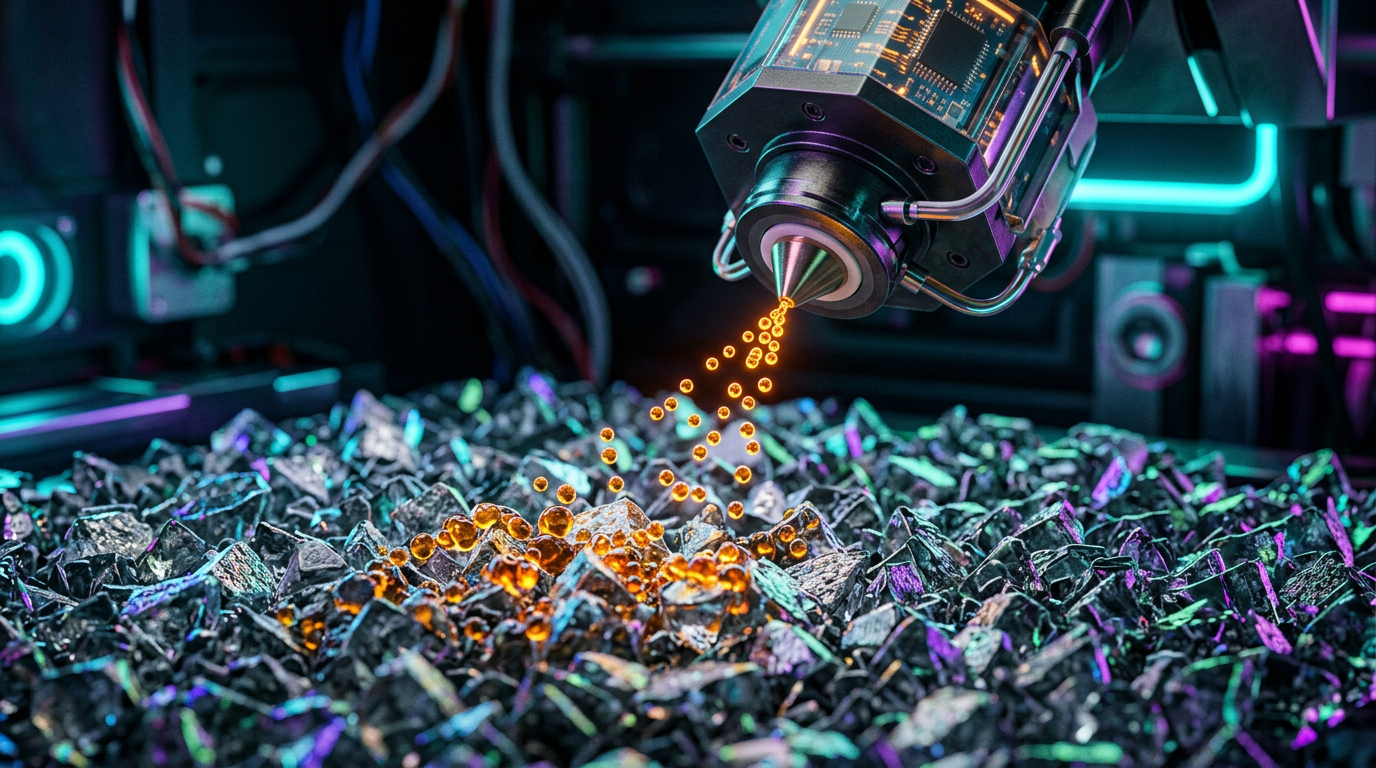
The global manufacturing sector is currently colliding with a harsh ecological reality: the traditional lifecycle of glass is fundamentally broken. Despite being infinitely recyclable in theory, the practical economics of glass recycling are a logistical nightmare. Municipalities are burdened by the necessity of sorting glass by color and chemical grade, while the physical recycling process demands astronomical energy expenditures to reach the 1,500°C (2,732°F) required to melt silica back into a workable state. Consequently, millions of tons of post-consumer glass are relegated to landfills annually. However, an emerging technological synergy between advanced materials science and additive manufacturing is poised to shatter this paradigm. Enter Vitriform3D, a pioneering startup that, in collaboration with Oak Ridge National Laboratory’s (ORNL) Manufacturing Demonstration Facility, is redefining the structural potential of waste glass through a highly specialized application of binder jet 3D printing.
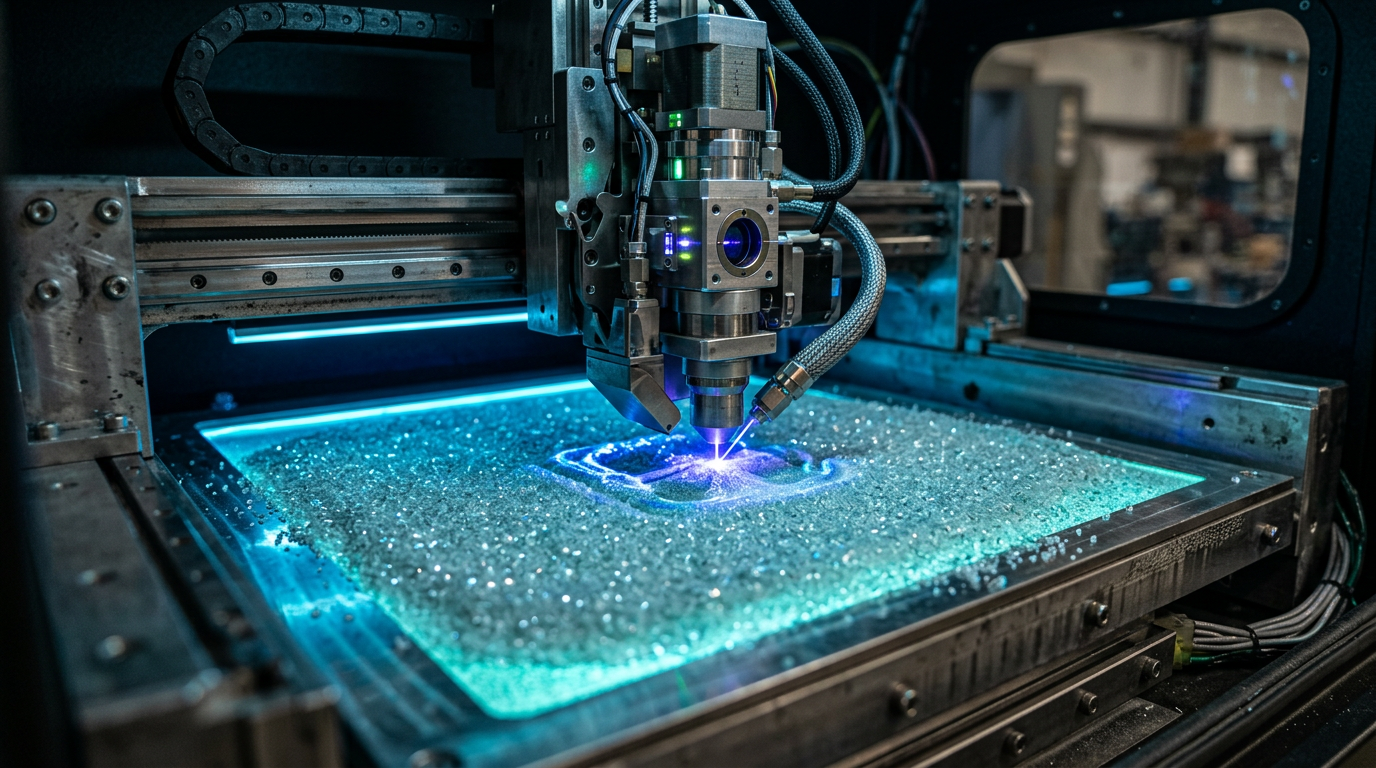
To understand the magnitude of this architectural shift, one must first dissect the mechanics of binder jetting. Unlike Fused Deposition Modeling (FDM), which extrudes melted thermoplastics, or Stereolithography (SLA), which cures liquid resins with UV light, binder jetting operates on a powder bed fusion principle—minus the thermal fusion. The process begins by spreading an ultra-thin, precisely calibrated layer of raw material across a build platform. In Vitriform3D’s case, this feedstock is pulverized post-consumer glass. A high-precision piezoelectric printhead, conceptually similar to those found in enterprise 2D inkjet printers, then glides over the powder bed. Instead of ink, this array of microscopic nozzles deposits precisely calculated picoliter droplets of a proprietary chemical binding agent. This binder acts as a localized adhesive, fusing the glass particles together strictly where the digital CAD model dictates. The build platform lowers by a fraction of a millimeter, a new layer of glass powder is swept across the surface, and the process repeats, voxel by voxel, until a three-dimensional geometry is fully realized.
While binder jetting itself is not a novel concept—it has been utilized for decades in metal casting sand molds and certain ceramic applications—the true engineering breakthrough lies in the proprietary chemical formulation of the binder agent. Glass, primarily composed of silicon dioxide, presents a unique challenge for chemical adhesion. It is inherently non-porous, chemically inert, and features a smooth microscopic surface topology, making it notoriously difficult for standard polymers to grip. Ryan Dehoff and the engineering team at ORNL’s MDF have focused heavily on optimizing this binder’s rheology and chemical interaction with silica. The resulting patent-pending process allows Vitriform3D to bypass the traditional, energy-devouring melting phase entirely. Furthermore, this specific binder jetting methodology is remarkably agnostic to the color or specific grade of the input glass. By eliminating the need for meticulous sorting and thermal reforming, this process transforms a low-value, highly problematic waste stream into a high-fidelity, structural feedstock capable of producing complex architectural geometries.
The implications for structural engineering and material science are profound. By controlling the deposition of the binder at the voxel level, engineers can theoretically manipulate the porosity, density, and optical properties of the final printed object. This allows for the creation of internal lattice structures that maximize strength while minimizing weight—a feat impossible with traditional glass casting or stone masonry. The resulting composite material, a matrix of recycled glass particulate suspended in a specialized polymer binder, exhibits unique mechanical properties that bridge the gap between traditional ceramics and advanced composites. This is not merely a recycling initiative; it is the genesis of an entirely new category of architectural metamaterials.
Enterprise Market Impact & Total Cost of Ownership (TCO)
For Chief Technology Officers, Chief Operating Officers, and enterprise supply chain architects, the advent of scalable glass binder jetting represents a critical inflection point in manufacturing economics. The modern enterprise is under unprecedented pressure to align with stringent Environmental, Social, and Governance (ESG) mandates, reduce carbon footprints, and navigate increasingly volatile global supply chains. Vitriform3D’s technology offers a compelling solution to these intersecting crises by enabling localized, circular manufacturing ecosystems.
Let us examine the Total Cost of Ownership (TCO) and the broader economic impact. Traditional architectural materials—such as granite, quartz, marble, and large-scale cast glass—require massive capital expenditure (CapEx) in extraction, high-heat processing, and global logistics. The weight of these materials results in exorbitant shipping costs and a massive carbon footprint before the product even reaches the installation site. Conversely, the binder jetting of recycled glass allows enterprises to source their raw feedstock locally. A municipal landfill or a local recycling facility transforms from a waste repository into a localized mining operation. By sourcing crushed glass locally and printing architectural elements on-demand, enterprises can drastically slash their inbound logistics costs, reduce their reliance on imported raw materials, and insulate themselves from global supply chain shocks.
Furthermore, the operational expenditure (OpEx) of binder jetting is highly favorable when scaled. Because the printhead deposits the binder across the entire X-axis in a single pass, binder jetting is inherently faster and more scalable than point-by-point extrusion methods like FDM or directed energy deposition. This high volumetric throughput makes it viable for mass production. When an enterprise integrates this technology, they are not just purchasing a printer; they are adopting a digital inventory model. Instead of warehousing thousands of square feet of floor tiles or custom countertops, a construction firm or interior design distributor can store digital CAD files, printing exact quantities on demand. This eliminates warehousing costs, reduces inventory depreciation, and entirely eradicates the waste associated with overproduction.
From an ESG perspective, the integration of this technology is a massive asset for corporate sustainability reporting. The ability to quantify the exact tonnage of waste glass diverted from landfills and upcycled into premium products provides undeniable, auditable data for carbon credit generation and sustainability certifications (such as LEED certification in commercial real estate). However, enterprise adoption is not without its hurdles. The initial CapEx for industrial-scale binder jetting systems is substantial, often running into the hundreds of thousands of dollars. Additionally, enterprises must factor in the post-processing requirements. While the printing process itself avoids the 1,500°C melting point of glass, binder-jetted green parts often require a secondary curing phase—either thermal or chemical—to achieve their final mechanical strength. Facility managers must account for the footprint, ventilation, and energy requirements of these post-processing stations when calculating the true TCO of deployment.
The Consumer Reality: What This Means for You
While the underlying chemical engineering and enterprise economics are complex, the translation of this technology to the consumer market is deeply visceral and aesthetically transformative. For the average homeowner, interior designer, or architecture enthusiast, Vitriform3D’s innovation signals a departure from the homogenized, mass-produced materials that have dominated home construction for the last century. We are entering an era of mass customization, where the concept of “sustainability” is no longer synonymous with compromise, but rather with premium, bespoke design.
Imagine renovating a kitchen. Traditionally, a consumer might select a slab of quartz or granite, shipped across the globe, cut to a standard shape, and installed with significant waste. With glass binder jetting, that same consumer can commission a countertop printed entirely from the recycled glass bottles collected from their own city’s recycling program. Because the process is driven by digital 3D models, the physical constraints of traditional stone cutting are eliminated. Countertops can be printed with integrated, sweeping curves, complex internal channels for plumbing, or perfectly contoured recesses for smart home devices. The technology allows for a level of personalization that was previously reserved for ultra-luxury, handcrafted installations.
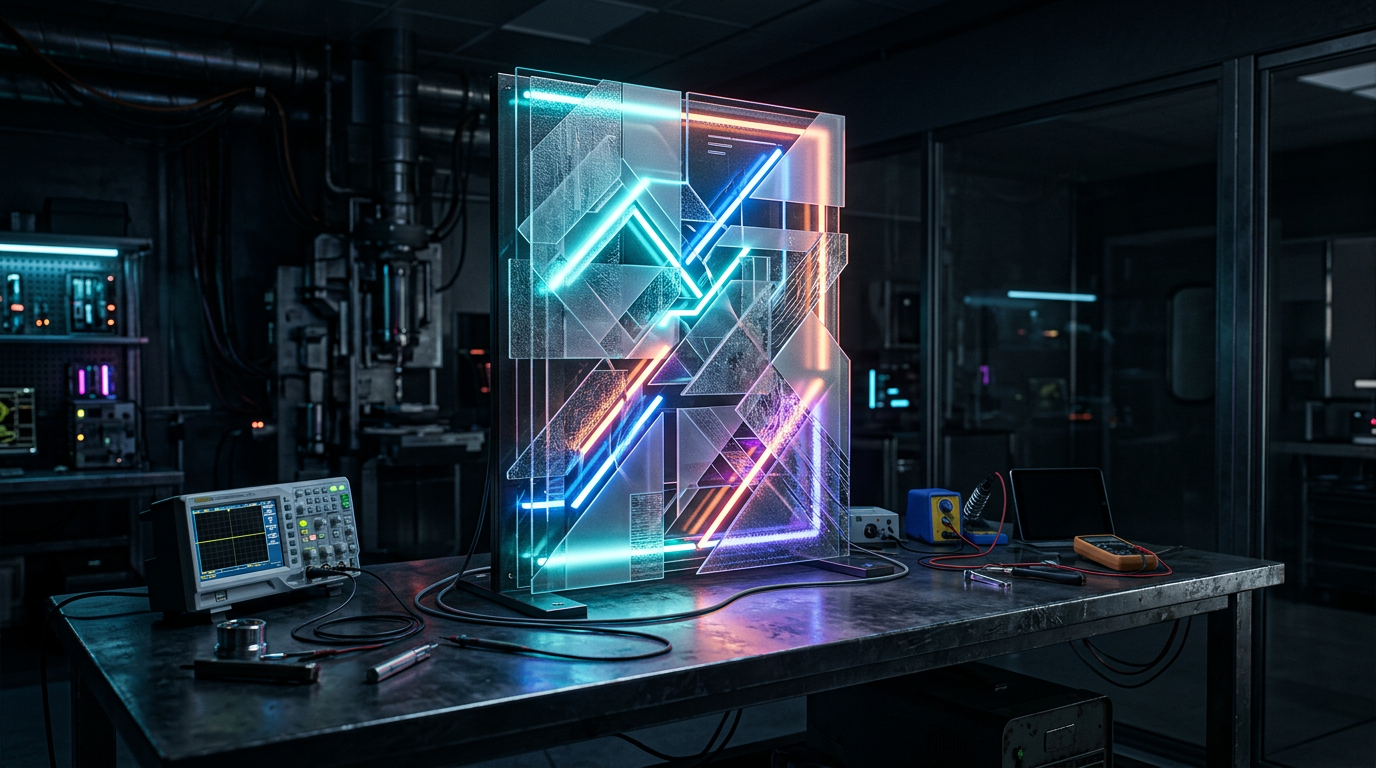
Aesthetically, the use of crushed glass as a primary medium offers unique optical properties. Vitriform3D refers to their design philosophy as “sustainability that sparkles.” Because the base material is translucent silica, the final printed objects interact with light in ways that solid stone or concrete cannot. The source material highlights the integration of rear-mounted LEDs into these printed structures. By manipulating the density of the binder and the coarseness of the glass powder during the print process, designers can create architectural wall accents, backsplashes, and floor tiles that diffuse embedded lighting, creating glowing, ambient surfaces. This capability seamlessly merges structural materials with smart home lighting systems, turning a static wall into a dynamic, illuminated interface.
Beyond aesthetics, this technology fundamentally alters the consumer’s relationship with waste. It provides a tangible, beautiful endpoint for the circular economy. When consumers see their discarded glass transformed into high-value, durable goods, it reinforces the value of local recycling initiatives. Furthermore, as the technology matures, the source hints at the potential for this patent-pending process to scale down to the desktop or hobbyist 3D printer space. While handling fine glass powder requires specific safety protocols (to prevent inhalation of silica dust), the prospect of localized, neighborhood-level micro-factories printing custom glass homewares on demand is a tantalizing glimpse into the future of consumer manufacturing.
The Industry Ripple Effect
The successful commercialization of binder-jetted recycled glass will not occur in a vacuum; it will send seismic shockwaves through multiple established industries. Traditional glass manufacturers, legacy ceramics producers, and incumbent 3D printing giants will all be forced to recalibrate their strategies in response to this material disruption.
For legacy glass and ceramics conglomerates—companies like Corning, Saint-Gobain, and Mohawk Industries—Vitriform3D represents an asymmetric threat. These legacy giants have built their empires on massive, centralized manufacturing facilities reliant on high-heat furnaces and immense economies of scale. A decentralized model, where high-quality architectural glass products can be printed at room temperature using local waste, undermines their core logistical advantage. To remain competitive, these legacy manufacturers will likely be forced to either acquire startups like Vitriform3D to capture their intellectual property or invest heavily in developing their own low-energy, additive manufacturing divisions. We can expect a fierce patent war over the specific chemical formulations of silica-binding agents in the coming years.
Within the additive manufacturing sector itself, this development challenges the dominance of traditional materials. Companies like HP (with their Multi Jet Fusion tech), Desktop Metal, and ExOne have largely focused their binder jetting efforts on industrial metals, foundry sand, and specialized polymers. The realization that post-consumer glass can be utilized as a highly profitable, structurally sound feedstock will undoubtedly trigger a pivot in R&D departments across the industry. Hardware manufacturers will race to develop specialized powder handling systems designed specifically for the abrasive nature of crushed glass, ensuring that printheads and powder-spreading mechanisms do not degrade prematurely.
Furthermore, this innovation will likely spur a renaissance in materials science software. Slicing engines and CAD software will need to evolve to simulate the optical properties of printed glass. Engineers will require software capable of predicting how light will refract through a binder-jetted matrix, allowing designers to optimize the placement of LEDs and the density of the glass powder before a single drop of binder is deposited. Ultimately, Vitriform3D is not just introducing a new product; they are proving the viability of a new material category, forcing the entire hardware and manufacturing ecosystem to adapt to a reality where the landfill is the new supply chain.
TechNode HQ Verdict: Pros, Cons & Usability
- Pro (Engineering): Bypasses the 1,500°C thermal melting phase of traditional glass processing, drastically reducing energy consumption while allowing for voxel-level geometric complexity via piezoelectric binder deposition.
- Pro (Consumer): Enables the creation of highly customized, translucent architectural elements (like LED-backlit countertops and tiles) that actively divert waste from local landfills, merging premium aesthetics with verifiable sustainability.
- Con: The abrasive nature of crushed silica powder poses a significant wear-and-tear risk to the mechanical components and delicate inkjet nozzles of the 3D printer, potentially increasing maintenance costs.
- Con: Achieving the final mechanical strength required for load-bearing architectural applications likely necessitates a secondary chemical or thermal curing phase, adding time and complexity to the manufacturing pipeline.
Enterprise Usability: For CTOs and manufacturing COOs, this technology should be aggressively evaluated for immediate pilot programs, particularly within the commercial real estate, interior design, and sustainable construction sectors. Enterprises should partner with local waste management facilities to secure a steady feedstock of crushed glass, leveraging the resulting products to meet corporate ESG goals and reduce reliance on imported stone and ceramics. The initial CapEx of the hardware will be offset by the near-zero cost of raw materials and the premium pricing commanded by bespoke, sustainable architectural goods.
Everyday Usability: For the general public, direct access to desktop glass binder jetting is still a few years away due to the safety requirements of handling fine silica powder. However, consumers and interior designers should actively seek out these printed products for upcoming renovations. Purchasing these materials today supports the localized circular economy and provides access to unique, customizable, and illuminated home fixtures that traditional manufacturing simply cannot replicate.
Sources & Citations:
Original Technical Breakdown via: tomshardware
Official Handle: @tomshardware
Topics Explored: 3D Printing, Sustainable Manufacturing, Binder Jetting, Materials Science, Circular Economy