The Architectural Shift: Engineering for the Absolute Minimum
In an era where consumer electronics are defined by their ability to do absolutely everything—rendering 3D graphics, processing machine learning algorithms on the edge, and bombarding users with a relentless stream of push notifications—ReMarkable has taken a radically divergent path. The newly announced ReMarkable Paper Pure, priced at an aggressive $399, is not a triumph of maximalist engineering. Rather, it is a masterclass in the brutal, calculated subtraction of hardware. As a Senior Enterprise Infrastructure Analyst, looking at the Bill of Materials (BOM) and the architectural decisions inside the Paper Pure reveals a fascinating narrative about cost-saving, computational bottlenecks, and the physics of digital paper.
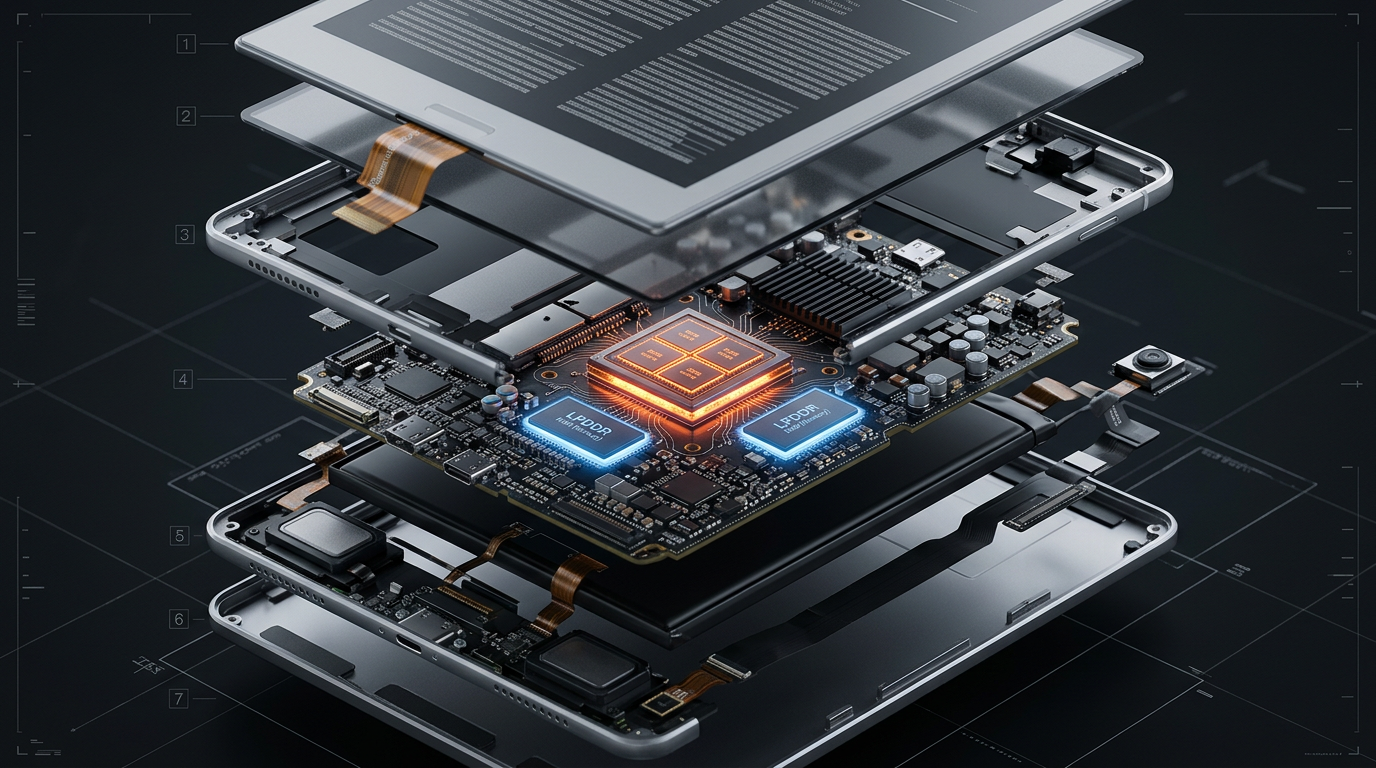
Let us begin with the silicon. The Paper Pure is powered by a 1.7 GHz dual-core ARM Cortex-A55 processor. To put this into perspective, the premium ReMarkable Paper Pro utilizes a 1.8 GHz quad-core Cortex-A53. While the A55 microarchitecture offers slight improvements in instructions per clock (IPC) and branch prediction over the aging A53, the halving of the core count is a severe computational downgrade. In a general-purpose tablet, a dual-core A55 would be entirely unusable in 2026. However, ReMarkable’s proprietary Linux-based operating system is so aggressively stripped down that it requires virtually no background processing. The CPU’s sole responsibility is polling the electromagnetic resonance (EMR) digitizer at a high frequency and pushing vector graphics to the display controller. Even so, this silicon deficit manifests in real-world use. When writing rapidly, the dual-core processor struggles to keep up with the digitizer’s input queue, resulting in what early testers describe as “occasional lag.” For a device whose entire value proposition is the seamless replication of pen on paper, any latency—even milliseconds—breaks the cognitive illusion.
The memory architecture is where the cost-cutting becomes truly draconian. The Paper Pure is equipped with 2GB of LPDDR3 RAM. In the context of modern hardware, LPDDR3 is a relic. It offers significantly lower memory bandwidth and higher power consumption per bit transferred compared to the LPDDR4X or LPDDR5 modules found in modern budget smartphones. Why use it? Because it is incredibly cheap to source. For basic note-taking, 2GB of LPDDR3 is sufficient. However, the bottleneck will become glaringly obvious in enterprise use cases. When a user attempts to load a 150-page architectural PDF layered with complex vector annotations, the low data transfer rates of the LPDDR3 memory will result in noticeable page-turn latency and rendering delays. The 32GB of local storage (down from 64GB on the Pro and Move models) further cements this device as a thin client reliant on cloud connectivity rather than a standalone computational powerhouse.
Yet, where the internal silicon falters, the display engineering triumphs. The Paper Pure features a 10.3-inch monochrome E Ink display. By abandoning the complex color filter array (CFA) and the front-light light guide plate (LGP) required for the Paper Pro’s backlit color display, ReMarkable’s engineers have achieved something remarkable: they have brought the electrophoretic ink capsules microscopically closer to the glass surface. In display engineering, the distance between the display medium and the stylus tip dictates the amount of parallax (the optical illusion that the ink is floating below the pen). By thinning the display stack, the Paper Pure achieves a “whiter, smoother glass” with zero pixelation and a contrast ratio that arguably surpasses its $800 sibling. The black E Ink is rich, deep, and visually striking.
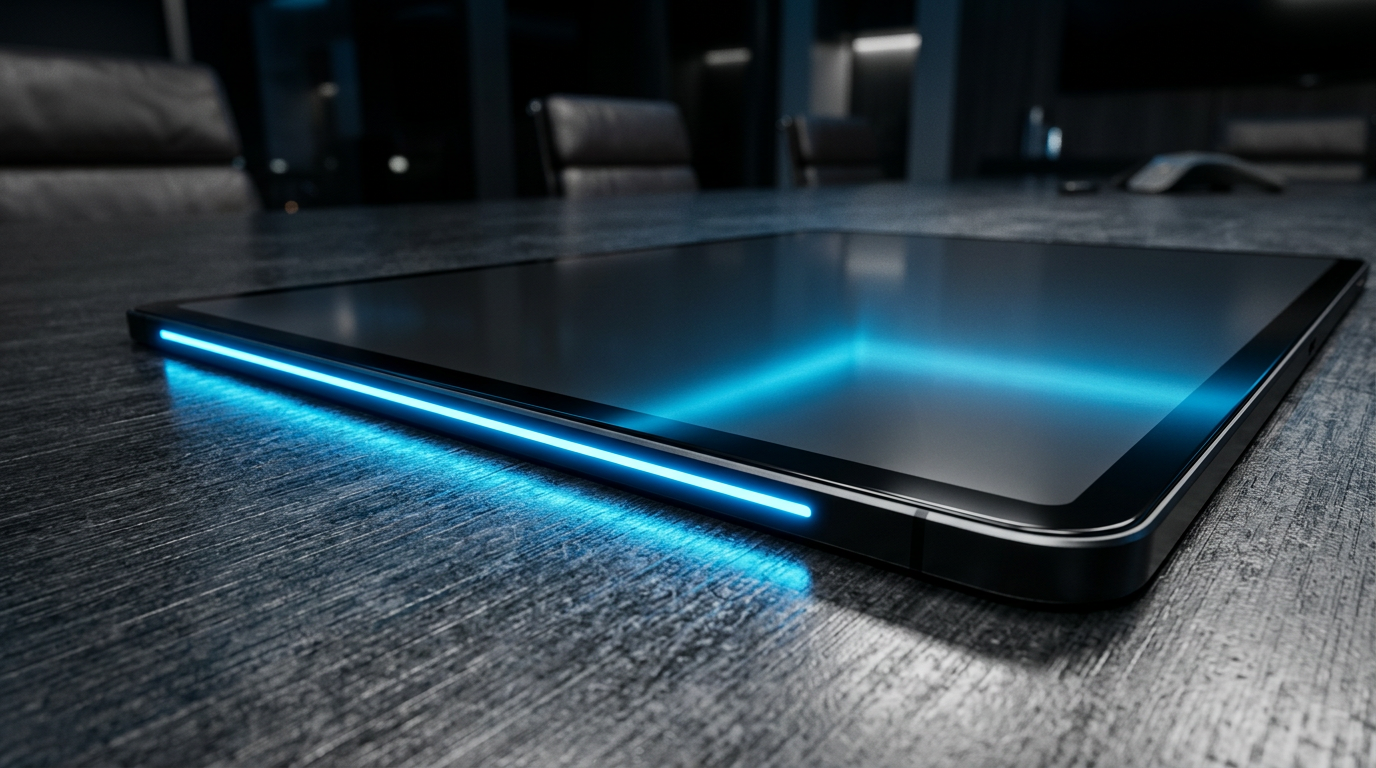
However, physics demands a trade-off. The removal of the LGP and the color filter layer inherently reduces the structural rigidity of the tablet’s chassis. Measuring 7.4 x 8.9 inches and weighing a mere 0.79 pounds, the Paper Pure suffers from a noticeable lack of torsional strength. Early hands-on testing reveals a millimeter or two of flex and wobble when the device is placed on a flat surface. For a premium writing instrument, a chassis that does not lie perfectly flat on a desk is a significant manufacturing oversight, one that betrays the “Pure” moniker and highlights the compromises required to hit a $399 price point.
Enterprise Market Impact & TCO: The ROI of Deep Work

From the perspective of a Chief Information Officer (CIO) or an IT procurement director, the ReMarkable Paper Pure presents a highly compelling, yet complex, deployment proposition. The modern enterprise is currently grappling with a crisis of attention. The proliferation of Slack, Microsoft Teams, and constant email notifications has decimated the capacity for “deep work”—the focused, uninterrupted cognitive effort required to solve complex problems. General-purpose tablets like the Apple iPad Pro, while powerful, are fundamentally distraction engines. Deploying an iPad to an executive for note-taking often results in them answering emails during board meetings. The Paper Pure, by contrast, is an enforced digital sanctuary.
When calculating the Total Cost of Ownership (TCO) for an enterprise fleet, the Paper Pure is highly attractive. The base hardware is $399 (or $449 with the essential Marker Plus and folio). However, the true cost lies in the software ecosystem. ReMarkable operates a closed ecosystem, devoid of third-party Mobile Device Management (MDM) agents like Jamf or Microsoft Intune. Instead, enterprise integration relies on the “Connect” subscription, priced at $3.99 per month or $39 per year. This subscription unlocks unlimited cloud storage and, crucially, API integrations with enterprise staples like Slack, Miro, Google Drive, Dropbox, and Microsoft OneDrive.
For an enterprise deploying 1,000 units, the hardware CapEx is roughly $449,000, with an ongoing OpEx of $39,000 annually for the Connect subscription. Compared to deploying 1,000 iPad Pros (easily exceeding $1,000,000 in CapEx plus expensive MDM licensing), the Paper Pure is a budget-friendly alternative. But the value is not just in the hardware savings; it is in the workflow integrations. The “Send to Slack” and “Send to Miro” features allow executives to sketch out a system architecture or a marketing funnel in a distraction-free environment, and with a single tap, push that vector graphic directly into a corporate communication channel. This frictionless bridge between analog ideation and digital collaboration is the Paper Pure’s killer enterprise feature.
Furthermore, ReMarkable has introduced a browser-based screen-sharing feature that operates independently of the paid subscription. By simply opening a browser window on any computer, a user can mirror their ReMarkable screen in real-time. In a post-pandemic world dominated by Zoom and Microsoft Teams, the ability to use the Paper Pure as a high-precision digital whiteboard without installing proprietary drivers or dealing with complex network handshakes is a massive operational win. It transforms the tablet from a solitary note-taking device into a collaborative presentation tool.
However, IT departments must conduct rigorous Red Team audits on ReMarkable’s cloud infrastructure. Because the device lacks a browser or local app ecosystem, all data must transit through ReMarkable’s proprietary cloud to reach OneDrive or Slack. For organizations dealing with highly classified IP, HIPAA-compliant healthcare data, or ITAR-restricted engineering schematics, routing unencrypted vector sketches through a third-party consumer cloud is a non-starter. ReMarkable must provide robust SOC 2 Type II compliance documentation and enterprise-grade encryption-at-rest guarantees if they intend to capture the Fortune 500 market. Until they offer a localized, on-premise sync solution, the Paper Pure will remain a tool for individual productivity rather than a fully compliant enterprise endpoint.
The Consumer Reality: What This Means for You
For the everyday consumer, the ReMarkable Paper Pure requires a fundamental recalibration of expectations. We have been conditioned by Apple, Samsung, and Amazon to view tablets as consumption devices—portals to Netflix, Spotify, the Kindle Store, and the endless scroll of social media. The Paper Pure is not a consumption device; it is a creation device. Buying this tablet with the expectation of using it like an iPad will result in immediate, profound disappointment.
The most jarring consumer reality is the lack of a backlight. In 2026, almost every e-reader on the market, from the cheapest Amazon Kindle to the premium Onyx Boox devices, features a front-lit display that allows for reading in the dark. The Paper Pure does not. If you are sitting in a dimly lit room, the dark gray text on the E Ink display becomes incredibly difficult to read. You must treat this device exactly as you would a physical pad of paper: it requires ambient environmental lighting. While this omission is a brilliant engineering move to increase contrast and reduce thickness, it is a massive lifestyle compromise. You cannot use the Paper Pure to read or journal in bed with the lights off while your partner sleeps.
Speaking of reading, consumers must understand the friction involved in content consumption. There is no built-in bookstore. You cannot tap an icon and instantly download the latest New York Times bestseller. If you want to read an e-book on the Paper Pure, you must legally acquire an EPUB file, log into the ReMarkable desktop or mobile app (or the web portal), and manually push the file to the device over the cloud. It is a manual, multi-step process that feels archaic compared to the one-click gratification of the Amazon ecosystem. The device is heavily biased toward doing, not consuming. It comes pre-loaded with a robust library of templates, forms, and grids designed to facilitate journaling, project planning, and sketching.
Yet, for a specific demographic, these limitations are exactly what they are paying for. The Paper Pure offers a psychological sanctuary. When you sit down with this device, you are entirely untethered from the anxiety-inducing ping of notifications. The tactile experience of the Marker Basic (or the upgraded Marker Plus with its built-in eraser) gliding across the micro-textured glass is sublime. The latency, while occasionally noticeable to a trained eye during rapid scribbling, is generally smooth enough to maintain the flow state. The magnetic attachment of the stylus, which snaps firmly to the right side of the chassis and charges automatically, is a premium touch that elevates the daily user experience.
The keyboard navigation, however, remains a glaring flaw. Because the E Ink display has a slow refresh rate compared to an LCD or OLED screen, typing on the on-screen virtual keyboard is a frustrating, laggy experience. Entering Wi-Fi passwords or renaming files feels like a chore. This reinforces the device’s core identity: it is meant for a stylus, not for fingers.
The Industry Ripple Effect: Forcing the Hand of Giants
ReMarkable’s decision to launch a highly capable, premium-feeling device at the $399 price point sends a shockwave through the niche digital paper industry. For years, ReMarkable has positioned itself as the luxury option, commanding prices upwards of $800 for its Pro models. By stepping down into the mid-tier market, they are directly challenging the behemoths of the industry, most notably Amazon and Onyx Boox.
The Amazon Kindle Scribe is the Paper Pure’s most direct existential threat. Also starting at $399, the Scribe offers 16GB of storage (half of the Pure’s 32GB) but counters with a massive ecosystem advantage: seamless integration with the Kindle Store and the Kindle Unlimited subscription. Furthermore, the Scribe includes a front-light, making it a vastly superior device for nighttime reading. However, Amazon’s software for note-taking, organization, and enterprise integration is rudimentary compared to ReMarkable’s polished, folder-based UI and native Slack/Miro hooks. ReMarkable is betting that professionals will choose superior writing software and cloud integrations over Amazon’s massive bookstore.
For Onyx Boox, which produces devices like the Note Max, the Paper Pure is a wake-up call. Boox devices run full Android, allowing users to download any app from the Google Play Store. While this offers ultimate flexibility, it also introduces the very distractions that digital paper users are trying to escape. Furthermore, Android is notoriously poorly optimized for E Ink displays, resulting in ghosting and battery drain. ReMarkable’s locked-down, hyper-optimized Linux OS offers a vastly superior battery life and a cleaner, more focused user interface.
The broader implication of the Paper Pure is the commoditization of high-end E Ink technology. By proving that a high-contrast, zero-pixelation writing experience can be delivered for under $400, ReMarkable is setting a new baseline for the industry. Apple, which has long ignored the E Ink market in favor of pushing the iPad and Apple Pencil, may eventually have to acknowledge that a segment of the professional market actively desires devices that do *less*. The Paper Pure proves that subtraction, when executed with precision, is a highly marketable feature.
TechNode HQ Verdict: Pros, Cons & Usability
- Pro (Engineering): The removal of the color filter array and light guide plate drastically reduces parallax, bringing the E Ink capsules closer to the glass for an exceptionally high-contrast, zero-pixelation display.
- Pro (Consumer): The browser-based screen-sharing feature and native API integrations with Slack and Miro transform a solitary journaling tool into a frictionless, real-time remote collaboration device.
- Con: The reliance on an aging 1.7 GHz dual-core Cortex-A55 processor and low-bandwidth LPDDR3 RAM creates a computational bottleneck, resulting in occasional input lag and slow rendering of complex PDF files.
- Con: The thinned-out chassis lacks torsional rigidity, resulting in structural flex and a noticeable wobble when the tablet is placed on a flat desk, undermining the premium writing experience.
Enterprise Usability: For a CTO or IT Director, the Paper Pure is a highly cost-effective tool for executives and creatives who require a distraction-free environment for deep work and ideation. The $39/year Connect subscription is a negligible OpEx for the value of native Slack and OneDrive integrations. However, strict data compliance audits must be conducted, as all proprietary sketches must transit through ReMarkable’s consumer-grade cloud infrastructure. It is highly recommended for non-classified brainstorming, but not for sensitive IP development.
Everyday Usability: The general public should approach the Paper Pure with caution. If you are looking for an e-reader to consume novels in bed, buy a Kindle; the lack of a backlight on the Pure makes low-light reading impossible. However, if you are a student, writer, or professional suffering from notification fatigue and seeking a pure, unadulterated digital canvas to organize your thoughts, the $399 price point makes this the most accessible, high-quality digital paper tablet on the market today.
Sources & Citations:
Original Technical Breakdown via: zdnet
Official Handle: @ZDNET
Topics Explored: E Ink Technology, Enterprise Productivity, ARM Cortex-A55, ReMarkable Paper Pure, Digital Note-Taking