The Architectural Shift
In the high-stakes arena of generative AI, there exists a “Great Filter”—an unforgiving economic and computational barrier that separates the ambition of building a foundational model from the brutal reality of achieving it. India’s first GenAI unicorn, Krutrim, has just hit that filter. Its widely reported pivot from the glamorous, capital-incinerating race of proprietary model development to the pragmatic, revenue-focused business of cloud services is not merely a change in strategy; it is a textbook case of a company choosing survival over a dream that became untenable. The move, following a year of product silence, layoffs, and the quiet shuttering of its consumer app, marks a crucial moment of maturity—or capitulation—for the Indian AI ecosystem.
To understand the gravity of this pivot, one must first grasp the architectural and economic chasm between model building and cloud provisioning. The ambition to create a sovereign alternative to GPT-4, Claude 3, or Gemini is a campaign that must be measured in billions of dollars and tens of thousands of A-class GPUs. A single training run for a frontier model can consume hundreds of millions of dollars in electricity and compute time alone. This requires a war chest that Krutrim’s $50 million raise, while significant for an early-stage venture, could not sustain. It was a war chest for a single battle, not the protracted war of attrition that defines the current AI landscape. The company’s simultaneous decision to “pause” its custom silicon design efforts is the other shoe dropping. Designing bespoke AI accelerators to challenge NVIDIA’s CUDA-moated empire is another multi-billion dollar, decade-long quest. Attempting to fight a two-front war—against OpenAI on the model front and NVIDIA on the silicon front—was a strategic overreach from the start.
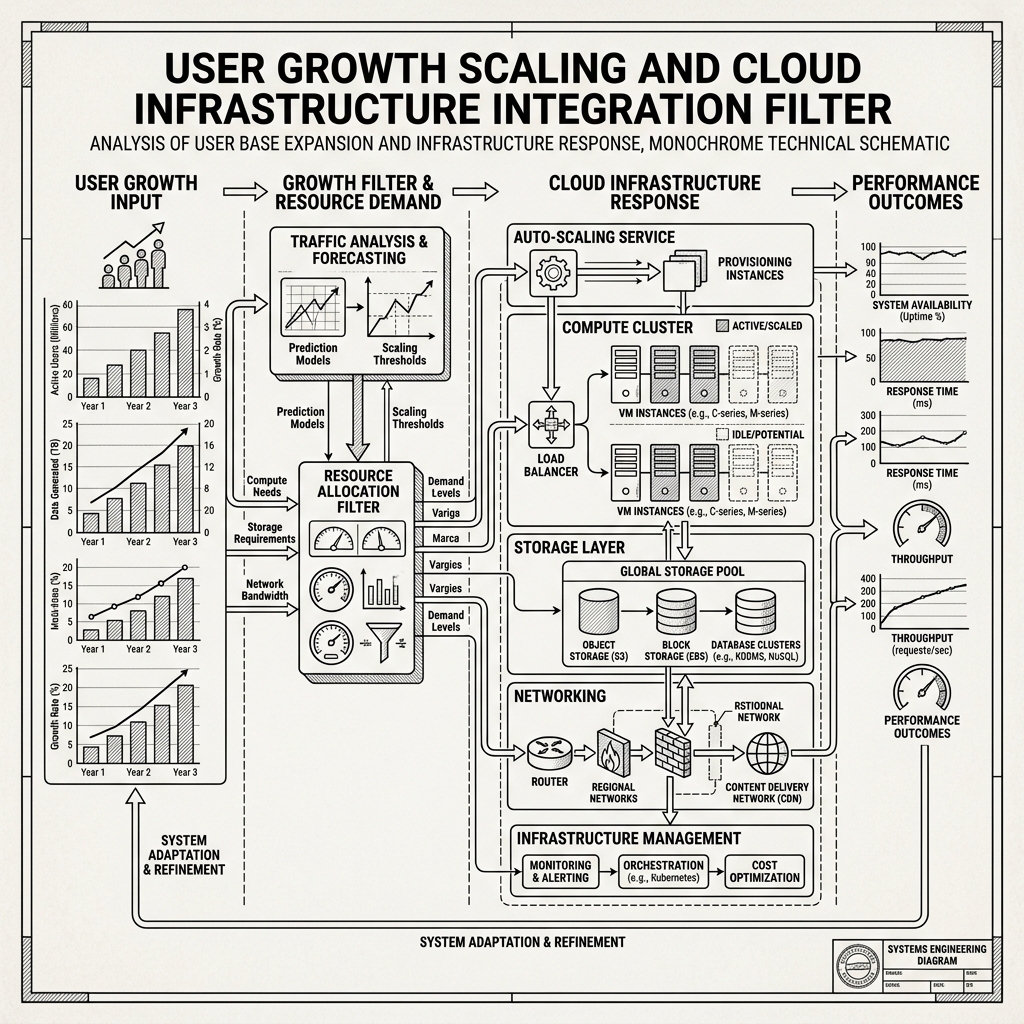
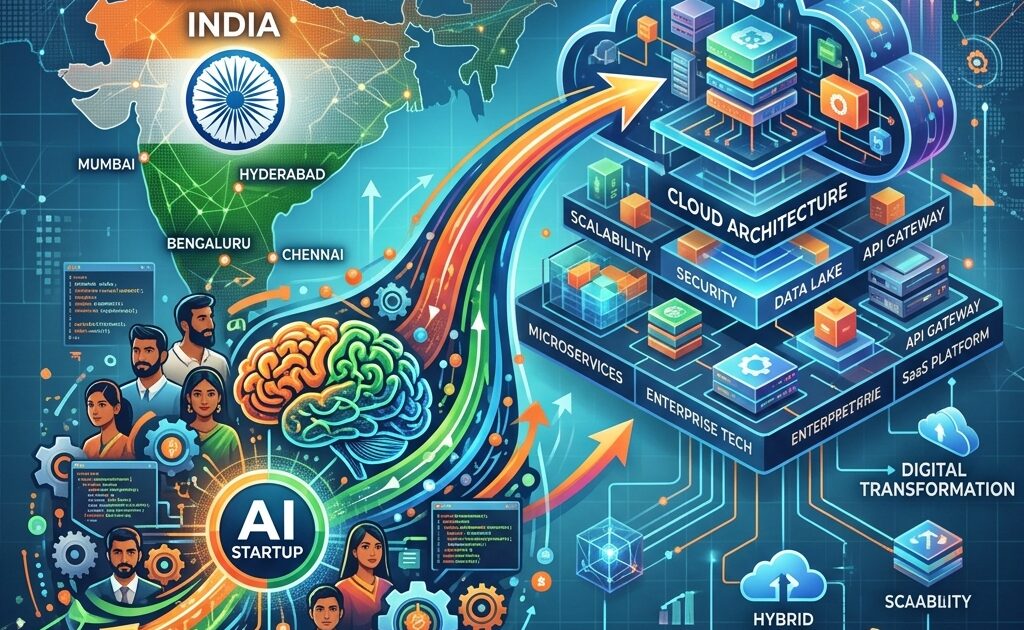
Instead, Krutrim has retreated to the oldest and most reliable business model in a technological gold rush: selling the picks and shovels. By shifting to become an “AI Cloud,” Krutrim is transforming its primary liability—the immense cost of its GPU cluster—into its primary asset. This new model likely rests on a three-pronged service architecture. At the base layer is Infrastructure-as-a-Service (IaaS), the straightforward, high-demand business of renting out raw GPU cycles to other companies. The next layer is Platform-as-a-Service (PaaS), offering a managed environment where developers can take powerful open-source models like Llama or Mistral and fine-tune them for specific tasks without the headache of managing the underlying infrastructure. Finally, there’s Model-as-a-Service (MaaS), where Krutrim can still leverage its now-legacy Krutrim-2 model and other open-source alternatives, serving them via API and charging on a per-token basis. This is a pivot from high-risk, high-reward scientific research to a lower-margin, but vastly more predictable, utility business.
Enterprise Market Impact & TCO
For Chief Technology and Financial Officers across India, Krutrim’s pivot reshapes the landscape of domestic AI deployment. The critical question is no longer “Can Krutrim’s model compete?” but rather “Does Krutrim’s cloud offer a compelling Total Cost of Ownership (TCO) and strategic advantage over the global hyperscalers like AWS, Azure, and GCP?” The answer is nuanced. Krutrim’s potential value proposition for the Indian enterprise rests on three pillars: data sovereignty, latency, and localized support. For sectors like financial services, healthcare, and government, the ability to process sensitive data within India’s borders, free from the jurisdictional complexities of the US CLOUD Act, is a powerful driver. Furthermore, hosting models physically closer to Indian users can provide significant latency advantages for real-time applications, a critical factor in user experience.
However, the most scrutinized aspect of Krutrim’s enterprise offering will be its financial claims. The reported FY26 revenue of ~$31.5 million and, more astonishingly, its first annual net profit with margins over 10%, must be viewed with extreme skepticism. The source article’s reference to a prior year where 90% of revenue came from founder Bhavish Aggarwal’s other companies, Ola and Ola Electric, is the key. It is highly probable that this “profitability” is an artifact of creative internal accounting. Krutrim can charge its sister companies a premium for its GPU capacity, effectively transferring funds to its own balance sheet to project an image of financial health and commercial traction. This is a paper profit, not a market-validated one. The true health of the business lies not in the top-line revenue figure but in the growth and contract value of its “25+ external enterprise customers.” Until those numbers are transparent and substantial, any claim of profitability is marketing, not a measure of enterprise success.
An enterprise CTO evaluating Krutrim must therefore conduct a rigorous TCO analysis. While Krutrim may offer competitive pricing on raw GPU instances (IaaS), the real cost includes the maturity of the software stack, the reliability of the MLOps tooling (PaaS), and the breadth of available models (MaaS). The hyperscalers have spent over a decade and hundreds of billions of dollars perfecting this ecosystem. Krutrim is starting from a much earlier point. The decision will come down to a trade-off: are the benefits of data sovereignty and potentially lower latency worth the risk of using a less mature platform compared to the battle-hardened offerings of global giants? For many, the initial engagement will likely be for non-critical workloads or as part of a multi-cloud strategy to mitigate vendor lock-in.
The Consumer Reality: What This Means for You
For the average person in India and the global tech enthusiast, the esoteric world of enterprise cloud pivots can feel distant. Yet, the implications of Krutrim’s strategic shift are tangible. The most immediate and symbolic impact is the disappearance of the “Kruti AI assistant” from app stores. This was the company’s sole consumer-facing product, the tangible manifestation of its promise to build a uniquely Indian AI experience. Its removal signifies the end of that direct-to-consumer dream. The ambition to create an AI that inherently understands the nuances of Hindi, Tamil, or Bengali, and can grasp the cultural context behind a query about cricket or a local festival, has been put on the back burner. Consumers are left with the existing global options, which, while powerful, often superimpose a Western context onto a non-Western world.
This does not mean Krutrim will vanish from your life. Instead, it will become part of the invisible plumbing of the digital world. The next time you use an Indian e-commerce app and get a surprisingly relevant product recommendation, or your local fintech app instantly flags a fraudulent transaction, the underlying AI model performing that task might be running on Krutrim’s servers. The company is transitioning from being a brand you interact with to a utility that other brands rely on. In this new role, Krutrim’s success could foster a more vibrant domestic AI startup scene. By providing more affordable and accessible GPU compute, it could empower a new generation of Indian developers to build niche, culturally-aware AI applications that would have been too expensive to develop using global cloud providers.
In the long term, this could lead to a wave of innovation that does, eventually, fulfill the original promise, albeit indirectly. Instead of one monolithic “Indian AI,” we may see hundreds of smaller, specialized AIs for specific Indian use cases, all powered by a common domestic infrastructure backbone. So while the grand, top-down vision has faded, a more resilient, bottom-up ecosystem may rise in its place. The dream of a sovereign AI hasn’t died; it has been decentralized.
The Industry Ripple Effect
Krutrim’s pivot sends a powerful shockwave through the global AI investment and development community. It serves as a stark validation for the more measured strategies of its rivals and a sobering reality check for venture capitalists funding “national champion” AI startups. Rival Sarvam, for instance, which has focused on optimizing open-source models and building strategic partnerships, now appears prescient. By avoiding the siren song of building a frontier model from scratch, Sarvam has conserved capital and focused on go-to-market execution, a strategy that now looks far more sustainable. Krutrim’s retreat effectively cedes the foundational model battlefield in India, leaving the territory to a combination of global giants and open-source-focused local players.
More broadly, this event reinforces the terrifying moat of the incumbents. The AI race is increasingly looking like a game only playable by trillion-dollar hyperscalers (Microsoft/OpenAI, Google, Amazon/Anthropic) and a handful of hyper-funded outliers. The sheer capital required to compete at the highest level creates a barrier to entry so formidable that even a well-funded unicorn in the world’s fifth-largest economy had to abandon the effort. This will likely cause VCs worldwide to reassess their AI theses. Investment may shift away from ambitious foundational model startups and toward two other categories: companies building the infrastructure and tooling around AI (the “picks and shovels” that Krutrim is now making), and companies building highly specific, vertical AI applications on top of existing models.
The narrative of creating sovereign, regional AI challengers has been dealt a significant blow. Governments and investors who believed they could simply fund their way to an indigenous alternative to OpenAI must now confront the reality that money is only one part of the equation. Access to unprecedented computing scale, unique datasets, and the world’s top 0.1% of AI research talent are the other critical components, and these are not easily bought. Krutrim’s story is a cautionary tale that will be studied in boardrooms from Silicon Valley to Shenzhen: in the age of generative AI, ambition must be tethered to an almost unimaginable resource base. For everyone else, the most viable path is not to rebuild the mountain, but to find a clever way to climb it.
TechNode HQ Verdict: Pros, Cons & Usability
- Pro (Engineering): The pivot to a cloud infrastructure model is a pragmatic and commercially viable strategy. It transforms a massive capital expenditure (GPU cluster) into a revenue-generating asset and aligns the company with the more sustainable “picks and shovels” role in the AI gold rush.
- Pro (Consumer): By potentially lowering the barrier to entry for GPU compute in India, Krutrim’s cloud could foster a more diverse ecosystem of AI-powered startups, leading to more innovative and culturally-attuned applications for Indian consumers in the long run.
- Con: The “profitability” claim is a significant red flag, likely propped up by internal revenue from parent company Ola. This lack of transparency obscures the true market traction of its cloud services and makes its $1B valuation highly questionable.
- Con: The dream of a premier, sovereign Indian foundational model is now indefinitely delayed. This cedes ground to US-based models and represents a loss of ambition for the creation of truly indigenous AI at the highest level.
Enterprise Usability: A CTO in the Indian market should approach Krutrim with cautious optimism. It is a viable option for a multi-cloud strategy, especially for workloads where data sovereignty and low latency are paramount. However, they should demand full transparency on uptime, the maturity of the MLOps stack, and the true cost beyond headline GPU pricing. Start with non-critical workloads to test the platform’s stability and support before considering any large-scale migration from established hyperscalers.
Everyday Usability: The public cannot “buy” or “use” Krutrim directly anymore. Its consumer-facing product is gone. The value for the everyday user is now indirect and long-term. They should watch for a new wave of Indian-made apps with sophisticated AI features over the next 1-2 years, as this will be the true measure of whether Krutrim’s pivot successfully enabled a broader ecosystem of innovation.
Sources & Citations:
Original Technical Breakdown via: techcrunch
Official Handle: @TechCrunch
Topics Explored: Krutrim, Generative AI, Cloud Computing, India, Bhavish Aggarwal