The Architectural Shift

The internet, as we’ve known it for four decades, is undergoing its most profound transformation since the advent of broadband. No longer a passive conduit for data, the network is evolving into an intelligent, adaptive system—capable of anticipating, optimizing, and even monetizing the traffic it carries. At the heart of this shift is artificial intelligence, and Cisco is positioning itself not as a vendor, but as the architect of the AI-native network.
This isn’t about faster pipes. It’s about smarter ones. Traditional networks operate on static configurations, reactive troubleshooting, and manual provisioning. When a link fails, engineers are paged. When congestion spikes, users suffer. But AI workloads—whether generative models, autonomous agents, or real-time inference engines—don’t tolerate latency, jitter, or packet loss. They demand consistency, predictability, and performance guarantees. And they don’t follow predictable traffic patterns. An AI agent might sit idle for hours, then suddenly burst into thousands of micro-transactions across distributed systems. This unpredictability breaks legacy network assumptions.
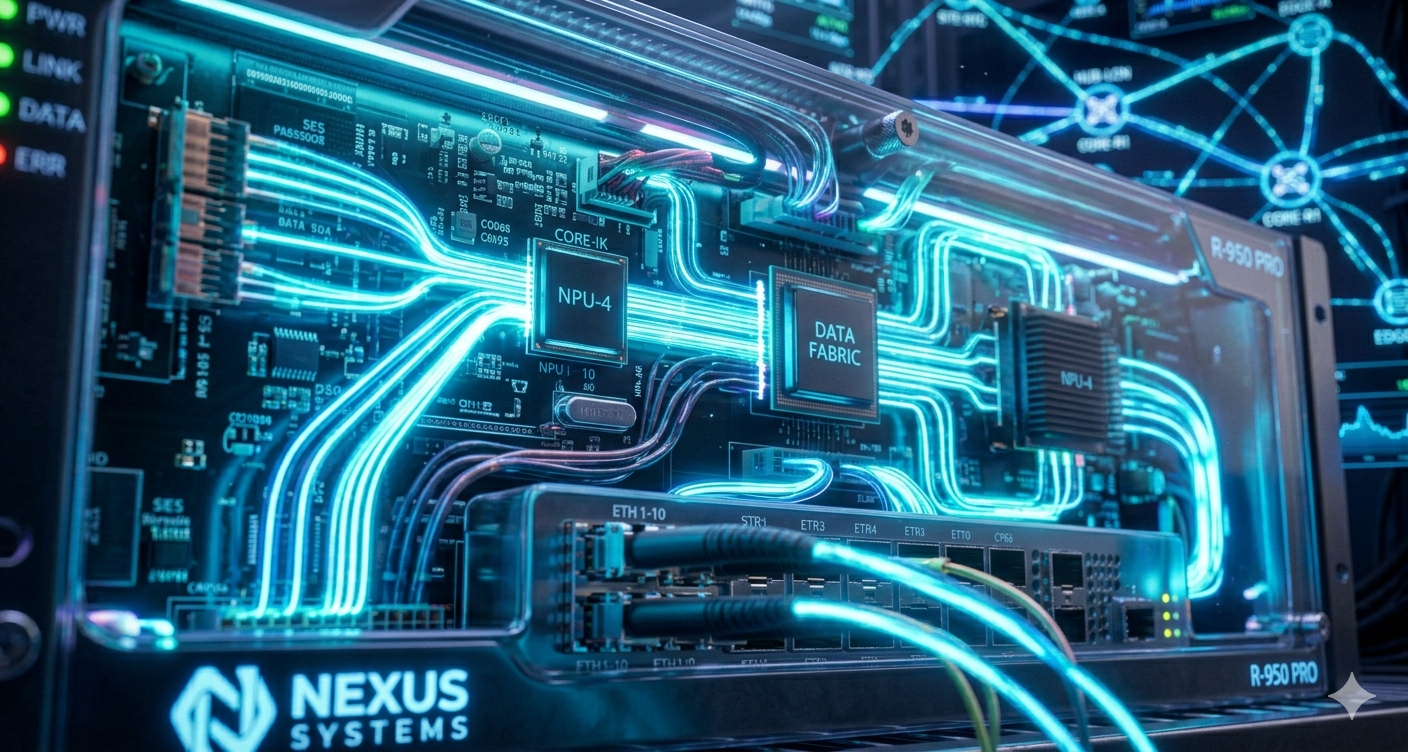
Cisco’s response is a full-stack re-architecture, starting at the silicon level. The company’s Silicon One G-series and Q-series ASICs are purpose-built for this new era. These chips support line-rate telemetry, meaning every packet can be monitored in real time without sampling or performance degradation. This data feeds into Cisco’s Crosswork and ThousandEyes platforms, where machine learning models analyze microsecond-level anomalies, detect early signs of congestion, and predict failures before they impact users. It’s not just monitoring—it’s prescriptive intelligence.
At the control plane, Cisco is doubling down on Segment Routing (SR), a protocol that replaces legacy MPLS with source-based path computation. In traditional networks, each router makes independent forwarding decisions. In SR, the ingress router encodes the entire path into the packet header, enabling dynamic traffic engineering based on real-time conditions. This is critical for AI workloads that require guaranteed latency or high-throughput lanes. For example, a provider can create a “low-latency inference lane” for real-time AI applications, while reserving a “high-throughput training lane” for batch processing—all on the same physical infrastructure.
Equally transformative is Cisco’s Routed Optical Networking (RON) strategy. By collapsing the DWDM and IP layers into a single control plane, Cisco eliminates the traditional “IP-over-optical” stack, reducing latency by up to 30% and simplifying operations. This is not just an efficiency play—it’s a necessity for AI. Optical networks are no longer dumb transport; they’re programmable, adaptive systems that respond to AI-driven demand. In metro areas, Lumen’s METRON architecture leverages this approach to scale capacity rapidly while reducing operational complexity.
At the edge, Cisco’s Unified Edge Platform integrates compute, storage, and networking into a single chassis, enabling low-latency inference for AI agents. This is where the network stops being just connectivity and starts becoming a distributed compute fabric. Real-time video analytics, autonomous systems, and smart city applications can now run closer to users, reducing backhaul costs and improving performance. The Secure AI Factory ensures these workloads are isolated, encrypted, and compliant with data sovereignty requirements—critical for healthcare, government, and financial services.
Enterprise Market Impact & TCO
For enterprise IT leaders, the shift to AI-ready networks isn’t just about performance—it’s about Total Cost of Ownership (TCO), risk mitigation, and strategic agility. The traditional model of overbuilding capacity to handle peak loads is no longer sustainable. AI traffic doesn’t follow predictable curves; it spikes unpredictably, often overwhelming networks that were designed for steady-state workloads. Cisco’s approach replaces overprovisioning with precision investment.
Using AI-driven telemetry and digital twin modeling, service providers can simulate network behavior under various AI workload scenarios. This allows them to expand capacity only where and when it’s needed, optimizing every dollar of CapEx. For example, instead of deploying fiber to every node in anticipation of future demand, providers can use predictive analytics to identify high-growth corridors and prioritize investments accordingly. This shift from reactive to predictive planning reduces waste and improves ROI.
Operational costs (OPEX) are also being transformed. Traditional networks require constant human intervention—truck rolls, manual troubleshooting, configuration changes. With Cisco’s Provider Connectivity Assurance and ThousandEyes, networks become self-healing. Anomalies are detected before they impact users, root causes are identified across multi-vendor environments, and automated remediation kicks in without human intervention. This reduces mean time to repair (MTTR) from hours to minutes, if not seconds.
For enterprises, this translates into higher service availability and lower downtime costs. As Lumen’s Distinguished Engineer Francis Ferguson noted in a recent podcast, “In the customers’ experience, even if you get it right 99% of the time, that is still 100% wrong in the moment they need it and the network fails.” Cisco’s assurance platforms aim to eliminate that 1% failure window by making networks proactive rather than reactive.
Monetization is another key driver. Enterprises are no longer satisfied with commoditized bandwidth. They want performance guarantees—low latency, minimal jitter, high reliability. Cisco enables providers to offer premium “AI-ready” connectivity tiers, priced based on service level agreements (SLAs). For example, a financial services firm running real-time fraud detection can pay for a dedicated low-latency lane, while a media company doing AI-powered video rendering can opt for high-throughput bulk transfer. This creates higher-margin revenue streams beyond basic connectivity.
Network slicing further enhances this model. By allocating resources dynamically, providers can create virtual networks tailored to specific applications. A smart factory might need ultra-reliable low-latency communication (URLLC) for robotic control, while a telehealth provider requires consistent bandwidth for 4K video consultations. These slices run on shared infrastructure but are isolated at the control and data planes, ensuring performance and security. This is not just network virtualization—it’s business model innovation.
The Consumer Reality: What This Means for You
While enterprise implications are profound, the real test of any infrastructure shift is how it impacts the everyday user. For the global public, the move to AI-ready networks means applications will become more responsive, reliable, and intelligent—but only if providers invest in the upgrade.
Consider gaming. Cloud-based platforms like Xbox Cloud Gaming and NVIDIA GeForce Now are already pushing networks to their limits. Add AI-powered NPCs (non-player characters) that adapt in real time, and latency becomes critical. A 50-millisecond delay might be tolerable for a movie stream, but it’s catastrophic for a first-person shooter. With AI-optimized networks, gamers will experience near-instant response times, even during peak hours.
Telehealth is another area where this shift matters. Remote consultations, AI-assisted diagnostics, and real-time monitoring of chronic conditions all depend on stable, low-latency connections. A dropped call during a mental health session or a lag in transmitting ECG data could have serious consequences. AI-ready networks ensure these services remain uninterrupted, even as demand surges.
Smart cities and IoT will also benefit. Traffic lights that adjust in real time based on AI analysis of camera feeds, emergency response systems that prioritize routes using predictive analytics, and public safety networks that detect anomalies in crowd behavior—all rely on edge AI and ultra-reliable connectivity. These services won’t work on today’s best-effort networks. They need the guarantees that AI-ready infrastructure provides.
But there’s a caveat: not everyone will benefit equally. Urban areas with fiber-to-the-home and dense edge compute will see the most immediate gains. Rural and underserved regions may lag behind, exacerbating the digital divide. Moreover, the cost of premium AI-ready services could create a two-tier internet, where only those who can pay get the best performance. This isn’t just a technical challenge—it’s a social one.
The Industry Ripple Effect
Cisco’s push into AI-ready networks is sending shockwaves through the industry. Competitors like Juniper, Nokia, and Huawei are now racing to match its full-stack vision. Juniper’s Apstra and Mist AI platforms offer similar automation and assurance capabilities, but lack Cisco’s depth in optical networking and silicon. Nokia is investing heavily in private 5G and edge computing, but its AI integration remains fragmented. Huawei, despite its technical prowess, faces geopolitical headwinds that limit its global reach.
The real disruption, however, is economic. By enabling providers to monetize performance rather than capacity, Cisco is redefining the value proposition of connectivity. This could lead to a consolidation in the telecom sector, as smaller providers struggle to afford the CapEx required for AI-ready infrastructure. Alternatively, it could spur innovation in network-as-a-service (NaaS) models, where providers lease AI-optimized capacity on demand.
Cloud hyperscalers are also watching closely. AWS, Microsoft, and Google have built massive AI infrastructures, but they depend on telcos for last-mile delivery. If providers can offer guaranteed performance, they gain leverage in negotiations. Conversely, if they fail to upgrade, hyperscalers may bypass them entirely with private fiber or satellite networks.
Ultimately, Cisco’s bet is that the network will become the battleground for AI dominance. It’s not enough to have powerful models; they must be delivered with reliability, speed, and security. The company’s 40-year legacy in building the internet gives it a unique advantage—but execution will determine whether it leads the next era or becomes a cautionary tale of missed opportunity.
TechNode HQ Verdict: Pros, Cons & Usability
- Pro (Engineering): Line-rate telemetry and AI-driven anomaly detection enable true predictive operations, reducing downtime and improving network resilience.
- Pro (Consumer): Applications like telehealth, gaming, and smart cities will become more reliable and responsive, enhancing quality of life.
- Con: High CapEx requirements and vendor lock-in risk may exclude smaller providers and limit competition.
- Con: Lack of standardized SLAs for AI performance could lead to inconsistent user experiences across providers.
Enterprise Usability: CTOs should pilot AI-ready networking in high-value use cases like financial trading, healthcare, or private 5G, where performance guarantees justify the investment. Avoid blanket rollouts until ROI is proven.
Everyday Usability: The general public should not expect immediate benefits. Wait for providers to deploy these networks widely, and demand transparency on performance SLAs before paying premium prices.
Sources & Citations:
Original Technical Breakdown via: blogs
Official Handle: @blogs
Topics Explored: AI-ready networks, Cisco Segment Routing, network automation, edge AI, network slicing