The Architectural Shift
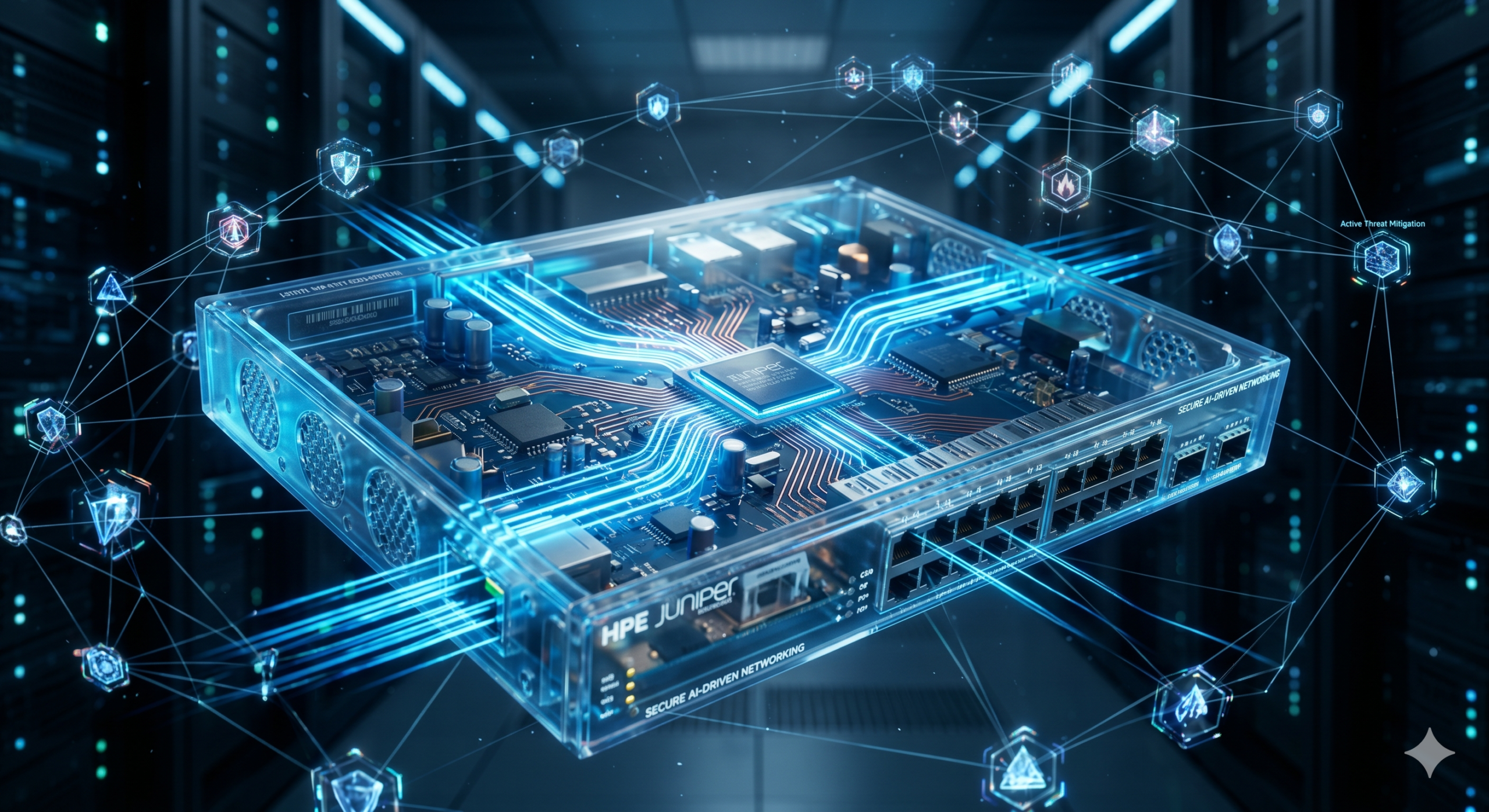
The elevation of HPE Juniper Networking to Challenger status in the 2025 Gartner Magic Quadrant for Hybrid Mesh Firewall is not merely a marketing milestone—it’s a validation of a decade-long architectural evolution that has redefined how security integrates with network infrastructure. At its core, this shift represents a move away from the legacy model of bolt-on security appliances toward a unified, telemetry-driven fabric where networking and protection are inseparable. The foundation of this transformation lies in Junos OS, a single, hardened operating system that spans physical hardware (SRX series), virtual machines, and containerized deployments (cSRX), ensuring consistent policy enforcement and behavior across environments.
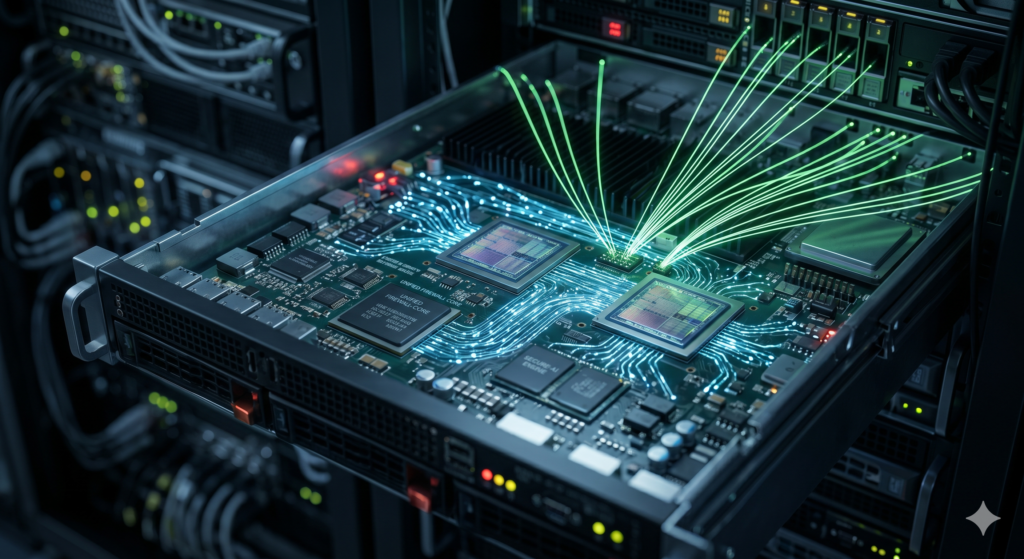
Unlike competitors who rely on stitching together disparate security tools via APIs or overlay controllers, HPE Juniper’s architecture embeds security at the data plane level. This is achieved through purpose-built silicon—custom ASICs like those in the latest SRX5000 line—that perform deep packet inspection, SSL/TLS decryption, and threat detection at line rate, without introducing latency bottlenecks. These ASICs are not just accelerators; they are policy enforcement engines that operate in parallel with routing and switching functions, enabling real-time decisions based on AI-analyzed telemetry. The result is a network that doesn’t just forward packets but understands their intent, origin, and risk profile.
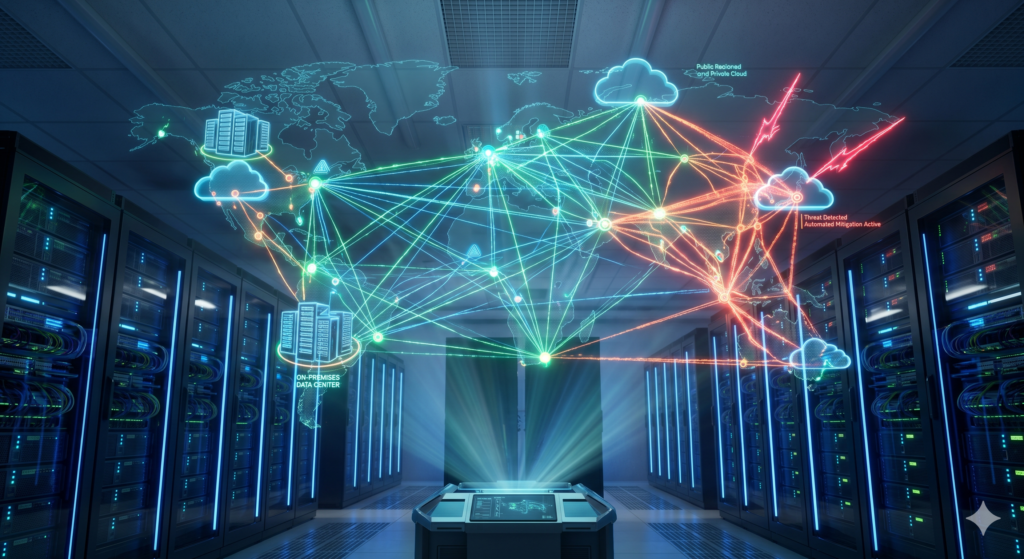
The “mesh” in Hybrid Mesh Firewall is not a metaphor—it’s a functional topology. Each node in the network, whether a branch router, data center switch, or cloud gateway, acts as both a security enforcer and a sensor. When a threat is detected—say, a lateral movement attempt from a compromised endpoint—the event is instantly shared across the mesh via encrypted telemetry streams. Other nodes dynamically update their local policies, blocking the threat’s path before it reaches critical assets. This peer-to-peer intelligence sharing eliminates the need for a centralized “brain” that can become a single point of failure or latency sink.
Central to this system is Mist AI, now fully integrated post-HPE acquisition, which processes petabytes of real-time data from Juniper’s access points, switches, and firewalls. The AI models are trained on global threat patterns but fine-tuned at the enterprise level, reducing false positives by understanding normal user and device behavior. For example, if a user suddenly starts accessing databases at 3 a.m. from an unfamiliar location, the system doesn’t just flag it—it correlates with device health, network posture, and application usage to determine if it’s a legitimate remote worker or a compromised account. This context-awareness is what separates true AI-native security from mere automation.
Enterprise Market Impact & TCO
For CISOs and network architects, the implications of HPE Juniper’s Challenger positioning extend far beyond analyst validation—they translate into tangible reductions in complexity, risk, and total cost of ownership (TCO). Enterprises today grapple with a fractured security landscape: legacy firewalls at the perimeter, cloud-native security groups in AWS and Azure, and endpoint protection on laptops—all managed through different consoles, with inconsistent policies and blind spots in between. This fragmentation leads to configuration drift, alert fatigue, and, ultimately, breaches.
HPE Juniper’s unified platform, orchestrated through Security Director Cloud, collapses this sprawl into a single pane of glass. Policies are defined once—say, “All finance team devices must have encrypted storage and up-to-date OS patches”—and automatically translated into technical rules across on-prem SRX firewalls, cloud virtual appliances, and even IoT gateways. This eliminates the manual, error-prone process of writing and maintaining thousands of ACLs. According to internal Juniper case studies, enterprises report a 60% reduction in firewall rule management time and a 45% drop in policy-related outages.
Scalability is another critical advantage. Traditional firewalls scale vertically—buy a bigger box when traffic grows—leading to costly forklift upgrades and downtime. HPE Juniper’s architecture scales horizontally: add a new SRX appliance or spin up a cSRX instance in Kubernetes, and it auto-joins the mesh, inheriting policies and sharing telemetry. This elasticity is crucial for organizations undergoing digital transformation, such as retailers expanding e-commerce or healthcare providers adopting telemedicine. One European bank, for instance, deployed 200 new branch firewalls in under two weeks using zero-touch provisioning, with full security policy enforcement from day one.
The HPE acquisition amplifies these benefits. HPE’s Aruba networking portfolio, particularly its SD-WAN and wireless solutions, now integrates natively with Juniper’s security stack. This means a user connecting via an Aruba access point triggers automatic security posture checks—device compliance, location, behavior—before granting network access, all within a zero-trust framework. HPE’s global services arm also provides deployment, migration, and managed security offerings, reducing the burden on internal IT teams. Early adopters report a 30% lower TCO over three years compared to maintaining separate Juniper and HPE contracts.
However, the transition is not without friction. Organizations deeply invested in Cisco, Palo Alto, or Fortinet ecosystems may face integration challenges, particularly around identity management and SIEM compatibility. While Juniper supports standard protocols like SAML and Syslog, full interoperability often requires custom scripting or third-party middleware. Additionally, the AI-driven model demands high-fidelity data—poorly labeled devices or inconsistent logging can degrade threat detection accuracy. Enterprises must invest in data hygiene and staff training to realize the full value.
The Consumer Reality: What This Means for You
To the average consumer, HPE Juniper’s rise in the Gartner rankings may seem like distant enterprise news. But the ripple effects touch everyday digital life in profound, if invisible, ways. When a bank, airline, or government agency secures its infrastructure with a hybrid mesh firewall, the result is not just fewer headlines about data breaches—it’s a more reliable, responsive, and trustworthy digital experience.
Consider online banking. A traditional firewall might block known malware IPs but miss a sophisticated attack that mimics legitimate user behavior. With HPE Juniper’s AI-native system, the network learns what “normal” looks like for each customer: typical login times, device fingerprints, transaction patterns. If a hacker gains access and tries to transfer funds at an unusual hour from a new device, the system doesn’t just block it—it can silently redirect the transaction to a secure verification flow, preventing fraud without disrupting the user. This kind of proactive protection reduces the need for cumbersome two-factor authentication while actually improving security.
Remote work and education also benefit. During the pandemic, many organizations scrambled to scale VPNs, leading to slow connections and dropped sessions. HPE Juniper’s architecture supports secure access service edge (SASE) principles, where users connect directly to the nearest cloud gateway instead of tunneling back to a central data center. This cuts latency and improves performance for video conferencing and cloud apps. A teacher in rural India accessing a global learning platform, for example, experiences smoother streaming because the network dynamically optimizes the path and applies security policies at the edge.
Even consumer IoT devices—smart thermostats, cameras, doorbells—become safer. These devices are notoriously insecure, often becoming entry points for botnets. With HPE Juniper’s zero-trust approach, each device is treated as untrusted until verified. The network continuously monitors its behavior; if a smart camera suddenly starts sending large amounts of data to an unknown server, it’s automatically quarantined. This protects not just the home network but also prevents the device from being used in attacks on others.
Yet, there’s a caveat: this security comes at a cost that may eventually trickle down. Enterprises paying premium prices for integrated platforms may pass some of those costs to consumers through higher service fees. And while AI reduces false positives, it can also introduce opacity—users may be blocked without clear explanations, leading to frustration. The balance between security and usability remains delicate, and the public must demand transparency from service providers.
The Industry Ripple Effect
HPE Juniper’s ascent in the Hybrid Mesh Firewall quadrant is sending shockwaves through the enterprise networking and security markets. Competitors like Palo Alto Networks, Fortinet, and Cisco can no longer rely on feature checklists or standalone product excellence. The bar has shifted to architectural cohesion—how well security is woven into the fabric of the network, not just layered on top.
Palo Alto, long dominant in the Gartner Magic Quadrant, now faces pressure to prove that its Prisma Access and SASE offerings deliver the same level of integration as HPE Juniper’s native mesh. Fortinet’s strength in cost-effective, all-in-one appliances is being challenged by the demand for AI-driven automation and cloud-native scalability. Cisco, despite its broad portfolio, continues to struggle with fragmentation between its networking and security divisions—a weakness that HPE Juniper’s unified engineering culture directly exploits.
The acquisition by HPE also reshapes the competitive landscape. HPE brings not just capital but a global enterprise sales force, supply chain, and services network. This allows HPE Juniper to compete more aggressively in large-scale tenders, particularly in regulated industries like finance and healthcare where compliance and support are critical. We’re already seeing shifts in procurement patterns: a major Asian telecom recently switched from a multi-vendor setup to an HPE Juniper-only architecture, citing reduced operational risk and better vendor accountability.
Meanwhile, cloud providers like AWS and Microsoft Azure are watching closely. Their native security tools (e.g., AWS Network Firewall, Azure Firewall) are powerful but often lack the deep integration with on-prem systems that enterprises demand. HPE Juniper’s hybrid focus fills this gap, potentially slowing the cloud giants’ push toward full-stack dominance. Instead, we may see more partnerships—such as Juniper’s existing integration with Azure Virtual WAN—where cloud and on-prem security coexist in a mesh.
The long-term trend is clear: the future belongs to platforms, not products. Standalone firewalls will become as obsolete as standalone routers. The winners will be those who can deliver a self-optimizing, self-protecting network fabric—one that adapts to threats in real time, scales elastically, and requires minimal human intervention. HPE Juniper’s Challenger status is not the end goal; it’s a stepping stone toward becoming a Leader, and the entire industry is now racing to catch up.
TechNode HQ Verdict: Pros, Cons & Usability
- Pro (Engineering): Unified Junos OS with custom ASICs enables consistent, high-performance security enforcement across hybrid environments.
- Pro (Consumer): Indirect benefits include more reliable digital services, fewer data breaches, and smoother remote access experiences.
- Con: Risk of vendor lock-in and high upfront costs for organizations not already in the Juniper ecosystem.
- Con: AI-driven decisions may lack transparency, making incident investigation and user communication challenging.
Enterprise Usability: CTOs should consider HPE Juniper for greenfield deployments or major infrastructure overhauls, especially in hybrid or multi-cloud environments. For existing multi-vendor setups, conduct a phased migration with strong change management.
Everyday Usability: The general public doesn’t need to buy anything—this is backend infrastructure. However, consumers should favor services (banks, apps, ISPs) that disclose strong security practices, as they’re more likely to benefit from such advanced platforms.
Sources & Citations:
Original Technical Breakdown via: blogs
Official Handle: @blogs
Topics Explored: HPE Juniper, Hybrid Mesh Firewall, Gartner Magic Quadrant, AI-Native Networking, Zero Trust Security