Key takeaways
- The Apple M7 Ultra is being engineered with up to 1.5TB of unified memory for AI workloads.
- Configuring a 2028 Mac with 1.5TB of unified memory could push prices beyond $35,000.
- Apple is reportedly skipping higher-end M6 chips to accelerate M7 development and AI integration.
- The massive hardware cost is driven by widespread memory-chip shortages and advanced AI-heavy workload requirements.
- An 18-to-20-inch foldable OLED device running iPadOS is also in development, facing potential launch delays until 2029.
The Architectural Reality of the Apple M7 Ultra
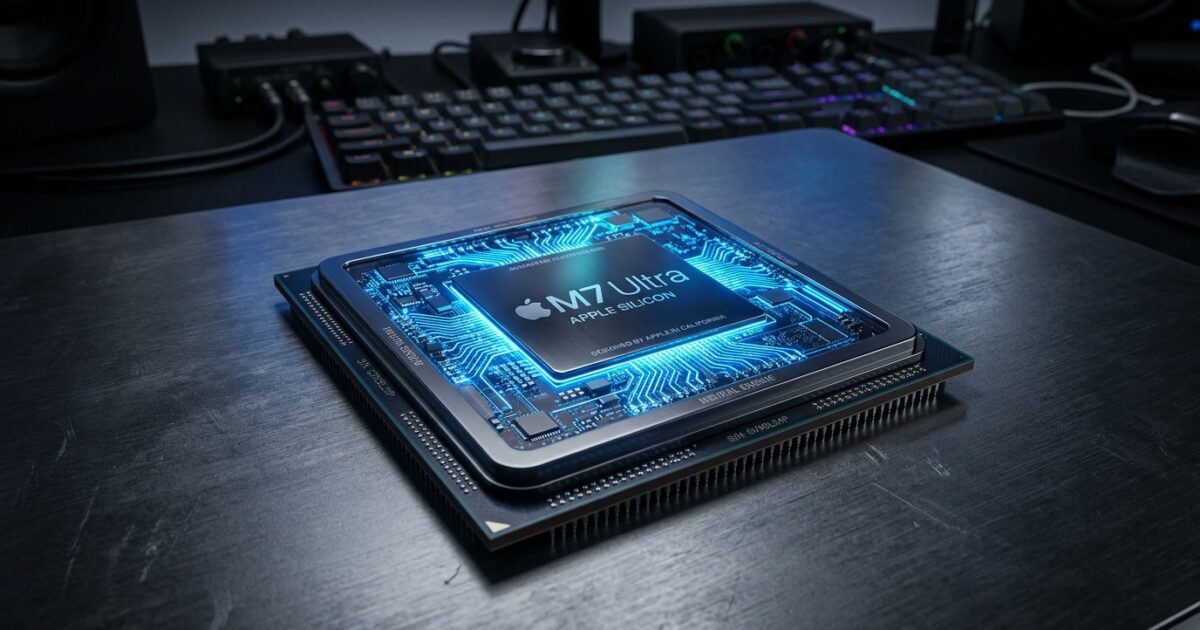
The enterprise hardware landscape is bracing for a seismic shift. By 2028, the Apple M7 Ultra is projected to arrive, bringing unprecedented capabilities and a staggering price tag. According to recent supply chain leaks and technology analysts, Apple is reportedly disrupting its traditional release cycle—pushing aside higher-end M6 variants to accelerate the development of the M7 generation. This pivot underscores a new era where artificial intelligence is no longer just a complementary feature; it is the fundamental force dictating how silicon architecture is designed and deployed.
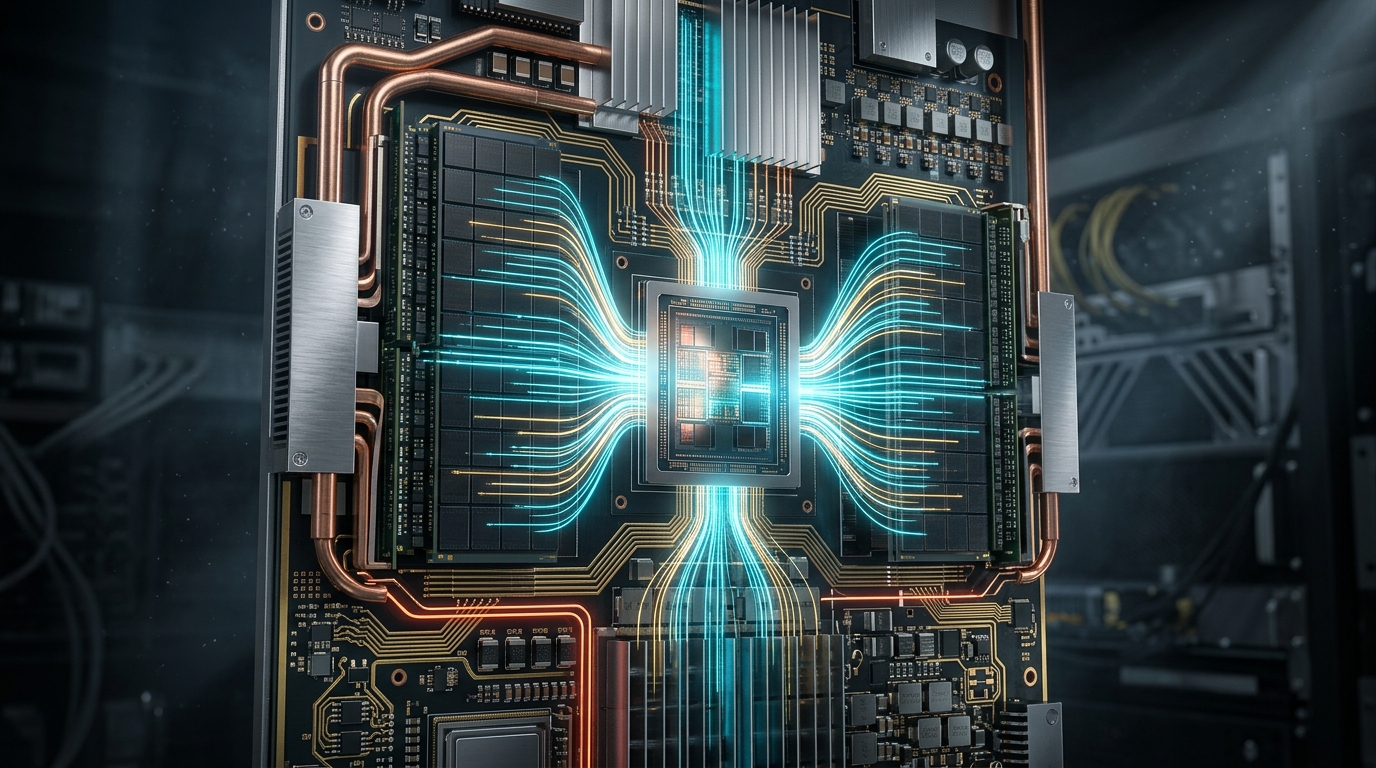
At the core of this transformation is the M7 Ultra’s capacity to support up to 1.5TB of unified memory. To put this into perspective, this massive allocation matches the maximum RAM configuration of the older 2019 Intel-based Mac Pro. However, executing this within a unified memory architecture—where the CPU, GPU, and Neural Engine share a single high-bandwidth memory pool—represents a monumental engineering leap. Traditional PC architectures rely on physically separated RAM modules and dedicated VRAM on graphics cards, linked by a restrictive PCIe bus. This physical separation creates a data transfer bottleneck. In contrast, Apple’s unified memory allows massive AI models to reside in a single location, accessible instantaneously by all processing units.
Apple’s roadmap is aggressively pursuing this future. Development is already underway for M8 processors (codenamed ‘Soko’), which are expected to utilize a microscopic 1.4-nanometer manufacturing process by 2028. However, the M7 Ultra remains the immediate bridge to this localized AI revolution. By handling intensive artificial intelligence workloads locally, the top-end M7 Ultra models will likely be targeted strictly at professional AI researchers and workstation users, engineered to compete directly with dedicated enterprise AI accelerators like Nvidia’s Blackwell architecture.
Market Impact & Enterprise Deployment

For C-suite executives and IT procurement directors, the financial implications of this technological leap are profound. Widespread memory-chip shortages and the sheer volume of advanced silicon required mean that maxed-out configurations of the Apple M7 Ultra will be exceptionally expensive. Analysts project that configuring a 2028 Mac Studio with 1.5TB of unified memory could easily push its price over the $35,000 threshold. When factoring in taxes, specialized peripherals, and AppleCare enterprise support, organizations could realistically see per-workstation deployments approaching a staggering $50,000.
The availability and final pricing of this 1.5TB memory configuration will depend heavily on the state of the memory industry and component shortages in 2028. The supply chain for advanced memory modules is inherently volatile, subject to geopolitical tensions and limited global fabrication capacities. Consequently, the M7 Ultra will not just be an expensive machine; it may become a highly scarce commodity, leading to strict allocation caps for corporate buyers attempting to secure hardware for their internal data centers.
However, the Total Cost of Ownership (TCO) must be calculated against the potential Return on Investment. For research laboratories, cinematic rendering houses, and machine learning startups, cloud computing costs are the ultimate budget drain. Renting cloud instances equipped with arrays of Nvidia GPUs can easily surpass $100,000 annually per engineer. If a localized M7 Ultra workstation can dramatically reduce the time required to compile millions of lines of code or fine-tune a 100-billion parameter Large Language Model entirely on-device, the exorbitant upfront cost translates directly into massive capital savings and accelerated time-to-market. This positions the Mac Studio as foundational enterprise infrastructure, drastically reducing reliance on external cloud environments and eliminating data privacy concerns associated with remote transmission.
The Logistics Analogy
Think of traditional computing memory like a city’s road network: data (traffic) has to travel back and forth between the CPU (downtown) and the GPU (the industrial district) over a set of highways (the PCIe bus). Even with the fastest modern highways, transferring massive cargo takes a significant amount of time. The unified memory architecture of the M7 Ultra is akin to building a colossal, omni-directional hyperloop where downtown and the industrial district are stacked perfectly on top of each other. Every department has instantaneous, simultaneous access to the exact same massive central warehouse (1.5TB of data) without ever having to move a single box. This is precisely why it can process sprawling, parameter-heavy AI models natively, completely bypassing the latency and traffic jams that routinely choke traditional computing systems.
The Consumer Translation
While a $35,000 workstation is entirely detached from the average consumer’s reality, the trickle-down economics of Apple’s silicon and display pipeline will reshape everyday computing. As Apple pioneers extreme unified memory and processing power for the M7 Ultra, the baseline technology inevitably scales down to benefit the mass market. We are already seeing a dramatic shift across Apple’s broader ecosystem. The company is expected to continue its gradual transition to OLED displays across its entire tablet and laptop lineups by 2028. Furthermore, Apple is currently in advanced talks to upgrade 2028 iPhone models with significantly more advanced display technology, including highly efficient Indium Zinc Oxide (IZO) cathodes which dramatically reduce power consumption while boosting brightness for mobile users.
The most anticipated trickle-down consumer innovation, however, is the heavily rumored foldable form factor. Apple is actively developing a large-scale foldable device featuring an expansive 18-inch to 20-inch OLED display. Apple intends to maintain a strict distinction between its product lines, with this foldable hybrid expected to run a tailored version of iPadOS rather than merging fully with macOS. Apple’s absolute goal for this foldable device is to engineer a screen with a nearly invisible crease, overcoming the tactile flaws that plague current industry competitors and pushing the boundaries of material science.
However, bringing this ambitious consumer technology to market is proving incredibly difficult. Current prototypes of Apple’s large foldable device are reportedly heavy, weighing around 3.5 pounds, which severely impacts daily portability. Furthermore, due to the extraordinarily high cost of manufacturing large, flawless foldable OLED panels, estimates suggest the foldable iPad/Mac hybrid could be priced as high as $3,000 to $3,900. Recent reports indicate that the project has encountered significant engineering hurdles, potentially pushing the launch window to 2029 or later. This demonstrates that even with the immense power of upcoming silicon like the M7 series, physical hardware constraints remain a formidable challenge.
Cross-Industry Impact & Disruption
The sheer processing capability of the Apple M7 Ultra, combined with 1.5TB of unified memory, will extend far beyond traditional tech circles, triggering massive disruptions across multiple specialized industries. In the medical imaging and biomedical research sector, the ability to process multi-gigabyte 3D MRI scans and run complex genomic sequencing algorithms locally in real-time will revolutionize diagnostic speed. Hospitals and research universities will be able to perform advanced AI-assisted diagnostics entirely on-premise, completely eliminating the need to transmit highly sensitive patient data to vulnerable cloud servers, thus ensuring strict compliance with global privacy and security regulations.
In the automotive and aerospace engineering industries, the M7 Ultra will rapidly democratize high-level simulation. Currently, simulating autonomous driving AI models across millions of virtual miles requires leasing computational time on massive supercomputers or cloud clusters. With a maxed-out Mac Studio, specialized engineering teams can run these computationally massive physics and AI simulations directly from their local desks. This drastically lowers the barrier to entry for transportation startups, allowing leaner teams to iterate upon vehicle designs and machine learning driving algorithms at a fraction of the historical cost and time.
Similarly, architectural engineering and urban planning will experience a monumental paradigm shift. The creation of “digital twins”—exact, real-time virtual replicas of physical buildings or entire smart cities—requires vast amounts of memory to render textures, physics, dynamic lighting, and IoT sensor data simultaneously. The M7 Ultra’s colossal unified memory pool will allow urban planners to render and manipulate these sprawling smart city environments natively on a single workstation, viewing real-time simulations of traffic flow, energy consumption, and structural integrity without the rendering bottlenecks that currently plague the industry.
Frequently Asked Questions
Q1: When is the Apple M7 Ultra expected to be released?
A1: The M7 Ultra chip is expected to arrive in 2028, following the base M7 and M7 Pro/Max variants. Apple is reportedly altering its traditional release cycle to accelerate this timeline.
Q2: Why could the M7 Ultra Mac be so expensive?
A2: Configuring a 2028 Mac with 1.5TB of unified memory could push its price over $35,000. This astronomical cost is driven by the massive amount of advanced silicon required for AI-heavy workloads and anticipated global memory-chip shortages.
Q3: How much unified memory will the M7 Ultra support?
A3: The M7 Ultra is being engineered to support up to 1.5TB of unified memory. This matches the maximum RAM capacity of the older 2019 Intel-based Mac Pro, but with significantly higher bandwidth and speed.
Q4: What is driving Apple’s shift in chip development?
A4: Artificial intelligence has evolved from being just another feature to a central force shaping how Apple’s chips are designed. This pivotal shift is prioritizing raw AI performance and memory capacity over traditional metrics like device thinness.
Q5: Will the technology in the M7 Ultra reach consumer devices?
A5: Yes, the architectural advancements are driving a broader ecosystem shift, including the transition to OLED across all laptops by 2028 and the development of a large 18-to-20-inch foldable device running iPadOS, though that foldable may be delayed until 2029 due to engineering hurdles.
TechNode HQ Verdict: Pros, Cons & Usability
- Pro (Engineering): Eliminates traditional PCIe bottlenecking by offering 1.5TB of unified memory, allowing massive local AI model training previously restricted to remote server clusters.
- Pro (Consumer): Drives the democratization of advanced silicon and display technologies (like OLED and IZO) down the product stack to everyday consumer laptops and smartphones.
- Con: A staggering projected cost of $35,000+ severely limits accessibility and introduces high financial risk for early adopters facing rapid chip obsolescence.
- Con: Widespread memory-chip shortages could severely bottleneck production, leading to unpredictable allocation constraints and deployment delays for enterprise buyers.
Enterprise Usability: CTOs at AI-focused startups, rendering houses, and research facilities should begin forecasting long-term budget allocations now. If your operation spends tens of thousands monthly on cloud GPU compute, transitioning to localized M7 Ultra nodes could yield a rapid ROI, completely justifying the shocking initial purchase price through enhanced productivity.
Everyday Usability: The general public should absolutely not purchase this machine. It is a specialized, high-bandwidth industrial tool disguised as a desktop computer. Everyday consumers should instead look toward the standard M7 or M7 Pro variants, which will inherit the architectural efficiency and basic AI features without the real-estate-level price tag.