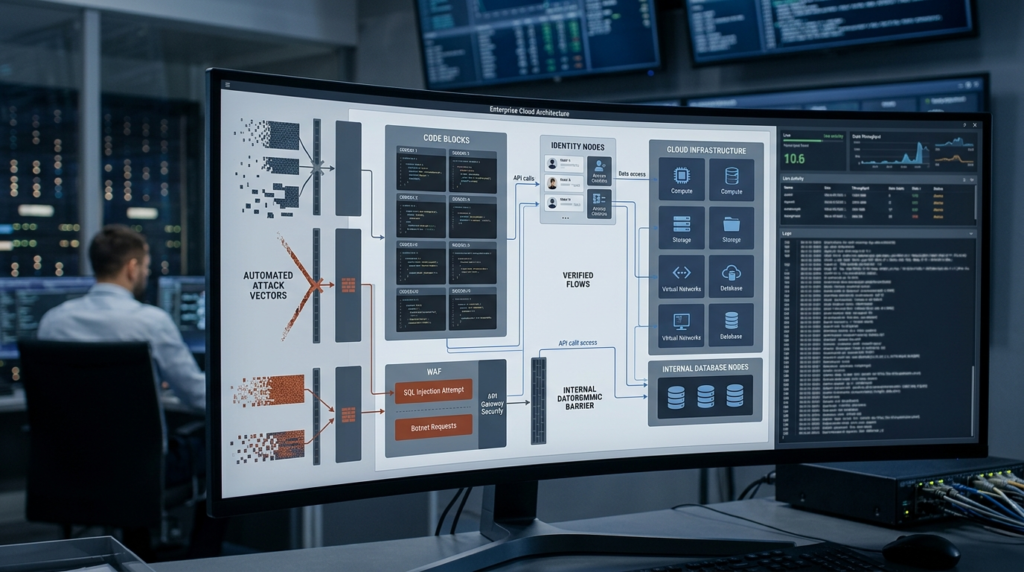
Why Enterprise AI Governance Requires Provable Runtime Control
As autonomous agents delegate tasks across APIs, enterprise IT must shift from post-hoc observability to cryptographic, runtime provable authorization.
Coverage desk
Current desk
As autonomous agents delegate tasks across APIs, enterprise IT must shift from post-hoc observability to cryptographic, runtime provable authorization.
A Pew Research Center poll across 37 nations reveals 46% of adults expect AI to eliminate jobs, with pessimism highest…
Google Threat Intelligence reveals how attackers exploit agents and models, urging leaders to deploy multi-model enterprise AI security and graph…
Salesforce links CRM data and Agentforce directly to AWS and Google Cloud via open protocols, expanding model choice and cross-cloud…
Microsoft has released a draft Humanist AI Code of Conduct, establishing aspirational safety goals for future internal models without enforcement…
AI coding agents reduce the cost of refactoring enterprise legacy systems, but verification and review bottlenecks remain critical operational constraints.
Anthropic's Dario Amodei, OpenAI's Sam Altman, and xAI's Elon Musk agree to pace frontier AI model scaling and support third-party…
Microsoft Patch Tuesday releases a record 974 security fixes as AI bug hunting accelerates, creating severe deployment bottlenecks for enterprise…
Cisco Secure AI Factory adds Supermicro liquid-cooled servers and NVIDIA Rubin support, enabling 200 kW rack-scale performance for enterprise AI…
Deploying enterprise data agents requires strict access control, reliable data foundations, and scalable architecture. Discover Red Hat's proven deployment b...