Key takeaways
- Cisco partnered with Supermicro to deliver NCP-compliant liquid-cooled rack-scale AI factories.
- Liquid-cooled Cisco N9000 switches and Supermicro compute support densities surpassing 200 kW per rack.
- Scale-up networking fabrics disaggregate dense compute across racks to bypass 30-50 kW facility limits.
- Full-stack observability integrates Cisco Cloud Control with NVIDIA AI Enterprise and AgentOps tooling.
- Enterprise data estates connect securely to AI factories to optimize continuous token production economics.
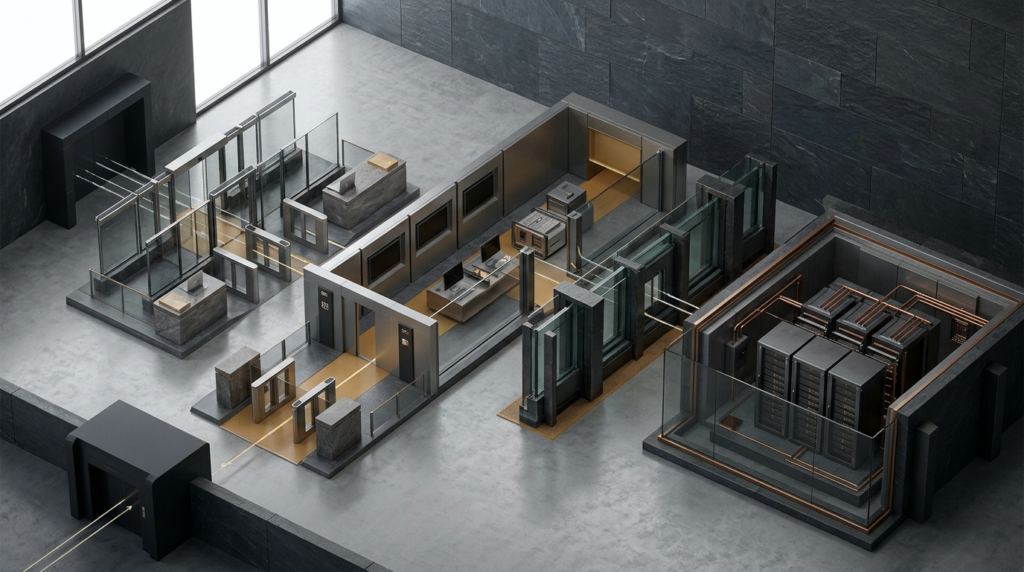
The enterprise data center landscape is shifting rapidly from experimental model training toward dedicated, high-throughput token generation. The expanded Cisco Secure AI Factory portfolio, developed in direct partnership with Supermicro and NVIDIA, provides pre-validated, liquid-cooled rack-scale infrastructure tailored for enterprise private clouds, sovereign cloud operators, and next-generation neoclouds. By unifying compute nodes, front-end Ethernet, and back-end scale-up fabrics under unified management, this architecture directly resolves the compounding bottlenecks of thermal dissipation, data gravity, and operational risk facing modern enterprise IT leadership.
The Cisco Secure AI Factory Architectural Evolution
Modern distributed artificial intelligence workloads no longer behave like traditional enterprise web or database tiers. As foundation models scale toward trillion-parameter checkpoints and real-time agentic reasoning, workload performance becomes entirely bound by inter-accelerator communication latency and thermal efficiency. The newly expanded Cisco Secure AI Factory addresses this physical reality by coupling Supermicro liquid-cooled server architectures with Cisco high-density networking, creating certified NVIDIA Cloud Partner (NCP) compliant compute pods capable of running high-intensity training and inference pipelines right out of the box.
At the physical networking layer, the architecture establishes a bifurcated, purpose-built fabric design. The front-end management, client communication, and north-south data ingestion pipelines run across high-throughput switches powered by Cisco Silicon One. This switching architecture guarantees consistent line-rate packet handling, deterministic latency, and deep telemetry capture across standard enterprise protocols. Simultaneously, the specialized east-west backend fabric—which manages collective communication primitives such as AllReduce and AllGather across GPU clusters—is constructed upon NVIDIA Spectrum-X Ethernet switches. This dual-fabric topology is managed through Cisco Nexus One, delivering a unified pane of glass across previously isolated networking environments.
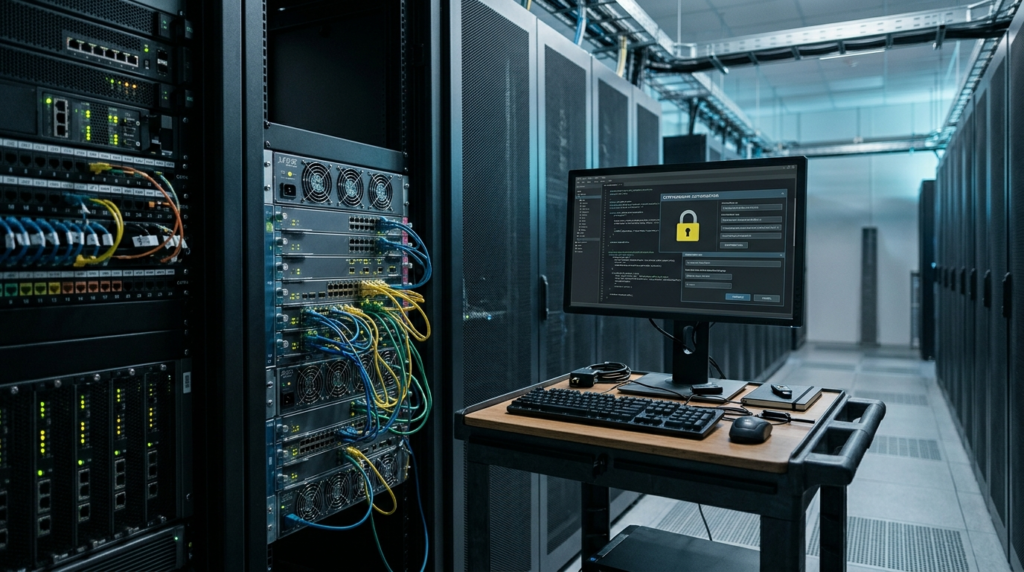
Compute density within the expanded portfolio is engineered to support next-generation accelerator platforms, specifically the NVIDIA Vera Rubin NVL72 and NVIDIA HGX Rubin NVL8 architectures. Because fully loaded Rubin NVL72 configurations can draw and dissipate in excess of 200 kilowatts per rack, conventional raised-floor air cooling is physically inadequate. The platform integrates direct-to-chip liquid cooling within the Supermicro compute chassis, operating in tandem with liquid-cooled Cisco Nexus 9000 (N9000) Series switches. This closed-loop fluid architecture maintains optimal thermal envelopes across switches, optical transceivers, and accelerators, eliminating the micro-throttling events that degrade long-running model training runs.
Disaggregated Scale-Up Fabrics for Thermal Constraints
While greenfield hyperscale data centers are engineered from the ground up for 200 kW per rack, most enterprise co-location spaces and on-premises server rooms operate under strict thermal and electrical caps of 30 kW to 50 kW per rack. Deploying a monolithic NVL72 rack into these existing footprints is physically impossible without catastrophic power reconfiguration or substantial floor de-rating.
To overcome this real-world constraint, the joint Cisco-Supermicro architecture supports fabric-disaggregated scale-up domains. By leveraging high-speed, ultra-low-latency scale-up interconnects and optimized optical links, dense compute nodes can be physically distributed across four or five adjacent 40 kW racks while remaining logically bound as a single, low-latency compute domain. This physical disaggregation allows enterprise IT directors to stand up cutting-edge Rubin-class clusters within standard enterprise data halls without rebuilding utility substations or chiller loops.
Unified Telemetry and AgentOps Integration
Infrastructure complexity often introduces severe visibility blind spots. A single degraded optical transceiver or dropped packet in a high-bandwidth collective communication phase can stall thousands of GPU cores simultaneously, burning capital without generating tokens. To mitigate operational fragility, the platform tightly couples the hardware plane with NVIDIA AI Enterprise and Cisco Cloud Control.
Through this integration, network operations (NetOps) and machine learning operations (MLOps) teams gain synchronized observability across server compute health, network interface cards (NICs), optical transceivers, and switch queues. The inclusion of native AgentOps tooling allows platform engineers to monitor autonomous agent workflows, detect tool-call latencies, and trace data execution paths across the entire stack. This full-stack operational envelope builds directly on enterprise modernization frameworks detailed in our technical analysis of Decoding Cisco AI Infrastructure: UCS-X Architecture, Splunk MLTK, and the Era of AIOps.
Market Impact and High-Density Deployment
The enterprise infrastructure market is undergoing a structural pivot from capital-intensive GPU stockpiling toward strict token production economics. For the past three years, enterprise technology acquisitions were dominated by the rush to secure GPU allocations. In 2026, enterprise finance committees and CIOs demand demonstrable return on investment, measuring infrastructure efficiency by cost-per-token, power utilization effectiveness (PUE), and operational uptime.
The collaboration between Cisco, Supermicro, and NVIDIA targets this shift by commoditizing validated AI factory topologies. Rather than requiring enterprises to employ specialized supercomputing engineering teams to design custom liquid manifolds and optimize RoCE (RDMA over Converged Ethernet) parameters, Cisco Validated Services provide certified blueprints. These architectures de-risk multi-million-dollar deployments for three primary customer segments:
- Enterprise Private Clouds: Organizations retaining high-value proprietary datasets—such as banking transaction records, clinical healthcare trials, and internal code repositories—that cannot leave the corporate firewall due to compliance or IP leakage risks.
- Neocloud Infrastructure Providers: Specialized GPU cloud operators competing against tier-1 hyperscalers by offering bare-metal and managed AI clusters with guaranteed network SLAs and lower cost-per-token overhead.
- Sovereign Cloud Operators: National and regional data center initiatives that require strict physical and cryptographic isolation of training datasets, verified supply chains, and localized compliance adherence.
Enterprise Data Gravity Versus Public Cloud LLMs
Public foundation models provided by hyperscalers are inherently trained on public web crawl data. While powerful for general conversational tasks, enterprise reasoning requires real-time access to corporate data estates—ERP databases, customer interaction histories, and proprietary supply chain telemetry. Moving hundreds of petabytes of sensitive enterprise data into multi-tenant public cloud environments introduces severe egress fees, regulatory exposure, and latency penalties.
Deploying the Cisco Secure AI Factory on-premises or within sovereign colocation facilities places high-density compute directly adjacent to the corporate data estate. Cisco networking switches act as the secure data pipeline, feeding unstructured enterprise documents and vector databases directly into inference and fine-tuning pipelines with zero exposure to external networks. This architecture bridges the gap between static enterprise data warehouses and dynamic token generation factories.
Operational Governance and Enterprise Risk

Deploying liquid-cooled, high-density AI infrastructure introduces distinct operational and logistical risks that IT executives must evaluate before issuing capital purchase orders. While reference architectures significantly lower implementation friction, physical facility requirements and vendor supply chain dependencies remain substantial factors.
First, fluid handling in the data center represents a major operational transition for traditional enterprise facilities teams. Direct-to-chip liquid cooling systems require dedicated Secondary Fluid Networks (SFN), coolant distribution units (CDUs), and strict water chemistry maintenance regimes to prevent galvanic corrosion or bio-fouling in micro-channel cold plates. Organizations must train data center staff or partner with managed service providers to manage quick-disconnect couplings, leak detection sensors, and facility pump redundancy.
Second, power distribution architectures must accommodate extreme localized heat and energy demand. A single row of five 200 kW racks draws a full megawatt of electrical capacity. Upgrading transformer feeds, three-phase power whips, and uninterruptible power supply (UPS) backups requires extended lead times. Enterprise planning cycles must align compute procurement with electrical infrastructure readiness to avoid paying depreciation on idle hardware.
Finally, enterprise IT buyers must navigate ecosystem lock-in considerations. While Cisco Silicon One and Supermicro hardware adhere to open networking standards, the deep operational integration with NVIDIA Spectrum-X, NVIDIA AI Enterprise, and proprietary NCP validation tightly couples the software lifecycle to NVIDIA release cycles. CTOs must evaluate whether this optimized integration provides sufficient total cost of ownership (TCO) benefits to outweigh the flexibility of disaggregated, open-source networking stacks.
Bottom line
The expansion of the Cisco Secure AI Factory portfolio represents a critical maturation of enterprise AI infrastructure. By moving beyond disjointed server procurement and delivering validated, liquid-cooled, rack-scale pods equipped with synchronized Ethernet fabrics, Cisco and Supermicro provide enterprise technology leaders with a predictable, repeatable path toward private AI deployment. Organizations planning trillion-parameter model training, dense agentic inference pipelines, or sovereign data operations should initiate facility power and cooling assessments immediately ahead of the general rollout in October 2026.
TechNode HQ Verdict: Pros, Cons & Usability
- Pro (Engineering): Native interoperability between liquid-cooled Cisco N9000 switches and Supermicro liquid-cooled servers enables sustained 200+ kW rack densities without thermal throttling.
- Pro (Consumer): Accelerated enterprise token production lowers the latency and increases the reliability of agentic digital assistants and automated consumer workflows worldwide.
- Con: Upgrading legacy 30 kW enterprise data halls to support dense fluid cooling and multi-megawatt rows requires significant facility CapEx and lead time.
- Con: Tight operational dependency on NVIDIA Spectrum-X and NVIDIA AI Enterprise software stacks limits multi-accelerator ecosystem flexibility.
Enterprise Usability: CTOs and infrastructure architects should leverage Cisco Validated Services to certify data center power, fluid loops, and network fabrics prior to delivery, focusing initial rollouts on private datasets requiring strict regulatory isolation.
Everyday Usability: Enterprise end-users will experience faster response times, higher context availability, and reduced service interruptions across internal AI agents and external enterprise-grade generative services.
Sources
- Cisco Expands Secure AI Factory with NVIDIA for the Rack-Scale Era
- Cisco expands rack-scale secure AI factory infrastructure for neocloud and sovereign clouds – SiliconANGLE
- Cisco and Nvidia take AI factories from rack to runtime
- The network becomes the computer as Cisco and Nvidia accelerate AI factory rack-scale
- Nvidia’s next multibillion-dollar market: Breaking the AI factory out of the data center