Key takeaways
- Google Threat Intelligence Group documented adversaries shifting from basic prompting to autonomous multi-agent pipelines, executing mass credential harvesting in under six hours.
- Upstream software supply chain contamination and AI toolkit hijacking by threat groups like TeamPCP directly target developer reliance on AI coding assistants.
- Adversaries expand enterprise attack surfaces through LLMJacking of GPU compute quotas, targeted data theft extortion, and massive 100-million-prompt model distillation campaigns.
- Defending against machine-speed attacks requires multi-model cross-validation and unified security graphs that connect code repositories, identities, and runtime cloud telemetry.
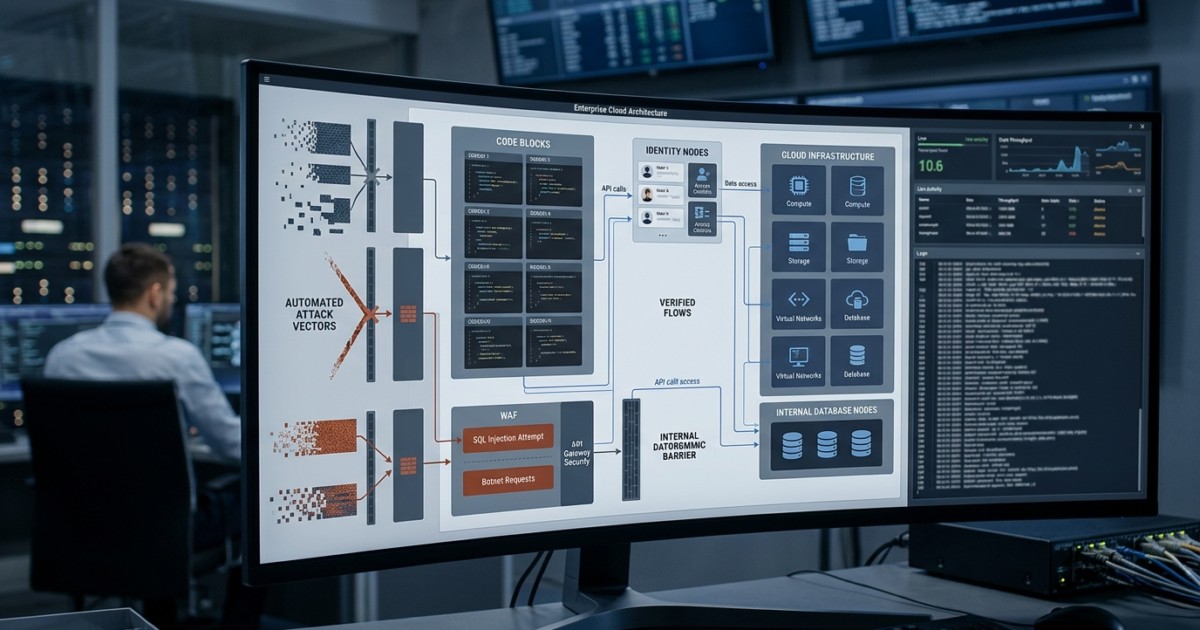
Enterprise AI security is confronting a structural shift from speculative threat models to observed, machine-speed adversary campaigns. According to Google Threat Intelligence Group (GTIG) telemetry released in the September 2026 Cloud CISO Perspectives by Sandra Joyce, VP of Google Threat Intelligence, adversaries have evolved beyond basic prompt engineering toward fully automated, multi-agent attack pipelines. Threat actors now compromise cloud environments, poison upstream software supply chains that coding assistants rely on, siphon high-performance compute via LLMJacking, and deploy autonomous agents capable of completing mass credential harvesting operations in under six hours. To counter these automated tactics, enterprise security leaders must abandon manual alert triage in favor of unified context graphs and multi-model autonomous defenses.
Operational realities documented across enterprise incidents demonstrate that defending against AI-enabled adversaries requires parity in speed and context. Organizations expanding their use of autonomous workflows cannot rely on traditional perimeter controls when attackers manipulate the very foundation models and developer pipelines powering modern software delivery.
Three Structural Shifts Defining the AI Threat Landscape
Security strategies in the current enterprise environment must be grounded in empirical telemetry rather than speculative disruption. As both a frontier artificial intelligence laboratory and a global incident response provider through Mandiant, Google operates from a dual vantage point that tracks how machine learning architectures are engineered and how adversaries target them in production environments. In the latest GTIG AI Threat Tracker, Google outlines three structural shifts that dictate enterprise defense:
- Accelerated development and supply chain exposure: Autonomous agents and automated coding assistants push code to production at unprecedented velocity, creating new vectors for upstream repository poisoning.
- Expansion of enterprise attack surfaces: Attackers increasingly focus on proprietary model weights, fine-tuned agent instructions, and high-performance computing quotas as high-value targets for extortion and resource theft.
- Operationalization of autonomous adversary tooling: Threat groups have shifted from conversational interface prompts to coordinated multi-agent pipelines capable of orchestrating full attack lifecycles without manual intervention.
Addressing these shifts requires chief information security officers (CISOs) to view AI not as an isolated software category, but as an interconnected layer woven across identity systems, continuous integration pipelines, and runtime infrastructure.
Software Supply Chains Under Pressure from Agentic Coding
Development velocity has decoupled from traditional security verification cycles. When engineering teams integrate autonomous coding agents into continuous integration and continuous delivery (CI/CD) pipelines, malicious actors exploit developers’ trust in automated suggestions by contaminating upstream open-source packages. GTIG telemetry confirms that malicious package poisoning contributed substantially to the spike in software supply chain breaches documented throughout 2025 and early 2026.
Adversaries specifically tailor payloads to exploit the trust boundaries of developer tools. The financially motivated threat group tracked as TeamPCP (UNC6780) has deployed more than six distinct methodologies targeting AI workflows and open-source practices. Their operations include hijacking developer toolkits, executing indirect prompt injections, and blinding AI scanners by feeding them toxic prompts designed to obfuscate underlying malicious code.
Mitigating this exposure requires shifting verification directly into developer environments through in-editor guardrails. Similar to real-time text validation, real-time security checking must sit natively within integrated development environments (IDEs), immediately identifying poisoned dependencies, toxic prompt payloads, and misconfigured agent toolkits before code reaches version control. However, editor-level inspection alone leaves blind spots regarding live cloud infrastructure configurations. Platforms designed around code-to-cloud security, such as Wiz Code, bridge this context by continuously verifying code changes against live cloud runtime realities prior to release.
Enterprise teams must also avoid reliance on a single frontier model for vulnerability analysis. Google’s research demonstrates that single-model code inspection creates an architectural monoculture. Threat actors actively craft inputs designed to bypass the safety filters of specific large language models (LLMs). Deploying a multi-model defense that cross-validates findings across Gemini, commercial models, and open-source engines eliminates single-model blind spots, minimizes false positives, and flags complex logic flaws. Automated frameworks like Google CodeMender extend this architecture by autonomously analyzing repositories and generating verified patches before vulnerable code reaches production.
LLMJacking and Model Distillation Expand Attack Surfaces
Securing software authoring pipelines addresses only the initial point of entry. Enterprise AI deployments expose novel operational assets that adversaries actively exploit. The monetization of compromised infrastructure has expanded beyond traditional cryptocurrency mining into LLMJacking, where cybercriminals and state-sponsored actors hijack GPU quotas to execute resource-heavy models and agentic workflows at the victim organization’s expense.
In one April 2026 intrusion investigated by Mandiant, an attacker gained initial access to a corporate cloud tenant via an exposed personal access token. Rather than exfiltrating standard database records, the intruder immediately provisioned unauthorized high-performance AI infrastructure, scaling compute clusters to execute external workloads and leaving the enterprise to absorb steep platform invoices.
Beyond compute theft, enterprise AI data has emerged as a prime extortion target. During the second quarter of 2026, Mandiant documented multiple extortion intrusions involving the theft of proprietary model weights, fine-tuned agent instructions, curated prompt libraries, and domain-specific training data. Simultaneously, illicit marketplaces have experienced surging demand for compromised credentials, with consumer and enterprise AI accounts trading at discounts reaching 99% off standard subscription pricing.
Adversaries are also executing large-scale model distillation campaigns. In documented operations, attackers issued over 100 million structured prompts across compromised accounts to systematically extract proprietary logic, decision boundaries, and reasoning capabilities from commercial models. This technique allows threat actors to replicate enterprise capabilities while evading vendor usage policies.
| Attack Vector | Threat Actor Technique | Observed Telemetry and Incident Evidence | Required Enterprise Defense |
|---|---|---|---|
| Supply Chain Poisoning | Contaminating upstream packages trusted by coding assistants; blinding code scanners with toxic prompts | TeamPCP (UNC6780) deployed over six distinct methods targeting open-source development and AI toolkits | In-editor security guardrails; multi-model code scanning; continuous code-to-cloud verification via Wiz Code |
| LLMJacking & Compute Theft | Unauthorized provisioning of high-performance GPU instances for external model inference | Compromised personal access token leveraged in April 2026 to scale unauthorized enterprise cloud GPU quotas | Granular API token governance; GPU quota anomaly alerts; automated session policy enforcement |
| Model Distillation & Extraction | Systematic multi-million prompt generation to exfiltrate proprietary reasoning and business logic | Coordinated distillation operations generating over 100 million prompts across compromised enterprise accounts | API rate limiting; prompt pattern anomaly detection; egress token inspection; AI Software Bill of Materials |
| Autonomous Multi-Agent Pipelines | Chaining autonomous coding chatbots and execution agents for rapid compromise cycles | Autonomous credential harvesting pipeline planned, built, and executed in under six hours | Autonomous graph-based defense; machine-speed telemetry analysis via Google AI Threat Defense |
Adversaries Transition to Autonomous Multi-Agent Pipelines
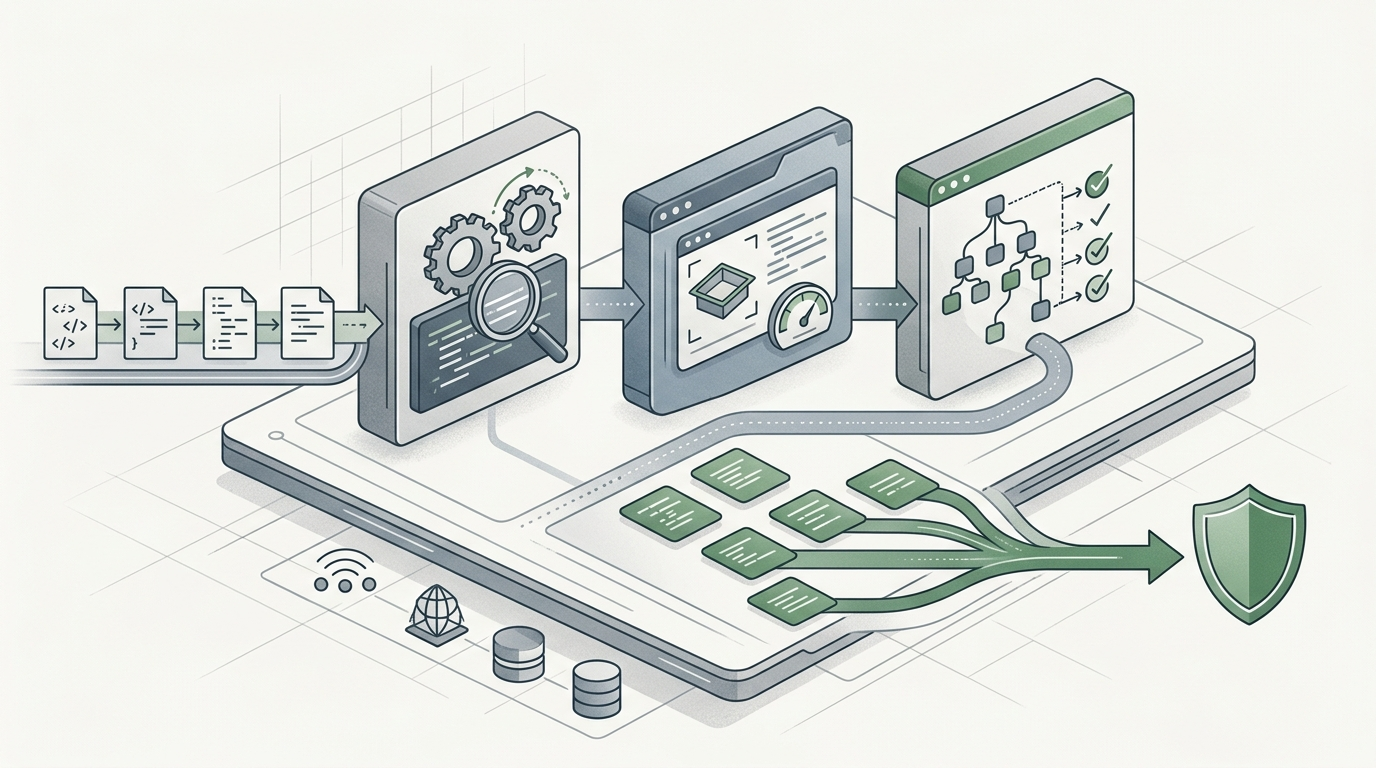
The most consequential operational change in adversary behavior is the transition from interactive prompting to autonomous execution pipelines. Rather than using AI merely to draft phishing emails or generate individual scripts, threat actors now deploy multi-agent systems that coordinate end-to-end intrusion lifecycles.
During an intrusion analyzed by Mandiant, a financially motivated actor breached cloud infrastructure and initiated an autonomous multi-agent pipeline. By providing an AI coding chatbot with specific target parameters and structured instructions, the adversary automated the planning, tool development, and execution phases of a mass credential harvesting campaign in under six hours. This compression of the attack lifecycle challenges traditional security operations center (SOC) workflows that rely on human analysts manually reviewing static alert queues.
State-sponsored operations reflect a similar evolution toward model orchestration. GTIG telemetry tracked a PRC-nexus espionage group using a utility designated as CC Switch to rotate across multiple commercial and open-source models, including Claude, Codex, and Gemini. The tool dynamically evaluated operational needs, routing exploit development to models optimized for code generation while assigning social engineering tasks to models specialized in conversational nuances. In parallel, Russian-nexus group UNC5792 integrated AI models into automated monitoring bots to ingest and structure massive streams of unstructured telecommunications data into prioritized intelligence feeds.
This widespread deployment of automated agents elevates identity governance to a critical enterprise vulnerability. Organizations must implement precise controls over non-human identities, applying specialized frameworks such as Cisco Duo agentic identity management and advanced cloud identity behavioral clustering to identify unauthorized agent behavior before credential abuse escalates.
Architecting Machine-Speed Defense: Multi-Model Analysis and Context Graphs
While autonomous attacks accelerate threat delivery, enterprise defenders retain an asymmetric operational advantage. External adversaries operate with limited contextual knowledge, probing cloud boundaries from the outside without visibility into internal architectures. Defenders, by contrast, possess comprehensive internal context: source code repositories, identity fabrics, cloud resource configurations, and real-time network telemetry.
Converting this asymmetric context into defensive speed requires replacing disconnected security silos with unified intelligence fabrics. Google has structured this approach within Google AI Threat Defense (AITD), an autonomous framework that integrates multiple defensive tiers:
- Reasoning engines: Gemini frontier models analyze complex threat indicators and correlate multi-stage event logs across distributed infrastructure.
- Contextual graph mapping: The Wiz Security Graph links code dependencies, model registries, data lineage, and runtime cloud identities into a centralized, dynamic topology.
- Autonomous remediation: CodeMender generates and applies verified source-level fixes directly to repositories, eliminating vulnerabilities before attackers reach runtime environments.
- Frontline intelligence: Real-time threat feeds from Mandiant directly inform Google Security Operations, enabling automated systems to sever toxic attack combinations at machine speed.
This multi-tiered model directly counters single-model vulnerabilities by cross-verifying threat telemetry across heterogeneous AI systems. Defensive operations are further reinforced by infrastructure-level disruptions, where cloud providers proactively deactivate malicious projects and enforce continuous classifier updates developed by Google DeepMind to intercept weaponized prompts before execution.
Bottom line
The operational reality outlined in Google’s telemetry confirms that AI security has moved past conversational experimentation into an automated operational conflict. Enterprise security leaders must reject fragmented management models that treat AI inventories, developer tooling, and cloud infrastructure as separate domains. Protecting enterprise assets against autonomous, multi-agent intrusion pipelines requires an integrated defense strategy:
- Deploy in-editor security guardrails that inspect dependencies and prompt structures in real time during code creation.
- Implement continuous code-to-cloud verification graphs that evaluate repository updates against live runtime identity and configuration data.
- Govern non-human agent identities and enforce strict API access controls to prevent LLMJacking and unauthorized model distillation.
- Replace static alert triage queues with autonomous, multi-model threat analysis engines capable of executing coordinated countermeasures in minutes rather than days.
Sources
- Cloud CISO Perspectives: How Google monitors AI threats and advances AI defenses | Google Cloud Blog
- GTIG AI Threat Tracker: From Prompting to Autonomy – The Evolution of Adversarial AI | Google Cloud Blog
- Autonomous AI Agents Compromise Thousands of Credentials in Under Six Hours
- Threat actors are coming for your AI assets to operationalize their use of AI | CSO Online
- Google: AI Now Powers Every Threat Actor’s Playbook | Cyber Magazine
- Introducing Google AI Threat Defense to help you outpace the adversary | Google Cloud Blog
- Now in preview: Find and fix software vulnerabilities with CodeMender | Google Cloud Blog