Key takeaways
- Mercury radiation belt existence confirmed, lasting 8-12 hours per event.
- It appears 50% of the time at aphelion, but only 20% near the Sun.
- MESSENGER data re-analysis proved Mercury traps high-energy electrons dynamically.
- BepiColombo mission hardware will rely on these findings for shielding.
- Challenges previous assumptions about planetary magnetospheres and solar proximity.
The Architectural Reality of the Mercury Radiation Belt

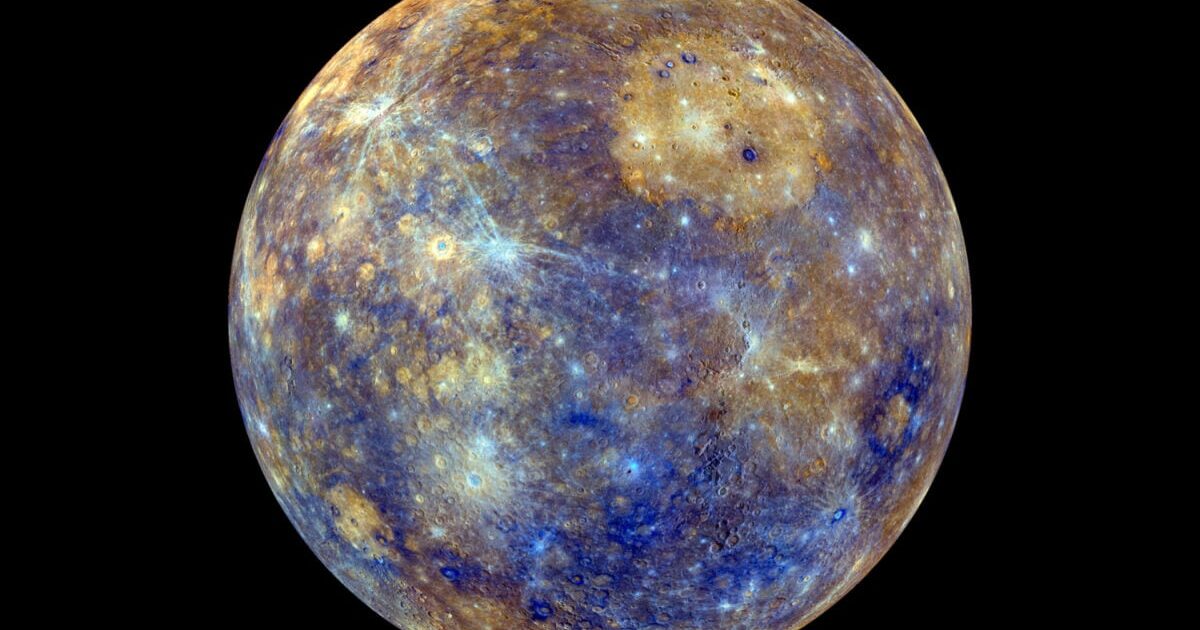
The confirmation of a Mercury radiation belt radically shifts our baseline understanding of planetary magnetospheres and the engineering requirements for deep-space hardware survival. For decades, the astrophysics and aerospace engineering communities operated under the assumption that Mercury’s unique environment rendered stable radiation trapping impossible. Possessing a weak magnetic field—measured at roughly 1% of the strength of Earth’s magnetic shield—and positioned at an extreme proximity to the Sun, Mercury was viewed as entirely exposed to the tumultuous weather and magnetic extremes of solar emissions. The prevailing theory suggested that there simply was not enough room or magnetic stability for energetic electrons to survive before being violently ejected into space or colliding directly with the planetary surface.
However, recent findings have forced a complete rewrite of this narrative. By re-evaluating historical observations collected between 2011 and 2015 by NASA’s MESSENGER (MErcury Surface, Space ENvironment, GEochemistry, and Ranging) spacecraft, researchers from the University of Michigan and the University of California, Berkeley, deployed advanced analysis techniques to uncover hidden structures in the data. They definitively confirmed that Mercury, much like Earth and the gas giants, operates as a natural laboratory capable of catching and trapping high-energy electrons within a ring-like radiation architecture.
Unlike the permanent and highly stable Van Allen Belts that encapsulate Earth, Mercury’s radiation belt is deeply transient and uniquely conditional. The data reveals that this high-energy electron trapping mechanism forms approximately 50% of the time when the planet reaches aphelion—its farthest orbital distance from the Sun. Conversely, when Mercury swings closer to the solar surface, the radiation belt is present for only about 20% of the observed time. When these belts do form, their lifespans are remarkably brief by astronomical standards, typically sustaining for just 8 to 12 hours before rapid collapse, though they have been observed to persist for several Earth days under exceptionally stable solar conditions.
This intermittent behavior highlights a critical distinction in planetary physics: Mercury’s lack of a permanent belt is due to rapid particle loss rather than a lack of particle supply. The intense and fluctuating solar wind conditions literally blow the trapped particles out of their magnetic confines. This discovery proves that Mercury is perfectly capable of the fundamental physics required to capture high-energy electrons, but its innate features and extreme solar environment dictate exactly how, and for how long, that radiation belt manifests. This distinction changes everything for engineers tasked with sending millions of dollars of delicate silicon into the inner solar system.
Market Impact & Deployment: The Aerospace ROI
While the confirmation of a transient magnetospheric structure may initially seem confined to the realm of academic astrophysics, the downstream implications for the aerospace sector, satellite manufacturing, and Enterprise IT organizations managing orbital infrastructure are profound. The immediate proving ground for this new paradigm is the BepiColombo mission, an ambitious joint venture between the European Space Agency (ESA) and the Japan Aerospace Exploration Agency (JAXA) that is scheduled to begin its orbital operations around Mercury in late 2026.
The BepiColombo mission architecture is highly complex, consisting of two distinct orbiters: the Mercury Planetary Orbiter (MPO), engineered to scrutinize the planet’s surface composition and interior dynamics, and the Mercury Magnetospheric Orbiter (Mio), designed specifically to provide high-accuracy measurements of the magnetic field and the newly confirmed radiation structures. For the engineers and spaceflight operatives managing this mission, radiation belts represent one of the most perilous obstacles to spacecraft integrity and mission success.
From a Total Cost of Ownership (TCO) perspective, radiation shielding is one of the most expensive aspects of spacecraft development. Hardening delicate silicon processors and sensory equipment against high-energy electron bombardment adds massive weight to a spacecraft. In the aerospace industry, weight correlates directly to exponential increases in launch costs, fuel requirements, and mission limitations. By understanding that Mercury’s radiation belt is highly predictable based on the planet’s orbital position—forming primarily at aphelion and rarely at perihelion—engineers can shift away from a brute-force approach of blanket hardware armoring. Instead, they can adopt a highly dynamic, software-defined shielding strategy.
This allows for the optimization of scientific observations. Mission controllers can schedule the most sensitive, high-risk data collection sequences during the 80% of perihelion windows when the radiation belt is absent, safely powering down or physically shielding vulnerable instruments during the brief 8-to-12-hour high-radiation surges. This intelligent lifecycle management preserves the functional integrity of billion-dollar satellite assets, drastically extends the operational lifespan of the mission, and saves tens of thousands of developer and engineering hours previously spent compensating for generalized radiation degradation. It is a masterclass in leveraging localized environmental data to maximize the return on investment for deep-space infrastructure.
The Consumer Translation: Why Planetary Physics Matters
It is natural to question how fluctuating magnetic fields and high-energy electron traps tens of millions of miles away could possibly impact the daily lives of the worldwide public. The answer lies in the inevitable trickle-down effect of extreme engineering. Just as the intense stress-testing of materials in military aviation ultimately leads to safer commercial airliners, the extreme Networking & Cloud resilience and radiation-hardened hardware developed for missions like MESSENGER and BepiColombo directly influence terrestrial technology.
To understand the core mechanism without needing a degree in astrophysics, consider a high-level structural analogy: Imagine a global logistics network struggling with extreme supply chain shocks. When a major manufacturing hub (the Sun’s solar wind) unexpectedly floods the network with cargo (high-energy particles), a small local warehouse with limited infrastructure (Mercury’s weak magnetic field) can only store the massive influx of inventory for a brief 8-to-12-hour window. Very quickly, the system is overwhelmed, the warehouse reaches critical capacity, and the excess inventory must be rapidly purged from the system. This perfectly illustrates why Mercury catches and traps particles, but can only hold them temporarily before the structure collapses under the pressure of the solar wind.
The engineering solutions required to build sensors, microprocessors, and memory modules capable of surviving these violent, unpredictable “inventory purges” of high-energy radiation force the technology sector to develop incredibly robust silicon. Over time, these manufacturing techniques and fault-tolerant software architectures find their way into consumer and commercial terrestrial applications. The radiation hardening required to survive Mercury’s environment eventually enhances the reliability of medical imaging equipment, nuclear reactor monitoring systems, and the vast fleets of communication satellites orbiting Earth. Every time you rely on GPS navigation, execute a high-frequency financial transaction synced via satellite, or utilize global broadband internet, you are directly benefiting from the fault-tolerant engineering pushed to its limits by the demands of planetary physics.
The Future of Orbital Mechanics and Data Analysis
Looking ahead, the confirmation of the Mercury radiation belt opens a new chapter in how we process and interpret vast datasets across the solar system. The fact that the evidence for this radiation belt was hidden within the data transmitted by the MESSENGER spacecraft years ago highlights a critical evolution in data science and signal processing. It was only through the application of modern, advanced analysis techniques that researchers were able to filter out the noise and identify the specific interference patterns that proved the existence of the high-energy electron traps.
This serves as a powerful reminder for the enterprise data sector: massive repositories of historical data often contain paradigm-shifting insights that are simply waiting for the right algorithmic approach to be unlocked. As the BepiColombo orbiters arrive at Mercury and begin transmitting fresh telemetry back to Earth, they will not just be observing a planet; they will be utilizing Mercury as a natural laboratory. The data gathered here will be extrapolated to infer what radiation environments might look like around other exoplanets orbiting close to their host stars, as well as providing crucial models for how distant planets react during extreme space weather events.
Ultimately, the “super wonky” nature of Mercury’s radiation belt is a testament to the dynamic, ever-changing nature of our solar system. It forces engineers to build smarter, more adaptable hardware, challenges scientists to refine their magnetic models, and ensures that the boundaries of technological resilience are continuously pushed outward, benefiting everything from deep-space exploration to the smartphone in your pocket.
Frequently Asked Questions
Q1: Does Mercury have a radiation belt?
A1: Yes, scientists recently confirmed that Mercury has a transient radiation belt. Unlike Earth’s stable Van Allen belts, Mercury’s radiation belt only forms under specific solar wind conditions.
Q2: How long does the Mercury radiation belt last?
A2: The radiation belts on Mercury typically last for 8 to 12 hours. However, under certain conditions, they can occasionally persist for several Earth days.
Q3: When is the radiation belt most likely to appear?
A3: Mercury’s radiation belt is present approximately 50% of the time when the planet is at aphelion (farthest from the Sun). It appears only about 20% of the time when it is closer to the Sun.
Q4: What spacecraft gathered the data for this discovery?
A4: Researchers identified specific interference patterns in historical data collected by NASA’s MESSENGER orbiter. This spacecraft operated around Mercury from 2011 to 2015.
Q5: How does this impact future space missions?
A5: Engineers and scientists will use these radiation belt findings to better protect sensitive instruments on the BepiColombo mission. It will also help optimize the timing of scientific observations.
TechNode HQ Verdict: Pros, Cons & Usability
- Pro (Engineering): Allows for dynamic, software-defined shielding optimization rather than blanket hardware armoring, saving massive launch weight.
- Pro (Consumer): Accelerates the development of radiation-hardened silicon that eventually improves terrestrial medical and communication devices.
- Con: The transient, unpredictable nature of the 8-to-12 hour radiation windows complicates automated orbital scheduling.
- Con: Sudden collapses in the radiation belts during intense solar winds leave spacecraft vulnerable to rapid particle surges.
Enterprise Usability: CTOs in the aerospace and satellite deployment sectors must integrate these dynamic space weather models into their risk assessment and hardware lifecycle management pipelines immediately to ensure mission viability.
Everyday Usability: While not a direct consumer purchase, the public will ultimately benefit from the resilient infrastructure, reliable global communications networks, and scientific insights this deep-space hardware development yields over the next decade.