Key takeaways
- Intel generated $16.5 billion in Q3 2026 revenue (up 21% year-over-year) with non-GAAP earnings per share of $0.52 and a 44.1% gross margin.
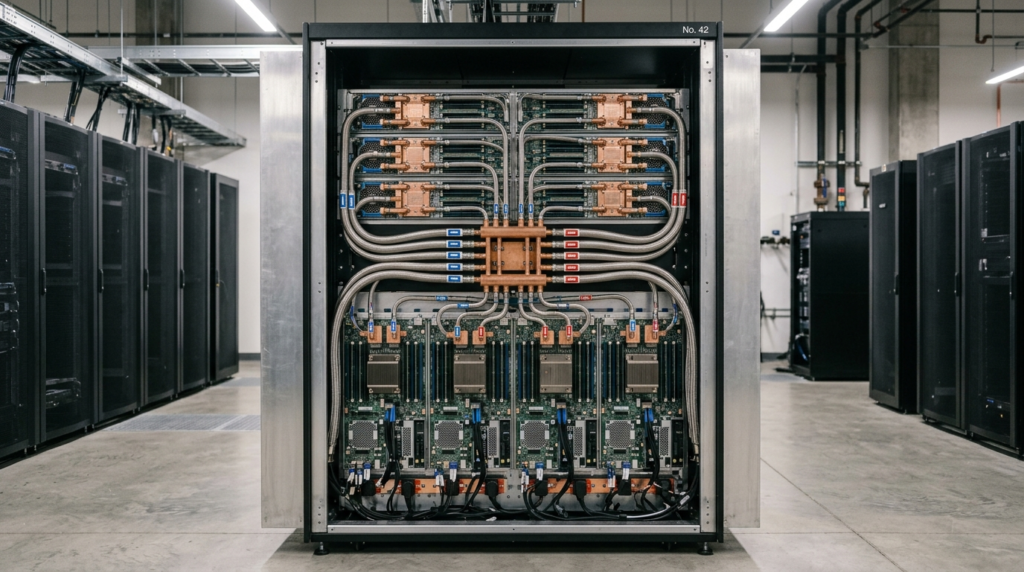
- Data Center and AI (DCAI) revenue jumped 78% year-over-year to $7.3 billion, delivering $3.0 billion in operating profit on strong Xeon 6 server pull-through.
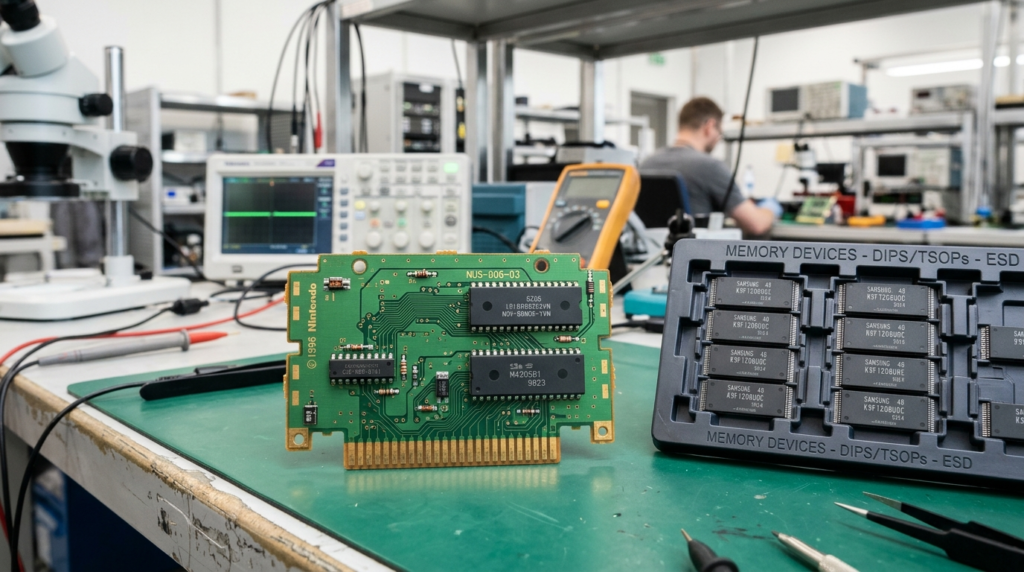
- Client Computing and Physical AI Group (CCPG) revenue fell 5% to $8.1 billion, constrained by sharp DRAM and NAND memory cost increases across the PC supply chain.
- Intel Foundry posted $6.7 billion in revenue, narrowing its quarterly operating loss to $1.9 billion while delivering the Intel 14A Process Design Kit version 0.9.
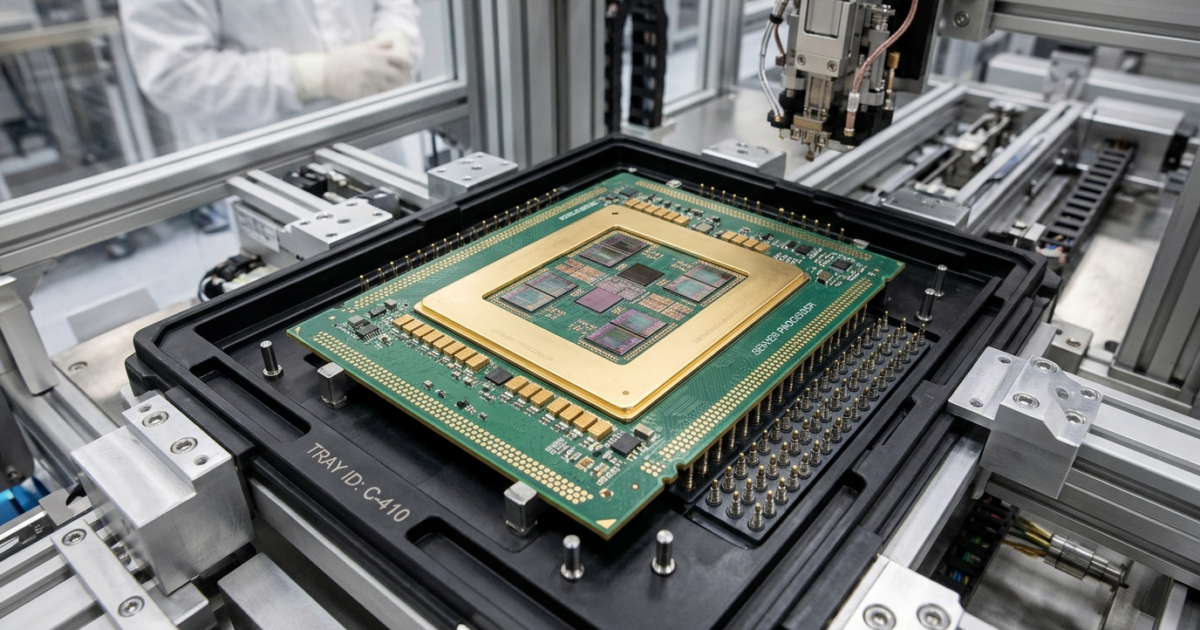
- Advanced packaging substrate shortages remain the principal physical bottleneck capping total enterprise Xeon family deliveries.
In its third-quarter 2026 financial results, Intel Corporation generated $16.5 billion in revenue—a 21% increase year-over-year—driven by explosive enterprise and AI data center demand that countered mounting memory cost pressures in client PCs. Intel reported non-GAAP earnings per share of $0.52 and a non-GAAP gross margin of 44.1%, surpassing quarterly guidance. The Data Center and AI (DCAI) group led corporate performance with $7.3 billion in revenue, up 78% year-over-year, marking the unit’s fastest growth in 15 years. However, the Client Computing and Physical AI Group slipped 5% to $8.1 billion, weighed down by high DRAM and NAND prices across the broader PC ecosystem.
Server Demand Drives Record DCAI Expansion
The standout performer in Intel’s Q3 2026 earnings release was the Data Center and AI division. DCAI revenue climbed from $4.1 billion in Q3 2025 to $7.3 billion, delivering $3.0 billion in operating income and an operating margin of 41.5%. Intel CFO David Zinsner noted that this surge represents the strongest year-over-year data center growth rate the company has achieved in a decade and a half.
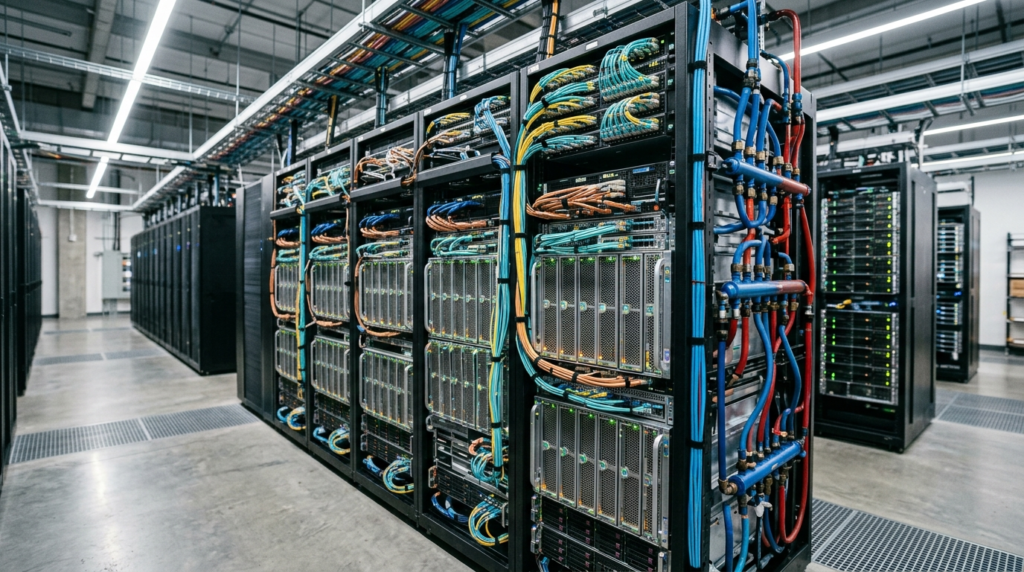
According to analysis from ServeTheHome, shipment volumes were lifted by broad customer demand spanning hyperscale operators, traditional enterprise deployments, and neocloud providers. Intel confirmed that its “Purpose Built Silicon” revenue more than doubled compared to the prior-year period. Server platforms based on Xeon 6 processors benefited heavily from system-level pairings in accelerated computing clusters, where host CPUs sit alongside dedicated graphics processors from NVIDIA and custom accelerators.
This server momentum occurred despite fierce architectural competition. AMD has gained substantial traction with its 192-core EPYC Turin processors in compute-dense cloud environments, where Intel currently lacks an equivalent native core count. Yet broad infrastructure expansion has absorbed virtually all available x86 server inventory. Even as macroeconomic uncertainty and credit shakeouts across neocloud operators reshape data center financing, demand for enterprise server silicon continues to outstrip immediate production capacity.
| Segment / Metric | Q3 2026 Revenue | YoY Growth | Operating Profit | Operating Margin |
|---|---|---|---|---|
| Data Center and AI (DCAI) | $7.3 billion | +78% | $3.0 billion | 41.5% |
| Client Computing & Physical AI (CCPG) | $8.1 billion | -5% | Unspecified | Compressed |
| Intel Foundry (incl. intersegment) | $6.7 billion | +58% | -$1.9 billion | -27.7% |
| Consolidated Total (Non-GAAP) | $16.5 billion | +21% | $0.52 EPS | 44.1% Gross Margin |
Memory Price Escalation Pressures Client Computing
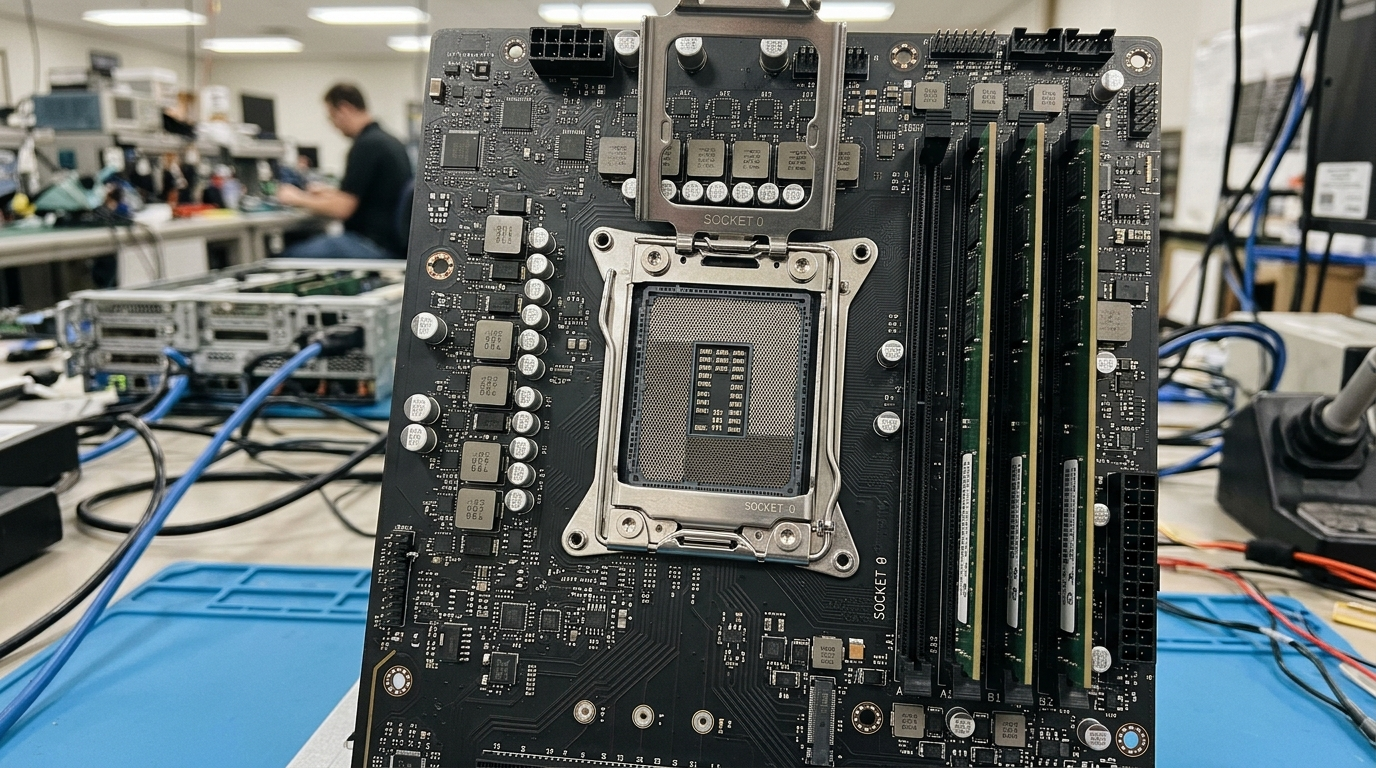
While data center infrastructure expanded rapidly, the Client Computing and Physical AI Group (CCPG)—previously designated CCG before early 2026 restructuring—faced severe industry friction. Revenue dropped 5% year-over-year to $8.1 billion, contrasting sharply with inflation-adjusted expectations for PC client sales.
The principal drag on client hardware was not core architectural performance, but systemic memory market pricing. High-bandwidth memory (HBM) and enterprise DDR5 production have absorbed massive fab capacity from leading memory manufacturers, creating shortages and sharp price spikes for standard consumer DRAM and NAND flash. Because memory represents an escalating share of system bill-of-materials (BOM) costs, original equipment manufacturers (OEMs) have faced margin contraction, forcing retail PC price increases that chilled buyer demand.
This dynamic has particularly dampened demand for mainstream desktops, traditional laptops, and compact form factors such as mini PCs. Although Intel launched its Core Ultra Panther Lake processors built on the Intel 18A process node to deliver improved power efficiency and integrated neural processing, consumer systems have struggled to absorb auxiliary component price hikes. In contrast to AI servers where high memory margins are readily absorbed by cloud budgets, entry-level and mid-range PC platforms remain highly sensitive to component price inflation.
Foundry Execution Narrows Losses Amid Substrate Limits
Intel Foundry reported Q3 revenue of $6.7 billion, a 58% increase year-over-year. While this figure includes significant intersegment billing rather than standalone external commercial revenue, operational metrics reflected tangible manufacturing improvements. Operating losses narrowed to $1.9 billion (-27.7% margin) from a $2.3 billion deficit in Q3 2025, driven by maturing wafer cycle times and yield optimization across internal fabrication lines.
On the technology roadmap, Intel met a critical process milestone during the quarter by releasing the Intel 14A Process Design Kit (PDK) version 0.9 to early customers in October 2026. Capital expansion also proceeded on schedule across domestic sites, including ongoing fab construction in Ohio.
However, output expansion faces an acute physical constraint: packaging substrate availability. Intel CEO Lip-Bu Tan acknowledged on the earnings call that substrate shortages are directly capping total volume delivery for the Xeon family. Even as wafer fab yields improve at facilities in Arizona and Oregon, advanced back-end packaging cannot produce completed multi-die packages fast enough to fulfill pending order queues. Consequently, management disclosed that Intel is evaluating reallocating a portion of its Intel 18A wafer allocation toward server processors once packaging material bottlenecks begin to ease.
What happens next
Intel issued fourth-quarter 2026 revenue guidance between $15.0 billion and $16.0 billion, alongside projected non-GAAP earnings per share of $0.25. The cautious outlook highlights the sharp divergence between robust data center spending and prolonged weakness in personal computing.
Management expects elevated DRAM and NAND pricing pressure to persist into 2027, maintaining elevated BOM costs across client platforms through at least the first half of the year. For IT infrastructure buyers and hardware engineers, server procurement will remain tightly bound to substrate availability rather than silicon wafer allocation. Organizations planning data center expansions should anticipate extended lead times for Xeon 6 and custom silicon platforms through the coming quarters.