Key takeaways
- AMD Q3 2026 revenue rose 45% year-over-year to $13.38 billion, driven by record Data Center sales of $8.55 billion, up 97% from the prior year.
- Deployment of agentic AI frameworks such as Meta Muse has revitalized enterprise demand for x86 CPUs, which handle sequential, multi-step orchestration more efficiently than GPUs.
- Hyperscalers including Anthropic, OpenAI, Microsoft, Oracle, and Meta are operationalizing AMD Helios rack-scale systems, supported by strategic equity investments.
- Sluggish consumer PC and gaming revenues reflected broader memory component cost inflation, while AMD secured TSMC advanced packaging and wafer capacity for fiscal 2027 server expansion.
Advanced Micro Devices Inc. delivered third-quarter 2026 financial results that exceeded analyst estimates, driven by unprecedented growth in its data center operations. Total revenue climbed 45% year-over-year to $13.38 billion, outpacing Wall Street expectations of $13.09 billion. Non-GAAP diluted earnings per share reached $2.09, beating the $1.95 consensus, while net income surged 77% from $1.96 billion to $3.47 billion. The quarter was anchored by AMD’s Data Center segment, which posted record revenue of $8.55 billion—a 97% year-over-year increase—accounting for 64% of total company revenue. This performance reflects rapid enterprise adoption of agentic AI frameworks that favor multi-core server processors for complex execution loops.
According to AMD’s official quarterly earnings release, the company expects data center momentum to carry into the fourth quarter, forecasting revenue of approximately $17 billion at the midpoint of its guidance range, well above the $16.2 billion consensus estimate. The shift marks a notable transition in AI compute infrastructure, where autonomous workflows require balanced compute nodes rather than dedicated GPU clusters alone.
| Financial Metric | Q3 2026 Reported | Wall Street Consensus | Year-Over-Year Change |
|---|---|---|---|
| Total Revenue | $13.38 billion | $13.09 billion | +45% |
| Non-GAAP Diluted EPS | $2.09 | $1.95 | +7.2% beat |
| Net Income | $3.47 billion | $1.96 billion (prior) | +77% |
| Data Center Revenue | $8.55 billion | N/A | +97% (64% of total) |
| Client & Gaming Revenue | $3.70 billion | N/A | -8% |
| Non-GAAP Gross Margin | 55.0% | 55.3% | -30 bps |
Agentic workloads revive enterprise CPU demand
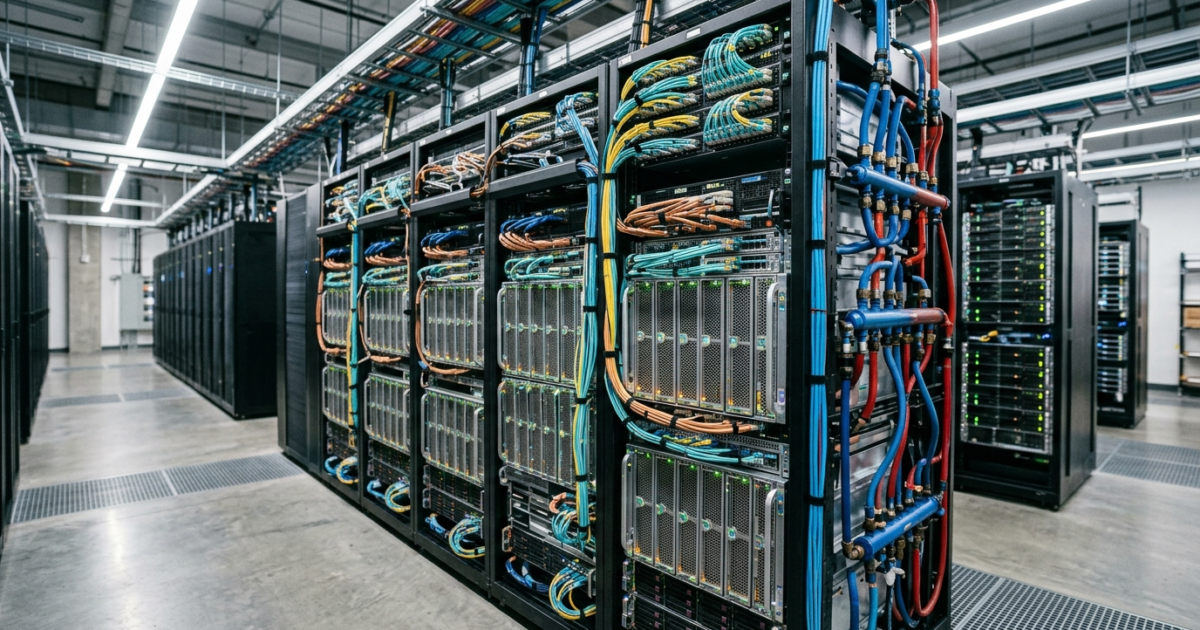
For several quarters, enterprise hardware budgets concentrated primarily on accelerator clusters to train large foundation models. However, the operational deployment of agentic systems—such as Meta Platforms Inc.’s Muse and autonomous enterprise workflows—has reshuffled compute priorities across cloud environments. While deep learning training and initial inference rely heavily on massive GPU parallelism, autonomous agents operate through sequential decision trees, iterative tool calls, context parsing, and dynamic software orchestration. These multi-step routines execute substantially more efficiently on multi-threaded x86 central processors than on accelerators optimized strictly for matrix math.
AMD Chief Executive Lisa Su highlighted this architectural dynamic during the analyst conference call, stating that enterprise deployment of agentic software is just beginning to expand. Cloud providers and enterprise operators are upgrading existing compute nodes with AMD EPYC server CPUs to handle sustained background agent activity without incurring prohibitive power or software abstraction overhead. The resurgence helped AMD’s server CPU business deliver its highest quarterly growth rate in over two years, mitigating broader macro concerns surrounding credit and debt financing for AI infrastructure.
Rack-scale Helios expansion and strategic silicon acquisitions
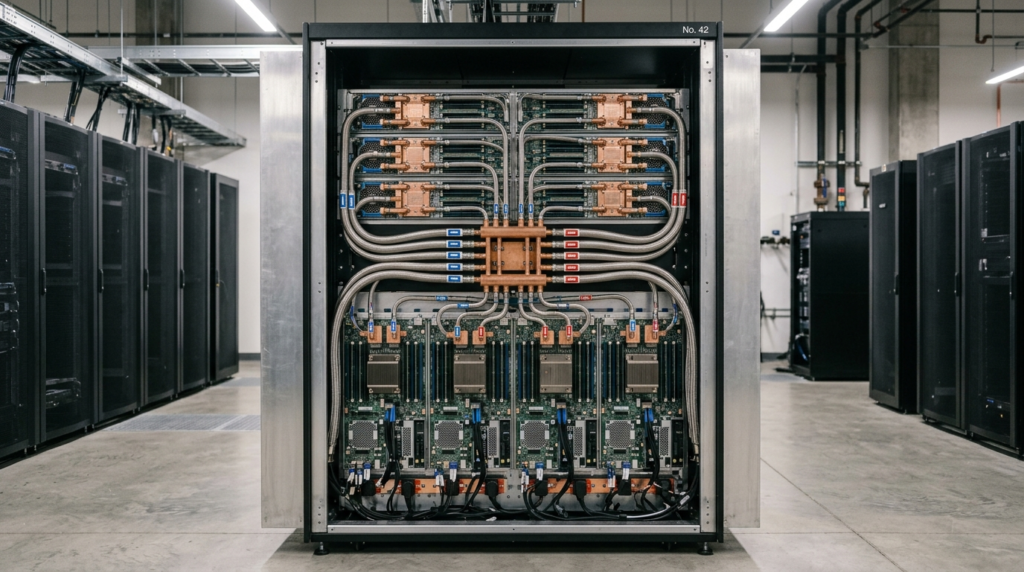
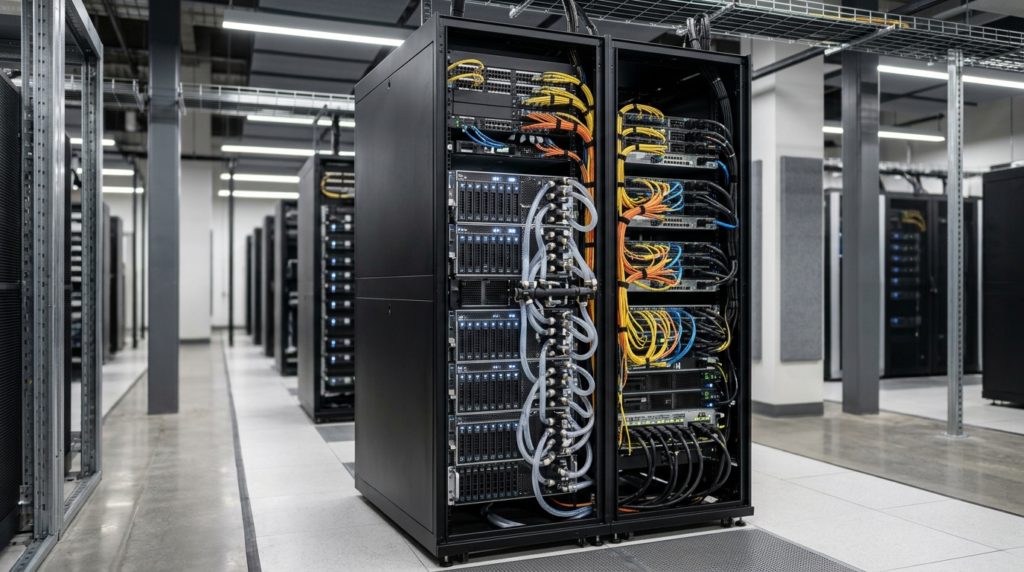
Beyond standalone EPYC processors, AMD is securing significant enterprise wins with its Helios rack-scale systems, which integrate proprietary server CPUs and accelerators into turnkey data center configurations. Su confirmed that Anthropic PBC, OpenAI Group PBC, Microsoft Corp., Oracle Corp., and Meta have all deployed Helios systems in production environments. Meta announced that its initial Helios server racks are fully operational, coinciding with AMD participating with a $1 billion investment in Meta’s recent equity financing as reported by SiliconANGLE. Concurrently, AMD committed $5 billion toward Anthropic ahead of the frontier lab’s planned initial public offering.
To diversify its architectural capabilities beyond general-purpose computing, AMD completed several targeted acquisitions during the third quarter. In September, the company entered an agreement to acquire Fei-Fei Li’s startup World Labs for $8.2 billion in an all-stock transaction. World Labs develops spatial intelligence models capable of simulating interactive three-dimensional physical environments for robotics. In August, AMD acquired Taalas Inc., a specialist designing model-specific application-specific integrated circuits (ASICs) that hardwire trained models directly into silicon. These acquisitions indicate a long-term strategy to flank standard accelerator architectures with high-throughput inference hardware and embodied intelligence capabilities.
PC market headwinds and TSMC supply commitments
While data center performance broke records, AMD’s Client and Gaming segment contracted 8% year-over-year to $3.70 billion, with gaming revenues tumbling 40%. The decline aligns with industry-wide pressures documented by Counterpoint Research, which recorded a 4% year-over-year decline in global PC shipments during the second quarter of 2026 due to escalating component costs, particularly DRAM and high-density NAND flash memory.
The contrast between enterprise strength and consumer hardware weakness mirrors the divergence seen across the semiconductor landscape. Unlike rival Intel Corp., which saw its stock drop sharply after guiding conservatively due to production bottlenecks, AMD indicated no packaging or capacity shortfalls. Following an executive delegation to Taiwan to coordinate with Taiwan Semiconductor Manufacturing Co. (TSMC), Su stated that AMD has locked down advanced packaging substrates, high-bandwidth memory allocations, and leading-edge silicon wafers necessary to support planned server revenue doubling in fiscal 2027.
What happens next
In the near term, enterprise infrastructure teams must evaluate their capacity planning models as agentic frameworks shift baseline workloads from pure GPU clusters toward hybrid compute topologies. AMD’s fourth-quarter revenue guidance of $17 billion indicates sustained hyperscale demand, but the company’s gross margin projection of 55%—slightly below Wall Street’s 55.3% consensus—points to higher near-term costs associated with ramping advanced packaging lines and integrating all-stock acquisitions.
System architects should track two key milestones over the coming quarters: the integration of Taalas custom ASIC silicon into Helios rack roadmaps for low-power inference, and the availability of TSMC advanced packaging allocations heading into early 2027. If agentic workloads continue to prioritize CPU-bound control logic, AMD’s x86 footprint will remain a structural hedge against accelerator supply concentration.
Sources
- AMD Reports Third Quarter 2026 Financial Results :: Advanced Micro Devices, Inc. (AMD)
- AMD beats expectations as agentic AI sparks its data center revenue growth engines – SiliconANGLE
- Nvidia, AMD to buy $4B in Meta shares as part of expanded chip partnerships – SiliconANGLE
- AMD acquires world model developer World Labs for $8.2B – SiliconANGLE
- AMD acquires Taalas to hardwire AI models into silicon – SiliconANGLE
- Memory Crunch Ends PC Recovery as Global Shipments Decline for First Time Since Q1 2025