Key takeaways
- AMD generated record net revenue of $13.377 billion in Q3 2026, expanding 45% year-over-year and 16% sequentially.
- Data Center revenue surged 97% year-over-year to $8.546 billion, driven by sustained EPYC CPU deployments and Instinct MI450 AI accelerator volume shipments.
- AMD’s quarterly data center revenue eclipsed Intel’s $7.3 billion, highlighting accelerating market share capture in hyperscale AI infrastructure.
- Fourth-quarter 2026 revenue guidance was established at $17.0 billion (plus or minus 3%), signaling approximately 66% year-over-year growth as Helios rack-scale systems scale.
Advanced Micro Devices (AMD) delivered record financial results for the third quarter of 2026, generating $13.377 billion in net revenue—a 45% increase year-over-year and 16% growth sequentially. The record performance was anchored by AMD’s Data Center business, where revenue surged 97% year-over-year to $8.546 billion, driven by sustained enterprise adoption of EPYC server CPUs and volume shipments of Instinct MI450 AI accelerators. GAAP operating income reached $2.832 billion with diluted earnings per share of $1.46, while non-GAAP operating income totaled $3.923 billion with diluted earnings per share reaching $2.09. Management projected fourth-quarter 2026 revenue of approximately $17 billion, reflecting anticipated year-over-year growth of 66% as rack-scale AI clusters expand.
Data Center Expansion Driven by Instinct MI450 and EPYC Platforms
The Data Center segment has become AMD’s primary financial engine, accounting for nearly 64% of total quarterly revenue. Segment revenue reached $8.546 billion, expanding 27% from the preceding quarter. AMD attributed the surge to concurrent demand across high-density cloud instances and large-scale AI training deployments. The quarter marked the commercial production rollout of the Instinct MI450 accelerator family alongside AMD’s Helios rack-scale systems, designed to satisfy dense training and inference demands across frontier artificial intelligence research labs and hyperscale cloud providers.
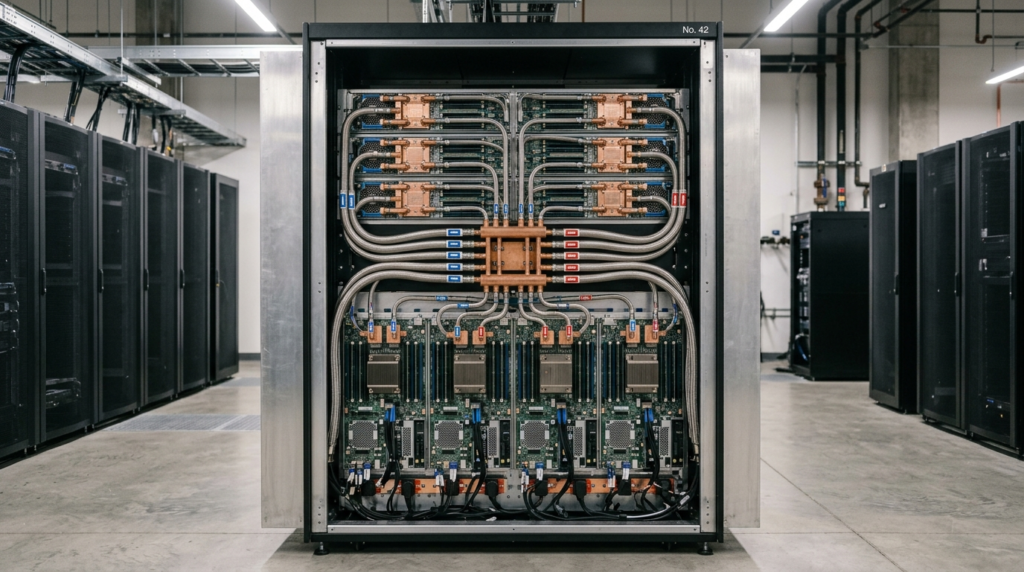
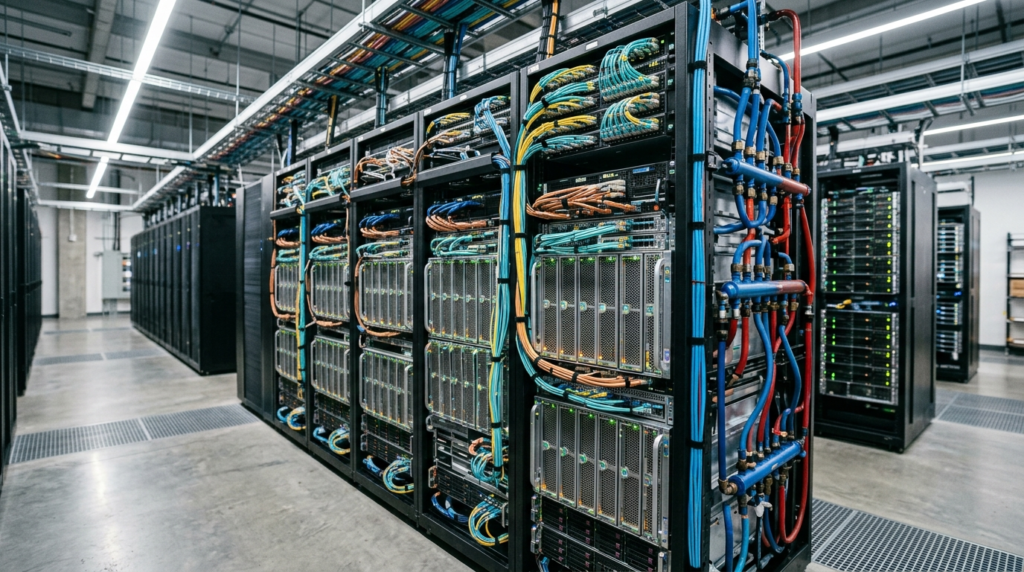
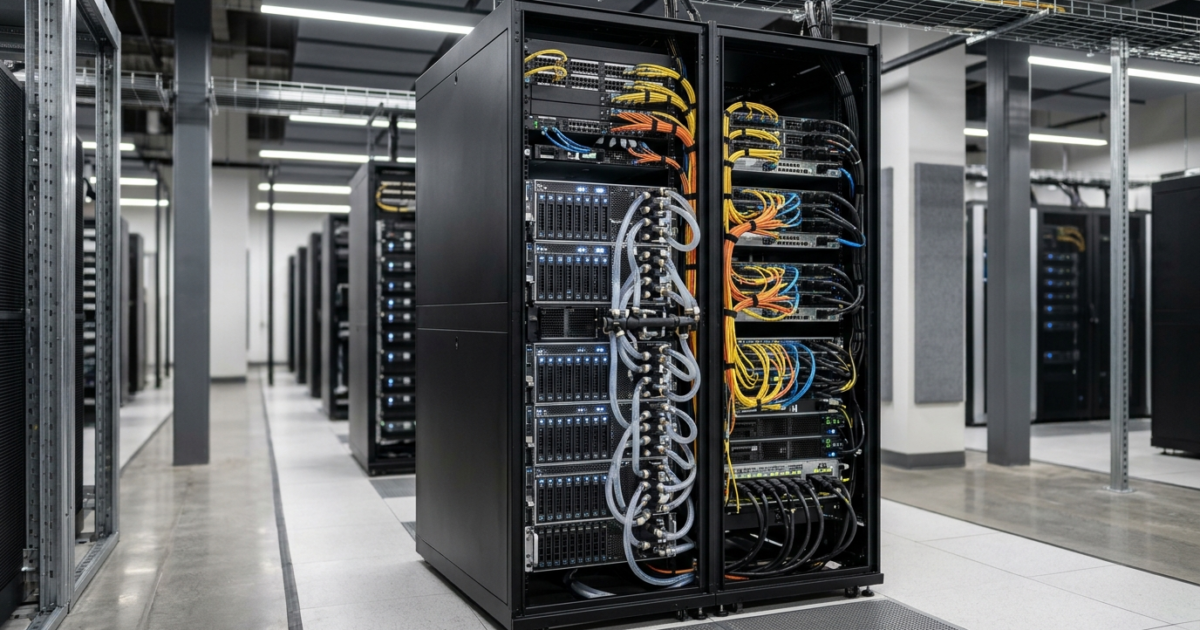
According to disclosures by AMD and reporting by ServeTheHome, major cloud and AI infrastructure operators—including Anthropic, Meta, Microsoft, OpenAI, and Oracle Cloud Infrastructure—are currently running active production workloads on Helios rack-scale configurations. Unlike isolated board-level accelerator deployments, the Helios architecture integrates high-density Instinct compute nodes with high-throughput EPYC host processors, multi-rail networking, and direct liquid cooling to sustain dense multi-megawatt clusters. Continued enterprise deployments of fifth-generation EPYC “Turin” processors also contributed to server market share gains, providing higher core density and memory bandwidth across enterprise virtualization and database workloads.
| Segment | Q3 2026 Revenue | YoY Change | Primary Growth Drivers |
|---|---|---|---|
| Data Center | $8.546 billion | +97% | EPYC Turin server processors, Instinct MI450 AI accelerators, Helios rack-scale deployments |
| Client | $2.949 billion | +7% | Ryzen mobile processor demand, enterprise notebook refresh cycles |
| Gaming | $773 million | -40% | Semi-custom console maturation, elevated NAND and memory supply costs |
| Embedded | $1.109 billion | +29% | Aerospace and defense, industrial automation, communications infrastructure |
Data Center Trajectory and the Upcoming x86 Socket Race
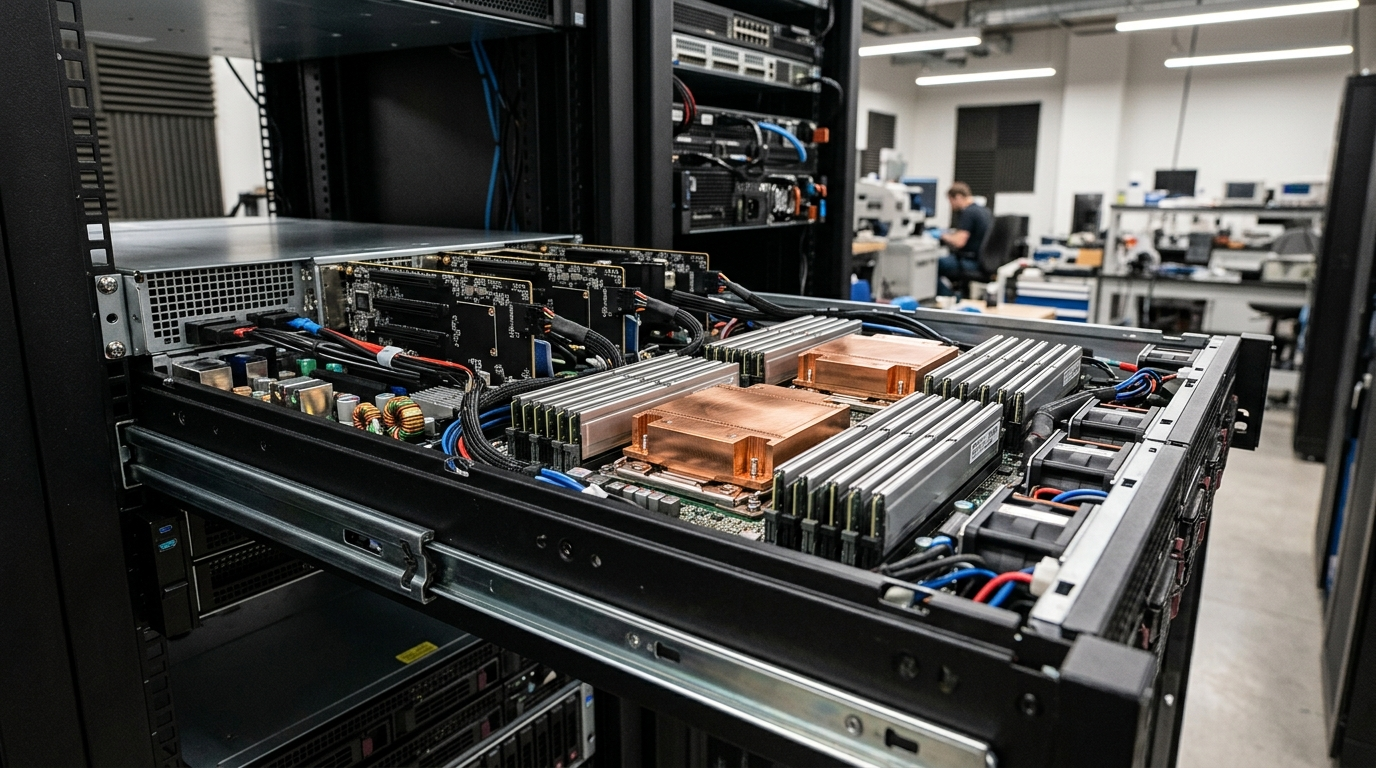
AMD’s data center revenue trajectory provides a sharp technical comparison against broader industry dynamics. In reported quarterly figures, AMD’s Data Center revenue of $8.546 billion outpaced Intel’s data center division, which posted $7.3 billion in revenue representing 78% growth over the same timeframe. As detailed in TechNode HQ’s coverage of Intel Q3 2026 Earnings: Server Demand Counters Client PC Slump, both semiconductor suppliers are benefiting from massive global capital expenditures in server upgrades, but AMD achieved faster year-over-year revenue velocity in data center deployments.
Architecturally, AMD is positioning its upcoming sixth-generation EPYC platform, codenamed “Venice,” to maintain per-socket performance leadership. Built on Zen 6 architecture, Venice introduces support for PCIe Gen 6 connectivity and a 16-channel DDR5 memory subsystem, doubling interface bandwidth to prevent interconnect bottlenecks with next-generation accelerators and high-speed storage. Intel’s competing PCIe Gen 6 server platform, “Diamond Rapids,” is projected for rollout later in 2027. Consequently, enterprise infrastructure buyers designing high-throughput rack clusters anticipate that early PCIe Gen 6 server validation and deployment will occur predominantly on AMD platforms throughout the first half of 2027.
Divergence in Client, Gaming, and Embedded Divisions
Outside of enterprise infrastructure, AMD’s divisions demonstrated mixed results. The combined Client and Gaming segments generated $3.722 billion, contracting 8% year-over-year. However, performance diverged significantly between the two underlying categories:
- Client Segment: Rose to approximately $2.949 billion, up 7% year-over-year. Growth was supported by demand for Ryzen mobile processors across commercial notebooks. AMD’s upcoming Ryzen AI Halo platform, featuring the Ryzen AI Max Pro series (associated with the Gorgon Halo architecture), is positioned to expand local LLM inferencing on developer workstations with up to 128GB of unified memory once hardware distribution broadens.
- Gaming Segment: Declined 40% year-over-year to $773 million. The contraction reflects secular maturation in semi-custom console cycles alongside elevated memory and NAND flash component pricing, which constrained discretionary consumer hardware upgrades.
- Embedded Segment: Delivered $1.109 billion in revenue, growing 29% year-over-year. The segment, established through AMD’s acquisition of Xilinx, benefited from increased design wins across aerospace, defense, automotive, and industrial automation markets.
What happens next
For the fourth quarter of 2026, AMD issued financial guidance projecting revenue of $17.0 billion, plus or minus 3%. At the midpoint, this forecast implies roughly 66% year-over-year revenue growth and 27% sequential expansion, demonstrating that management expects data center accelerator demand to accelerate further through year-end. Non-GAAP gross margin is projected to remain stable at approximately 55%.
Infrastructure architects and hardware procurement teams should monitor two primary operational factors over the coming quarters:
- Helios Rack-Scale Delivery Velocity: AMD’s near-term revenue targets depend heavily on packaging capacity and component logistics for full-rack Instinct MI450 clusters. Ensuring continuous supply of high-bandwidth memory and advanced liquid-cooled chassis assemblies will determine whether shipments meet hyperscaler build-out schedules.
- Venice Validation Schedules: With Venice bringing PCIe Gen 6 and 16-channel memory configurations to market ahead of Intel’s Diamond Rapids, server system vendors will begin sampling qualification motherboards to enterprise buyers during late 2026 and early 2027. Infrastructure teams planning long-term compute refreshes should assess qualification lead times for high-density socket deployments.