Key takeaways
- Google launched Project Suncatcher on October 1, 2026, deploying four Tensor Processing Units (TPUs) into orbit aboard a SpaceX rocket.
- Operated in partnership with Planet, the refrigerator-sized prototype satellite will test accelerator survivability under launch vibration, cosmic radiation, and thermal extremes.
- Operations are limited to 15-minute bursts of Google’s Gemma model due to thermal constraints in a vacuum, where heat dissipation relies entirely on radiative cooling.
- Pre-flight beam testing showed Trillium (v6e Cloud TPU) processors tolerated more than 2 krad(Si) in a 67MeV proton beam, exceeding the 5-year shielded mission requirement of 750 rad(Si).
- Low Earth orbit offers up to eight times more solar generation than ground facilities, providing an alternative explore path against terrestrial grid and land bottlenecks.
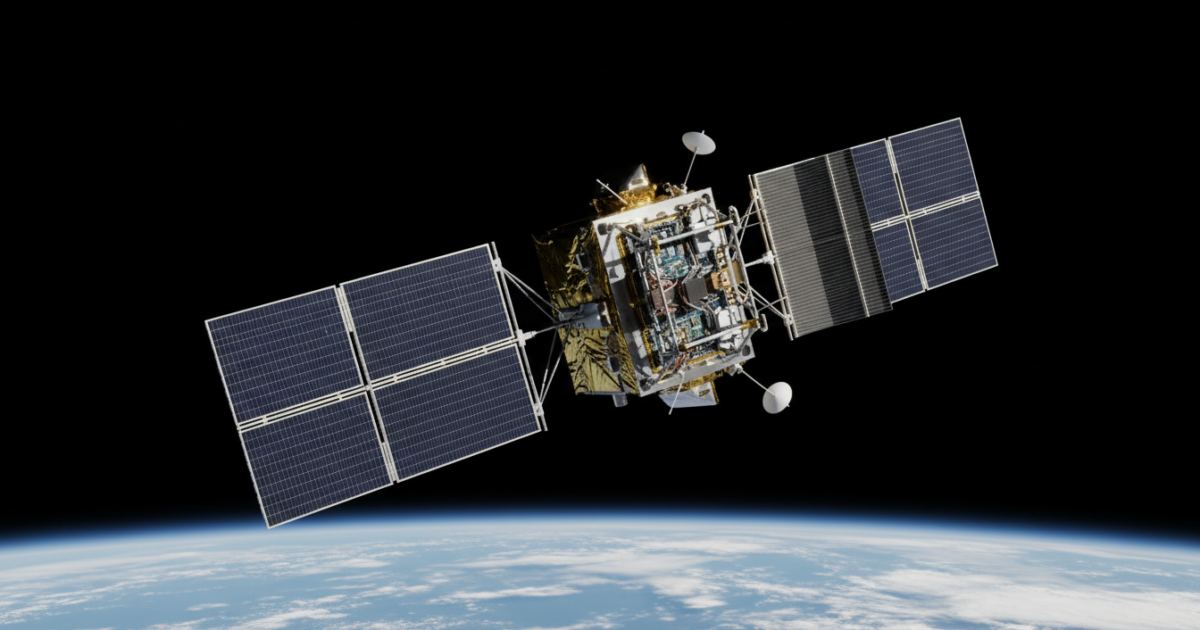
Google has deployed a refrigerator-sized prototype satellite into low Earth orbit to test operating machine learning silicon in the space environment, the company confirmed following an October 1, 2026 launch aboard a SpaceX rocket. Designated as Project Suncatcher, the experimental mission carries four custom Tensor Processing Units (TPUs) into orbit, operated in partnership with satellite imagery provider Planet. The prototype is designed to evaluate how commercial AI accelerators withstand launch vibrations, extreme temperature swings, and cosmic radiation while running Google’s open-weight Gemma model in short 15-minute bursts. While the orbital platform benefits from near-constant solar energy, severe thermal dissipation limits in a vacuum present major engineering hurdles for scalable orbital compute.
Orbital Payload and Mission Profile
The mission represents Google’s first in-orbit deployment of its proprietary AI accelerator silicon. Travis Beals, senior director and lead of Project Suncatcher, characterized the spacecraft as “a very minimal test” intended to establish baseline viability rather than full-scale data center operations. A report on Project Suncatcher detailed that the satellite carries four TPUs, packaged into a compact satellite bus provided and managed by Planet. Planet ground teams are tasked with initial satellite commissioning and orbital stabilization, after which Google engineers will activate the accelerators to execute machine learning workloads.
The test payload executes a specialized build of Google’s lightweight Gemma model. Rather than processing continuous enterprise query streams, the processors will run in constrained intervals to generate inference answers for simple evaluation prompts while ground stations monitor telemetry and error states. According to an official Project Suncatcher overview, the experimental mission is scheduled to operate for a full year in low Earth orbit, giving engineering teams longitudinal data across diverse solar illumination cycles and orbital passes.
| System Parameter | Specification or Ground Benchmark | Orbital Operational Condition |
|---|---|---|
| Compute Payload | 4 Google Tensor Processing Units (TPUs) | Integrated into a refrigerator-sized satellite bus |
| Launch Vehicle | SpaceX orbital rocket (launched October 1, 2026) | Deployed into low Earth orbit (LEO) |
| Primary Mission Operator | Planet (satellite bus and bus operations) | Google manages TPU compute workloads |
| Evaluation Model | Google Gemma (open-weight machine learning model) | Inference tasks executed in 15-minute cycles |
| Target Mission Duration | 12 months of active orbit | Continuous telemetry and performance logging |
| Radiation Tolerance | >2 krad(Si) in 67MeV proton beam testing | Exceeds 750 rad(Si) 5-year shielded requirement |
Thermal Dissipation and Vacuum Constraints
Deploying high-density silicon into space introduces extreme thermodynamic challenges. In terrestrial facilities, accelerators reject heat through convection—relying on high-velocity chilled airflow, direct-to-chip liquid cooling loops, and external evaporative cooling towers. In the vacuum of low Earth orbit, convective cooling does not exist. Spacecraft can reject thermal energy only through radiative dissipation, where heat transfer scales strictly with radiator surface area and the fourth power of surface temperature.
This physical barrier dictates the operational profile of the prototype. Google restricted TPU execution to 15 minutes at a time to prevent thermal accumulation from exceeding silicon junction limits. Without active airflow or massive radiator panels, running modern matrix-multiplication units at continuous maximum TDP would quickly cause thermal throttling or permanent package damage. Between compute bursts, the hardware must remain idle while heat conducts through the chassis and radiates into space.
The thermal barrier contrasts sharply with the abundance of orbital solar energy. In low Earth orbit, satellites can access near-constant sunlight and generate up to eight times more solar power than equivalent terrestrial solar farms, which suffer from atmospheric attenuation, weather obscuration, and nighttime downtime. However, solar panels facing the sun absorb significant heat, and Earth’s thermal albedo further limits passive cooling efficiency on low-altitude orbits.
Radiation Resilience and Terrestrial Grid Pressures
Cosmic radiation poses the second fundamental hurdle for commercial silicon in space. Beyond Earth’s protective atmosphere, processors face solar energetic particles and galactic cosmic rays capable of triggering single-event upsets (SEUs), latch-ups, and long-term total ionizing dose (TID) degradation. Traditional aerospace applications rely on heavily hardened, older semiconductor nodes with thicker gate oxides and redundant logic, which lag modern AI accelerators by several generations in performance per watt.
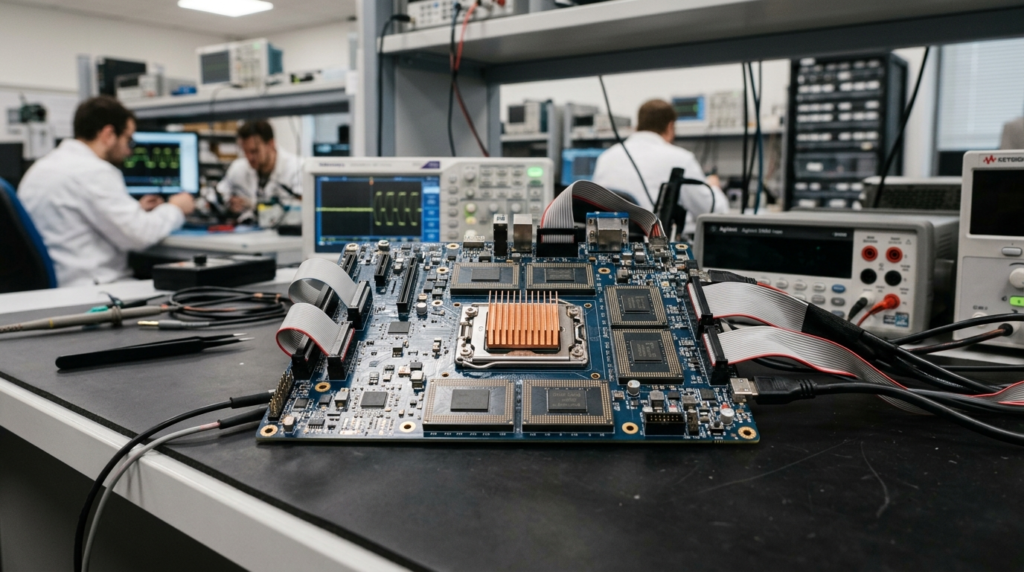
To evaluate whether modern cloud silicon could survive without complete rad-hard redesigns, Google conducted extensive pre-flight laboratory testing. As detailed in a Google Research publication on space-based AI infrastructure, researchers subjected Trillium (v6e Cloud TPU) processors to a 67MeV proton beam. The test hardware absorbed more than 2 krad(Si) of total ionizing dose before memory anomalies emerged, well beyond the 750 rad(Si) threshold estimated for a shielded five-year mission in low Earth orbit.
Google’s exploration of space-based computing reflects growing resource constraints on the ground. Terrestrial data center operators face intensifying grid capacity bottlenecks, protracted utility interconnection queues, and escalating local pushback over water consumption and power allocation. A growing number of terrestrial data center projects facing grid and community resistance have stalled billions in planned infrastructure, prompting cloud providers to investigate non-traditional deployment environments. Nonetheless, orbital platforms carry substantial operational offsets, including high launch costs, satellite station-keeping requirements, space debris hazards, and limited ground-link communication bandwidth compared to terrestrial fiber networks.
What happens next
Following orbital stabilization by Planet, Google engineers will begin initial TPU power-on sequences and diagnostic checks. The team plans to systematically scale Gemma inference runs to measure how the processors handle the physical stress of spaceflight, cycling temperatures, and background radiation throughout orbital day-night transitions.
Over the one-year test window, Google will record bit-flip rates, error-correcting code (ECC) events, and thermal degradation curves. The resulting dataset will inform whether future iterations require revised thermal bus designs or additional physical shielding. While commercial orbital data centers remain years away from economic or operational parity with ground facilities, Project Suncatcher will provide critical empirical evidence on whether standard enterprise silicon can reliably process machine learning workloads in the space environment.