Key takeaways
- Efficient Computer secured $97 million in Series B funding at a $650 million valuation, bringing total financing to $173 million.
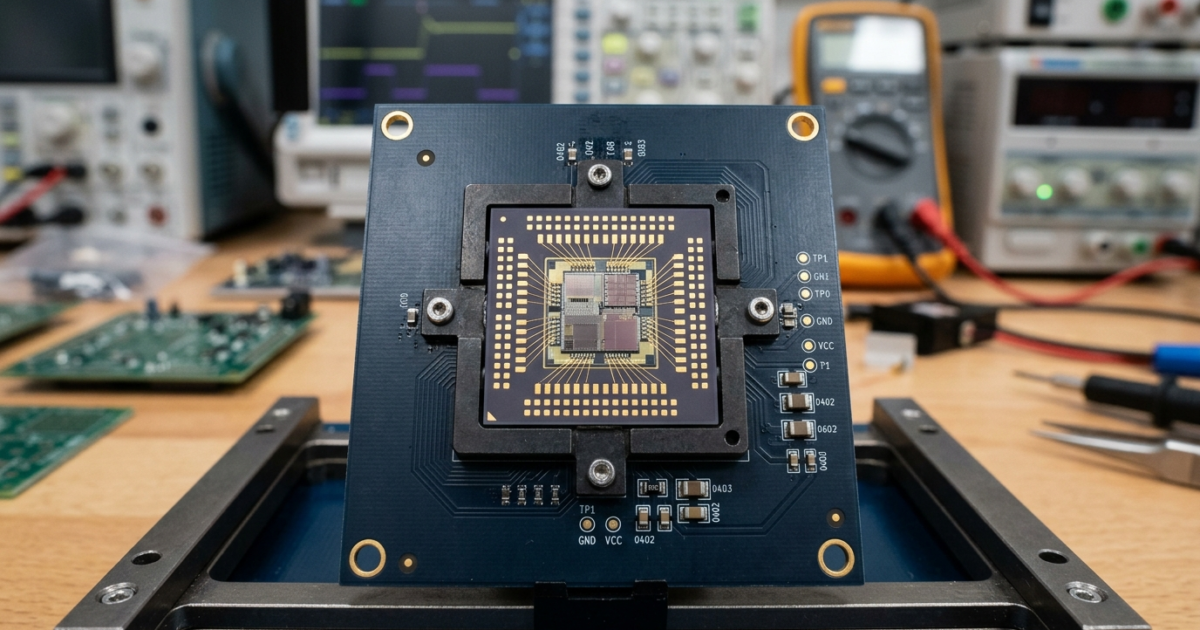
- The company’s Electron E1 processor integrates a reconfigurable processing element grid, a RISC-V scalar core, 4 MB MRAM, and 3 MB SRAM to achieve up to 1 TOPS/W peak energy efficiency.
- A proprietary effcc compiler translates standard C, C++, and common machine learning models directly to dataflow silicon without requiring custom microcode.
- Silicon has taped out four times and is shipping in commercial volume for edge robotics, autonomous drones, and wearables, with datacenter architectures in development.
Low-power chip startup Efficient Computer Co. has closed a $97 million funding round led by TQ Ventures, completed at a $650 million valuation. The Series B investment brings the company’s total funding to $173 million following an earlier $60 million round in February 2026. Efficient Computer plans to allocate the capital to scale volume production of its commercial Electron E1 processor and expand its spatial dataflow computing fabric from battery-powered edge robotics into general-purpose datacenter infrastructure.
Series B expansion and silicon production
The financing round drew participation from Eclipse, Union Square Ventures, Giant Ventures, Triatomic Capital, TO Capital, TF Capital, Mana Ventures, Toyota Ventures, Overmatch, and Borderless. According to Efficient Computer, the capital will primarily support foundry commitments, packaging capacity, and customer engineering support as lead accounts ramp deployment.
Hardware production has moved past early prototyping. Efficient Computer has taped out its silicon four times and is already shipping processors in commercial volume to launch partners in robotics, autonomous drones, civil infrastructure monitoring, and smart wearables. TQ Ventures partner Andrew Marks noted that the investment decision hinged on demonstrated silicon execution and toolchain viability rather than simulated projections, highlighting that the startup successfully built both the physical silicon and the accompanying software compiler required to operationalize its architecture.
Spatial dataflow architecture and the effcc compiler
Modern central processing units (CPUs) and graphics processing units (GPUs) dedicate substantial portions of their silicon area and dynamic power to managing instruction overhead. Systems running standard x86 and ARM instruction set architectures must continuously fetch, decode, reorder, and retire instructions, shuttling intermediate values across dense register files and hierarchical caches. While specialized neural processing units (NPUs) bypass some of this overhead through fixed systolic arrays, they sacrifice general programmability and cannot run full application routines efficiently.
Efficient Computer’s spatial dataflow architecture routes instructions across a reconfigurable physical array to mirror the application’s actual dataflow graph. By executing operations directly as operands become available across the silicon fabric, the architecture removes conventional fetch-decode cycles and minimizes register file movement. The company claims this approach achieves a 10x to 100x energy-efficiency improvement over standard von Neumann CPUs when processing heterogeneous application pipelines governed by Amdahl’s Law.
Historically, academic dataflow architectures struggled to gain commercial adoption due to extreme compiler complexity and the requirement for proprietary assembly code. Efficient Computer attempts to bypass this barrier using its proprietary effcc compiler, which allows software engineers to compile standard C, C++, and common machine learning model formats directly onto the spatial dataflow fabric without manual code refactoring.
| Subsystem / Feature | Design Specification | Operational Purpose |
|---|---|---|
| Compute Fabric | Reconfigurable Processing Element (PE) Grid | Spatial execution of dataflow graphs without instruction fetch overhead |
| Scalar Core | Integrated RISC-V Core | Control flow handling, legacy operating system routines, and orchestration |
| Non-Volatile Memory | 4 MB MRAM | Low-leakage on-chip storage for model weights and system state |
| Volatile Memory | 3 MB SRAM | High-speed scratchpad and intermediate execution buffering |
| Peak Efficiency | Up to 1 TOPS/W | Continuous edge intelligence on battery and energy-harvesting budgets |
| Software Toolchain | effcc Compiler | Native compilation of standard C, C++, and deep learning graphs |
| Commercial Status | 4 Tape-Outs Completed | Active commercial volume shipments to lead customers |
Deployment across physical AI and datacenter fabrics
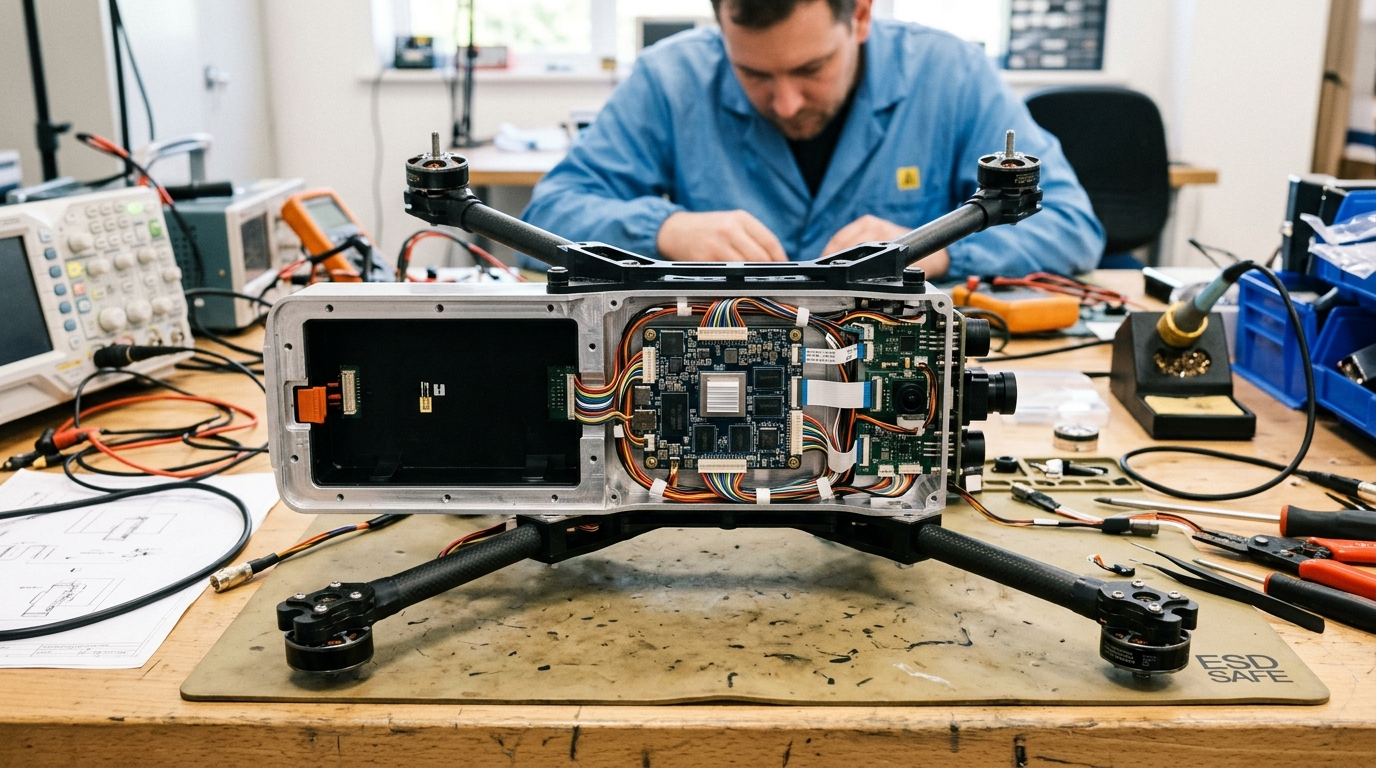
The company’s initial commercial traction focuses on what co-founder and Chief Executive Brandon Lucia terms “physical AI.” These environments—including small unmanned aerial vehicles, inspection crawlers, distributed seismic monitors, and wearable health systems—operate on strict battery envelopes where recharging is infrequent or impossible. In these systems, real-time sensor processing, classical filtering, Kalman state estimation, and neural inference must share power budgets measured in milliwatts.
While the Electron E1 targets edge platforms, Efficient Computer is also expanding its spatial dataflow technology to address datacenter general-purpose compute. Modern hyperscale datacenters face severe thermal and power grid constraints driven by dense accelerator clusters. Efficient aims to deliver more than a 10x reduction in datacenter server energy consumption by applying spatial dataflow principles to server-class processors.
Expanding into datacenter computing involves significant technical friction. Unlike standalone edge microcontrollers, datacenter processors require high-throughput memory channels, coherent multi-socket interconnects, robust virtualization primitives, and broad compatibility with complex enterprise operating systems. Whether Efficient Computer’s compiler and hardware fabric can scale to multi-threaded enterprise workloads without exposing architectural bottlenecks remains an open engineering question.
What happens next
In the near term, Efficient Computer will direct its $97 million Series B funding toward ramping foundry output and fulfilling volume purchase orders for the Electron E1 processor across its primary customer base. System integrators building industrial drones and embedded monitoring devices will evaluate whether production silicon maintains its claimed 1 TOPS/W efficiency across sustained operating temperatures.
Concurrently, hardware engineering teams will monitor disclosures regarding the company’s datacenter architecture roadmap. Key milestones to watch over the next 12 to 18 months include test silicon announcements for server-class compute tiles, published benchmarks comparing effcc compiler throughput against optimized x86 and ARM binaries on standard datacenter workloads, and formal details on memory subsystem interconnects.
Sources
- Low-energy chip startup Efficient Computer closes on $97M in funding – SiliconANGLE
- Efficient Computer, Taking on AI’s Energy Problem, Announces $97M to Scale its Processors from Physical AI to the Datacenter
- Solving computing’s energy problem with Efficient Computer’s $97M Series B
- Efficient Computer raises $97M at $650M valuation to cut AI’s power bill, from robots to data centres — TFN
- Efficient Computer Raises $97M Series B for its Spatial Dataflow – Converge Digest
- Electron E1 | Low Power AI Chip for Edge Devices & Embedded Systems | Efficient Computer
- Efficient Computer, Taking on AI’s Energy Problem, Announces $97M to Scale its Processors from Physical AI to the Datacenter