Key takeaways
- The iPhone 18 Pro introduces a mechanical four-stop variable aperture (f/1.48, f/1.8, f/2.8, f/4.0) on the primary 48MP camera, delivering true optical bokeh, 50% more light at f/1.48, and natural starburst flares.
- Fabricated on 2nm architecture, the A20 Pro chip achieves a 24% single-core and 26% multi-core CPU advantage over the iPhone 17 Pro in Geekbench 7, outperforming Qualcomm’s Snapdragon 8 Elite Gen 5 by up to 44%.
- A redesigned second-generation vapor chamber expands thermal surface area by 3x, yielding up to a 40% improvement in sustained throughput without overheating.
- Battery endurance reaches up to 34-36 hours of video playback on the iPhone 18 Pro and 45 hours on the Pro Max, complemented by 15-minute rapid charging to 50%.
- The Dynamic Island is 25% smaller due to under-display infrared Face ID integration, while the 7000-series aluminum chassis remains vulnerable to corner denting.
This iPhone 18 Pro review evaluates Apple’s 2026 flagship smartphone lineup, assessing whether the hardware justifies the $1,199 starting price ($1,299 for the Pro Max). Anchored by the 2-nanometer A20 Pro silicon, a mechanical four-stop variable aperture (f/1.48 to f/4.0), and a 25% smaller Dynamic Island, the iPhone 18 Pro delivers measurable leaps in sustained processing speed and battery endurance. Third-party testing confirms single-core CPU gains of 24% and multi-core boosts of 26% over the iPhone 17 Pro, alongside up to 34 to 36 hours of video playback. While aluminum chassis durability and incomplete Camera Control software integration remain notable friction points, the device establishes a formidable benchmark for creators and performance-focused users.
Evaluation scope and testing methodology
To establish an objective appraisal of the iPhone 18 Pro and iPhone 18 Pro Max, our analysis synthesizes hands-on testing published by Gizmodo’s veteran reviewer Raymond Wong, official technical disclosures from Apple’s product debut, standardized battery analysis from CNET and TechRadar, and optical teardowns from PetaPixel.
Rather than relying on unverified promotional claims, this evaluation examines measurable performance metrics, real-world camera performance across variable lighting, thermal dissipation during intensive computational tasks, and battery discharge rates under continuous multi-hour workloads. Furthermore, we cross-reference official EU energy labeling documentation to examine repairability scoring and internal component accessibility relative to previous flagship cycles.
At-a-glance hardware comparison
The transition from the iPhone 17 Pro to the iPhone 18 Pro series introduces architectural adjustments across silicon fabrication, optical hardware, battery capacities, and display sensor integration. The table below delineates verified specifications between the standard Pro and the Pro Max alongside their generational predecessors.
| Specification | iPhone 18 Pro | iPhone 18 Pro Max | iPhone 17 Pro | iPhone 17 Pro Max |
|---|---|---|---|---|
| Base Retail Price | $1,199 | $1,299 | $1,099 | $1,199 |
| Display Size & Cutout | 6.3-inch OLED, 25% smaller Dynamic Island | 6.9-inch OLED, 25% smaller Dynamic Island | 6.3-inch OLED, standard Dynamic Island | 6.9-inch OLED, standard Dynamic Island |
| System-on-Chip (SoC) | A20 Pro (2nm, 6-core CPU, 7-core GPU) | A20 Pro (2nm, 6-core CPU, 7-core GPU) | A19 Pro (3nm, 6-core CPU, 6-core GPU) | A19 Pro (3nm, 6-core CPU, 6-core GPU) |
| Neural Processing Unit | Dual 16-core Neural Engine | Dual 16-core Neural Engine | Single 16-core Neural Engine | Single 16-core Neural Engine |
| Main Camera Aperture | Variable mechanical (f/1.48, f/1.8, f/2.8, f/4.0) | Variable mechanical (f/1.48, f/1.8, f/2.8, f/4.0) | Fixed aperture (f/1.78) | Fixed aperture (f/1.78) |
| Telephoto Module | 4x optical zoom (fixed f/2.8) | 4x optical zoom (fixed f/2.8) | 5x optical zoom (fixed f/2.8) | 5x optical zoom (fixed f/2.8) |
| Rated Video Playback | Up to 34-36 hours | Up to 45 hours | Up to 33 hours | Up to 39 hours |
| Weight Delta | +5g vs. 17 Pro | +16g vs. 17 Pro Max | Baseline | Baseline |
| Cellular Modem | Apple C2 custom modem (mmWave 5G) | Qualcomm Snapdragon modem | Qualcomm Snapdragon modem | Qualcomm Snapdragon modem |
| Maximum Storage Option | Up to 2TB | Up to 2TB | Up to 1TB | Up to 1TB |
While the $100 price elevation across both configurations sets a higher barrier to entry, baseline feature parity between the 6.3-inch Pro and 6.9-inch Pro Max is closer than in previous years. Buyers selecting the smaller form factor no longer forfeit the highest storage tier, as both models accommodate configurations up to 2TB.
Silicon architecture: A20 Pro benchmarks and thermal redesign
At the center of the iPhone 18 Pro series is the 2-nanometer A20 Pro application processor. Fabricated on advanced lithography, the chip features a 6-core central processing unit, an upgraded 7-core graphics processing unit, and an expanded dual 16-core Neural Engine dedicated to on-device machine learning operations under iOS 27.
In standardized synthetic CPU assessments conducted by Gizmodo on official iOS 27 builds, the iPhone 18 Pro demonstrated notable generational gains over the A19 Pro. The device recorded a single-core score of 4,027 and a multi-core score of 11,540 in Geekbench 7. By comparison, the iPhone 17 Pro achieved 3,258 in single-core and 9,167 in multi-core testing, translating to a 24% improvement in single-threaded throughput and a 26% boost in multi-threaded computation.
When evaluated against contemporary Android flagships, the performance gap widens. The Samsung Galaxy S26 Ultra, powered by Qualcomm’s Snapdragon 8 Elite Gen 5 for Galaxy platform, posted Geekbench 7 scores of 2,790 single-core and 9,475 multi-core. In these documented runs, the A20 Pro outperformed Qualcomm’s silicon by 44% in single-threaded workloads and 28% in parallel processing.
Crucially, sustained performance represents a core hardware refinement. While previous assemblies struggled with thermal throttling during extended compute bursts, the iPhone 18 Pro integrates a second-generation vapor chamber. This thermal interface covers three times more surface area surrounding the SoC package. Apple documents up to a 40% improvement in sustained throughput over the iPhone 17 Pro. Testing confirms that demanding graphics workloads—such as rendering in Control and 3D titles like Monster Hunter Outlanders—execute without frame drops or localized surface overheating.
Local artificial intelligence inference also benefits from the dual 16-core Neural Engine. When generating images on-device using the Draw Things application running the FLUX.1 [schnell] model with the prompt “A photography of an astronaut riding a horse, 4K, volumetric light,” the iPhone 18 Pro completed generation in 49 seconds. The same task required 69 seconds on the iPhone 17 Pro, marking a 29% latency reduction.
Optics and camera engineering: Mechanical variable aperture analysis
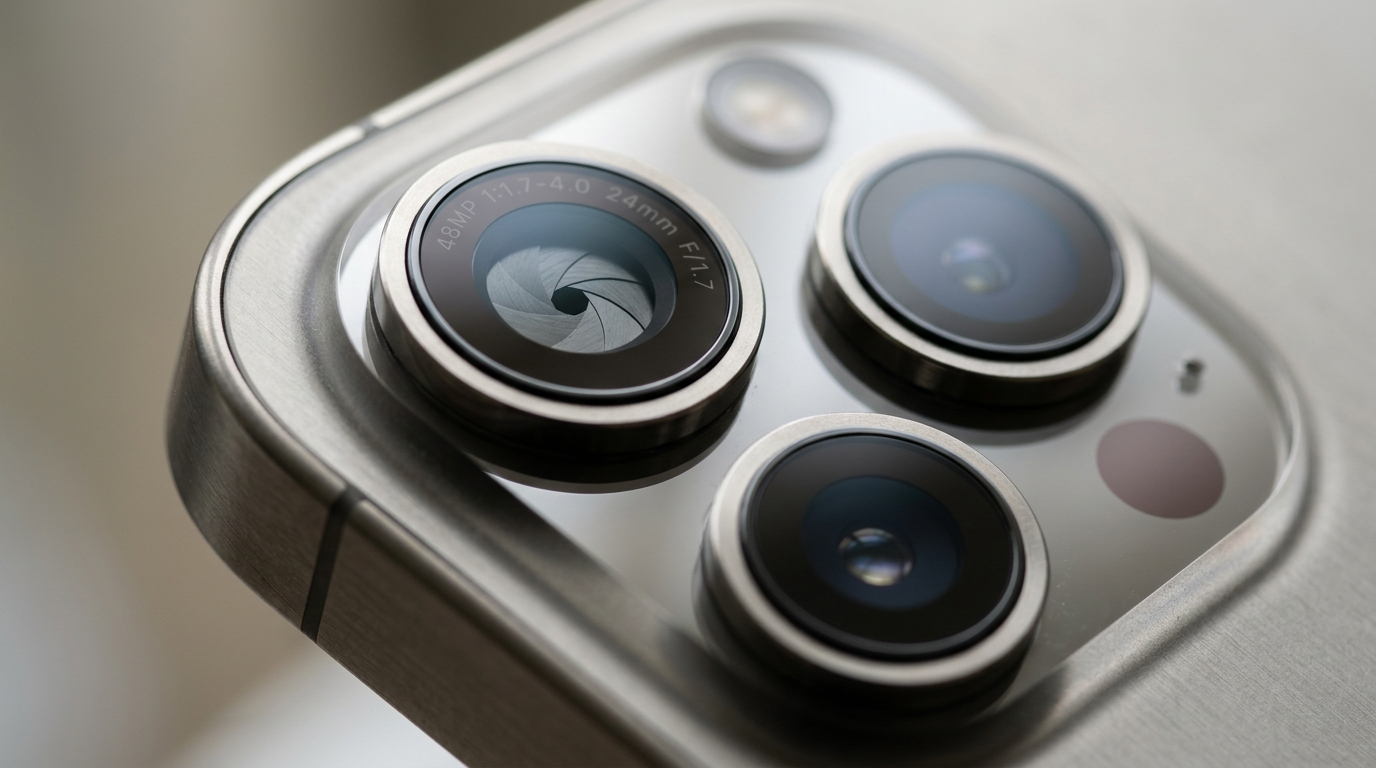
The optical headline of the iPhone 18 Pro and Pro Max is the replacement of the fixed f/1.78 main lens with a mechanical variable aperture system on the primary 48-megapixel sensor. Whereas mobile portrait modes typically simulate shallow depth of field through software segmentation masks and artificial blur algorithms, the iPhone 18 Pro employs physical iris blades that constrict and expand mechanically.
As documented by technical camera analysis from PetaPixel, the variable aperture mechanism operates along two distinct modes:
- Automatic Mode: The camera subsystem modulates the aperture steplessly to balance exposure, shutter speed, and scene depth. In everyday handheld capture, auto mode defaults toward wider settings (f/1.48 to f/1.8) to maintain low ISO values and reduce camera shake.
- Manual Pro Controls: Within the native iOS 27 Camera application, users can manually lock the physical aperture into four discrete stops: f/1.48, f/1.8, f/2.8, and f/4.0.
The physical f/1.48 maximum opening admits approximately 50% more light than the f/1.78 lens on the iPhone 17 Pro. In practice, this optical throughput reduces reliance on multi-frame computational Night Mode exposures, minimizing motion blur on handheld evening captures. Conversely, stopping down to f/4.0 expands the focal plane, keeping multi-layered subjects in sharp focus while rendering distinct star-shaped diffraction flares on specular lights—an authentic optical property impossible to duplicate cleanly in post-processing.
Beyond the variable aperture, the native Camera app integrates granular professional controls directly into the viewfinder. Creators can manually adjust shutter speeds (enabling long-exposure light trails without third-party utilities), white balance Kelvin values, and exposure compensation, supported by an interactive live luminance histogram. Complementing these adjustments is Photographic Styles 3, which introduces texture modulation parameters—including film grain, skin softening, and analog glow curves—providing an alternative to aggressive mobile sharpening filters.
However, optical flexibility remains restricted to the primary lens. The variable aperture functions across the 1x to 3.9x sensor-crop range. Once zooming crosses into the 4x telephoto module, the system reverts to a fixed f/2.8 aperture. Video creators can record with variable aperture settings and apply post-capture depth remapping, supported by subject-tracking auto-focus that locks onto moving subjects.
Battery endurance, charging rates, and modem efficiency
Battery longevity on the iPhone 18 Pro series exhibits significant gains, achieved through silicon efficiency improvements and internal chassis repackaging rather than experimental silicon-carbon chemistry. Official manufacturer ratings cite up to 34 hours of local video playback (with specific test sequences reaching 36 hours) and 31 hours of streamed media on the iPhone 18 Pro, while the iPhone 18 Pro Max reaches up to 45 hours of video playback.
Independent battery evaluations conducted by CNET and real-world testing from Gizmodo confirm that these ratings translate into exceptional endurance under practical loads:
- iPhone 18 Pro: Power users conducting intensive media capture, 4K video recording, high-framerate gaming, and persistent navigation consistently retained approximately 25% battery capacity following 12 to 14 hours of active off-charger usage.
- iPhone 18 Pro Max: The larger flagship frequently concluded full 16-hour operating cycles with 35% remaining capacity, providing genuine two-day capability for moderate workloads.
Fast-charging capabilities have also advanced, with official documentation noting that compatible high-wattage USB-C adapters can replenish the iPhone 18 Pro Max from 0% to 50% capacity in approximately 15 minutes, reducing downtime during intensive field production.
An unexpected hardware divergence appears in cellular connectivity. The 6.3-inch iPhone 18 Pro features Apple’s in-house C2 modem, succeeding the earlier C1 on the iPhone 16e and C1X on the iPhone Air. The C2 represents Apple’s first custom cellular baseband to incorporate mmWave 5G support, offering optimized power draw and stable connections in congested radio-frequency environments. In contrast, the iPhone 18 Pro Max retains a Qualcomm Snapdragon modem. While peak data speeds between the two modems show negligible variance in standard testing, field observations indicate that Apple’s custom silicon design contributes to reduced thermal output and superior battery preservation during continuous cellular streaming.
Ergonomics, chassis materials, and software friction
While the internal hardware represents a substantial upgrade, physical chassis decisions present tangible operational compromises. Apple continues to construct the iPhone 18 Pro unibody from 7000-series aluminum paired with a Ceramic Shield satin-glass wireless charging insert. Although aluminum provides superior thermal conductivity compared to titanium or stainless steel, facilitating rapid heat dispersion from the A20 Pro vapor chamber, it is markedly more susceptible to structural bruising, edge scuffs, and impact denting when dropped.
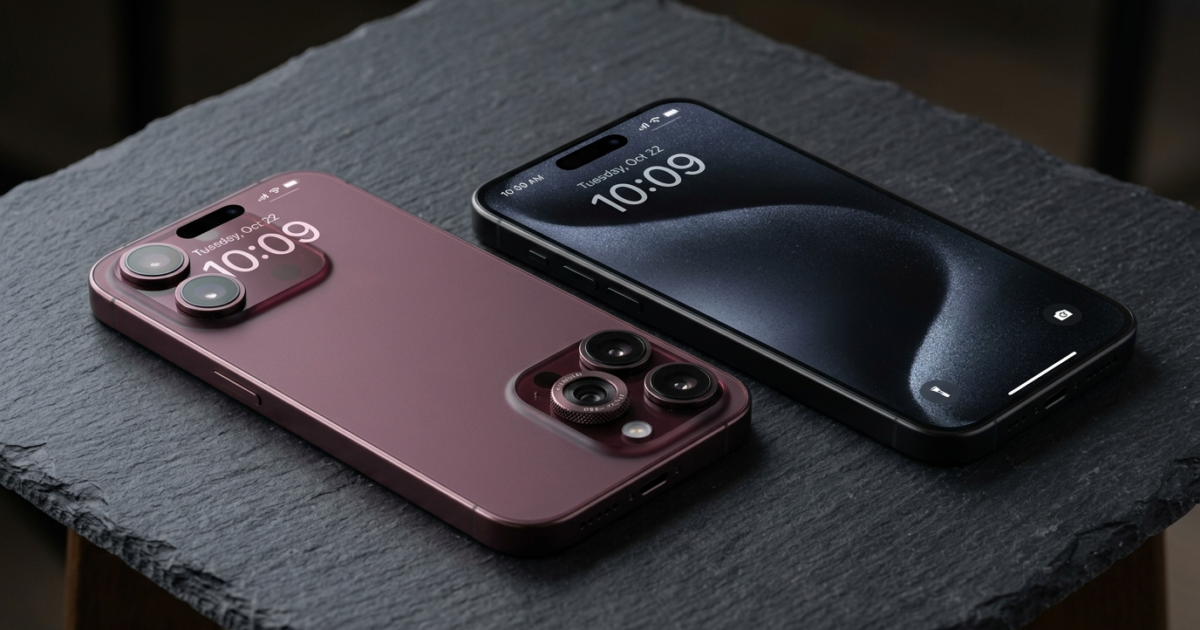
Weight has also increased. The iPhone 18 Pro registers a 5-gram increase over the 17 Pro, while the 18 Pro Max increases by 16 grams over its predecessor. Apple has distributed the internal mass effectively to minimize wrist strain, but the Pro Max remains a substantial device in hand and pocket. Furthermore, while the new Burgundy and Black finishes offer striking color-matched rear glass, both darker colorways act as fingerprint magnets requiring frequent cleaning with microfiber cloths.
On the display front, the Dynamic Island has been reduced in size by approximately 25%, capable of displaying up to three simultaneous Live Activities. Apple accomplished this footprint reduction by migrating the Face ID infrared illuminator beneath the active OLED display in the upper-left quadrant. In practical use, the sub-display sensor remains virtually undetectable during standard viewing distances and does not degrade biometric unlocking speed.
Software and input friction emerge in two specific areas:
- Camera Control Disconnect: The dedicated capacitive Camera Control button introduced in previous hardware iterations fails to interface with the new manual aperture or shutter controls. Users seeking to adjust the mechanical f-stops or manual exposure dials must interact directly with on-screen touch sliders, leaving the physical button feeling underutilized.
- Generative AI Boundaries: While iOS 27’s localized Siri AI demonstrates improved contextual indexing and faster response times via the dual Neural Engine, Apple’s generative photo editing features—such as “Reframe” and “Extend”—exhibit inconsistent output. During testing, automated background generation occasionally introduced hallucinated artifacts and unintended background figures, blurring the distinction between authentic photography and synthetic image generation.
For buyers evaluating hardware investments across Apple’s broader ecosystem, accessory and component pricing remains a consideration. While storage expansions reach 2TB—a factor explored in TechNode HQ’s analysis of how the Apple memory shortage squeezes margins and markets—users balancing device upgrades against wearable refreshes should weigh whether flagship specifications align with their daily workflows, as compared in our evaluation of the Apple Watch Series 12 vs SE 3.
Best fit by use case
The iPhone 18 Pro and iPhone 18 Pro Max represent a decisive convergence of professional imaging hardware and unmatched computational throughput. However, the $100 price increase across the lineup makes upgrade decisions contingent on specific user workflows and existing hardware generations.
- Professional Photographers and Filmmakers (Strong Buy): The mechanical variable aperture on the main 48MP sensor provides genuine optical control over depth of field and superior low-light gathering without algorithmic portrait distortion. Native manual shutter, ISO, white balance controls, and the availability of 2TB onboard storage make this a comprehensive mobile capture rig.
- Heavy Mobile Power Users and Travelers (Strong Buy for Pro Max): Users prioritizing untethered battery longevity will find the iPhone 18 Pro Max virtually impossible to deplete in a single operating day. With up to 45 hours of video playback and 15-minute rapid charging, it eliminates the operational necessity of external power banks.
- iPhone 17 Pro Owners (Skip or Selective Upgrade): Unless your daily routine demands true optical aperture control or multi-hour sustained GPU workloads that overwhelm the A19 Pro, the incremental display shrinkage and day-to-day speed improvements do not justify the $1,199 to $1,299 transition cost.
- iPhone 15 Pro, 16 Pro, or Older Upgraders (Definite Buy): For users operating hardware with earlier 3nm or 4nm silicon, standard fixed apertures, and deteriorating battery packs, the leap to the 2nm A20 Pro, dual 16-core Neural Engine, and extended battery life represents a transformative multi-year investment.
- Durability-Conscious Users (Proceed with Protection): Because the 7000-series aluminum housing remains susceptible to impact deformation, any purchase should factor in a high-grade protective case and display shield at checkout.
Sources
- iPhone 18 Pro and 18 Pro Max Review: Apple Is Just Flexing Hard Now
- Apple debuts iPhone 18 Pro and iPhone 18 Pro Max – Apple (IN)
- The iPhone 18 Pro Max’s Battery Is a Beast, but Is the Extra Juice Worth the Upgrade? – CNET
- Apple iPhone 18 Pro Camera Review: Small Changes, Big Differences | PetaPixel
- The iPhone 18 Pro’s game-changing feature isn’t the variable aperture camera, special version of Siri AI or ‘desktop-class’ processor — it’s that huge leap in battery life | TechRadar
- Apple Rates iPhone 18 Pro Slightly Easier to Repair Than 17 Pro – MacRumors