Key takeaways
- A 50-foot fiber optic HDMI cable eliminates wireless streaming latency for couch gaming.
- Bazzite OS transforms standard desktop PCs into a secure, console-like operating environment.
- The new Steam Controller 2 utilizes TMR sensors to permanently eliminate stick drift.
- Proton compatibility layers enable seamless execution of Windows titles on Linux kernels.
- Dual-booting Linux provides a zero-compromise workstation and living room gaming hybrid.
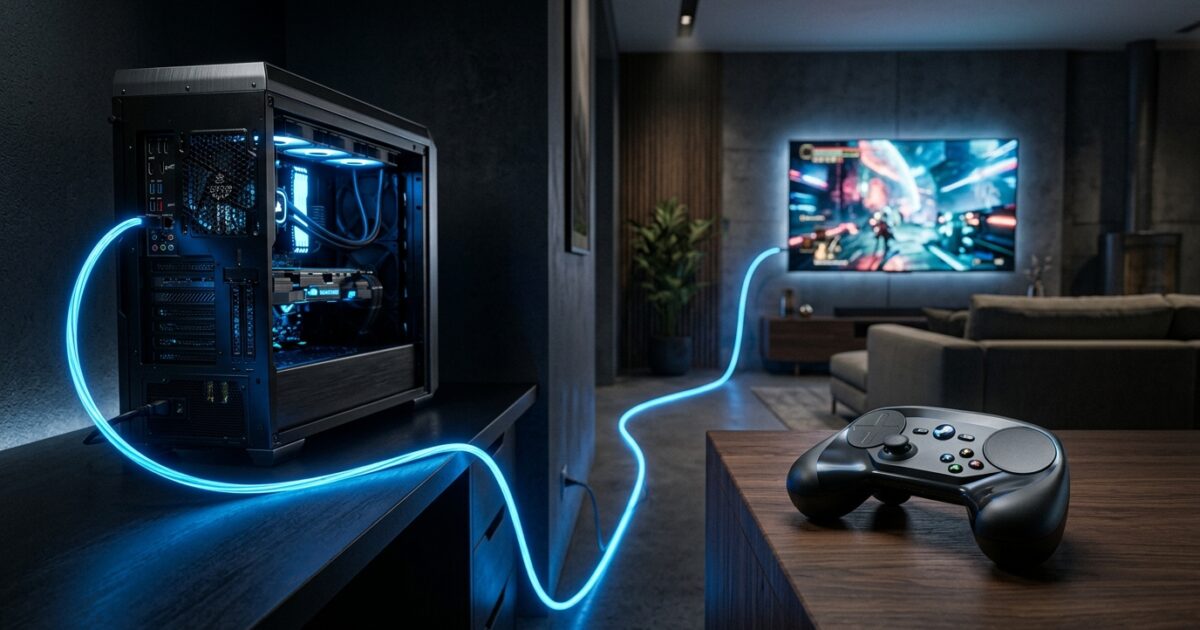
The pursuit of the perfect living room gaming experience has long been a compromise between the raw horsepower of a desktop PC and the seamless accessibility of a dedicated console. For decades, consumers and enterprise IT professionals alike have wrestled with the physical limitations of hardware deployments. However, a new paradigm is emerging among hardware enthusiasts that threatens to upend the traditional console market. By combining a 50-foot fiber optic HDMI cable, the newly released Steam Controller 2, and a specialized operating system, power users are building the ultimate DIY Steam Machine. This approach dismisses the need for Valve’s official console hardware or competing devices, offering a zero-compromise solution that leverages existing high-end PC components for couch gaming without the latency overhead of wireless streaming.
The desire to utilize a single, high-performance computing node for multiple discrete environments is not a new concept; it mirrors the virtualization strategies employed in enterprise data centers. But translating that capability into a home environment—where a machine must act as a productivity workstation in the office and a high-fidelity rendering engine in the living room—has historically been fraught with technical friction. This deep dive explores how recent advancements in optical data transmission, immutable Linux distributions, and precision peripheral engineering have finally made the localized hybrid computing model a viable reality for tech-savvy consumers.
The Architectural Shift of the DIY Steam Machine
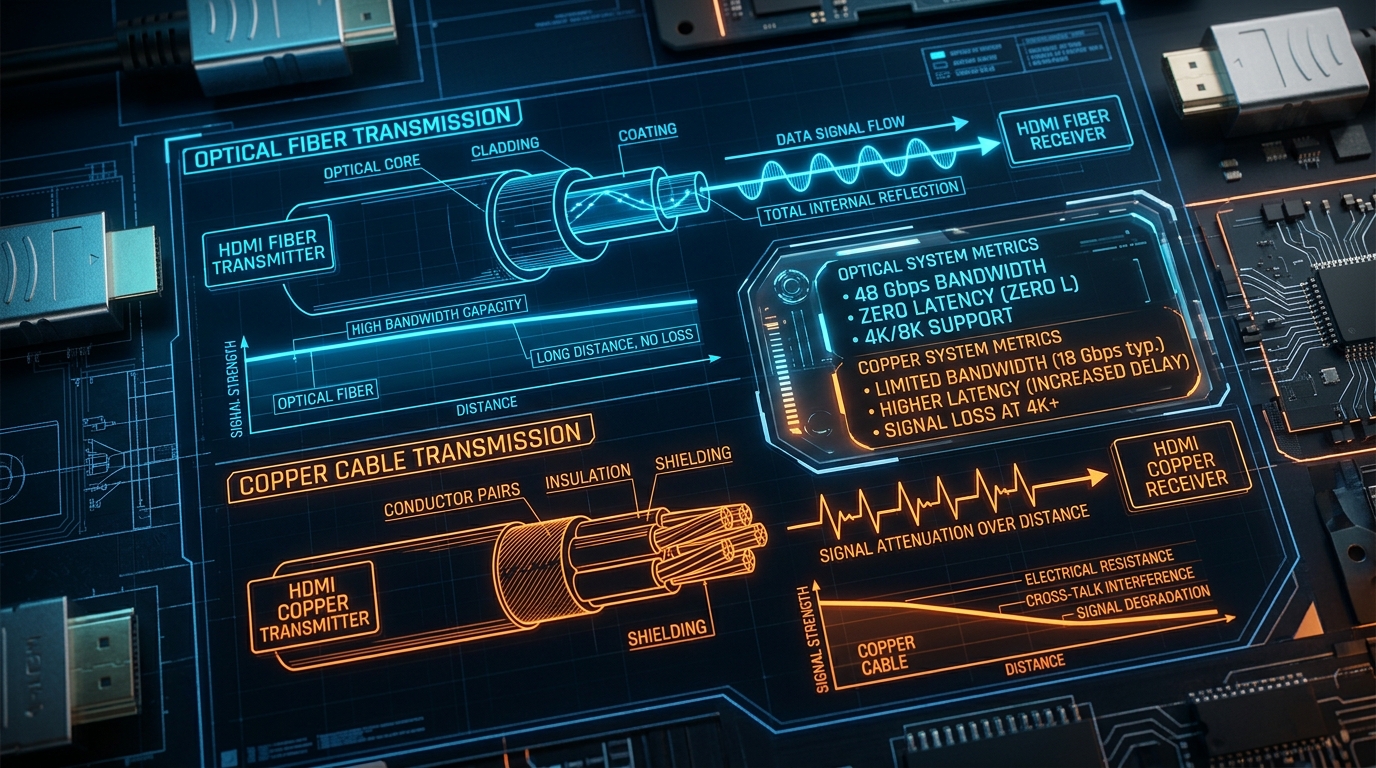
Bridging the physical gap between a home office workstation and a living room television has traditionally relied on wireless streaming solutions. Platforms like Moonlight, Sunshine, and Steam’s native Remote Play encode the video output of the host PC, transmit it over a local network, and decode it on a thin client connected to the television. While incredibly convenient, these streaming protocols inherently introduce noticeable latency penalties and video compression artifacts. For competitive gaming or any application requiring frame-perfect input responses, network jitter and bandwidth fluctuations can severely degrade the experience.
The enthusiast’s uncompromising answer to this network bottleneck is the deployment of a 50-foot fiber optic HDMI 2.1 cable. To understand the significance of this component, one must look at the limitations of traditional copper cables. Standard copper HDMI cables transmit data using Transition Minimized Differential Signaling (TMDS) or Fixed Rate Link (FRL) electrical signals. Over longer distances, these electrical signals suffer from severe attenuation, electromagnetic interference (EMI), and cross-talk, limiting copper’s effective range for high-bandwidth 4K/120Hz data to roughly 10 to 15 feet. Past that point, the signal degrades, resulting in digital dropouts, sparkles on the display, or complete signal failure.
Fiber optic HDMI cables solve this physics problem by embedding active photoelectric transceivers directly into the connector heads. The source connector converts the electrical HDMI signal into pulses of light, which travel down the fiber core with near-zero resistance and complete immunity to EMI. The destination connector then converts the light back into an electrical signal for the display. This allows them to carry massive bandwidth payloads—such as the 48 Gbps required for uncompressed 4K video at 120Hz—over distances of 50 feet or more without a single dropped frame or millisecond of latency. At approximately $75, routing an optical cable along the baseboards or through the molding of a house provides a perfect, lossless connection directly to a 4K living room display, transforming the centralized PC into a localized console.
Bazzite: The Immutable Linux OS Powering the Experience
Hardware connectivity is only half the equation; the software environment dictates the daily user experience and systemic stability. To achieve a seamless console feel, enthusiasts are abandoning traditional desktop operating systems in favor of Bazzite. Bazzite is an immutable, Linux-based operating system built on Fedora, specifically engineered to replicate and enhance the SteamOS experience provided by Valve’s handheld devices.
The concept of an immutable operating system is borrowed directly from enterprise IT and server infrastructure. In an immutable OS, the core system files are mounted as read-only. Updates are applied atomically as complete image replacements rather than individual package modifications. This architectural choice prevents system rot, accidental user breakage, and malicious modifications to core system files. If an update fails or introduces instability, the system can instantly roll back to the previous known-good state. For a living room device, this translates to console-like reliability—the system simply works, every single time it is booted.
Crucially, Bazzite supports a wide variety of hardware, including Nvidia and Intel GPUs that Valve’s official SteamOS may not fully support out of the box. By configuring Bazzite to automatically boot directly into Steam’s Big Picture mode, users bypass the desktop environment entirely, achieving a controller-first interface. The OS is capable of managing output states upon rebooting, automatically switching to the television display and routing audio via the HDMI interface. This effectively eliminates the traditional desktop friction, allowing the PC to wake from sleep and resume games exactly like a dedicated console, operating as a secure, unbroken endpoint solution.
The Evolution of Linux Gaming and the Proton Compatibility Layer
To fully appreciate the viability of Bazzite as a console replacement, one must examine the underlying software revolution that made Linux gaming possible. Historically, the desktop PC gaming ecosystem has been inextricably tied to Microsoft Windows and its proprietary DirectX graphics API. Transitioning to a Linux-based operating system meant sacrificing access to the vast majority of popular software titles. The DIY architecture is only feasible today due to the monumental advancements in compatibility layers, specifically Valve’s Proton.
Proton is an open-source compatibility tool based on a fork of Wine, augmented with a suite of high-performance translation libraries such as DXVK (DirectX to Vulkan) and VKD3D-Proton (DirectX 12 to Vulkan). Instead of requiring developers to natively port their codebases to Linux, Proton intercepts Windows-specific API calls and translates them into native Linux and Vulkan commands in real-time. This translation occurs with such efficiency that many applications actually experience performance improvements on Linux due to the reduced overhead of the operating system.
The integration of Proton into the Steam client has effectively decoupled PC gaming from the Windows kernel. For the end user, the experience is completely abstracted; a game is purchased, downloaded, and launched with a single click, exactly as it would on Windows. Bazzite leverages this robust foundation, pre-packaging all necessary dependencies, graphics drivers, and Proton configurations to ensure that the moment the system is booted, the entire Steam catalog is immediately available and optimized for the host hardware. This software breakthrough is the keystone of the entire DIY console endeavor, breaking the monopoly of proprietary operating systems in the living room.
The Steam Controller 2: Precision Input and TMR Technology
Completing this bespoke console ecosystem is the highly anticipated Steam Controller 2, which officially released on May 4, 2026. Input peripherals have long been the weakest link in bridging PC gaming to the living room, as traditional gamepads lack the precision needed for mouse-heavy strategy games or complex user interfaces. The Steam Controller 2 remedies this by engineering a bridge between traditional gamepad inputs and complex PC game requirements.
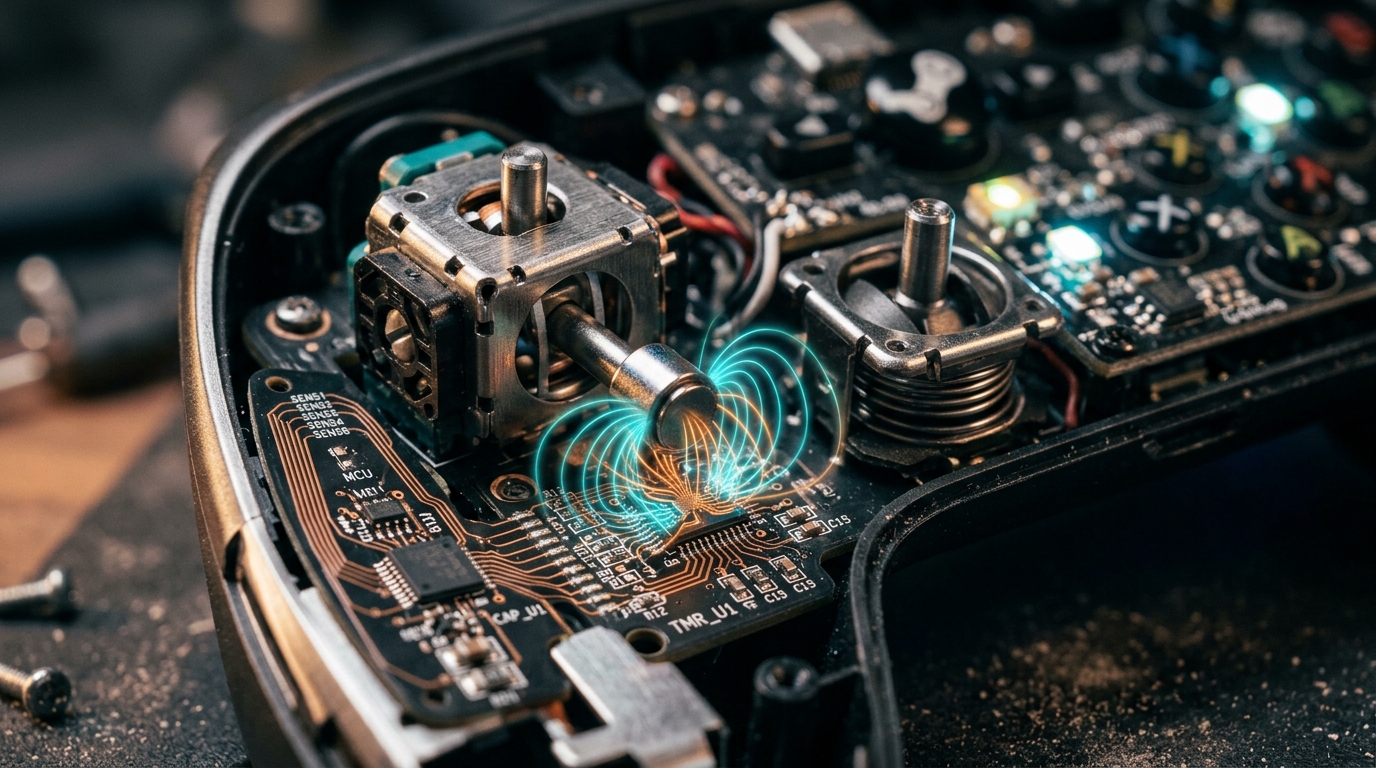
The defining technical feature of the Steam Controller 2 is its symmetrical dual clickable analog sticks, which are equipped with tunnel magnetoresistance (TMR) technology. Historically, analog sticks have relied on physical carbon potentiometers that degrade over time, leading to the infamous stick drift issue that has plagued modern consoles. TMR sensors, however, utilize magnetic fields to determine stick position. By measuring the changes in magnetic resistance as the stick moves, the controller calculates position without any physical contact between the sensor components. This permanent elimination of mechanical wear ensures that the controller will never develop stick drift, drastically extending the hardware’s operational lifespan.
Beyond the advanced analog sticks, the Steam Controller 2 includes dual pressure-sensitive touchpads for mouse emulation, capacitive grip sensors that detect when the controller is being held, and four programmable back-grip buttons. This offers unprecedented customization for power users. Furthermore, its native integration with Steam’s Big Picture mode ensures a reliable, drop-free connection, enabling users to wake the PC from sleep and navigate the entire operating system natively from the couch without ever needing to connect a physical keyboard or mouse.
Total Cost of Ownership (TCO) and the ROI Translation
For the consumer, analyzing the Total Cost of Ownership (TCO) reveals why this approach is gaining immense traction. Traditionally, maintaining a high-end PC gaming setup alongside a modern living room console requires a massive dual investment. A premium desktop PC can easily exceed $2,000, while a modern console adds another $500, plus the ongoing costs of monthly subscription services required for online multiplayer access on closed console platforms.
By investing $75 in a fiber optic HDMI cable and utilizing a free, open-source Linux distribution like Bazzite, users can completely negate the need to purchase a secondary console hardware ecosystem. This consolidates computational power into a single node. The return on investment (ROI) is realized not just in the hardware savings, but in the elimination of dual software libraries. Users no longer need to purchase games twice to play them in different rooms, nor do they need to manage disparate save files across different platform clouds.
From an enterprise perspective, the abstraction is clear: why provision and maintain discrete edge servers in separate locations when a centralized mainframe can deliver identical performance over high-speed optical pipelines? The desktop PC acts as the central compute node, executing all localized processing, while the fiber optic cable serves as the zero-latency delivery network to the edge display. This maximizes the utilization rate of the expensive PC hardware, ensuring it provides value both during workday productivity hours and evening entertainment periods.
Market Impact and the Future of Hybrid Computing
This evolving DIY architecture represents a significant shift in how consumers maximize their hardware investments and challenges the prevailing market dominance of closed console ecosystems. Instead of purchasing locked-down hardware or enduring the inherent lag of cloud gaming streaming services, users are effectively creating a unified hybrid compute model for the home. In practice, a single high-performance machine can serve as a NixOS workstation for software development and productivity by day, and a Bazzite-powered console by night. The transition between these roles is achieved seamlessly via a dual-boot reboot or advanced hibernate-to-disk states, preserving workflows and game sessions simultaneously.
We must acknowledge the friction inherent in this setup. A red team audit of this methodology reveals that seamless is a relative term. Configuring dual-boot Linux environments, managing GRUB bootloaders, and physically routing 50-foot optical cables through drywall or along molding requires a significant level of technical savvy. Furthermore, depending on the specific motherboard and GPU hardware, users have noted that manual adjustments to sound routing and display outputs may occasionally be required to ensure the system initializes correctly upon waking from sleep states. It is not a true out-of-the-box, frictionless experience for the mainstream consumer.
However, the implications stretch far beyond gaming. The technologies being adopted here are disrupting adjacent industries. In the commercial AV installation space, affordable fiber optic HDMI cables are rapidly rendering expensive, complex HDBaseT extenders obsolete. In the enterprise IT sector, the growing consumer familiarity with immutable Linux distributions like Bazzite paves the way for wider adoption of unbreakable endpoint OS architectures in corporate environments. Even the TMR technology in the Steam Controller 2 is setting a new standard for precision input, putting pressure on commercial drone operators and industrial control manufacturers to adopt similar drift-free magnetic inputs.
The combination of optical bandwidth, enterprise-grade immutable Linux distributions, and drift-free TMR controllers has elevated the home theater PC from a clunky, compromised niche into the definitive, uncompromising way to compute and play. As software automation improves to further reduce the setup friction, this hardware architecture will likely transition from an enthusiast experiment to a mainstream standard, fundamentally redefining the boundaries of centralized home computing.