Key takeaways
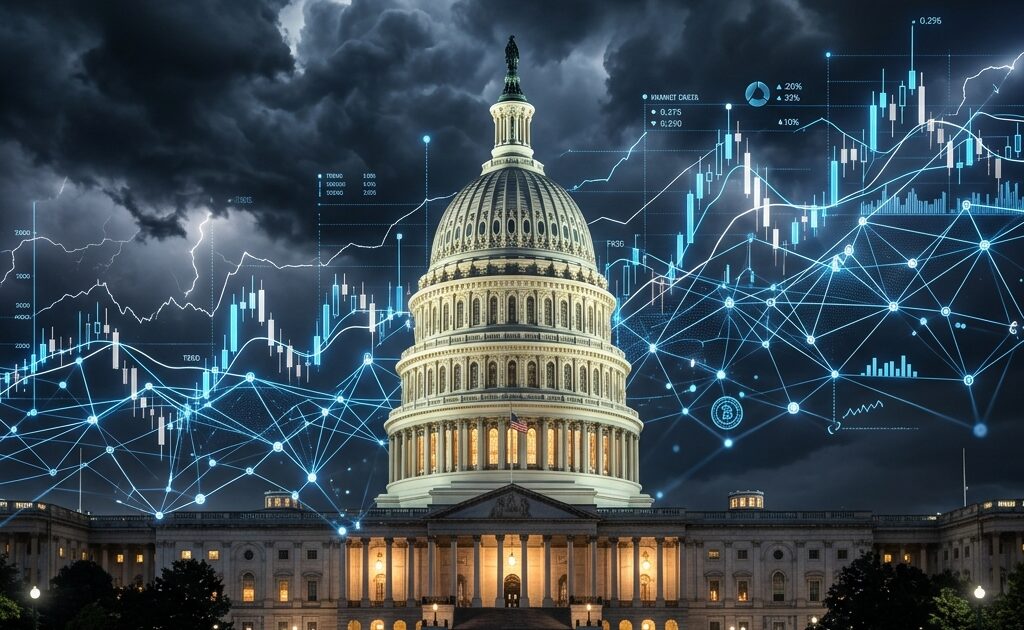
- Senate unanimously bans members and staff from using prediction markets.
- Move follows insider trading fears related to platforms Kalshi and Polymarket.
- A U.S. soldier previously won $400,000 betting on a classified operation.
- Crypto-based bets obscured identities during geopolitical strikes in the Middle East.
- Democrats are pushing the CFTC for broader federal regulations on event contracts.
The Architectural Reality

The U.S. Senate has unanimously voted to ban its members and staff from using prediction markets to wager on future events, fundamentally altering how political figures interact with digital forecasting platforms. The rule change targets a growing ecosystem of platforms that allow users to place financial bets on the outcomes of geopolitical shifts, elections, and military actions. At the core of this policy shift is the inherent conflict of interest when individuals possessing classified, non-public data interface with decentralized and centralized betting systems.
Technologically, platforms like Polymarket operate on decentralized blockchain infrastructure, utilizing cryptocurrency to facilitate trades. This architecture inherently obscures user identities, creating a massive blind spot for oversight committees. Conversely, Kalshi operates as a federally regulated financial exchange using fiat currency, yet even with its implementation of “technological guardrails,” three congressional candidates were recently suspended for manipulating the platform to bet on their own campaigns. The underlying infrastructure of these networks, whether built on traditional Enterprise IT databases or distributed ledgers, presents unprecedented challenges for data governance and insider trading detection.
Market Impact & Deployment

The immediate deployment of this Senate rule requires no signature from the President or approval from the House, making it an instantaneous compliance reality for Capitol Hill staff. The market reaction, surprisingly, has been collaborative rather than combative. Kalshi Chief Executive Tarek Mansour openly applauded the resolution on social media, recognizing that institutional trust is vital for the long-term viability of prediction platforms. Polymarket echoed this sentiment, suggesting that codifying anti-insider trading rules is a necessary evolution for the industry.
However, the financial stakes remain astronomically high. Recent data reveals the scale of the issue: prior to the U.S.-Israel strike on Iran, over 150 Polymarket accounts executed hundreds of bets exceeding $1,000, with 109 accounts wagering over $10,000—often at the “11th hour” before news broke. These metrics indicate a sophisticated deployment of capital timed perfectly with geopolitical intelligence. For risk management officers monitoring Networking & Cloud operations, the speed at which classified information leaks into financial markets is a glaring vulnerability that traditional surveillance tools are struggling to patch.
The Consumer Translation
For the general public, prediction markets have been marketed as crowdsourced truth engines—a way to cut through media noise by observing where people actually allocate their capital. However, the Senate’s ban exposes the asymmetric advantage held by those inside the halls of power. When a U.S. special forces soldier can legally net $400,000 by betting on a classified military operation they are actively participating in, the illusion of a fair, consumer-facing market shatters.
This legislative action signals to the everyday investor that participating in geopolitical event contracts might involve playing against individuals holding the answer key. As these platforms attempt to scale to broader Consumer Tech audiences, the presence of institutional insiders actively trading on classified operations creates a toxic environment that undermines the platforms’ stated goal of objective forecasting.
CFTC Regulations and the Future of Betting
The Senate’s internal ban is merely the opening salvo in a broader regulatory war. Democratic lawmakers are heavily pressuring the Commodity Futures Trading Commission (CFTC) to enact sweeping federal rules that would prohibit event contracts related to elections, wars, and government actions outright, unless there is a valid economic hedging interest. Senate Minority Leader Chuck Schumer explicitly warned against allowing Congress to “turn into a casino.”
If the CFTC moves forward with these restrictions, the architecture of platforms like Kalshi and Polymarket will require radical reconfiguration. They would need to shift away from the highly lucrative, headline-driven political betting markets and pivot toward supply chain logistics, economic indicators, or climate events. The technical challenge will be implementing KYC (Know Your Customer) and compliance tracking on platforms historically designed to resist such oversight.
TechNode HQ Verdict: Pros, Cons & Usability
- Pro (Engineering): Forces prediction platforms to develop superior, verifiable identity and compliance APIs rather than relying on total anonymity.
- Pro (Consumer): Levels the playing field by removing actors who possess literal insider knowledge of military and geopolitical operations.
- Con: A broader CFTC crackdown could cripple the predictive accuracy of these platforms by limiting the pool of informed, high-capital participants.
- Con: Enforcing rules on decentralized, crypto-native platforms like Polymarket remains a severe technical hurdle for regulators.
Enterprise Usability: For compliance officers and enterprise IT leaders, this serves as a massive red flag regarding employee access to betting platforms on corporate networks. Organizations handling sensitive government, defense, or financial data should immediately audit network traffic and consider blocking prediction market APIs to prevent employees from monetizing proprietary intelligence.
Everyday Usability: Consumers should approach political and geopolitical prediction markets with extreme caution. The Senate’s actions confirm that these markets are heavily skewed by players with asymmetrical, classified information. Until broader CFTC guardrails are deployed, retail users are the liquidity for insiders.