
Key takeaways
- Business travel inflation surged in early 2026, with global gas expenses spiking 22%.
- Despite rising costs, premium cabin bookings increased by 9% year-over-year.
- SAP Concur is deploying Agentic AI to transition toward an Autonomous Enterprise model.
- AI-generated deepfake receipts now account for roughly 1% of submitted corporate expenses.
- The Amex GBT and SAP Concur alliance is consolidating the travel tech ecosystem.
The economic models governing corporate travel are currently experiencing a severe stress test. In the first half of 2026, a perfect storm of geopolitical volatility, supply chain bottlenecks, and surging fuel prices has driven business travel inflation to unprecedented levels. Yet, counter to traditional macroeconomic expectations, corporate travel volume has not collapsed. Instead, organizations are absorbing the financial shock, viewing in-person deployment as an indispensable driver of long-term growth and talent retention. But behind the scenes, this inflationary pressure is forcing a radical, accelerated transformation in how enterprise travel and expense (T&E) infrastructure operates.
According to newly released global data from SAP Concur, covering January 1 through May 31, 2026, the cost of moving employees around the globe has spiked across nearly every major category. Airfare rose more than 8% year-over-year, hotel rates increased by 6%, and car rental costs climbed 5%. The most staggering metric, however, is the fuel shock: the average transaction in Concur Expense for gas surged 22% globally, jumping from $50 in February to $61 in April [1]. To survive this environment without slashing travel budgets, Chief Financial Officers and Chief Information Officers are turning to a new paradigm: Autonomous Spend Management powered by Agentic AI.
The Architectural Reality of Autonomous Spend Management
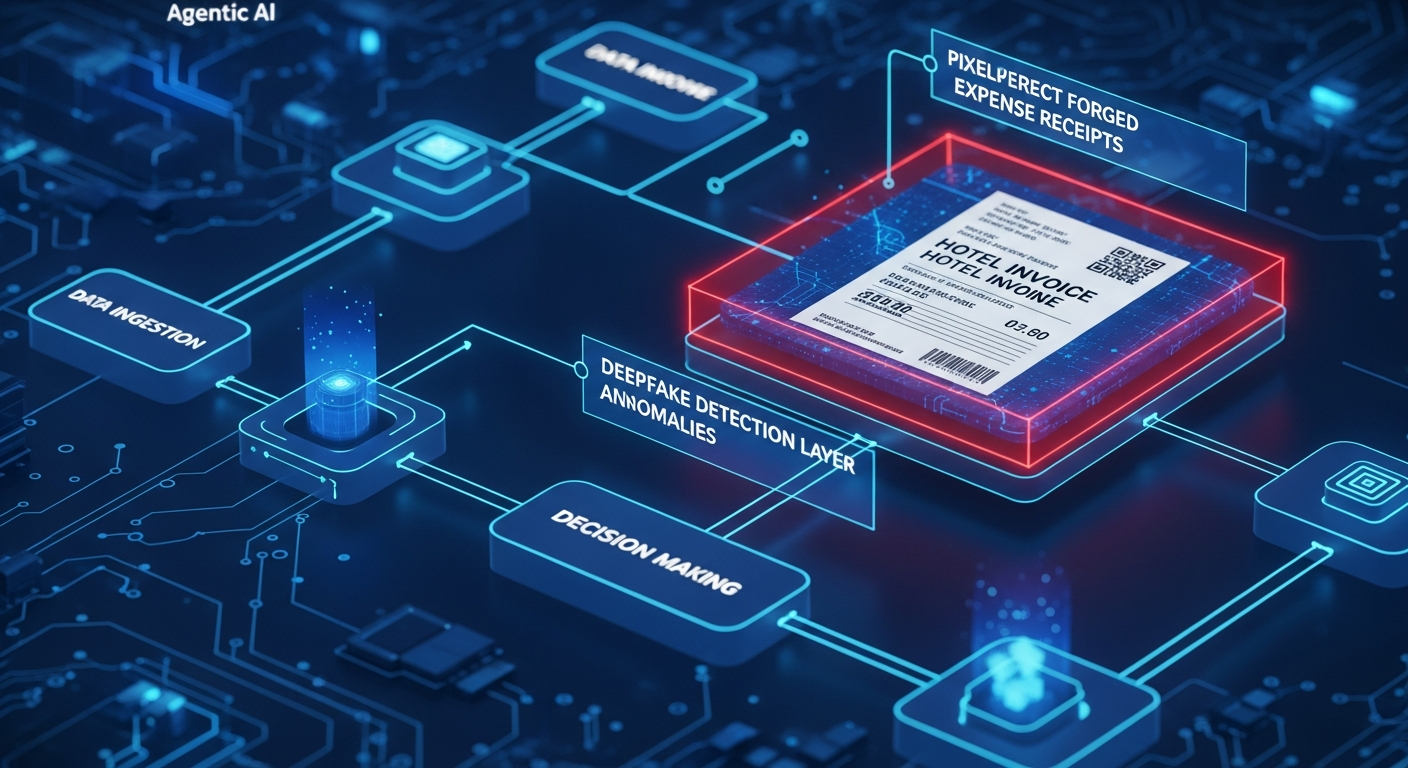
The traditional T&E software stack—characterized by manual data entry, reactive policy enforcement, and human-led auditing—is officially obsolete. The sheer volume of data generated by modern corporate travel, combined with the margin pressures of 2026, has necessitated a shift toward an “Autonomous Enterprise” model. SAP Concur is at the forefront of this transition, aggressively re-architecting its platform from a passive system of record into an active system of execution.
At the core of this architectural shift is the deployment of agentic artificial intelligence. Unlike generative AI, which simply produces text or images, agentic AI possesses the autonomy to execute multi-step workflows, make policy-based decisions, and interact with external APIs without human intervention. In Q2 2026, SAP is layering “Joule”—its proprietary agentic AI—directly into the travel experience [2]. Joule is trained on massive datasets of supplier marketplace data and historical expense patterns, allowing it to autonomously audit, reconcile, and process reimbursements in the background.
This transition requires robust cloud infrastructure capable of processing real-time telemetry from thousands of traveling employees. The system now utilizes predictive analytics to issue pre-trip and mid-trip interventions. For example, the platform can link international travel itineraries to third-party Mobile Device Management (MDM) services. If an employee lands in a foreign country, the system predictively issues an alert prompting them to switch data plans, preemptively neutralizing exorbitant roaming charges before they occur.
Market Impact & Deployment: The Deepfake Fraud Vector

While AI is streamlining expense management, it is simultaneously weaponizing expense fraud. The democratization of generative AI tools has given rise to a terrifying new vector for corporate theft: the deepfake receipt. According to recent internal audits and industry data, roughly 1% of submitted corporate receipts are now flagged as potentially AI-generated or digitally manipulated [3].
These are not the clumsy Photoshop jobs of the past. Modern AI can generate pixel-perfect hotel invoices and dining receipts complete with accurate local tax rates, realistic wear-and-tear patterns, and authentic-looking vendor logos. Human auditors are fundamentally incapable of detecting these forgeries at scale. In response, enterprise IT departments are deploying advanced machine-learning countermeasures. SAP Concur’s Verify tool now utilizes AI to scan for microscopic metadata anomalies, unnatural lighting gradients, and structural inconsistencies that betray a synthetic document [4].
The market impact of these technological arms races is driving massive industry consolidation. Recognizing the need for tighter integration between the point of booking and the point of expensing, American Express Global Business Travel (Amex GBT) and SAP Concur have forged a strategic alliance to launch “Complete” [5]. This next-generation platform deeply integrates Amex GBT’s Egencia booking marketplace with Concur Expense. By unifying the data pipeline, enterprises can deploy dynamic virtual cards that lock in compliance at the exact moment of booking, effectively neutralizing downstream fraud and out-of-policy spending.
The Consumer Translation: Behavioral Shifts in Transit
How does this highly technical shift impact the everyday employee navigating an airport in 2026? The data reveals fascinating behavioral adaptations as travelers attempt to balance comfort with tightening corporate purse strings. While overall flight and hotel booking volumes remain relatively flat, the way employees move once they reach their destination is changing.
Global car rental bookings have declined by roughly 4%, directly correlating with a 4% increase in rail bookings [1]. This suggests that employees, likely prompted by AI-driven policy nudges and the 22% spike in gas prices, are opting for more cost-effective and sustainable ground transportation.
In the skies, a distinct “barbell” effect has emerged in corporate booking patterns. Despite budget squeezes, premium travel demand remains incredibly strong. Premium cabin bookings (business and first class) increased by 9% year-over-year. Meanwhile, standard economy bookings remained flat, and premium economy bookings plummeted by 15% [1]. For long-haul and international flights, organizations still view premium travel as a necessary investment in executive wellbeing, but they are entirely cutting out the middle-tier compromises. You are either flying standard economy, or you are flying first class.
For the employee, the death of the manual expense report is a massive quality-of-life upgrade. Agentic AI means faster, often instantaneous, reimbursements. However, this convenience comes with the reality of absolute surveillance over corporate spend. The Enterprise IT systems of 2026 leave zero margin for “creative” expensing or policy bending.
The Future of Corporate Mobility
The Global Business Travel Association (GBTA) forecasts that global business travel spending will reach approximately $1.62 trillion in 2026 [6]. The narrative that remote work would permanently kill corporate travel has been thoroughly debunked. In fact, 90% of frequent U.S. business travelers report that traveling for work positively impacts their careers, underscoring its vital role in relationship building and talent retention [1].
Organizations are willing to absorb higher travel costs, but they are no longer willing to tolerate operational inefficiency. The integration of agentic AI, predictive cost controls, and automated fraud detection is not just a software upgrade; it is a fundamental rewiring of corporate financial governance.
TechNode HQ Verdict: Pros, Cons & Usability
- Pro (Engineering): Agentic AI integration (like SAP’s Joule) eliminates manual reconciliation, drastically reducing the Total Cost of Ownership (TCO) for enterprise finance departments.
- Pro (Consumer): Employees benefit from near-instantaneous expense reimbursements and automated policy guidance, removing the administrative burden of post-trip reporting.
- Con: The rise of AI-generated deepfake receipts introduces a sophisticated new threat vector that requires constant, expensive algorithmic updates to detect.
- Con: Market consolidation (e.g., the Amex GBT and SAP Concur alliance) risks creating vendor lock-in, reducing leverage for enterprise procurement teams during contract negotiations.
Enterprise Usability: CTOs and CFOs must immediately audit their current T&E stacks. If your organization is still relying on human spot-checks for expense auditing, you are actively bleeding capital to AI-driven fraud and operational inefficiency. Upgrading to an autonomous, AI-verified spend management platform is a mandatory defensive posture for 2026.
Everyday Usability: For the traveling employee, embrace the automated tools provided by your organization. Ensure you are booking through approved, integrated channels to take advantage of virtual cards and automated expensing, but be aware that algorithmic auditing means policy compliance is now strictly black-and-white.