Key takeaways
- Congress passed a $70 billion DHS budget reconciliation package extending through FY 2029.
- The legislation heavily funds ICE cloud infrastructure while cutting critical CISA cybersecurity budgets.
- DHS still holds $100 billion in unspent capital, highlighting severe federal IT procurement bottlenecks.
- Enterprise contractors like AWS and Palantir are poised for massive data orchestration windfalls.
- Defunding federal vulnerability management creates severe attack surfaces across U.S. civic infrastructure.
The passage of the DHS $70 Billion Budget reconciliation package is dominating political headlines, framed largely around the narrow 214-212 House vote and the aggressive expansion of President Donald Trump’s mass deportation agenda. But beneath the partisan friction—including Rep. Tim Walberg’s last-minute vote flip and the ongoing legal battles over a $1.8 billion “anti-weaponization” slush fund—lies a much larger, structural story. For the technology sector, this legislation represents one of the most significant and paradoxical shifts in federal infrastructure spending in modern history.
By allocating $70 billion to the Department of Homeland Security over the next three years (through FY 2029), Congress has effectively authorized a massive procurement boom for surveillance technology, cloud hosting, and data orchestration. Yet, as highlighted by Rep. Rosa DeLauro (D-CT), this same bill actively defunds critical cybersecurity and Transportation Security Administration (TSA) operations. The result is a dangerous architectural paradox: the federal government is rapidly expanding the largest centralized database of biometric and personal data in U.S. history, while simultaneously gutting the perimeter defenses required to protect it.
The Architectural Reality of the DHS $70 Billion Budget
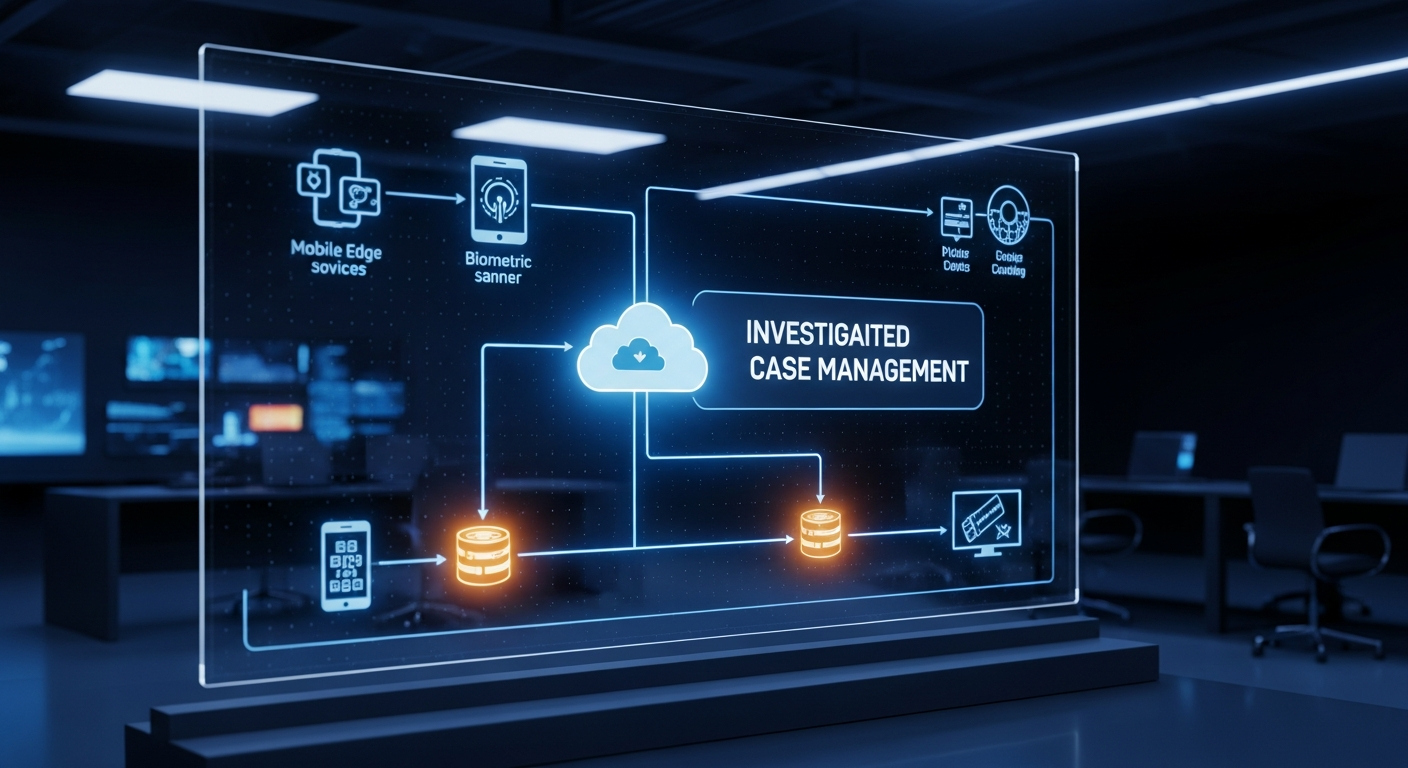
To execute enforcement operations at the scale promised by the administration, U.S. Immigration and Customs Enforcement (ICE) and Customs and Border Protection (CBP) cannot rely on legacy systems or manual logistics. The operational reality of “mass deportation” is fundamentally a problem of enterprise IT. It requires the real-time ingestion, normalization, and querying of petabytes of disparate data.
At the core of this architecture are platforms like Palantir’s Investigative Case Management (ICM) system and massive data lakes hosted on AWS GovCloud. These systems are designed to interface with hundreds of external databases, pulling in Department of Motor Vehicles (DMV) records, utility bills, healthcare provider information, license plate reader (LPR) tracking data, and social media scraping. When an ICE agent is in the field, they are not simply looking at a static dossier; they are accessing a dynamic, interconnected web of biometric hashes—including facial recognition and iris scans—processed through advanced ETL (Extract, Transform, Load) pipelines.
The DHS $70 Billion Budget will supercharge these capabilities, funding the expansion of API gateways that allow federal systems to bypass local “sanctuary city” protections by directly tapping into commercial data brokers. However, scaling this architecture introduces immense technical friction. Rep. Mary Gay Scanlon (D-PA) pointed out on the House floor that DHS has yet to spend $100 billion of the nearly $200 billion it received under the prior “One Big Beautiful Bill Act.”
From an engineering perspective, this backlog is entirely predictable. Federal IT procurement is notoriously sluggish. Deploying new cloud environments requires rigorous FedRAMP High authorization, and integrating cutting-edge surveillance tools with decades-old legacy mainframes often results in severe technical debt. The unspent $100 billion is not merely a bureaucratic oversight; it is a symptom of a system choking on its own data ingestion requirements.
Market Impact & Deployment: The Cloud Windfall

The financial implications for Silicon Valley and defense contractors are staggering. While public approval for ICE hovers at a dismal 33%, the agency remains one of the most lucrative clients for major tech firms. The new funding ensures that multi-million dollar contracts for cloud infrastructure and predictive analytics will not only be renewed but vastly expanded.
Historically, companies like Amazon and Microsoft have faced intense internal pushback over these contracts. Following the tragic killings of U.S. citizens Renee Nicole Good and ICU nurse Alex Pretti by ICE agents earlier this year, tech workers mobilized under campaigns like “ICEout.tech,” demanding their employers sever ties with the agency. Despite this internal friction, the enterprise revenue generated by DHS contracts—often routed through third-party resellers like Dell Federal Systems to obscure direct involvement—is too massive for tech giants to abandon.
The deployment phase of this budget will likely focus on interoperability. DHS aims to strengthen its Fusion Centers, which act as data-sharing hubs between federal, state, and local law enforcement. By subsidizing the cost of cloud storage and analytics software for local police departments, DHS can effectively crowdsource its surveillance network, creating a unified, nationwide dragnet powered by commercial tech infrastructure.
The Cybersecurity Paradox: Defunding Defense
The most alarming aspect of the reconciliation package is what it cuts. While pouring billions into data collection, the bill slashes funding for the Cybersecurity and Infrastructure Security Agency (CISA). This continues a dangerous trend of hollowing out the nation’s primary defense against cyber threats to public infrastructure.
Recent budget proposals have targeted CISA with cuts of up to 17%, aiming to eliminate over 1,000 staff positions. Programs critical to national defense—such as the Stakeholder Engagement Division, the Joint Cyber Defense Collaborative (JCDC), and vulnerability management teams that perform penetration testing for critical infrastructure—are being systematically dismantled. Furthermore, the recent 76-day partial DHS shutdown severely damaged morale and retention, with TSA and cyber workers going weeks without pay.
This creates a terrifying threat landscape. By aggregating unprecedented amounts of sensitive biometric and personal data into federal cloud environments, DHS is building the ultimate honeypot for Advanced Persistent Threats (APTs) and nation-state hackers. Simultaneously, by defunding CISA, the government is firing the very security engineers tasked with monitoring the perimeter. For enterprise Chief Information Security Officers (CISOs) who rely on CISA’s threat intelligence and early warning systems, this budget signals a retreat from the public-private partnership model, leaving the commercial sector to fend for itself against state-sponsored ransomware and supply chain attacks.
The Consumer Translation: Edge Computing in the Streets
How does this macro-level IT shift impact the everyday citizen? The answer lies in the deployment of edge computing. When border czar Tom Homan threatened to send “more ICE agents than you’ve ever seen” to New York City in retaliation for state laws limiting DHS cooperation, he wasn’t just threatening manpower—he was threatening a surge in mobile surveillance infrastructure.
Modern enforcement relies on edge devices: mobile biometric scanners, automated license plate readers mounted on unmarked vehicles, and tactical drones. These devices process data locally before syncing with the central cloud, allowing agents to make real-time, algorithmic decisions on the streets. The integration of machine learning into these edge devices means that predictive policing models will increasingly dictate patrol routes and target identification.
For the average consumer, this translates to a tangible erosion of privacy in public spaces. The infrastructure built to track undocumented immigrants inherently captures the data of U.S. citizens. As the dragnet widens, the likelihood of algorithmic false positives—where citizens are mistakenly targeted due to facial recognition errors or database mismatches—increases exponentially.
Navigating the “Anti-Weaponization” Slush Fund
Complicating the IT procurement landscape is the inclusion of Trump’s $1.8 billion “anti-weaponization fund.” Designed to compensate individuals who claim they were victimized by the federal government, critics have widely condemned it as a slush fund for political allies. Currently, a federal judge in Virginia has temporarily blocked the Department of Justice from making any payouts.
From an infrastructure standpoint, this fund represents a bizarre bureaucratic anomaly. Building the secure portals, verification APIs, and financial routing systems to process these highly subjective claims requires dedicated IT resources—resources that are already stretched thin by the backlog of the unspent $100 billion. It is a prime example of how political mandates often ignore the realities of software development and deployment timelines.
TechNode HQ Verdict: Pros, Cons & Usability
- Pro (Engineering): The budget provides unprecedented capital to modernize federal data orchestration, pushing the boundaries of cloud interoperability and large-scale ETL pipelines.
- Pro (Consumer): Potential for streamlined, modernized federal databases that could eventually reduce bureaucratic friction in other government services.
- Con: The severe defunding of CISA creates a catastrophic vulnerability, leaving massive biometric databases exposed to nation-state cyberattacks.
- Con: The deployment of edge surveillance technology in urban centers poses severe risks to civic privacy and increases the likelihood of algorithmic false positives.
Enterprise Usability: For defense contractors and cloud providers, this is a generational revenue opportunity. However, enterprise CISOs outside the defense sector must prepare for a “post-CISA” reality. With federal threat intelligence drying up, private enterprises must heavily invest in their own zero-trust architectures and private threat-hunting networks.
Everyday Usability: The public should anticipate a highly visible increase in surveillance technology in major cities. Citizens should audit their digital footprints, understand the data-sharing policies of their local municipalities, and recognize that commercial data brokers are now effectively serving as extensions of federal law enforcement.