Key takeaways
- HP slashed the Omen Max 16 by $1,100, dropping the RTX 5080 flagship to a historic $2,699.99.
- Intel’s Core Ultra 9 275HX drops hyper-threading, matching last-gen performance at half the power (70W-80W).
- The RTX 5080 Mobile utilizes 16GB of GDDR7, outperforming the previous RTX 4090 Mobile by up to 20%.
- A 1TB PCIe Gen 4 SSD serves as the primary bottleneck for this otherwise flawless desktop replacement.
The HP Omen Max 16: A Historic Market Anomaly
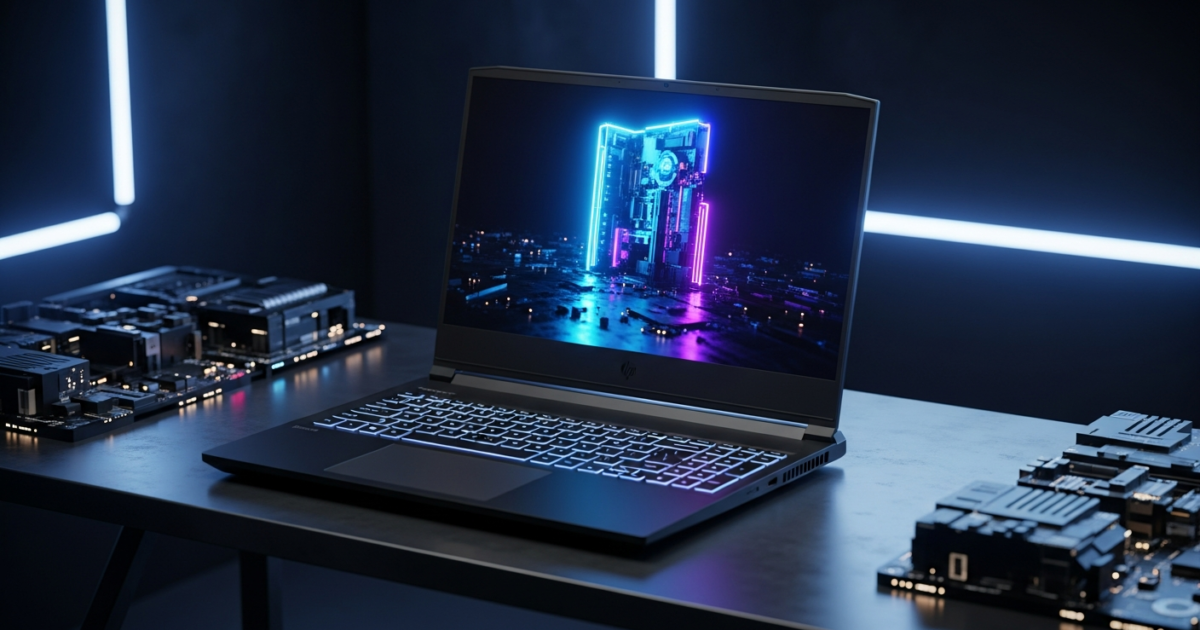
The high-end portable computing market in 2026 is currently defined by severe price inflation. Driven by an insatiable enterprise demand for AI hardware, memory supply chain costs have skyrocketed, pushing flagship laptops well beyond the reach of the average consumer. Against this volatile macroeconomic backdrop, the HP Omen Max 16 has emerged as a shocking market anomaly. In a move that has temporarily destabilized the pricing matrix of the entire sector, HP has authorized a massive $1,100 discount on its flagship machine, dropping the MSRP from an exorbitant $3,799.99 down to a highly disruptive $2,699.99.
This is not a standard promotional cycle. The Model 16-ah0097nr is a bleeding-edge high-end gaming laptop equipped with silicon that was only recently unveiled to the public. By slashing 29% off the top-tier configuration—featuring an Intel Core Ultra 9 275HX and an Nvidia RTX 5080 Mobile—HP is executing a calculated loss-leader strategy. The goal is clear: capture dominant market share in the Q2 and Q3 window, undercutting premium competitors like Alienware and Lenovo before the holiday season begins. For enterprise professionals, data scientists, and hardcore gamers, this represents a rare opportunity to acquire workstation-grade compute power at a fraction of the current market rate.
The Architectural Reality: Intel Arrow Lake and Nvidia Blackwell
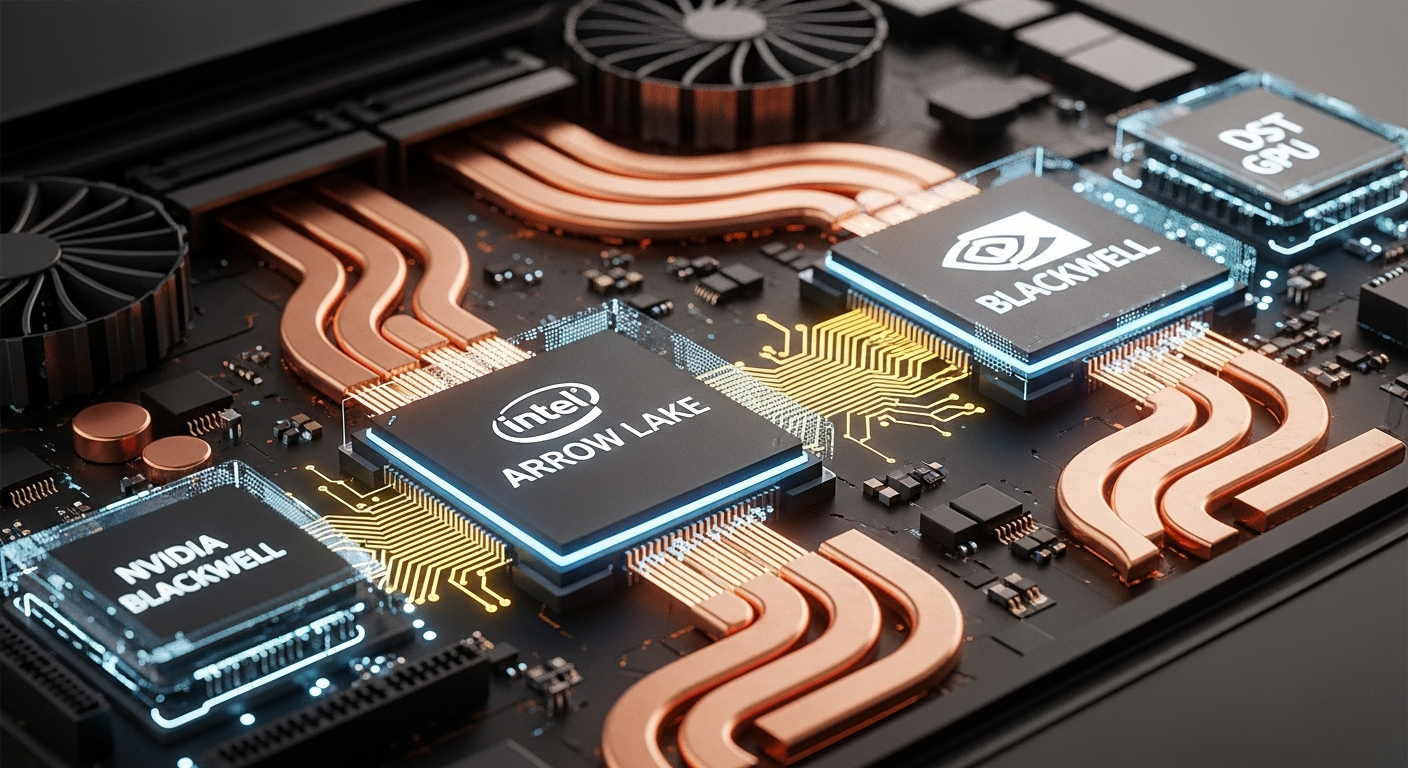
To understand why this price point is so disruptive, we must examine the silicon under the hood. The HP Omen Max 16 is engineered as a true desktop replacement, powered by Intel’s new Arrow Lake-HX architecture. The Intel Core Ultra 9 275HX represents a massive paradigm shift in x86 design. Fabricated on TSMC’s 3nm (N3B) process, this processor features a hybrid core design with 24 physical cores—8 “Lion Cove” Performance-cores and 16 “Skymont” Efficiency-cores. Most notably, Intel has entirely abandoned hyper-threading in this generation. By relying purely on physical cores and massive IPC (Instructions Per Clock) gains, the 275HX achieves a staggering Cinebench R23 multi-core score of 38,238.
More impressive than the raw benchmark data is the thermal efficiency. The Ultra 9 275HX achieves performance parity with the previous-generation i9-14900HX while drawing roughly half the power—operating comfortably in the 70W to 80W range compared to the 140W to 160W furnace of its predecessor. Furthermore, the inclusion of a dedicated 13 TOPS “AI Boost” NPU allows the system to offload background AI workloads, preserving battery life and thermal headroom for primary computing tasks.
On the graphics front, the machine is equipped with the Nvidia Blackwell based GeForce RTX 5080 Mobile. This GPU is a technological marvel, boasting 7,680 CUDA cores and a maximum Total Graphics Power (TGP) of 175W with Dynamic Boost. The true star of the show, however, is the inclusion of 16GB of next-generation GDDR7 VRAM. The bandwidth provided by GDDR7 allows the RTX 5080 Mobile to outperform the previous generation’s flagship RTX 4090 Mobile by roughly 15% to 20% in both rasterization and ray-traced workloads. It is a portable powerhouse designed to crush high-end rendering pipelines and AAA gaming titles with absolute impunity.
Market Impact & Deployment: The Cost of GDDR7

The aggressive $2,699.99 pricing of the HP Omen Max 16 cannot be overstated when viewed through the lens of current supply chain economics. According to industry supply chain audits, Nvidia’s memory procurement costs have soared by over 400% in the last 18 months, driven entirely by the global AI boom. GDDR7, the ultra-fast memory standard required to feed the Blackwell architecture, is in incredibly short supply. Foundries are prioritizing high-margin enterprise AI accelerators over consumer graphics memory, creating a severe bottleneck for laptop manufacturers.
Because of this dynamic, laptops equipped with 50-series Nvidia GPUs and 16GB of GDDR7 typically retail well above the $3,500 mark. HP’s decision to liquidate this specific SKU at $2,699.99 is a strategic maneuver to establish an install base for their Omen ecosystem. For IT departments and creative agencies looking to deploy mobile workstations for 3D rendering, local LLM execution, or complex data orchestration, the Total Cost of Ownership (TCO) proposition here is unmatched in the 2026 fiscal year.
The Consumer Translation: Display and Bottlenecks
Translating this raw compute power into the user experience, the HP Omen Max 16 delivers flawlessly on the audiovisual front. The chassis houses a 16-inch WQXGA (2560 x 1600) display that hits the sweet spot for modern computing. With a blistering 240Hz refresh rate, a 3ms response time, and 500 nits of peak brightness, the panel is equally adept at displaying hyper-fast competitive esports titles as it is rendering color-accurate timelines in Adobe Premiere Pro or DaVinci Resolve. The system is backed by 32GB of user-upgradable DDR5-5600 RAM, ensuring that memory-intensive applications have plenty of breathing room.
However, a rigorous red team audit of the spec sheet reveals a singular, frustrating bottleneck: the storage. HP has equipped this $2,699.99 machine with a 1TB PCIe Gen 4 NVMe M.2 SSD. In 2026, a 1TB drive is woefully inadequate for a machine of this caliber. With modern AAA gaming titles routinely exceeding 150GB, and 4K video rendering requiring massive scratch disks, users will find themselves running out of storage within weeks of deployment. Fortunately, the chassis allows for user-upgradable storage, meaning buyers should immediately factor in the cost of a secondary 2TB or 4TB Gen 4 drive to unlock the machine’s true potential.
TechNode HQ Verdict: Pros, Cons & Usability
- Pro (Engineering): The Intel Core Ultra 9 275HX delivers desktop-class multi-core performance (38,238 Cinebench R23) at an astonishingly efficient 70W-80W power draw.
- Pro (Consumer): The $1,100 discount brings a $3,800 flagship experience down to $2,700, democratizing access to 16GB of GDDR7 and 240Hz 1600p gaming.
- Con: The included 1TB PCIe Gen 4 SSD is a severe bottleneck for modern file sizes and will require an immediate aftermarket upgrade.
- Con: Because this is a loss-leader pricing strategy, inventory is highly volatile and likely to sell out rapidly, making fleet deployment difficult for enterprise buyers.
Enterprise Usability: For CTOs and IT directors, the HP Omen Max 16 at this price point is an immediate buy for creative professionals, data scientists, and engineers who require local, high-performance compute. The 16GB of GDDR7 is particularly valuable for running localized AI models and complex CAD rendering. However, due to the limited stock nature of this deal, bulk fleet procurement may be impossible.
Everyday Usability: For the hardcore gamer or freelance creator, this is the definitive laptop deal of 2026. It offers enough raw power to completely replace a bulky desktop tower while remaining portable enough for travel. If you have the budget and are willing to install a secondary SSD, there is currently no better value on the market.