The Architectural Reality
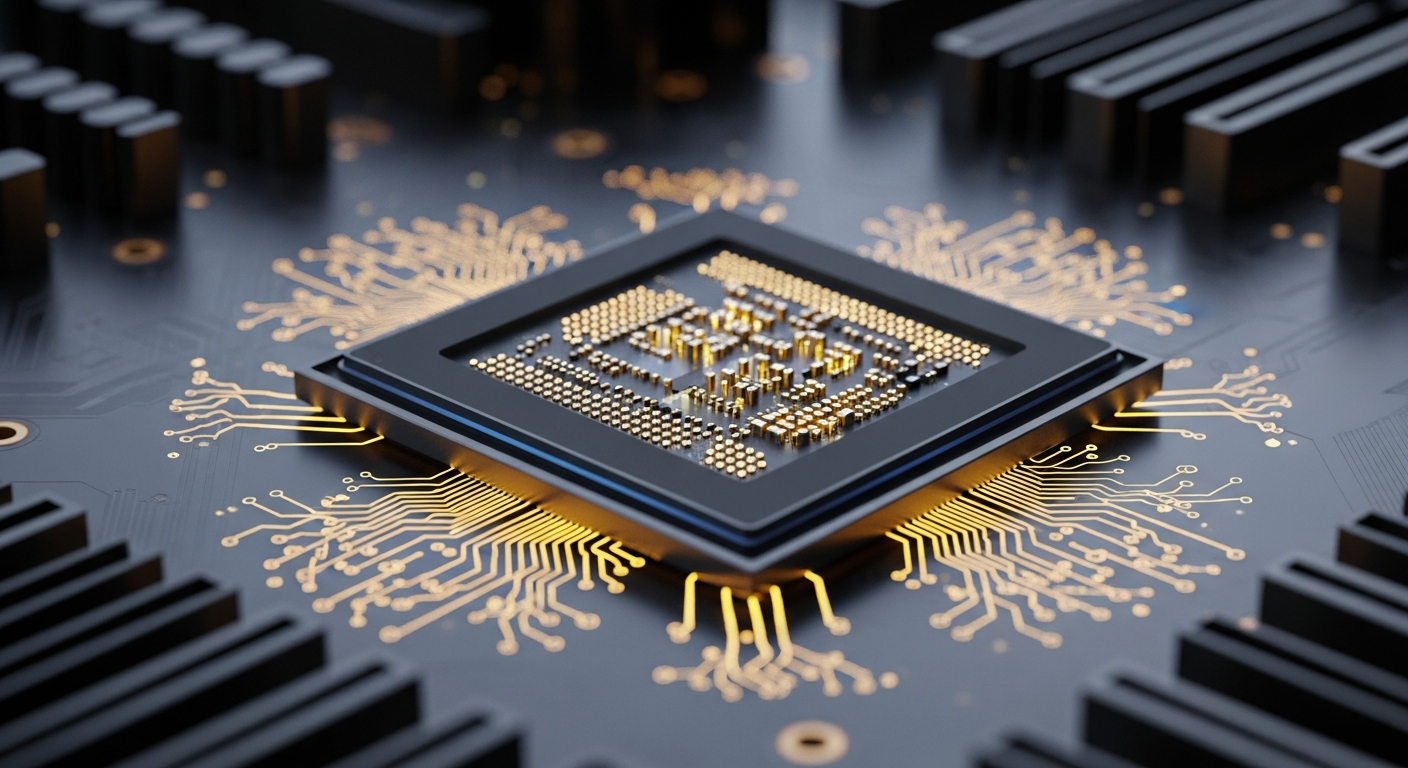
Advanced Micro Devices (AMD) has officially transitioned from the scrappy underdog of the semiconductor world to a foundational pillar of global artificial intelligence infrastructure. The company’s Q1 2026 earnings report delivered a resounding $10.25 billion in revenue—a 38% year-over-year surge that crushed Wall Street’s $9.89 billion consensus. But beyond the headline financial beat, which sent AMD’s stock soaring 16% in late trading and capped a staggering 253% 12-month rally, lies a profound architectural shift in how enterprise AI is deployed, managed, and scaled.
The undisputed engine of this growth is AMD’s data center segment, which posted a massive 57% year-over-year increase to reach $5.8 billion. This revenue is no longer just a byproduct of hyperscalers seeking secondary supply chains to hedge against Nvidia; it is the result of deliberate, highly competitive silicon engineering. AMD’s EPYC server CPUs and Instinct graphics processing units (GPUs)—specifically the MI300X and its successors—have proven their viability in high-stakes, memory-bound inference workloads.
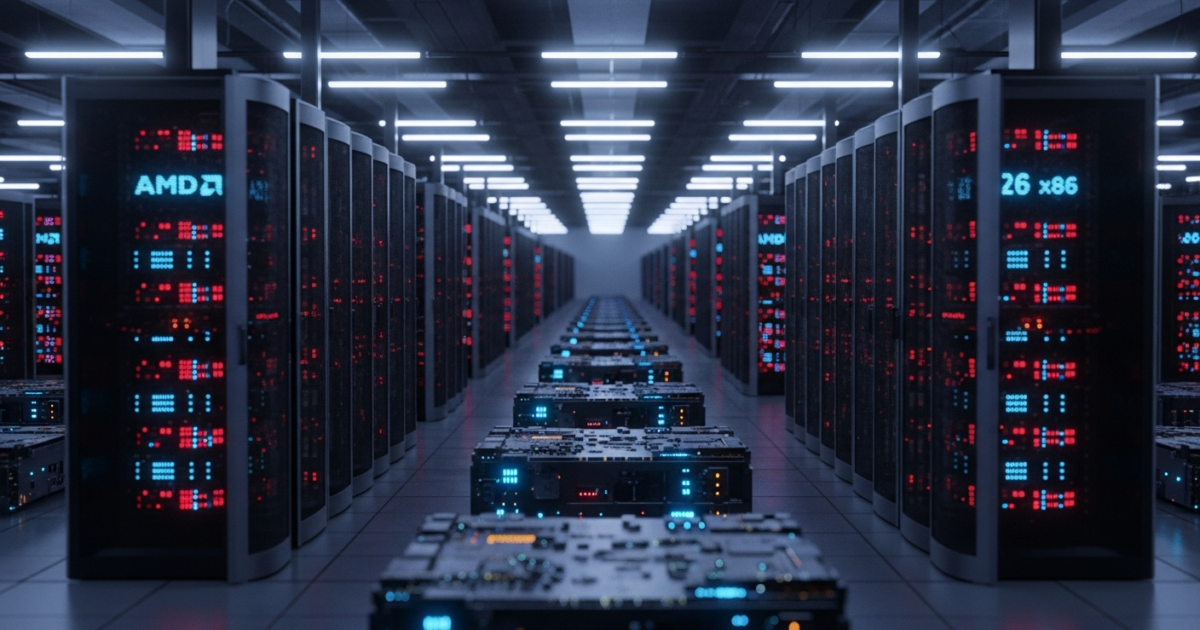
However, the most critical hardware revelation from CEO Lisa Su’s earnings call is the impending launch of “Helios,” AMD’s first-ever rack-scale system for AI data centers. Historically, AMD has sold discrete PCIe accelerators and OAM modules, leaving the complex system-level engineering of power delivery, liquid cooling, and high-speed interconnects to OEMs. Helios changes the paradigm. Designed as a direct rival to Nvidia’s multi-million-dollar Grace Blackwell and Vera Run rack-scale architectures, Helios represents AMD’s graduation to full-stack infrastructure provider.
By controlling the entire rack, AMD can optimize its Infinity Fabric interconnect to pool memory across dozens of GPUs, a necessity for serving trillion-parameter Large Language Models (LLMs) without catastrophic latency bottlenecks. This holistic approach is exactly what hyperscalers require to minimize Total Cost of Ownership (TCO) while maximizing tokens-per-watt.
Equally disruptive is AMD’s unprecedented alliance with longtime rival Intel. The two x86 pioneers are co-developing a new instruction set dubbed “AI Compute Extensions.” The companies claim this will increase compute density by up to 16 times. While a 16x claim requires a healthy dose of engineering skepticism—it is almost certainly a measurement of theoretical peak throughput utilizing native low-precision formats like FP4 or INT4, rather than a 16x boost in general Instructions Per Clock (IPC)—the strategic implication is massive. By embedding dedicated matrix-multiplication instructions directly into the x86 architecture, AMD and Intel are building a formidable moat against the encroachment of ARM-based server chips, ensuring that the CPU remains a first-class citizen in the AI era.
Market Impact & Deployment
The market dynamics surrounding AMD’s Q1 performance are defined by insatiable demand colliding with severe geopolitical and supply chain realities. The global shortage of High Bandwidth Memory (HBM) components has been exacerbated by supply chain disruptions stemming from the ongoing war in Iran. Yet, in the semiconductor industry, scarcity breeds premium pricing. This macroeconomic friction has paradoxically acted as a massive boon for chipmakers across the board. Intel recently recorded its best-ever month with a 194% year-to-date stock surge, Micron Technologies is up an astronomical 700% over the last year, and GlobalFoundries just posted a comfortable earnings beat.
Despite these supply constraints, AMD has secured monumental deployment contracts that guarantee multi-year revenue visibility. CEO Lisa Su confirmed that both OpenAI and Meta Platforms have agreed to purchase the Helios rack-scale systems, with shipments beginning in the second half of 2026. The Meta deal, in particular, is of a scale that borders on the incomprehensible.
Meta’s multi-year agreement involves deploying up to 6 gigawatts (GW) of GPUs across its global data center network. To put 6 gigawatts into perspective, a standard nuclear power plant reactor generates roughly 1 gigawatt of electricity. Meta is effectively building the computational equivalent of six nuclear reactors’ worth of AI infrastructure. This aligns with Meta’s real-world “Hyperion” data center project in Louisiana, a $10 billion facility designed to consume up to 5GW of power. Deploying infrastructure at this scale shifts the bottleneck from silicon manufacturing to municipal power grids, advanced liquid cooling logistics, and energy procurement.
For enterprise IT leaders, Meta’s adoption of AMD’s Helios and AI-optimized CPUs serves as the ultimate validation of AMD’s TCO argument. While Nvidia’s Blackwell architecture remains the undisputed king of raw, low-latency compute and ecosystem maturity (via CUDA), AMD’s Instinct line offers a compelling value proposition for memory-bound tasks. By offering 192GB to 288GB of HBM capacity per accelerator at a significantly lower price point and power draw than Nvidia’s flagship chips, AMD allows hyperscalers to fit massive open-weight models (like Llama 3) onto fewer cards, drastically reducing capital expenditure.
The Consumer Translation
While multi-million-dollar data center racks dominate the headlines, the ripple effects of AMD’s AI strategy are fundamentally altering the consumer and enterprise PC landscape. AMD’s Client and Gaming segment delivered $3.6 billion in revenue, a 23% year-over-year increase. This growth is not driven by traditional PC upgrade cycles, but by a renaissance in Central Processing Units (CPUs) fueled by the rise of Agentic AI.
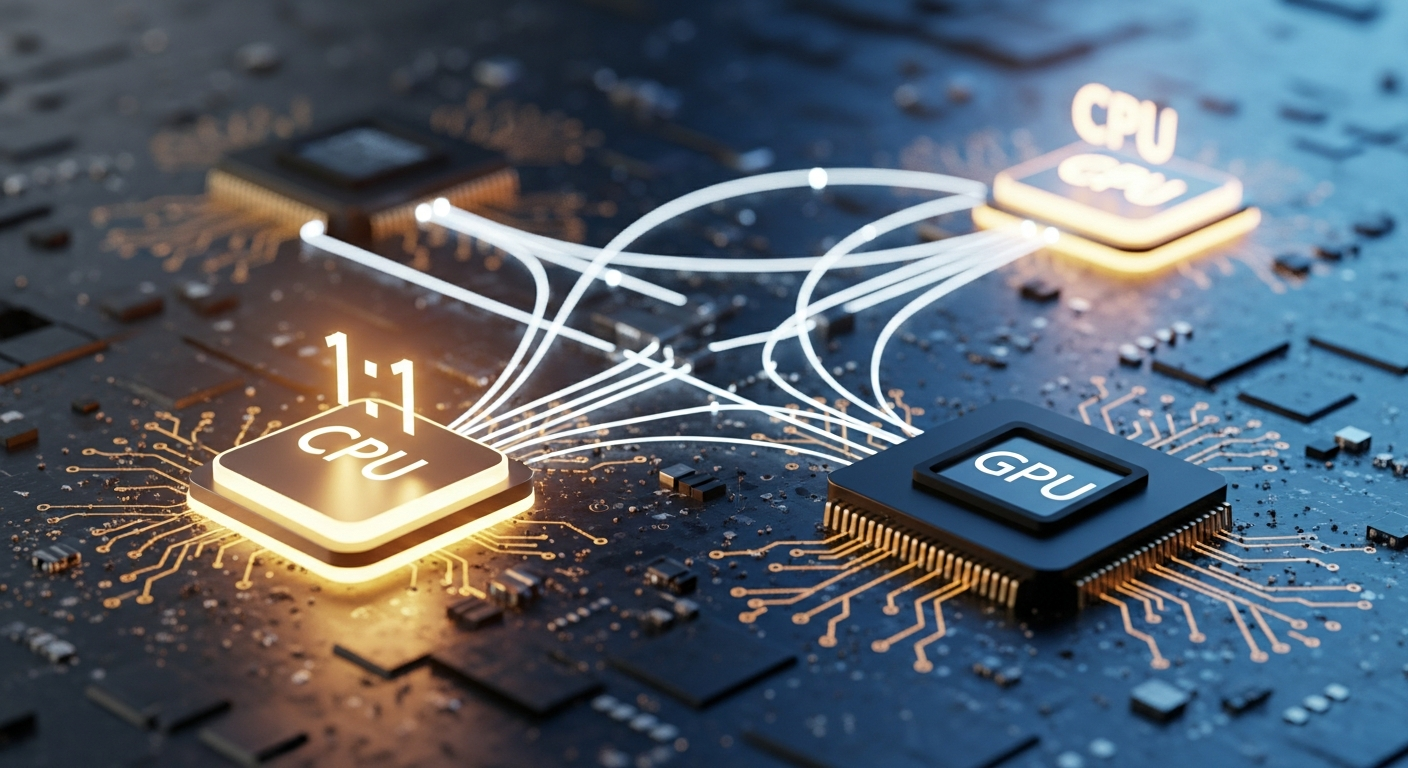
To understand this shift, one must understand the difference between a traditional AI chatbot and an AI agent. In the first wave of generative AI, a user submitted a prompt, the GPU processed a single forward pass of the model, and the answer was returned. This workflow was entirely GPU-bound. In data centers, this resulted in architectures featuring one CPU acting as a mere traffic cop for four to eight massive GPUs.
Agentic AI breaks this paradigm. AI agents do not just generate text; they reason, plan, execute code in sandboxed environments, query external databases, and validate their own outputs in iterative loops. This multi-step orchestration is highly sequential and relies heavily on branching logic—tasks where GPUs are notoriously inefficient, but where CPUs excel. As a result, the industry is rapidly shifting from a 1:8 CPU-to-GPU ratio toward a 1:1 ratio to prevent the CPU from bottlenecking the expensive GPUs.
For the everyday consumer and enterprise worker, this means the “AI PC” is becoming a reality. The joint AMD/Intel x86 AI Compute Extensions will allow laptops and desktop workstations to run complex, autonomous AI agents locally. Instead of paying a monthly subscription to run a coding agent or a financial analysis bot in the cloud—and suffering the latency and privacy risks associated with it—users will execute these workflows directly on their local CPUs. This localized efficiency is what Constellation Research analyst Holger Mueller points to when praising AMD’s innovation in chip design, noting that Lisa Su’s team is delivering this compute power in a highly cost-effective manner.
TechNode HQ Verdict: Pros, Cons & Usability
- Pro (Engineering): The Helios rack-scale system allows AMD to control the entire interconnect and power delivery stack, finally offering a plug-and-play, high-bandwidth alternative to Nvidia’s NVL72 racks for trillion-parameter model inference.
- Pro (Consumer): The x86 AI Compute Extensions and the rise of Agentic AI mean consumers will soon be able to run complex, multi-step AI workflows locally on their CPUs, drastically reducing reliance on cloud subscriptions and improving data privacy.
- Con: The “16x compute density” claim for the new x86 extensions is likely restricted to highly specific, low-precision (FP4/INT4) matrix math, not a general performance uplift for traditional software applications.
- Con: Meta’s 6GW deployment highlights a severe deployment bottleneck: the physical power grid. Procuring the silicon is only half the battle; finding the municipal energy and cooling infrastructure to support gigawatt-scale data centers will delay actual operational timelines.
Enterprise Usability: CTOs and infrastructure architects should immediately evaluate AMD’s Instinct and EPYC platforms for memory-bound inference workloads. If your enterprise is deploying open-weight models (like Llama) or building Agentic AI workflows, the TCO benefits of AMD’s higher memory capacity and the necessary 1:1 CPU-to-GPU ratio make AMD a mandatory inclusion in your hardware procurement strategy.
Everyday Usability: Consumers should hold off on purchasing standard laptops today. The impending integration of x86 AI Compute Extensions means the next generation of AMD and Intel CPUs will offer a generational leap in local AI processing. Wait for the H2 2026 hardware refresh to ensure your machine is capable of running local AI agents efficiently.