The Architectural Reality
The paradigm of nation-state cyber warfare has fundamentally shifted. For years, the cybersecurity industry has relied on disk-based heuristics and static file analysis to detect intrusions. However, a May 2026 threat intelligence disclosure by NCC Group subsidiary Fox-IT has exposed a chilling evolution in the arsenal of the North Korea-linked Lazarus Group. The threat actor, also tracked under monikers such as APT38, Hidden Cobra, and Gleaming Pisces, has successfully deployed a highly sophisticated, memory-only Remote Access Trojan (RAT) dubbed RemotePE. Targeted explicitly at financial institutions and cryptocurrency organizations, this malware represents a masterclass in anti-forensics, environmental keying, and telemetry blinding.
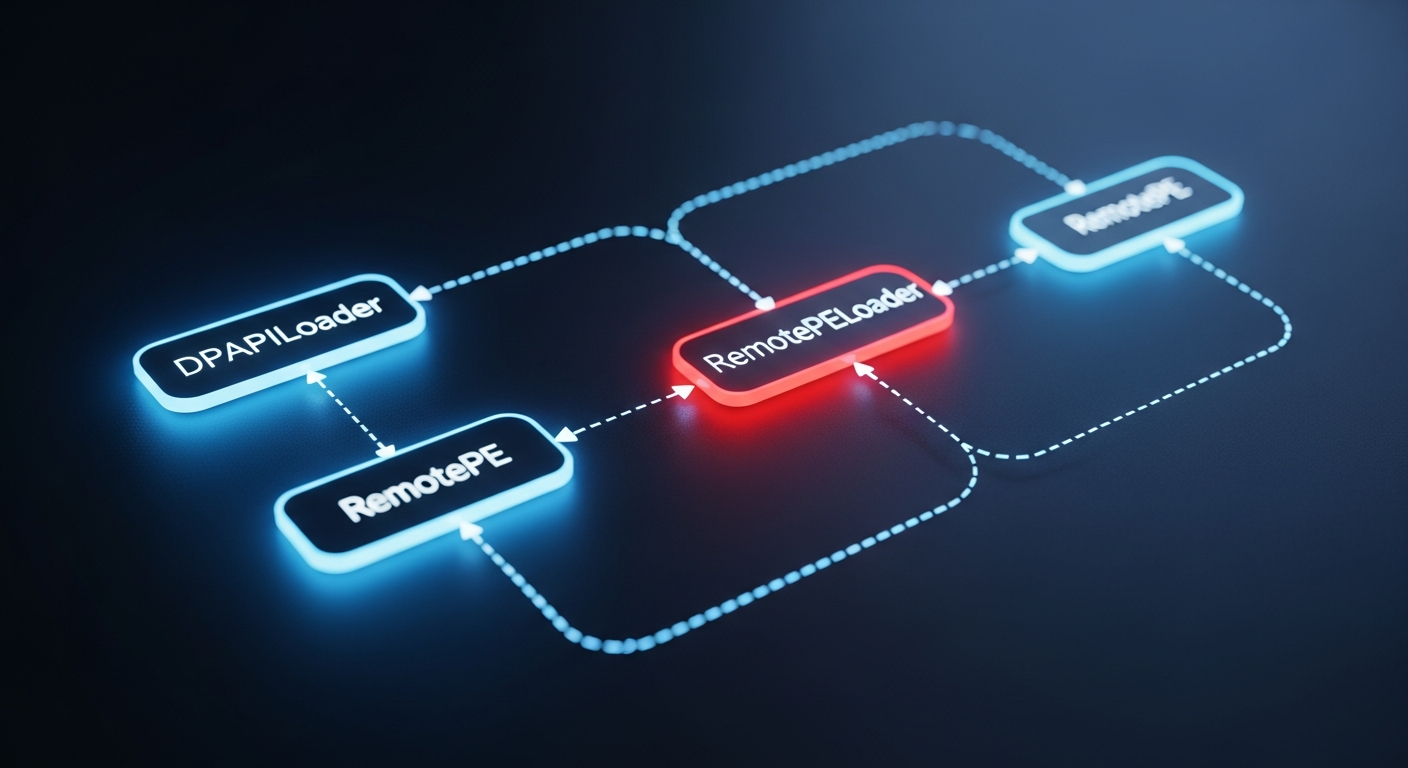
To understand the severity of RemotePE, one must dissect the multi-stage attack chain that facilitates its execution. The intrusion does not begin with a zero-day exploit against a perimeter firewall; it begins with human exploitation. Lazarus operators initiate contact via Telegram, meticulously impersonating existing employees of legitimate trading companies. By building rapport with targets in the cryptocurrency sector, they eventually schedule a meeting using spoofed Calendly or Picktime domains. Once the victim interacts with these malicious domains, the technical exploitation sequence is triggered, initiating a three-stage loader architecture designed to completely bypass modern Endpoint Detection and Response (EDR) solutions.
Stage 1: DPAPILoader and Environmental Keying
The infection sequence begins with a dynamic link library (DLL) tracked as DPAPILoader (often masquerading as “Iassvc.dll”). This loader’s primary function is to decrypt a secondary payload stored on the disk. However, it does not use a hardcoded decryption key. Instead, it leverages the Windows Data Protection API (DPAPI). DPAPI is a cryptographic subsystem built into the Windows operating system that derives symmetric keys from the logged-on user’s credentials. By encrypting the next-stage payload with DPAPI, Lazarus achieves what is known as “environmental keying.” The payload can only be decrypted on the specific machine of the compromised employee. If a security researcher, an automated sandbox, or an incident responder extracts the encrypted file and attempts to analyze it in an isolated environment, the decryption will fail. This technique effectively neutralizes automated threat intelligence pipelines.
Stage 2: RemotePELoader and Telemetry Blinding
Once successfully decrypted by the DPAPILoader, the second stage—RemotePELoader—is executed. This module is responsible for beaconing to a remote command-and-control (C2) server (such as “aes-secure[.]net”) over HTTP to fetch the final payload. Before it executes the core module, RemotePELoader actively neutralizes the host’s defenses. It employs a technique known as “Hell’s Gate,” which involves dynamically parsing the NTDLL.dll export directory in memory to find system call numbers. This allows the malware to execute direct system calls to the Windows kernel, entirely bypassing the user-mode API hooks that EDR solutions rely on to monitor malicious behavior.
Furthermore, RemotePELoader patches Event Tracing for Windows (ETW). ETW is the primary telemetry pipeline that the Windows operating system uses to send event logs to security products. By locating the EtwEventWrite function in memory and overwriting it with a return instruction (RET), the loader effectively blinds the operating system. The EDR is left running, but it receives no data, creating a false sense of security for the defending Security Operations Center (SOC).
Stage 3: RemotePE and Memory-Only Execution
The final stage is the RemotePE payload itself. Written in C++, this full-fledged RAT is fetched from the C2 server and injected directly into volatile memory (RAM). It is never written to the physical disk, leaving zero filesystem artifacts for traditional antivirus scanners to detect. RemotePE polls the C2 server for instructions and supports six distinct command categories:
- C2 Configuration: Obtaining or modifying the server communication parameters dynamically.
- Module Management: Registering new DLL modules, enumerating loaded DLLs, and unloading them directly in memory.
- File Operations: Reading, writing, and securely deleting files.
- Process Management: Enumerating running processes, creating new ones, or terminating them by ID.
- Execution Control: Sleeping for predetermined intervals to evade behavioral analysis, or exiting entirely.
- Connectivity: Pinging the server to maintain a persistent heartbeat.
A highly notable forensic detail is RemotePE’s file deletion mechanism. When instructed to delete a file, the malware does not simply remove the pointer in the Master File Table (MFT). It overwrites the file’s contents with constant bytes seven consecutive times before renaming and deleting it. This DoD 5220.22-M style wiping pattern ensures that forensic recovery tools cannot retrieve the deleted artifacts. This specific 7-pass overwrite pattern is a known signature of earlier Lazarus tools, specifically POOLRAT (also known as SIMPLESEA) and its lightweight successor, PondRAT, confirming the evolutionary lineage of this malware family.
Market Impact & Deployment
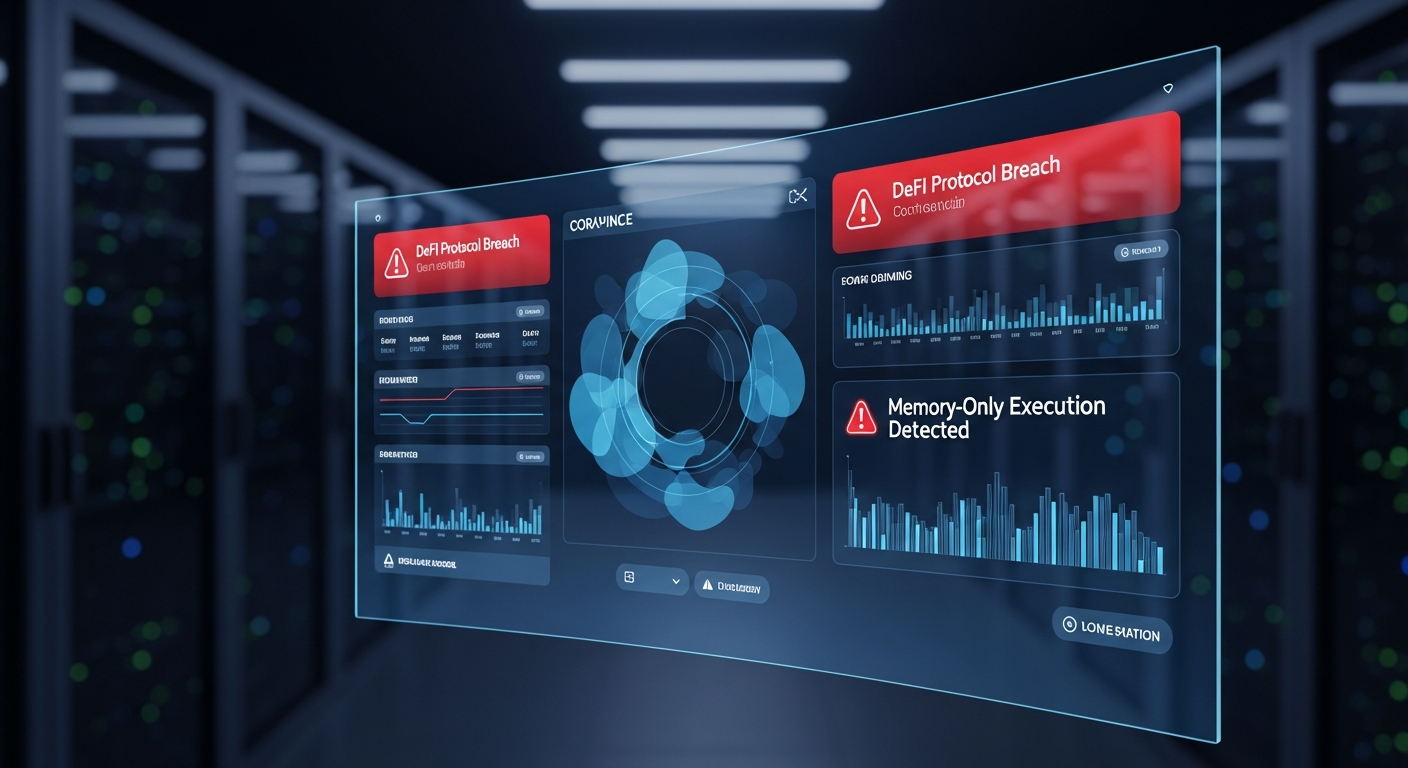
The deployment of RemotePE is not an isolated technical curiosity; it is a targeted economic weapon. The Lazarus Group operates as a primary cyber-revenue generation arm for the heavily sanctioned North Korean regime. Their pivot toward the Decentralized Finance (DeFi) sector is a calculated move to exploit environments where massive amounts of liquid capital are secured by relatively nascent security architectures.
The market impact of this specific campaign is profound, primarily because it exposes the glaring vulnerabilities in legacy enterprise security deployments. According to Fox-IT researchers Yun Zheng Hu and Mick Koomen, neither RemotePELoader nor RemotePE had a single detection on VirusTotal prior to their publication. A 0/70 detection rate for a fully operational, nation-state RAT is a stark indictment of signature-based antivirus solutions. The malware was under active development between mid-2023 and mid-2024, meaning Lazarus operated with impunity inside high-value networks for over a year.
For Chief Information Security Officers (CISOs) in the financial and crypto sectors, the Total Cost of Ownership (TCO) for defense has just skyrocketed. Defending against environmental keying and memory-only execution requires a fundamental architectural pivot. SOCs can no longer rely on scheduled disk scans. They must invest heavily in continuous memory forensics, behavioral anomaly detection, and advanced EDR platforms capable of detecting direct syscalls and ETW tampering. Furthermore, the “actor-in-the-loop” delivery model—where human operators manually guide the intrusion rather than relying on automated worms—means defenders are fighting intelligent, adaptive adversaries in real-time.
The broader threat intelligence community is already reacting. Competitors and analysts across the sector are updating their behavioral heuristics to catch the specific 7-pass file overwrite pattern and the abuse of DPAPI. However, the reality remains grim: RemotePE is purpose-built for long-term observation campaigns. Lazarus uses this toolset to quietly maintain access over an extended period, mapping out treasury wallets, internal approval workflows, and smart contract deployment pipelines before moving to a high-impact final objective—a large-scale financial heist.
The Consumer Translation
At first glance, a C++ memory-only RAT utilizing direct system calls appears to be a strictly enterprise-level problem. However, the downstream effects of RemotePE are devastating for the everyday consumer. The technology may be complex, but the real-world translation is simple: the platforms holding your digital wealth are under siege by invisible adversaries.
When a DeFi protocol or a cryptocurrency exchange is compromised by Lazarus, it is rarely the underlying blockchain cryptography that fails; it is the human operators managing the platform. If a lead developer or a treasury manager at your preferred crypto exchange falls victim to a fake Calendly meeting invite on Telegram, their workstation becomes the beachhead. Because RemotePE leaves no filesystem artifacts and blinds security software, the attackers can sit on that developer’s machine for months. They watch keystrokes, steal session tokens, and wait for the exact moment the developer accesses the platform’s hot wallets or administrative smart contract keys.
For the consumer, this means that the digital vault holding their life savings could be silently compromised right now, with the platform’s security team completely unaware. When Lazarus finally executes their heist, the funds are drained in a matter of minutes. Because cryptocurrency transactions are immutable and irreversible, there is no central bank to call for a chargeback. The consumer wakes up to a zero balance, and the platform often faces insolvency.
Furthermore, the initial access vector highlights a terrifying erosion of digital trust. The attackers approached victims on Telegram, a platform deeply ingrained in the culture of the crypto and tech communities. By impersonating real colleagues and using spoofed scheduling links, Lazarus is weaponizing professional networking. If consumers and professionals can no longer trust a simple meeting invite from a supposed colleague, the friction in digital communication and remote work increases exponentially. The human element remains the weakest link, and nation-state actors are exploiting it with devastating efficiency.
TechNode HQ Verdict: Pros, Cons & Usability
- Pro (Engineering): The use of Windows DPAPI for environmental keying is a brilliant anti-analysis mechanism, ensuring payloads cannot be decrypted outside the specific victim’s environment.
- Pro (Consumer): The public exposure of these tactics forces DeFi platforms to adopt stricter operational security (OpSec) and hardware-backed key management, ultimately maturing the industry.
- Con: The “memory-only” claim is slightly misleading; while the final RAT is memory-resident, the initial DPAPILoader and encrypted payloads must still touch the physical disk, leaving a narrow but critical window for forensic discovery.
- Con: Defending against ETW patching and direct syscalls (Hell’s Gate) requires highly intrusive, kernel-level security agents that can cause system instability and performance bottlenecks in enterprise environments.
Enterprise Usability: For CTOs and CISOs, legacy antivirus is officially dead. You must deploy advanced EDR solutions that monitor for behavioral anomalies, specifically the 7-pass file overwrite pattern and unauthorized DPAPI calls. Furthermore, strict zero-trust network access (ZTNA) and mandatory hardware security keys (like YubiKeys) must be enforced to mitigate the initial Telegram-based social engineering vectors.
Everyday Usability: The general public cannot “buy” a defense against RemotePE, but they can change their behavior. Consumers should diversify their crypto holdings across cold storage hardware wallets rather than leaving funds on centralized exchanges or DeFi platforms. Additionally, exercise extreme paranoia regarding unsolicited meeting invites or links sent via Telegram, even if they appear to come from a known contact.
Sources & Citations:
Original Claim via: thehackernews
Official Handle: @thehackernews
Topics Explored: Lazarus Group, RemotePE, Memory-Only Malware, DeFi Security, Threat Intelligence