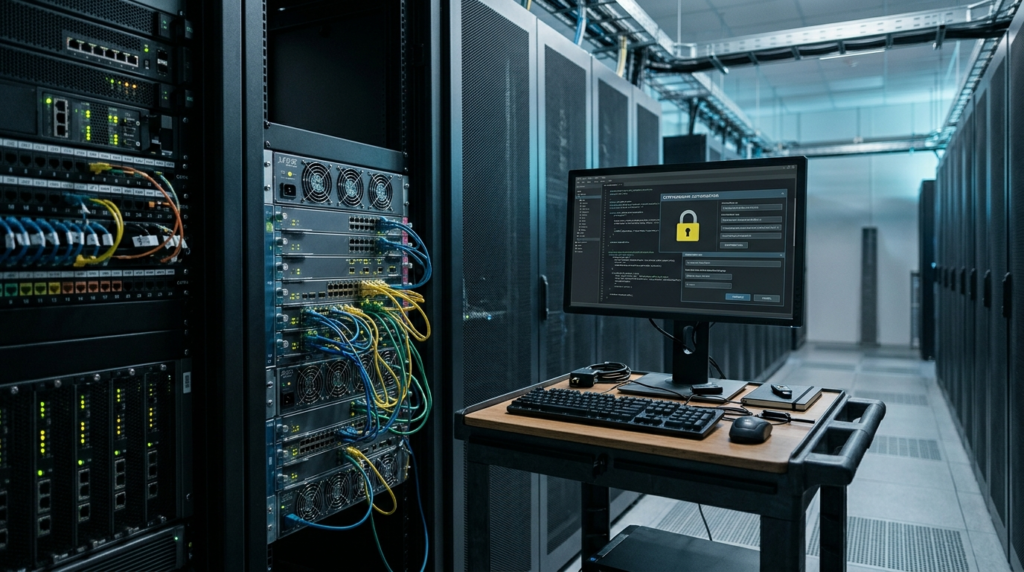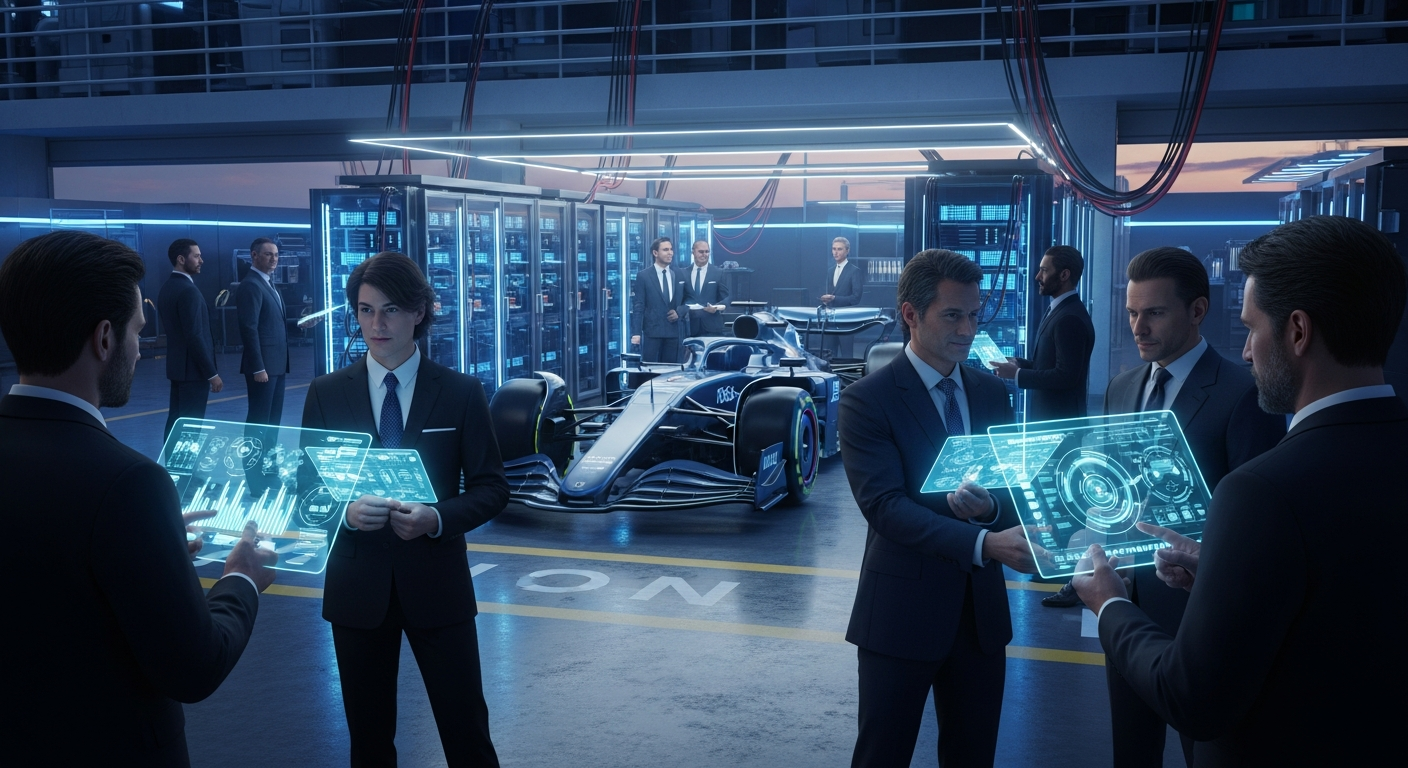
Over cold drinks in the sweltering Florida heat at the Miami Grand Prix, a profound shift in the global technology ecosystem was quietly taking place. While millions of fans watched multimillion-dollar machines chase the checkered flag, the real race was happening behind the scenes. In the exclusive, hyper-restricted confines of the Formula 1 paddock, founders, venture capitalists, Chief Information Officers (CIOs), and enterprise buyers were engaged in a different kind of high-speed pursuit: striking multi-million dollar B2B technology deals.
For decades, the traditional “founder retreat” in sleepy locales like Sonoma or Aspen was the gold standard for venture capital networking. But in 2026, the tech industry has officially hijacked Formula 1. The paddock has evolved from a glamorous VIP lounge into one of the densest concentrations of enterprise purchasing power on the planet. From AI infrastructure startups closing handshake deals between qualifying laps, to legacy tech giants deploying mission-critical hardware on the pit wall, Formula 1 is no longer just a sport. It is the ultimate enterprise deal room.
The Architectural Reality: F1 as the Ultimate Edge Computing Node
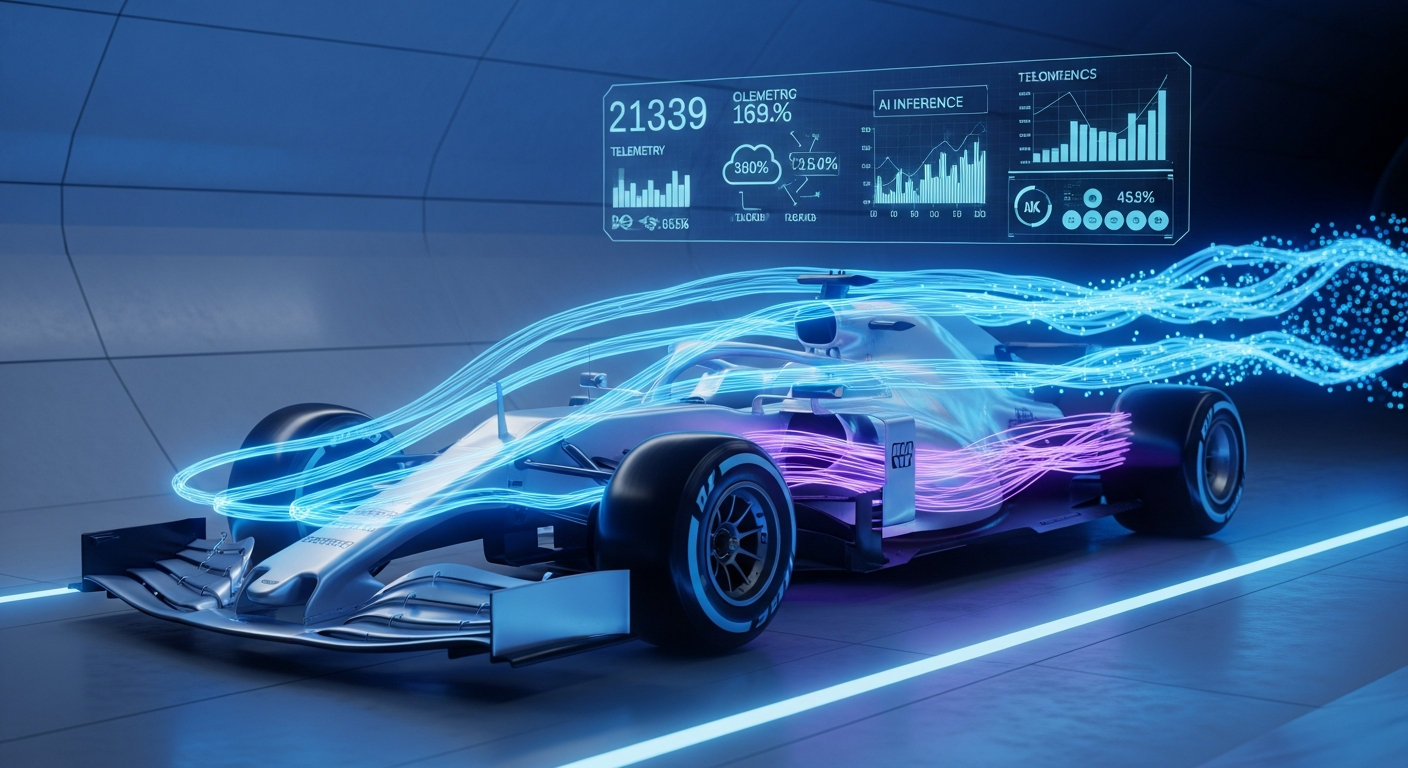
To understand why enterprise technology has converged on Formula 1, one must first understand the architectural reality of the modern F1 car. These vehicles are no longer just mechanical marvels; they are high-speed IoT devices and rolling server racks. A single F1 car is equipped with over 300 sensors, generating terabytes of telemetry data over a single race weekend. Processing this data requires immense computational power, making the sport a perfect proving ground for Edge AI and high-performance computing.
The 2025 and 2026 seasons have seen a massive influx of foundational infrastructure partnerships that go far beyond traditional logo placements. Take, for example, the alliance between Aston Martin Aramco and CoreWeave. CoreWeave did not just buy ad space; they became the team’s Official AI Cloud Computing Partner. In a sport where aerodynamic efficiency dictates success, Aston Martin relies heavily on Computational Fluid Dynamics (CFD). CoreWeave is actively migrating Aston Martin’s legacy on-premises computing infrastructure to a massive, scalable Cloud Computing environment. This migration eliminates hardware constraints, allowing engineers to run complex aerodynamic simulations faster and with higher fidelity. The integration is so deep that Aston Martin’s newly operational aerodynamic testing facility has been officially christened the “CoreWeave Wind Tunnel.”
Similarly, the integration of generative artificial intelligence has moved from the marketing department directly to the pit wall. In early 2026, Williams Racing announced a multi-year partnership with Anthropic, designating the company’s Claude LLM as the team’s “Official Thinking Partner.” This is not a superficial chatbot integration. Williams engineers and strategists are utilizing Claude across the entire organization to debug reams of complex code, analyze dense technical research, and optimize race strategies under extreme pressure. By combining elite human engineering talent with frontier AI models, Williams is attempting to compute its way back to the front of the grid.
The hardware layer is equally competitive. In May 2026, Intel announced its return to Formula 1 after a 17-year hiatus, partnering with McLaren as their official compute partner. Intel is providing the raw data capabilities and extra computing power required for McLaren’s race-weekend operations, proving that the demand for localized, high-performance compute in the paddock is higher than ever.
The Venture Capital Takeover: Replacing the Founder Retreat
While tech giants are using F1 cars to test their infrastructure, venture capital firms are using the paddock to accelerate their deal flow. The catalyst for this shift is simple: ROI on time. Startup founders have grown weary of isolated, multi-day retreats where they only meet other founders. As Josh Machiz, CMO of Lightspeed Venture Partners, aptly noted, the consistent ask from founders is always the same: “Help me meet more buyers.”
Recognizing that the F1 paddock naturally attracts Fortune 500 executives, CIOs, and CISOs, Lightspeed became the first major VC firm to formalize a structured partnership with Formula 1. Targeting the three U.S. races—Miami, Austin, and Las Vegas—Lightspeed built a program to seamlessly introduce their portfolio founders to enterprise clients and F1 tech teams, such as Aston Martin’s engineering division. The firm is already planning to expand this initiative internationally to Silverstone.
The results of this structured networking are tangible. During the 2026 Miami Grand Prix weekend alone, the paddock served as the incubator for several major contracts. One of Lightspeed’s AI infrastructure startups closed two deals, while a blockchain portfolio company secured a handshake agreement. Farooq Malik, founder of the startup Rain, successfully utilized the environment to close a deal, connect with a prospective client, and source a new product for Rain’s Enterprise Resource Planning ecosystem. In these hyper-condensed, high-stakes environments, the traditional months-long enterprise sales cycle is compressed into a three-day weekend.
Market Impact & Deployment: A $3 Billion Ecosystem
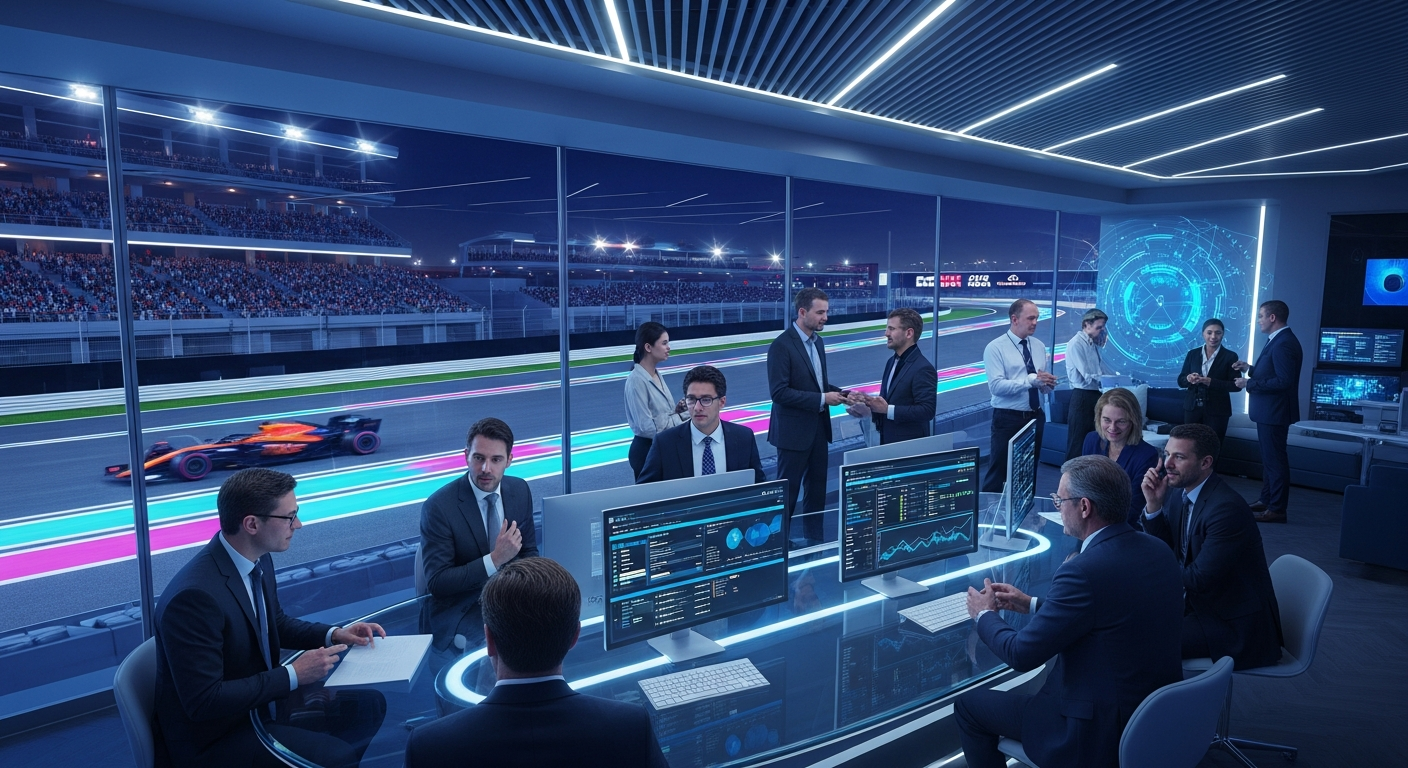
The anecdotal success of paddock deal-making is backed by staggering macroeconomic data. According to a 2026 forecast by Ampere Analysis, total global Formula 1 sponsorship spend is expected to exceed $3 billion for the first time in the sport’s history. The demographics of this capital have shifted dramatically. The tobacco, alcohol, and telecommunications giants of the past have been entirely eclipsed by the technology and financial sectors.
In 2026, the technology sector extended its lead as the dominant force in F1, surpassing $565 million in total sponsorship investment. This surge is heavily driven by AI and cloud infrastructure companies. In the past six months alone, eight major AI partnerships were signed across the grid, including deals with Groq, Meta AI, and Anthropic. Hewlett Packard Enterprise (HPE) and Oracle currently represent nearly a quarter of the technology vertical’s total spend, with Oracle’s title sponsorship of Red Bull Racing setting the standard at an estimated $100 million annually.
The financial technology (Fintech) sector is mirroring this aggressive expansion. Research from Fintech Branding Studio reveals that 34 finance-related companies are active in F1 sponsorships in 2026, up from roughly 20 the previous year. McLaren’s portfolio is a prime example, boasting Mastercard as a naming partner alongside crypto exchange OKX, fintech platform Airwallex, and trading provider FxPro. Audi’s new F1 entry has partnered with digital banking giant Revolut, while Visa and Cash App continue their dominant branding with the Racing Bulls team. The paddock is no longer just a place to watch a race; it is a fully functioning, multi-billion dollar B2B marketplace where the world’s most powerful tech and finance entities converge.
The Consumer Translation: Trickle-Down Intelligence
For the average consumer, the enterprise deals struck in the VIP suites of Miami or Las Vegas might seem worlds away. However, the technological arms race happening in Formula 1 has a direct, trickle-down impact on everyday consumer technology.
Formula 1 has historically been the ultimate R&D lab for the automotive industry, pioneering advancements in hybrid engines, kinetic energy recovery, and carbon fiber safety structures that eventually made their way into consumer vehicles. Today, that R&D lab has shifted from mechanical engineering to software and silicon. The edge computing hardware that Intel and Arm are testing in the extreme heat and vibration of an F1 car will eventually serve as the foundational architecture for the next generation of autonomous consumer EVs.
Furthermore, the cloud infrastructure and AI models being stress-tested by teams like Aston Martin and Williams are accelerating the broader enterprise IT market. When CoreWeave optimizes a cloud environment to process millions of aerodynamic data points in milliseconds, those same architectural efficiencies are eventually rolled out to enterprise clients in healthcare, finance, and logistics. When Anthropic’s Claude proves it can reliably debug complex telemetry code during a live Grand Prix, it validates the model’s safety and reasoning capabilities for mainstream corporate adoption.
Culturally, the explosion of F1’s popularity—catalyzed by the Netflix docuseries “Drive to Survive”—has perfectly aligned with the ethos of the tech industry. As Exowatt founder Hannan Happi observed, F1 represents engineering excellence, rapid iteration, and a willingness to spend big to win. It is a sport that mirrors the exact mindset of a hyper-growth Silicon Valley startup, making it the natural cultural home for today’s tech elite.
Red Team Audit: The Illusion of the Paddock
Despite the undeniable influx of capital and technology, a critical audit of the F1 paddock reveals several hidden bottlenecks and potential illusions. First and foremost is the barrier to entry. The paddock is what investors call a “priced filter.” Gaining access to these exclusive VIP areas requires dropping six figures on a weekend—a cost that is easily absorbed by mega-funds like Lightspeed or tech giants like Oracle, but entirely prohibitive for early-stage, bootstrapped startups. This creates an echo chamber where only the most heavily funded entities get a seat at the table, potentially stifling true grassroots innovation.
Secondly, the nature of the deals being struck must be scrutinized. The paddock is a high-pressure, alcohol-fueled environment designed to maximize FOMO (Fear Of Missing Out). While handshake deals and verbal agreements make for great PR, the reality of enterprise IT procurement is vastly more complex. A CIO might agree to a pilot program over a glass of champagne in the McLaren suite, but that software still has to pass rigorous security audits, compliance checks, and integration testing once everyone returns to the office. The true conversion rate of “paddock handshakes” to deployed enterprise contracts remains a closely guarded metric.
Finally, there is a degree of marketing fluff in the AI narratives being pushed by teams. While it is true that LLMs like Claude are being used by Williams Racing, the claim that AI is “driving race strategy” is often overstated. In reality, these models are currently acting as highly advanced coding assistants and data parsers, helping human engineers sift through telemetry faster. We are still years away from an AI model autonomously calling a pit stop during a safety car window.
TechNode HQ Verdict: Pros, Cons & Usability
- Pro (Engineering): The F1 environment forces tech companies to optimize their hardware and software for extreme low-latency, high-vibration, and data-dense edge computing scenarios, resulting in highly resilient enterprise products.
- Pro (Consumer): The massive R&D investments in F1 cloud infrastructure and edge AI directly accelerate the development of smarter, safer consumer autonomous vehicles and more efficient enterprise software.
- Con: The exorbitant cost of entry to the paddock creates an exclusionary networking environment, locking out early-stage startups that lack Tier-1 venture capital backing.
- Con: The chaotic, high-pressure nature of race weekends can lead to rushed B2B agreements that may face severe deployment and compliance bottlenecks once subjected to standard corporate procurement audits.
Enterprise Usability: For CTOs and enterprise founders with the capital to participate, the F1 paddock is currently the most efficient B2B networking environment in the world. However, organizations should approach these events with a strict, pre-defined procurement strategy to avoid FOMO-driven investments. Treat the paddock as a lead-generation and relationship-building tool, but ensure all technical vetting is deferred to the boardroom.
Everyday Usability: While the public cannot buy a ticket to the paddock deal room, consumers should pay close attention to the tech sponsors on the grid. The companies successfully deploying infrastructure in F1 today—such as CoreWeave, Anthropic, and Intel—are the ones building the foundational hardware and AI models that will power consumer devices and smart vehicles over the next decade.
Sources & Citations:
Original Claim via: TechCrunch
Official Handle: @TechCrunch
Topics Explored: Formula 1, Venture Capital, Cloud Computing, Edge AI, Enterprise Deals