
The Architectural Shift
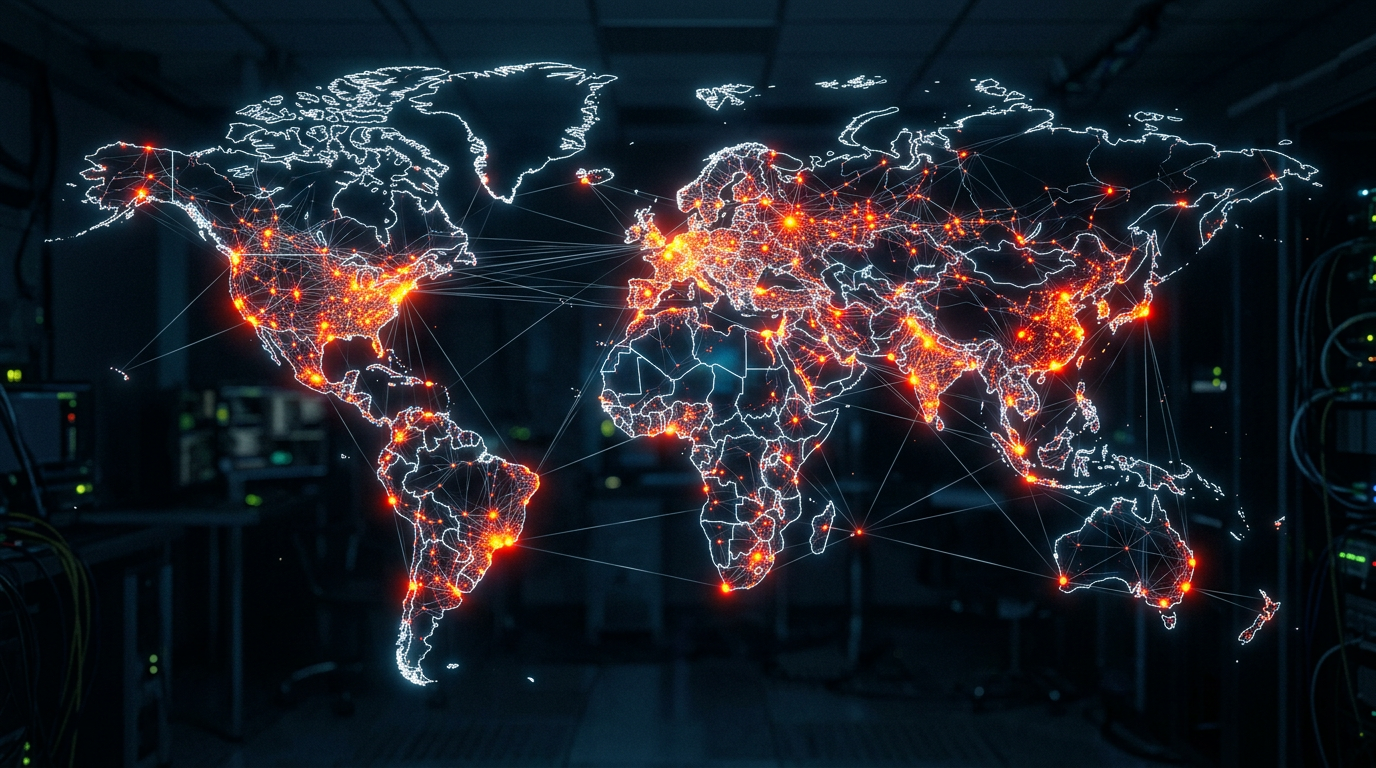
The modern enterprise perimeter has evaporated. In an era defined by decentralized cloud infrastructure, remote workforces, and sprawling microservices, the traditional concept of a defensible network boundary is a relic of the past. Security Operations Centers (SOCs) are no longer guarding a castle; they are attempting to police a chaotic, ever-shifting global metropolis. This architectural reality has forced a fundamental evolution in how organizations ingest, process, and act upon threat intelligence. The recent integration between Criminal IP, a specialized cyber threat intelligence provider operated by AI SPERA, and Securonix ThreatQ, a premier Threat Intelligence Platform (TIP), represents a critical inflection point in this evolution. It signals a definitive industry pivot away from reactive, static indicators of compromise (IoCs) toward proactive, exposure-based intelligence and automated orchestration.
To understand the gravity of this integration, one must first dissect the historical limitations of traditional threat intelligence. For the better part of a decade, SOCs have relied on static feeds—lists of known malicious IP addresses, domain names, and file hashes—often ingested via protocols like STIX and TAXII. While necessary, these feeds are inherently retrospective. By the time an IP address is flagged as malicious and propagated through global threat feeds, the threat actor has likely already rotated their infrastructure. Furthermore, traditional feeds lack contextual depth. They can tell an analyst that an IP is “bad,” but they rarely explain why, how it is configured, or what specific vulnerabilities it is exploiting. This lack of context forces human analysts into a grueling cycle of manual investigation, pivoting between multiple disparate tools to piece together the anatomy of an attack.
Criminal IP fundamentally alters this paradigm by operating not just as a repository of historical bad actors, but as a continuous, global internet scanner. Akin to platforms like Shodan or Censys, Criminal IP actively maps the internet’s attack surface. It performs continuous port scanning, banner grabbing, and vulnerability mapping across billions of internet-facing assets. When Criminal IP evaluates an IP address, it does not merely check it against a blacklist; it provides a real-time snapshot of that asset’s exposure. Is it hosting an exposed Remote Desktop Protocol (RDP) service? Is it acting as a residential proxy or a VPN exit node? What specific Common Vulnerabilities and Exposures (CVEs) are present on the software running on its open ports? This is exposure-based intelligence—a multidimensional view of infrastructure risk.
The architectural brilliance of this collaboration lies in how this rich, contextual data is piped directly into the Securonix ThreatQ platform. ThreatQ serves as the central nervous system for threat intelligence, aggregating data from myriad sources and feeding it into the broader security ecosystem, including Security Information and Event Management (SIEM) systems and Security Orchestration, Automation, and Response (SOAR) platforms. Through a robust, RESTful API integration, Criminal IP’s exposure data is seamlessly woven into ThreatQ’s data-driven orchestration engine.
At the engineering level, this means that when a suspicious IP address generates an alert within an organization’s SIEM, ThreatQ does not require a human analyst to manually query external databases. Instead, automated workflows—configured via JSON payloads and webhook triggers—instantly query Criminal IP’s threat database. The incoming indicator is automatically enriched with maliciousness scoring, VPN/proxy detection flags, and infrastructure insights. This enriched payload is then fed back into the ThreatQ dashboard, presenting the analyst with a unified, context-rich investigation graph. The system maps the relationships between IP addresses, associated infrastructure, and historical attack activity, transforming a single, opaque alert into a comprehensive threat narrative. This automated enrichment at scale drastically reduces the Mean Time to Detect (MTTD) and Mean Time to Respond (MTTR), shifting the SOC from a state of perpetual reaction to one of proactive defense.
Enterprise Market Impact & TCO
The integration of Criminal IP into Securonix ThreatQ is not merely a technical upgrade; it is a strategic financial maneuver for Chief Information Security Officers (CISOs) grappling with the escalating costs of cybersecurity operations. The Total Cost of Ownership (TCO) of a modern SOC is staggering, driven largely by the human capital required to manage an overwhelming volume of security alerts. Alert fatigue is an industry-wide epidemic. When Tier 1 analysts are bombarded with thousands of low-fidelity alerts daily, the inevitable result is burnout, high turnover rates, and, most dangerously, the accidental dismissal of critical threats hidden within the noise.
By automating the intelligence enrichment process, this integration directly attacks the most labor-intensive phase of the incident response lifecycle: triage and context gathering. In a traditional setup, an analyst might spend 15 to 30 minutes manually investigating a single suspicious IP address—checking reputation databases, running WHOIS queries, and searching for associated vulnerabilities. Multiply this by hundreds of alerts per shift, and the operational inefficiency becomes a massive financial drain. With Criminal IP and ThreatQ’s automated orchestration, this 30-minute manual process is reduced to milliseconds of API compute time. The analyst is presented with a decision-ready profile of the threat, allowing them to focus their expensive cognitive bandwidth on complex threat hunting and strategic remediation rather than mundane data collection.
Furthermore, this integration enhances the efficacy of Securonix’s broader platform, specifically its Unified Defense SIEM and its Agentic AI capabilities, personified by “Sam, the AI SOC Analyst.” AI models are only as effective as the data they are trained on and the context they are provided. By feeding Securonix’s AI engine with Criminal IP’s highly contextual, exposure-based intelligence, the AI can make vastly more accurate autonomous decisions. For example, if an internal user attempts to connect to an external IP, the AI can instantly recognize that the destination IP is not just “unknown,” but is actively hosting a known command-and-control (C2) framework on an obscure port, as identified by Criminal IP. The AI can then autonomously trigger a SOAR playbook to block the connection at the firewall and isolate the internal endpoint, all without human intervention.
However, enterprise IT leaders must approach this integration with a clear-eyed understanding of the hidden costs and deployment realities. While the press release touts the ability to incorporate this intelligence “without disrupting existing processes,” the reality of enterprise architecture is rarely so frictionless. Integrating a new, high-volume intelligence feed into an existing orchestration engine requires meticulous tuning. If the automated workflows are not properly calibrated, the influx of enriched data can actually exacerbate alert fatigue by overwhelming the SIEM with too much context.
Additionally, organizations must carefully manage API rate limits and data storage costs. Continuous, automated querying of external APIs at enterprise scale—where millions of logs are generated daily—can quickly consume API quotas, leading to unexpected overage charges or throttled intelligence feeds during critical incidents. Furthermore, storing the enriched JSON payloads within the SIEM or TIP for compliance and historical analysis will increase cloud storage consumption. CISOs must model these downstream costs against the anticipated savings in human labor and breach prevention to accurately calculate the true ROI of the deployment.
The Consumer Reality: What This Means for You
To the average consumer, the acronym-heavy world of SIEMs, TIPs, and API integrations can seem entirely disconnected from daily life. However, the reality is that the strength of these enterprise security architectures directly dictates the safety of the public’s most sensitive information. When you swipe a credit card at a major retailer, log into a healthcare portal to view medical records, or rely on municipal infrastructure for water and power, you are trusting that the organizations managing those systems have robust defenses. When those defenses fail, the consumer pays the ultimate price.
The devastating data breaches and ransomware attacks that dominate mainstream news headlines—incidents that result in stolen identities, drained bank accounts, and paralyzed hospitals—rarely occur because a hacker used an impossibly sophisticated, movie-style cyber weapon. More often than not, these catastrophic breaches begin with a mundane oversight. A threat actor finds an exposed, unpatched server on the edge of a company’s network, or they route their malicious traffic through a residential proxy network to make it look like a legitimate customer logging in from a local neighborhood. In a SOC overwhelmed by alert fatigue, the warning signs of these initial intrusions are easily missed by exhausted analysts.
The collaboration between Criminal IP and Securonix ThreatQ is fundamentally about closing these dangerous blind spots. By continuously scanning the internet for exposed vulnerabilities and instantly identifying deceptive tactics like VPN and proxy usage, this technology acts as a highly advanced digital immune system for the enterprises that hold consumer data. If a hacker attempts to breach a bank’s network using a compromised server, Criminal IP’s intelligence allows the bank’s security systems to instantly recognize the server’s malicious nature and block the connection before the hacker can access consumer financial records.
Moreover, the focus on VPN and proxy detection is particularly relevant to consumer protection. Cybercriminals frequently use massive networks of compromised consumer devices—often referred to as botnets or residential proxies—to mask their true locations. They might hijack a smart TV or an unsecured home router to launch attacks against corporate targets. By integrating Criminal IP’s ability to detect and flag these proxy networks, enterprises can better defend themselves against these distributed attacks. While this technology operates deep within the server racks of massive corporations, its ultimate function is to ensure that the digital services the public relies upon remain secure, operational, and resilient against an increasingly aggressive global cyber threat landscape.
The Industry Ripple Effect
The strategic alliance between Criminal IP and Securonix sends a clear signal across the cybersecurity industry: the convergence of Attack Surface Management (ASM) and Threat Intelligence is no longer a luxury; it is a baseline requirement. This move places immediate pressure on competing SIEM and SOAR vendors—such as Splunk (now backed by Cisco), Palo Alto Networks (Cortex XSOAR), CrowdStrike, and Microsoft Sentinel—to deepen their own native integrations with exposure-based intelligence providers.
Historically, ASM tools and TIPs existed in separate silos. ASM was viewed as a proactive IT hygiene function—finding open ports and unpatched servers—while TIPs were reactive, dealing with active threats. Criminal IP’s integration into ThreatQ shatters this silo, proving that real-time infrastructure exposure data is critical context for active incident response. Competitors who rely solely on traditional, static IoC feeds will find their platforms increasingly outmatched by the speed and precision of threat actors who constantly rotate their infrastructure.
Furthermore, this partnership highlights the escalating arms race in AI-driven security operations. Securonix’s heavy investment in Agentic AI—systems that don’t just analyze data, but take autonomous action—requires massive pipelines of high-fidelity, contextualized data to function safely. If an AI is going to be trusted to automatically block network traffic or isolate servers, the intelligence informing that decision must be flawless. By securing a direct pipeline to Criminal IP’s continuous internet scanning data, Securonix is effectively upgrading the sensory organs of its AI analyst. This forces the broader industry to reckon with the reality that the future of the SOC is not just about better algorithms, but about superior, real-time data ingestion. Vendors that cannot provide this level of automated, exposure-based enrichment will struggle to convince enterprise buyers that their AI solutions are safe to deploy in fully autonomous modes.
TechNode HQ Verdict: Pros, Cons & Usability
- Pro (Engineering): The integration provides seamless, API-driven ingestion of exposure-based intelligence (open ports, CVEs, proxy detection) directly into ThreatQ’s orchestration engine, enabling highly automated, context-rich SOAR playbooks that drastically reduce MTTD and MTTR.
- Pro (Consumer): By automating the detection of exposed infrastructure and masked threat actors, enterprises can prevent the initial network intrusions that lead to catastrophic ransomware events and massive consumer data breaches.
- Con: Continuous, automated API polling for intelligence enrichment at enterprise scale can lead to significant hidden costs, including API rate limit overages and increased cloud storage requirements for the enriched JSON log data.
- Con: Despite claims of seamless integration, deploying automated blocking based on IP reputation requires meticulous playbook tuning and baseline establishment to prevent false positives from disrupting legitimate business traffic, especially in dynamic cloud environments.
Enterprise Usability: For CTOs and CISOs currently utilizing Securonix ThreatQ, integrating Criminal IP is a highly recommended strategic move, provided the SOC engineering team has the bandwidth to properly tune the orchestration playbooks. It is an essential upgrade for organizations struggling with alert fatigue and looking to transition toward more autonomous, AI-driven incident response. However, deployment should be phased, starting with enrichment-only workflows before enabling automated blocking, to carefully monitor for false positives and assess API consumption rates.
Everyday Usability: This is strictly backend enterprise infrastructure and is not a product for individual consumers. However, the public should view the adoption of such automated, exposure-based intelligence platforms by major institutions (banks, healthcare providers, retailers) as a critical indicator of a maturing, more resilient digital economy that is better equipped to protect their personal data.
Sources & Citations:
Original Technical Breakdown via: bleepingcomputer
Official Handle: @bleepingcomputer
Topics Explored: Threat Intelligence, SIEM Architecture, Cybersecurity Automation, Securonix, Attack Surface Management