The Architectural Shift: From Static Pretraining to Dynamic Superlearners
The artificial intelligence industry is rapidly approaching a critical inflection point, widely recognized among infrastructure engineers and data scientists as the “data wall.” For the past decade, the dominant paradigm of AI development has been pretraining: feeding massive, static datasets of human-generated text, images, and code into neural networks. This approach birthed the Generative AI revolution, but it is fundamentally limited by the finite amount of high-quality human data available. To transcend this limitation, the industry must pivot from systems that merely synthesize existing human knowledge to systems capable of discovering entirely new knowledge. This requires a transition to Reinforcement Learning (RL), a paradigm where AI agents learn through continuous trial and error in simulated environments. However, the silicon infrastructure required to support this shift is vastly different from what powers today’s Large Language Models (LLMs).
The newly announced engineering collaboration between NVIDIA and Ineffable Intelligence—a London-based AI laboratory founded by AlphaGo architect David Silver—signals a monumental shift in how enterprise hardware will be designed, deployed, and utilized. Ineffable Intelligence, having recently emerged from stealth, is not merely building another foundational model; they are attempting to engineer “superlearners.” As NVIDIA CEO Jensen Huang noted, these are systems that learn continuously from experience. But realizing this vision requires tearing down and rebuilding the traditional AI compute pipeline. The architectural demands of large-scale reinforcement learning are so extreme that they expose the latent bottlenecks in current-generation hardware, forcing a complete rethink of memory bandwidth, interconnect speeds, and processor coupling.
To understand the magnitude of this architectural shift, one must dissect the fundamental differences in computational workloads. In traditional LLM pretraining, the workload is highly deterministic. Engineers can load massive, predictable batches of static data into the GPU’s High Bandwidth Memory (HBM). The data flows through the system in a highly parallelized manner, allowing for maximum utilization of the GPU’s Tensor Cores. The memory access patterns are known in advance, and latency, while important, can be managed through clever batching and pipeline parallelism. Reinforcement learning, conversely, is inherently chaotic, asynchronous, and dynamic. The data does not exist in a static repository; it is generated on the fly.
In an RL workload, the system operates in a continuous, tight loop: act, observe, score, and update. First, the AI agent must take an action within a simulated environment, which requires low-latency inference. Second, the environment must calculate the physical or logical consequences of that action, a process that is often heavily reliant on CPU-bound logic or specialized physics engines. Third, the system must score the outcome, calculating a reward based on complex, multi-variable objective functions. Finally, the system must immediately update the model’s weights via backpropagation based on that specific experience. This continuous cycle shatters traditional batching strategies. The system is constantly switching between inference, simulation, and training, creating severe data starvation issues where the GPU’s compute cores sit idle waiting for data to traverse the system bus.
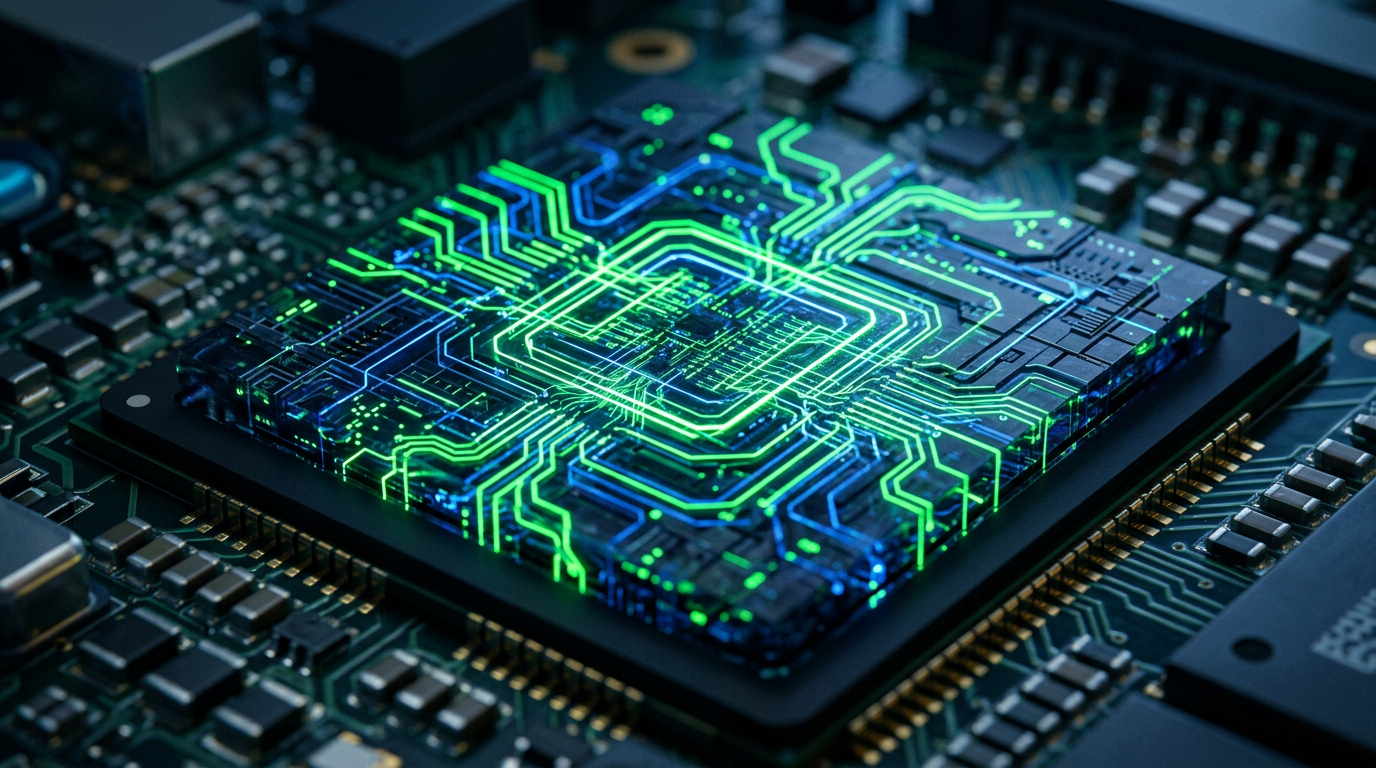
This is precisely why the NVIDIA and Ineffable Intelligence collaboration is initiating its work on the NVIDIA Grace Blackwell platform. The Grace Blackwell architecture (specifically the GB200 NVL72) is uniquely positioned to solve the RL bottleneck. Unlike traditional x86 CPU and PCIe-attached GPU setups, the GB200 utilizes the NVLink-C2C (Chip-to-Chip) interconnect. This provides a staggering 900 gigabytes per second of bidirectional bandwidth between the ARM-based Grace CPU and the Blackwell GPU, alongside a unified memory architecture. In an RL context, this means the CPU can run the complex, logic-heavy simulation environment, and the GPU can handle the neural network inference and weight updates, with both processors sharing data seamlessly without the crippling latency of traversing a standard PCIe bus. The environment state, the agent’s actions, and the resulting rewards can flow in a continuous, uninterrupted stream.
Furthermore, NVIDIA has explicitly stated that this collaboration will be among the first to explore the upcoming Vera Rubin platform. While Blackwell represents the current state-of-the-art, Vera Rubin is expected to push the boundaries of memory bandwidth even further, likely integrating next-generation HBM4 memory and advanced packaging techniques. In reinforcement learning, memory bandwidth is the ultimate currency. Because the system must constantly read the model weights for inference (acting) and immediately write new weights (updating) based on real-time experience, the memory interface is subjected to unprecedented stress. Vera Rubin’s anticipated architecture will be critical for scaling these “superlearners” to handle environments with billions of parameters and near-infinite state spaces, ensuring that the hardware does not bottleneck the algorithmic potential of Ineffable’s RL models.
Enterprise Market Impact & TCO
For Chief Technology Officers, Data Center Architects, and Enterprise IT leaders, the shift toward reinforcement learning infrastructure introduces a radical transformation in Total Cost of Ownership (TCO) and deployment strategy. The era of buying a cluster of GPUs, training a model for three months, and then shifting those resources to lightweight inference is ending. Reinforcement learning requires continuous, massive-scale compute. The AI does not simply “finish” training; it continuously simulates, explores, and refines its knowledge. This fundamentally alters the financial modeling of enterprise AI, shifting the bulk of expenditure from a one-time Capital Expenditure (CAPEX) for pretraining to a massive, ongoing Operational Expenditure (OPEX) for continuous simulation and learning.
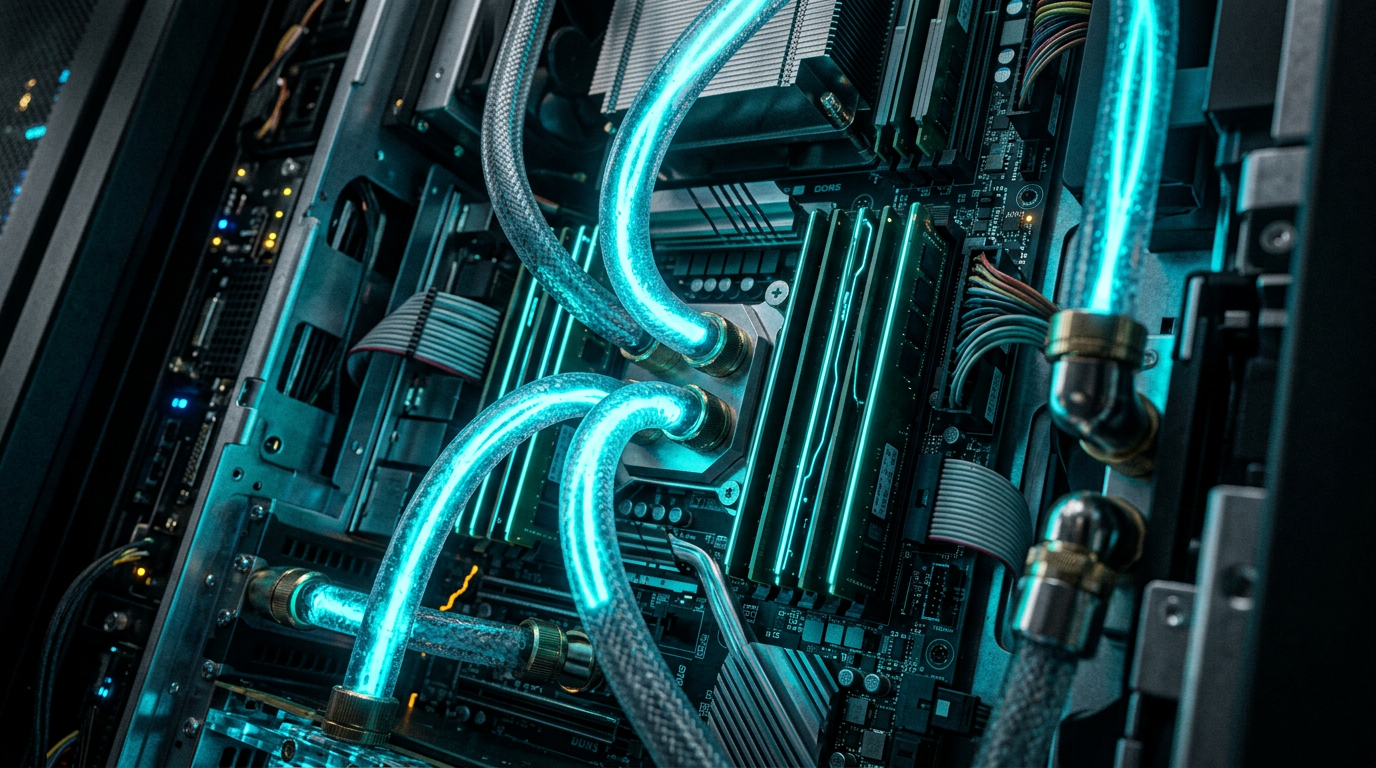
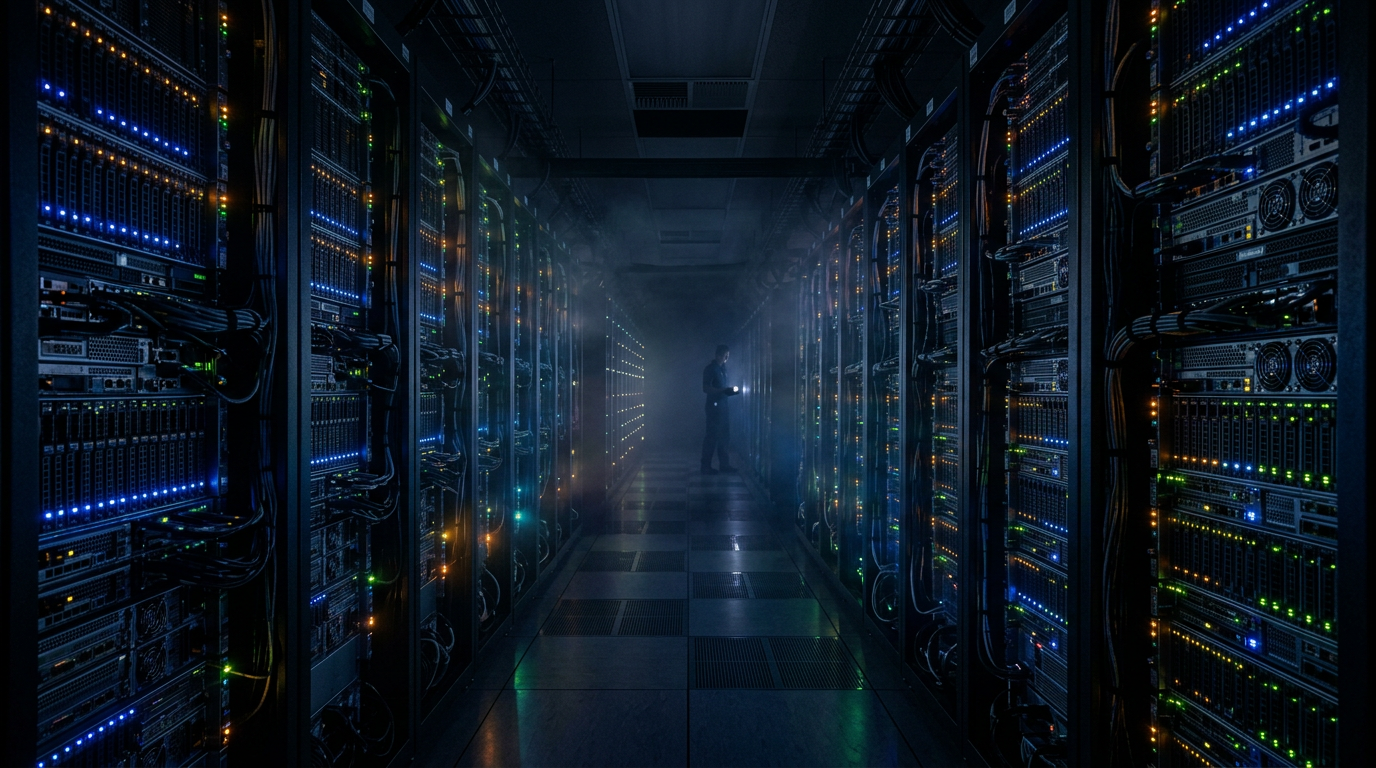
The deployment of Grace Blackwell and, eventually, Vera Rubin systems for RL workloads will require a complete reimagining of data center physical infrastructure. Traditional air-cooled data centers, which typically support rack densities of 10 to 15 kilowatts (kW), are entirely obsolete in this new paradigm. A single NVIDIA GB200 NVL72 rack, which houses 72 Blackwell GPUs and 36 Grace CPUs tightly coupled via NVLink, can draw upwards of 120 kW of power. When Ineffable Intelligence scales its RL algorithms, they will not be running on a single rack; they will require thousands of interconnected nodes to simulate complex environments in parallel. This necessitates a mandatory transition to direct-to-chip liquid cooling (DLC) and advanced facility-level thermal management.
The TCO calculations must now account for the immense power draw of continuous simulation. In standard LLM inference, GPUs often experience periods of lower utilization depending on user traffic. In an RL supercomputer, the system is designed to run at near 100% utilization 24/7, as every idle microsecond is a lost opportunity for the agent to experience a new simulated scenario and update its weights. This means the power consumption profile is flat and maximal. Enterprise IT leaders must secure long-term, high-capacity power purchase agreements (PPAs) and invest heavily in power conditioning and backup infrastructure, as any interruption in an RL training loop can corrupt the agent’s learning trajectory and waste millions of dollars in compute time.
Networking infrastructure is another massive TCO variable in the RL era. Because RL agents often learn in distributed environments—where thousands of parallel simulations are feeding data back to a centralized model for weight updates—the network fabric must support ultra-low latency and massive throughput. The traditional Ethernet fabrics used in standard enterprise IT are insufficient. Deploying these RL supercomputers requires extensive investments in NVIDIA Quantum InfiniBand or ultra-optimized Spectrum-X Ethernet with advanced RDMA (Remote Direct Memory Access) capabilities. The cost of the optical transceivers, switches, and cabling alone can account for up to 20% of the total cluster cost. If the network drops packets or introduces latency, the “act, observe, score, update” loop desynchronizes, leading to catastrophic drops in learning efficiency.
Finally, the software orchestration layer presents a significant enterprise challenge. Managing a dynamic RL workload is vastly more complex than orchestrating standard Kubernetes containers for web services. IT teams will need to invest in specialized cluster management software that can dynamically allocate CPU resources for simulation and GPU resources for neural network updates on the fly, depending on the immediate bottleneck of the RL environment. The collaboration between NVIDIA and Ineffable Intelligence will likely yield new software frameworks and APIs specifically designed to manage this complex pipeline, but enterprise IT teams will need to invest heavily in retraining their DevOps and MLOps personnel to handle these next-generation, continuous-learning systems.
The Consumer Reality: What This Means for You
While the engineering specifications of NVLink-C2C and the thermal dynamics of 120kW liquid-cooled racks may seem far removed from daily life, the consumer implications of this hardware shift are profound. We are currently living in the era of “Generative AI”—systems that can write emails, generate artwork, and summarize documents. These systems are useful, but they are fundamentally passive. They wait for a human prompt, synthesize existing human data, and provide an output. The collaboration between NVIDIA and Ineffable Intelligence is building the engine for “Agentic AI” or “Interactive AI.” These are systems that take actions, learn from the physical or digital world, and solve problems that humans have not yet figured out.
Consider the future of healthcare and pharmaceuticals. Currently, discovering a new drug takes over a decade and billions of dollars, relying heavily on human intuition and slow, physical laboratory testing. With the RL supercomputers being designed today, an AI agent could be placed in a hyper-realistic, molecular simulation environment. The agent’s goal (its reward function) would be to design a protein that binds to a specific cancer cell without harming healthy tissue. The AI would continuously act (designing a molecule), observe (simulating the chemical reaction), score (measuring the binding efficacy), and update its approach. Operating at the speed of Grace Blackwell and Vera Rubin, the AI could simulate millions of years of evolutionary trial and error in a matter of weeks, potentially discovering cures for diseases that currently baffle human scientists.
In the realm of robotics and autonomous systems, the impact will be equally transformative. Today’s autonomous vehicles and household robots struggle with edge cases—situations they have never encountered in their training data. A robot trained purely on human video data might not know how to react if a child suddenly runs into the street in a highly unusual manner, or if a household object is dropped and shatters in an unpredictable way. Reinforcement learning allows these systems to practice in physically accurate virtual worlds. A household robot powered by Ineffable’s “superlearner” algorithms could spend the equivalent of ten thousand lifetimes learning how to cook, clean, and navigate complex human environments in simulation before ever being deployed to your home. By the time you purchase the robot, it has already learned from every conceivable mistake.
Furthermore, this technology will revolutionize personalized digital experiences. Imagine a digital tutor that doesn’t just read from a textbook, but actively learns how your specific brain processes information. By continuously interacting with you, observing your responses, scoring your comprehension, and updating its teaching strategy, the RL agent becomes a hyper-personalized educator. It discovers the exact pedagogical approach needed to teach you complex subjects, adapting in real-time to your frustration or engagement levels. The shift from pretraining to reinforcement learning means moving from AI that acts as a universal encyclopedia to AI that acts as a dedicated, evolving partner in solving real-world problems.
The Industry Ripple Effect
The announcement of the NVIDIA and Ineffable Intelligence collaboration is a shot across the bow for the entire semiconductor and cloud computing industry. By explicitly targeting the infrastructure requirements of reinforcement learning, NVIDIA is attempting to establish a moat around the next generation of AI workloads, just as they did with LLM pretraining via their CUDA ecosystem. This move forces immediate and aggressive reactions from competitors like AMD, Intel, Google, and the major hyperscalers (AWS, Microsoft Azure, Meta).
For Google, this is particularly poignant. David Silver, the founder of Ineffable Intelligence, was a key architect at Google DeepMind, the very organization that pioneered modern deep reinforcement learning with AlphaGo. Google has heavily optimized its custom Tensor Processing Units (TPUs) for its internal workloads. However, NVIDIA’s public partnership with Ineffable signals that merchant silicon—commercially available hardware like Grace Blackwell—is evolving rapidly to support the most bleeding-edge, custom RL architectures. Google will be forced to prove that its upcoming TPUv6 architectures can handle the dynamic, asynchronous memory demands of continuous RL loops as efficiently as NVIDIA’s tightly coupled CPU-GPU NVLink systems.
AMD, currently riding a wave of success with its MI300X accelerators, faces a complex engineering challenge. While the MI300X boasts exceptional memory bandwidth and capacity—making it highly competitive for LLM inference—reinforcement learning requires the seamless integration of CPU simulation and GPU compute. AMD has the distinct advantage of manufacturing both high-performance EPYC CPUs and Instinct GPUs. To counter NVIDIA’s Grace Blackwell, AMD must accelerate the development and adoption of its own unified APU architectures (like the MI300A) and ensure their Infinity Fabric interconnect can match the latency and bandwidth metrics of NVLink-C2C. If AMD cannot provide a frictionless “act, observe, score, update” pipeline, they risk being relegated to legacy pretraining workloads while NVIDIA captures the high-margin RL market.
Finally, the hyperscalers (AWS, Azure, GCP) must re-evaluate their custom silicon strategies (e.g., AWS Trainium, Azure Maia). Designing an ASIC for static matrix multiplication is vastly different from designing a chip that can handle the chaotic memory access patterns of a continuous learning agent. The NVIDIA-Ineffable partnership sets a new benchmark for what AI infrastructure must achieve. If hyperscalers want to attract the next generation of AI startups building “superlearners,” they will either need to buy massive quantities of Vera Rubin hardware or radically redesign their in-house silicon to prioritize unified memory architectures and ultra-low latency interconnects over raw, brute-force compute.
TechNode HQ Verdict: Pros, Cons & Usability
- Pro (Engineering): The utilization of NVLink-C2C in the Grace Blackwell architecture eliminates the traditional PCIe bottleneck, allowing for the ultra-low latency, bidirectional data flow between CPU (simulation) and GPU (inference/training) required for continuous reinforcement learning loops.
- Pro (Consumer): Unlocks “Agentic AI” capable of discovering net-new knowledge, paving the way for hyper-advanced autonomous robotics, rapid pharmaceutical discovery, and AI that solves novel problems rather than just mimicking human text.
- Con: The power density and thermal requirements are astronomical. Running continuous, 24/7 RL simulations on GB200 NVL72 racks requires 120kW+ per rack and mandatory direct-to-chip liquid cooling, pricing out all but the most well-funded hyperscalers and sovereign AI initiatives.
- Con: Reinforcement learning is notoriously sample-inefficient and chaotic. Orchestrating the software layer to dynamically balance compute resources between environment simulation and neural network backpropagation remains a massive deployment challenge.
Enterprise Usability: For CTOs and Data Center Architects, deploying this infrastructure today requires a fundamental pivot in facility design. You cannot retrofit an air-cooled, 15kW/rack data center for this workload. Enterprises should begin evaluating liquid cooling retrofits, securing high-capacity power purchase agreements, and transitioning their MLOps teams to frameworks that support asynchronous, continuous learning pipelines. If you are not building for 100kW+ rack densities, you will not be able to run next-generation RL models on-premises.
Everyday Usability: The public cannot buy or interact with this raw infrastructure directly. However, the downstream effects will be felt within the next 3 to 5 years. Consumers should prepare for a shift from conversational AI chatbots to autonomous digital agents that can be delegated complex, multi-step tasks in the real world. This hardware is the foundation for the first truly reliable household robots and Level 5 autonomous vehicles.
Sources & Citations:
Original Technical Breakdown via: blogs
Official Handle: @blogs
Topics Explored: Reinforcement Learning, NVIDIA Grace Blackwell, Vera Rubin, AI Infrastructure, David Silver