The Architectural Shift

The era of the stateless, decision-tree chatbot is officially drawing to a close. For the better part of a decade, enterprise customer service has been plagued by rudimentary conversational interfaces that do little more than frustrate users and eventually route them to a human agent anyway. Netomi Inc.’s recent $110 million funding round—led by Accenture Ventures with heavy-hitting participation from Adobe Ventures, NAVER Ventures, and Fin Capital—signals a tectonic shift in enterprise IT infrastructure. The industry is moving away from reactive, layered conversational bots and toward deeply embedded, autonomous “Agentic AI.” But to understand why this $110 million injection is so critical, we must dissect the underlying architectural leap that Netomi is bringing to the table: the successful fusion of probabilistic reasoning with strict deterministic controls.
At the heart of the modern AI dilemma is the inherent nature of Large Language Models (LLMs). LLMs are probabilistic engines; they generate responses based on the statistical likelihood of token sequences. While this allows for incredibly fluid, human-like conversation, it is also the root cause of “hallucinations”—instances where the AI confidently invents facts, policies, or actions. For a consumer-facing app, a hallucination might be a minor annoyance. For highly regulated, high-volume enterprise environments like Netomi’s clients—which include Delta Air Lines, MetLife, and DraftKings—a hallucination is a catastrophic liability. If an AI agent hallucinates a refund policy for an airline or misinterprets a compliance regulation for a life insurance provider, the financial and reputational damages are immediate and severe.
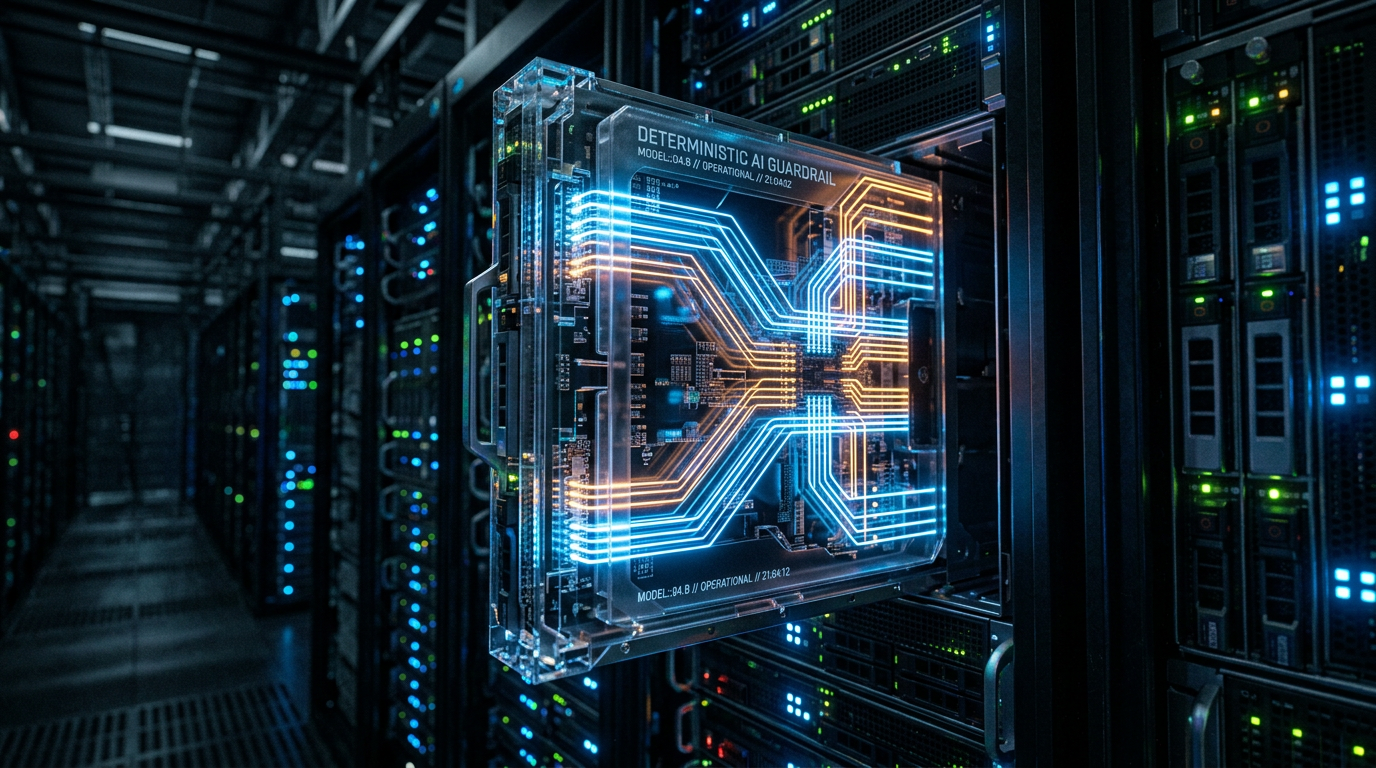
Netomi’s architectural breakthrough lies in its proprietary hybrid framework. The platform utilizes probabilistic reasoning to understand the nuance, sentiment, and complex intent of a customer’s query across chat, email, and voice channels. However, before any action is executed or any final response is generated, the AI’s proposed output must pass through a rigid layer of deterministic controls. These are hardcoded, immutable guardrails—state machines and logic gates that dictate exactly what the AI can and cannot do. By decoupling the natural language understanding (NLU) from the execution environment, Netomi allows enterprises to set absolute boundaries. The AI can reason flexibly about a customer’s problem, but it can only pull levers that the enterprise has explicitly unlocked.
Supporting this hybrid intelligence is a robust microservices architecture engineered specifically for concurrent load. In the enterprise sector, customer service traffic is rarely linear. A massive weather event can cause Delta Air Lines’ support queries to spike by 10,000% in a matter of minutes. A controversial call in an NBA game can flood DraftKings’ servers with thousands of simultaneous ticket requests. Legacy monolithic AI deployments often choke under these burst-load scenarios, leading to latency timeouts and system degradation. Netomi’s microservices approach ensures that the natural language processing, the deterministic rule evaluation, and the API integrations with backend CRM systems scale independently. If the reasoning engine requires more compute during a traffic spike, Kubernetes clusters can dynamically allocate resources to that specific microservice without bottlenecking the deterministic guardrail evaluations.
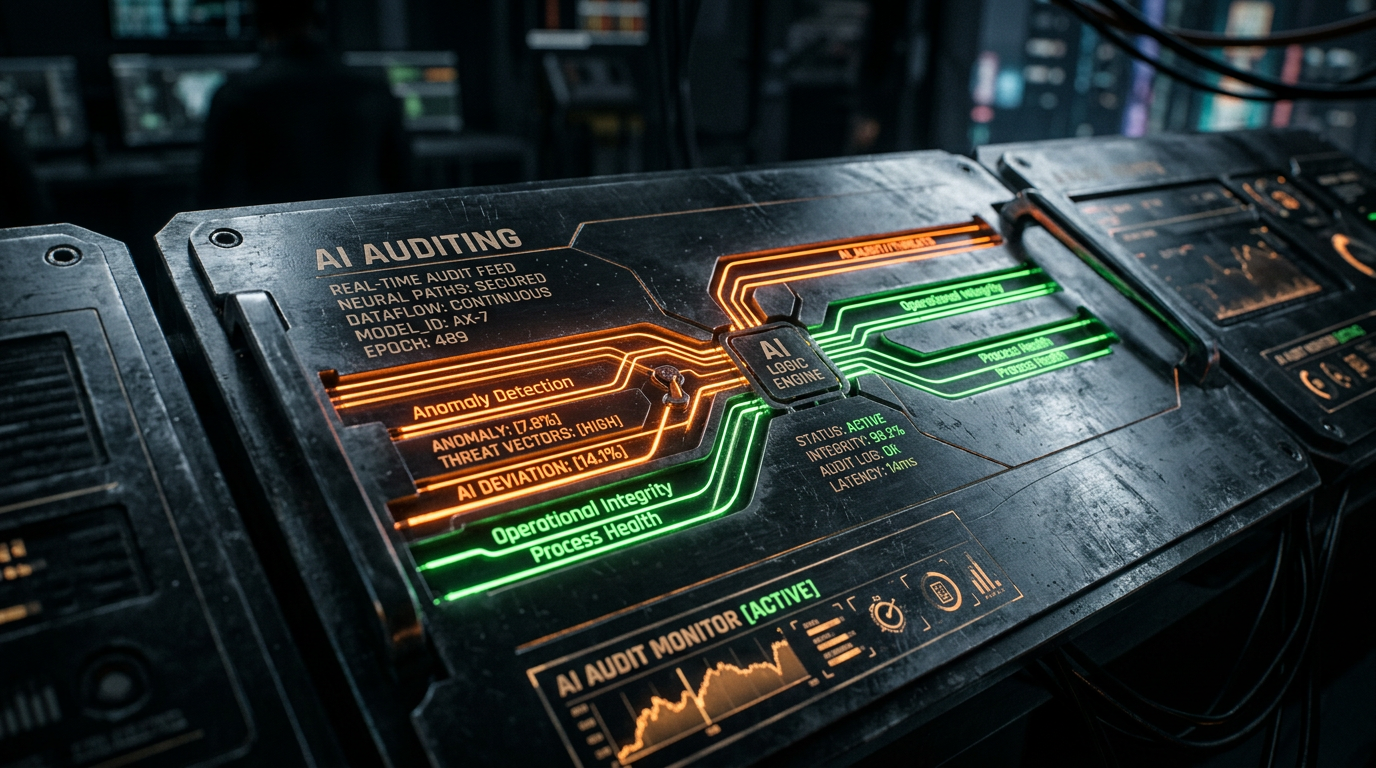
Furthermore, Netomi has addressed the primary roadblock to enterprise AI adoption: the “black box” problem. Governance and compliance teams have historically vetoed agentic AI rollouts because they cannot audit the AI’s decision-making process. Netomi mitigates this with a multilayer observability stack. This is not merely a basic logging tool; it is a real-time, high-fidelity tracing system that captures the entire lifecycle of an AI interaction. It logs the initial user prompt, the contextual data retrieved from the enterprise database, the probabilistic reasoning trace, the deterministic rules applied, and the final executed action. This creates an immutable audit trail. Netomi claims this architecture has resulted in “zero failures, zero broken guardrails and zero brand violations” across its deployments. While “zero” is a bold, statistically improbable claim in the long arc of software engineering, it underscores the rigorous, compliance-first engineering that has allowed Netomi to penetrate risk-averse sectors like insurance and aviation.
Enterprise Market Impact & TCO
The $110 million capital injection is not just a war chest for research and development; it is a clear indicator of the Total Cost of Ownership (TCO) crisis currently unfolding in enterprise contact centers. Human capital remains the single largest expense in customer experience (CX) operations. Recruiting, training, retaining, and managing thousands of Tier-1 support agents is a massive drain on enterprise margins. However, previous attempts to automate this via legacy chatbots often resulted in a negative ROI. The bots deflected only the simplest queries (password resets, balance checks) while frustrating customers to the point of brand abandonment, ultimately requiring human agents to spend more time de-escalating angry users.
Netomi’s agentic AI fundamentally alters the TCO equation by moving beyond simple deflection and into end-to-end resolution. Because the AI is granted deterministic agency—meaning it is securely integrated into backend systems via APIs to actually *do* things, like process refunds, re-route shipments, or alter insurance policies—it can fully resolve complex, multi-turn issues without human intervention. For a company like United Airlines or Ingram Micro, increasing the true resolution rate by even 15% translates to tens of millions of dollars in operational savings annually. The AI does not require sleep, does not suffer from burnout, and scales instantly to meet demand, drastically reducing the need for seasonal or crisis-driven staffing surges.
The strategic composition of Netomi’s investor syndicate is highly telling of its market trajectory. The round was led by Accenture Ventures, the investment arm of the global consulting behemoth. Accenture is not just providing capital; it is providing a massive, global deployment pipeline. Enterprise IT overhauls are notoriously complex, often requiring deep integration with legacy systems like SAP, Oracle, Salesforce, and custom mainframes. Accenture’s army of systems integrators will serve as the vanguard, pushing Netomi’s platform into the Fortune 500 under the banner of digital transformation. Ndidi Oteh, Chief Executive of Accenture Song, noted that agentic AI allows brands to respond with “greater empathy, consistency and intelligence.” In the enterprise lexicon, “consistency” is the keyword. Human agents have bad days; they misread policies and offer inconsistent resolutions. An agentic AI, bound by deterministic guardrails, delivers the exact same standard of service, perfectly aligned with corporate policy, 100% of the time.
The participation of Adobe Ventures also hints at a broader integration strategy. Adobe is a titan in the digital experience and marketing space. By aligning with Adobe, Netomi is positioning its agentic AI not just as a reactive support tool, but as a proactive engagement mechanism. This aligns perfectly with Netomi Founder and CEO Puneet Mehta’s vision of a “world model for customer experience.” In this paradigm, the AI is embedded directly into the digital product. It reads the customer journey in real-time. If a user is struggling to complete a checkout process or repeatedly clicking on a confusing insurance policy clause, the AI detects this friction and intervenes proactively, resolving the issue before the customer even thinks to open a support ticket. This shifts the AI from a cost-center (support) to a revenue-driver (conversion retention).
However, deploying this level of deep integration requires a sophisticated IT strategy. Chief Technology Officers (CTOs) must ensure their backend APIs are robust, secure, and capable of handling the high-frequency requests generated by an autonomous AI agent. The TCO calculation must factor in the compute costs of running the multilayer observability stack and the ongoing maintenance of the deterministic logic gates as corporate policies evolve. Yet, compared to the staggering costs of human-operated contact centers, the ROI of a successful Netomi deployment is undeniably compelling.
The Consumer Reality: What This Means for You
For the everyday consumer, the technical jargon of “deterministic guardrails” and “microservices architectures” means absolutely nothing. What matters is the end experience, and in that regard, Netomi’s technology promises a radical, long-overdue overhaul of how we interact with the brands we use daily. We have all been conditioned to dread customer service. We expect to wait on hold for 45 minutes listening to looping jazz, only to be connected to an agent who asks us to repeat the account information we already typed into the keypad. We expect chatbots to be infuriatingly dense, capable only of pointing us to FAQ articles that don’t solve our specific problem.
The deployment of agentic AI means the death of this reactive, friction-heavy model. Because Netomi’s AI is designed to be embedded directly into the digital experience, customer service will become increasingly invisible. Imagine you are traveling with Delta Air Lines. You are sitting in the terminal, and a severe storm rolls in, grounding your flight. In the legacy model, you and 200 other passengers would immediately rush the gate agent or flood the airline’s phone lines, resulting in hours of waiting and immense stress.
In the agentic AI model powered by Netomi, the system operates proactively. The AI is constantly monitoring the “world model” of the airline’s operations. The moment the flight is officially grounded in the backend system, the AI agent springs into action. It instantly analyzes the profiles of all 200 passengers. It checks available inventory on partner airlines, evaluates your frequent flyer status, and understands your final destination. Before you even stand up from your seat in the terminal, your phone buzzes. It’s a message from the airline: “We’re sorry, but your flight has been grounded due to weather. We have already rebooked you on a flight leaving from Gate B4 in 45 minutes. Your new boarding pass is attached. We have also issued a $50 meal voucher to your account for the inconvenience.”
This is the power of agentic AI. It doesn’t wait for you to ask for help; it identifies the problem and executes the solution autonomously. Furthermore, when you do need to initiate contact—perhaps for a highly specific, complex issue—the interaction will feel fundamentally different. Because the AI is capable of probabilistic reasoning, you won’t need to speak in robotic keywords. You can send a rambling, frustrated email or a voice note explaining a nuanced problem with your MetLife insurance claim. The AI will parse the intent, extract the relevant data, verify what actions it is allowed to take via its deterministic guardrails, and execute the resolution instantly.
Importantly, Netomi emphasizes that this technology is designed to work alongside human agents, not entirely replace them. This means that when an issue is too complex, too emotionally charged, or falls outside the AI’s deterministic boundaries (an “edge case”), it is seamlessly routed to a human. But because the AI has handled 80% of the routine heavy lifting, that human agent is no longer rushed, stressed, or overwhelmed. They have the time and bandwidth to provide genuine empathy and high-touch service. For the consumer, this means that when you actually need to speak to a human, you will get one faster, and they will be far more equipped to help you.
The Industry Ripple Effect
Netomi’s $110 million raise is a massive shot across the bow of legacy Customer Relationship Management (CRM) and support platforms. Giants like Salesforce, Zendesk, and Intercom have built multi-billion-dollar empires on the concept of ticketing systems. Their core architecture is designed around the idea that a customer has a problem, a ticket is created, it enters a queue, and a human (or a basic bot) eventually closes it. Netomi’s agentic approach threatens to render the very concept of a “support ticket” obsolete.
If an AI can read the digital journey and resolve the issue before the customer complains, the ticket is never created. This forces legacy CRM providers into a defensive posture. They must rapidly evolve their platforms from passive databases into active, autonomous agents, or risk being relegated to mere backend storage systems that agile AI layers like Netomi plug into. We are already seeing this arms race heat up across the industry. As noted in recent market movements, companies like OpenAI and Stripe are heavily investing in infrastructure to support the rising tide of agentic AI firms. The entire ecosystem is pivoting from “software that helps humans do work” to “software that does the work autonomously.”
Furthermore, Netomi’s strict focus on governance, compliance, and deterministic controls sets a new standard for enterprise AI vendors. In the post-ChatGPT gold rush, hundreds of AI startups pitched LLM wrappers to enterprises, only to be rejected by Chief Information Security Officers (CISOs) terrified of data leaks and hallucinations. Netomi’s multilayer observability stack and zero-brand-violation claims prove that the market is maturing. The winners in the next phase of the AI boom will not be the companies with the most creative generative models; they will be the companies that can build the most secure, auditable, and reliable infrastructure around those models.
This funding round also accelerates the timeline for the transformation of the Business Process Outsourcing (BPO) industry. Global call centers employing millions of workers will face immense pressure to adapt. While Netomi pitches its AI as a tool to work alongside humans, the economic reality is that as agentic AI becomes more capable, the total headcount required to run a global enterprise support operation will inevitably shrink. The human agents who remain will need to upskill, transitioning from routine problem solvers to complex edge-case managers and empathy specialists. Netomi is not just changing the software stack; it is fundamentally rewiring the economics and labor dynamics of global customer service.
TechNode HQ Verdict: Pros, Cons & Usability
- Pro (Engineering): The decoupling of probabilistic NLU from deterministic execution logic provides a highly secure, auditable framework that effectively neutralizes the risk of LLM hallucinations in production environments.
- Pro (Consumer): Shifts the customer experience from a reactive, friction-heavy ticketing process to a proactive, invisible resolution model, saving users immense time and frustration.
- Con: The “multilayer observability stack” and real-time deterministic evaluations introduce significant compute overhead, potentially driving up infrastructure costs compared to lighter, less secure AI deployments.
- Con: Achieving the “world model” requires incredibly deep, invasive API integrations into legacy enterprise backends, making deployment a slow, complex, and highly customized process.
Enterprise Usability: CTOs and CX leaders in highly regulated or high-volume industries (finance, aviation, healthcare) should immediately evaluate Netomi. The partnership with Accenture provides a reliable deployment pathway. However, enterprises must first ensure their internal APIs and data lakes are clean and accessible; agentic AI is only as effective as the backend systems it is allowed to control.
Everyday Usability: Consumers cannot buy Netomi directly, but they should actively look to do business with brands deploying this level of agentic AI. As this technology proliferates, consumers should raise their expectations and refuse to tolerate brands that still rely on legacy phone trees and dumb chatbots.
Sources & Citations:
Original Technical Breakdown via: siliconangle
Official Handle: @siliconangle
Topics Explored: Agentic AI, Enterprise Customer Experience, Microservices Architecture, AI Governance, Netomi