The Architectural Shift: Engineering the 245TB Behemoth
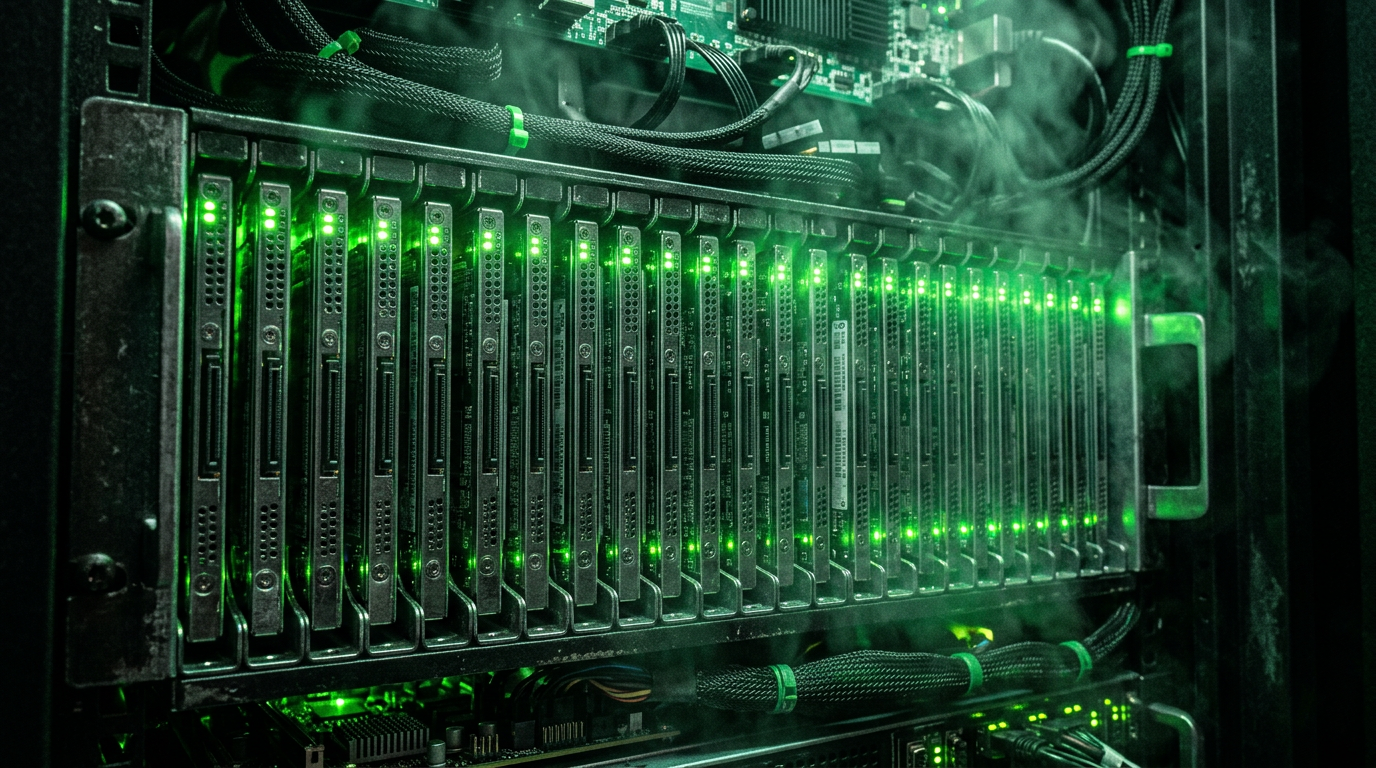
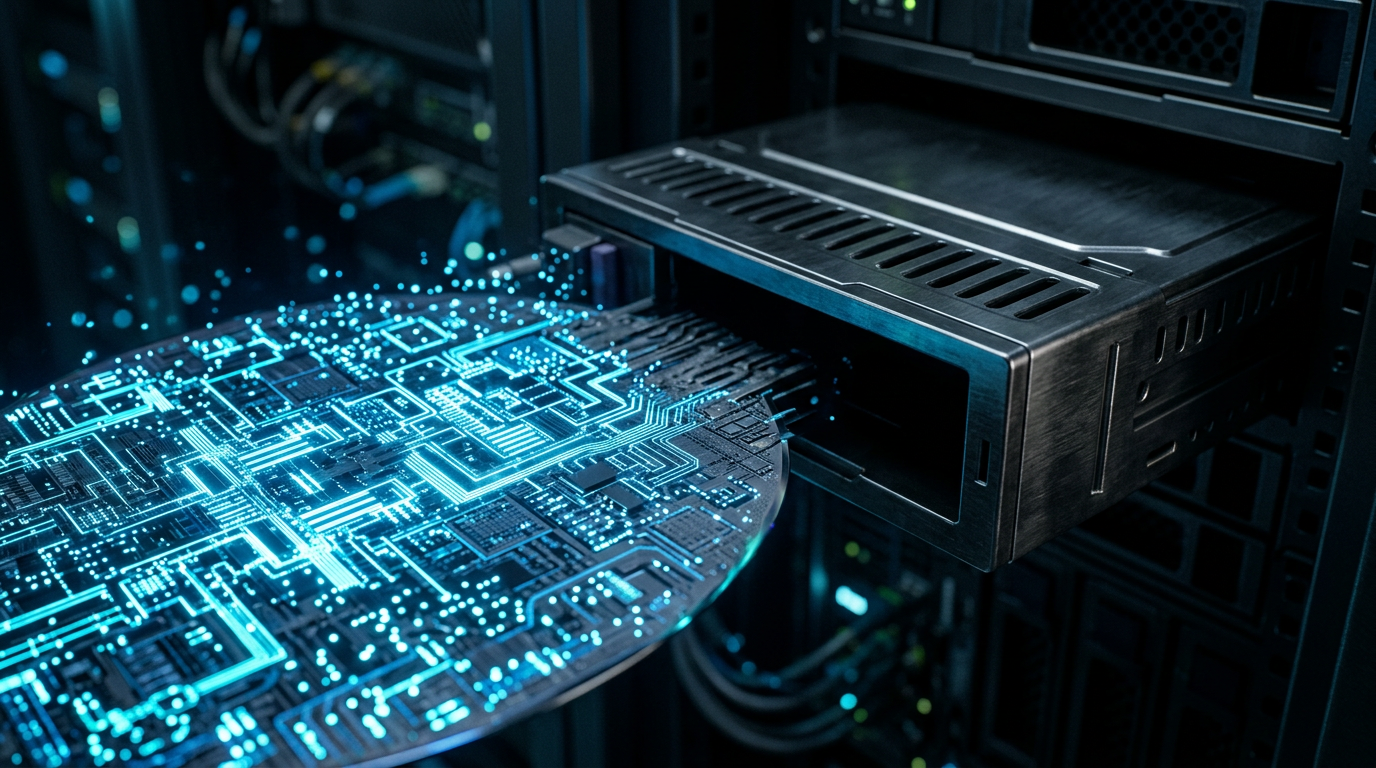
The artificial intelligence revolution has a dirty, poorly kept secret: it is running out of physical space and electrical power. As hyperscalers and enterprise data centers race to build massive AI data lakes, the traditional infrastructure relying on spinning magnetic disks (HDDs) has become a critical bottleneck. Enter the Micron 6600 ION SSD. Boasting an industry-shattering 245TB of capacity in a single drive, this piece of silicon is not just an incremental upgrade; it is a fundamental rewriting of data center physics and storage architecture.
To understand the magnitude of a 245-terabyte solid-state drive, we must dive into the microscopic architecture of the NAND flash that powers it. The Micron 6600 ION is built on Micron’s proprietary G9 QLC (Quad-Level Cell) NAND technology. In the realm of flash memory, QLC represents a masterclass in electrical engineering. Traditional Single-Level Cell (SLC) NAND stores one bit of data per cell, requiring the controller to distinguish between just two voltage states: zero and one. QLC, however, crams four bits of data into every single microscopic cell. To achieve this, the drive’s controller must precisely manage and read 16 distinct voltage states within a single cell. As cells shrink and stack vertically in 3D NAND configurations, the risk of electron leakage and signal interference grows exponentially. Micron’s G9 node manages to stabilize these 16 voltage states at an unprecedented density, pushing their QLC architecture at least a full generation ahead of competing enterprise silicon.
But density is only half the battle; form factor and thermal dynamics dictate whether a drive can actually survive in a hyperscale environment. The 6600 ION is deployed in both legacy U.2 and the modern E3.L (Enterprise and Datacenter Standard Form Factor) chassis. The E3.L standard is particularly vital here. Designed specifically for the thermal and spatial realities of modern server racks, E3.L allows for superior airflow and enhanced signal integrity over PCIe lanes. When you are pushing 245TB of data through a single node, thermal throttling is the enemy of performance. Astonishingly, Micron has engineered this drive to operate at a maximum power draw of just 30 watts. To put that into perspective, achieving 245TB using traditional enterprise HDDs would require an array of drives consuming significantly more power, generating vastly more heat, and occupying exponentially more physical rack space.
The architectural shift here is profound. We are moving from a paradigm where storage was measured by the physical limitations of spinning platters and actuator arms, to a purely solid-state reality where density is limited only by the atomic stacking of silicon gates. By eliminating the mechanical seek times and rotational latency inherent to HDDs, the NVMe protocol can finally stretch its legs, delivering the millions of IOPS (Input/Output Operations Per Second) required to feed data-hungry AI processors.
Enterprise Market Impact & Total Cost of Ownership (TCO)

For Chief Technology Officers and data center architects, the Micron 6600 ION is not just a technological marvel; it is a financial weapon. The economics of hyperscale computing are currently dictated by three constraints: floor space, power availability, and cooling capacity. The 6600 ION attacks all three simultaneously, fundamentally altering the Total Cost of Ownership (TCO) for enterprise storage.
Let us examine the raw mathematics of rack density. According to Micron’s deployment data, a standard 36U server rack fully populated with 245.76TB 6600 ION SSDs can house 720 drives, yielding a staggering 176.9 Petabytes (PB) of raw storage per rack. If an enterprise attempted to achieve maximum density using the highest-capacity hard drives theoretically available (44TB HDDs), that same 36U rack would only yield 31.7 PB. To match the storage capacity of a single rack of Micron SSDs, a data center would need to deploy approximately 5.6 racks of HDDs. This represents an 82% reduction in physical footprint. In Tier-1 data center markets like Northern Virginia, Frankfurt, or Tokyo, where real estate and power provisioning are sold at massive premiums, reclaiming 80% of your floor space translates to millions of dollars in saved CapEx.
However, the true TCO revolution lies in the power and cooling metrics. AI workloads are notoriously power-hungry, with modern GPU clusters pushing facility power grids to their absolute limits. Every watt spent spinning a hard drive is a watt that cannot be allocated to an NVIDIA H100 or B200 tensor core. The Micron 6600 ION operates at a peak of 30W. While a single high-capacity HDD might operate at around 10W, you need roughly six of them to match the capacity of one 6600 ION. Therefore, the SSD consumes about half the power per terabyte compared to an HDD array.
When scaled to the Exabyte level (1,000 Petabytes), the numbers become staggering. To build a 1-Exabyte data lake, an enterprise would need 4,069 Micron 6600 ION SSDs versus 22,727 HDDs. Operating 24/7 over a year, the SSD deployment saves 921 Megawatt-hours (MWh) of electricity. Because solid-state drives generate less heat per terabyte, the secondary savings in HVAC and liquid cooling infrastructure are equally massive—saving an estimated 3.14 billion Btu in cooling energy annually. This is why Dell Technologies is aggressively integrating the 6600 ION into their AI-optimized PowerEdge servers. A single 40-slot Dell PowerEdge server can now house nearly 10 Petabytes of data, creating a hyper-dense, localized data lake that can feed AI training models without the latency of traversing complex network topologies.
In the context of AI pipelines—specifically the Extract, Transform, Load (ETL) phase—storage speed is critical. GPUs are incredibly expensive assets. If a $40,000 GPU is sitting idle waiting for a mechanical hard drive to find and deliver training data, the enterprise is burning money. Micron’s internal testing shows the 6600 ION delivers 8.6x faster AI pre-processing and 3.4x higher data ingestion throughput compared to HDD arrays, with latency reduced to 1/29th of mechanical drives. This means GPUs spend more time computing and less time waiting, drastically improving the Return on Investment (ROI) of the entire AI hardware stack.
The Consumer Reality: What This Means for You
It is easy to look at a 245TB enterprise SSD and dismiss it as a piece of esoteric corporate hardware that has no bearing on the average consumer. You will not be installing a 6600 ION into your PlayStation 5 or your home gaming PC. However, the trickle-down economics and infrastructural impact of this drive will directly shape the consumer technology landscape over the next decade.
First and foremost, this technology dictates the speed and intelligence of the consumer AI tools you use daily. When you query a Large Language Model (LLM) like ChatGPT, Claude, or Google Gemini, or when you use AI to generate an image or summarize a document, you are interacting with a massive data center. The speed at which these models can retrieve context, access vector databases, and generate responses is heavily dependent on the storage layer. By reducing data retrieval latency to 1/29th of traditional hard drives, the Micron 6600 ION ensures that consumer-facing AI applications feel instantaneous, fluid, and capable of handling vastly larger context windows without timing out.
Secondly, there is a direct impact on the cost of consumer cloud services. We live in an era where our photos, videos, backups, and digital lives are stored in the cloud. Services like Apple iCloud, Google Drive, Microsoft OneDrive, and Dropbox rely on exabytes of storage. As consumers generate more data—driven by 4K and 8K smartphone video recording—the cost for tech giants to store this data skyrockets. By utilizing ultra-dense, power-efficient drives like the 245TB ION, cloud providers can drastically reduce their operational costs. While they may not lower your monthly subscription fee, this efficiency prevents the massive price hikes that would otherwise be necessary to sustain the exponential growth of consumer data.
Finally, there is a profound environmental reality. The digital cloud is not a magical, ethereal entity; it is a massive network of steel, silicon, and electricity that generates a massive carbon footprint. The power savings generated by transitioning from HDDs to high-density SSDs are a critical step toward sustainable computing. At an Exabyte scale, the Micron 6600 ION reduces CO2 emissions by 438 metric tons annually—the equivalent of the carbon absorbed by over 9,000 mature trees. As consumers become increasingly conscious of the environmental impact of their digital consumption, the shift toward hyper-efficient solid-state infrastructure allows the tech industry to scale its capabilities without proportionally scaling its carbon emissions.
The Industry Ripple Effect
The release of a 245TB SSD is a seismic event that forces the entire storage industry into a reactive posture. For the traditional hard drive cartel—dominated by Seagate, Western Digital, and Toshiba—the Micron 6600 ION represents an existential threat to their most lucrative market: nearline enterprise storage.
For years, HDD manufacturers have relied on the fact that while SSDs were faster, HDDs were vastly cheaper per gigabyte and offered higher absolute capacities for bulk storage. The 6600 ION shatters that paradigm. While HDDs are currently struggling to push past the 30TB to 40TB barrier—relying on incredibly complex and thermally challenging technologies like Heat-Assisted Magnetic Recording (HAMR) and Microwave-Assisted Magnetic Recording (MAMR)—Micron has casually leaped to 245TB using solid-state tech. The mechanical complexity of HAMR, which uses microscopic lasers to heat the disk platter before writing, introduces massive reliability concerns. In contrast, solid-state QLC scaling is a proven, reliable path. If HDD manufacturers cannot drastically accelerate their capacity roadmaps, they risk being entirely relegated to cold-storage archival duties, losing the highly profitable “warm data” and AI data lake markets entirely.
Among silicon competitors, the pressure is equally intense. Solidigm (born from Intel’s NAND division and now owned by SK Hynix) has been a leader in high-capacity QLC enterprise drives, previously making headlines with 60TB+ models. Samsung, the undisputed heavyweight champion of the global NAND market, has also been pushing the limits of its V-NAND architecture. Micron’s 245TB announcement is a direct shot across the bow of both Samsung and SK Hynix, effectively declaring that Micron holds the density crown for the AI era. This will trigger a massive R&D arms race. We can expect Samsung and Solidigm to accelerate their own ultra-high-capacity QLC and PLC (Penta-Level Cell) roadmaps, likely leading to a rapid commoditization of 100TB+ drives over the next 24 to 36 months.
Furthermore, this shift will force a redesign in server architecture. Companies like Dell, HPE, and Lenovo will need to rethink PCIe lane distribution, NVMe over Fabrics (NVMe-oF) networking, and backplane designs to ensure that the massive bandwidth potential of a rack filled with 245TB SSDs is not bottlenecked by the network switches. The entire data center ecosystem must upgrade its nervous system to handle the sheer volume of data these new organs can pump.
TechNode HQ Verdict: Pros, Cons & Usability
- Pro (Engineering): Unprecedented rack density. Achieving 176.9 Petabytes in a single 36U rack via the E3.L form factor fundamentally solves the physical space constraints of modern AI data centers.
- Pro (Consumer): Enables vastly faster, more complex AI models and helps stabilize the rising costs of consumer cloud storage by slashing data center power and cooling overhead.
- Con: The “Blast Radius” vulnerability. If a single 245TB drive suffers a catastrophic failure, the RAID rebuild times over current PCIe interfaces will be agonizingly long, potentially degrading array performance for days.
- Con: QLC Endurance limits. While perfect for read-heavy AI data lakes (ETL workloads), QLC NAND inherently suffers from lower Drive Writes Per Day (DWPD) endurance compared to TLC or SLC, making it unsuitable for high-churn transactional databases.
Enterprise Usability: For CTOs managing hyperscale cloud environments, AI training clusters, or massive object storage repositories (like MinIO or Ceph), the Micron 6600 ION is an immediate, must-evaluate deployment. The CapEx of the drives will be astronomical, but the OpEx savings in power, cooling, and floor space will likely yield a positive ROI within the standard 3-to-5-year hardware lifecycle. It should be deployed strictly in read-intensive, “warm” data tiers where capacity and read-throughput are prioritized over write-endurance.
Everyday Usability: The general public cannot and should not attempt to purchase this hardware. It requires specialized enterprise server backplanes (E3.L/U.2) and massive cooling infrastructure. However, consumers should celebrate this release, as it is the invisible engine that will power the next generation of instantaneous AI services and sustainable cloud computing.
Sources & Citations:
Original Technical Breakdown via: investors
Official Handle: @investors
Topics Explored: Micron 6600 ION, Enterprise SSD, AI Infrastructure, QLC NAND, Data Center Storage