The Architectural Shift
The global semiconductor landscape has not merely fractured; it has violently snapped. Just eighteen months ago, Nvidia was the undisputed sovereign of China’s artificial intelligence infrastructure, supplying the vast majority of the silicon powering the nation’s cloud providers. Today, in a stunning admission by CEO Jensen Huang, Nvidia’s market share in the Chinese AI accelerator sector has collapsed to absolute zero. Stepping into this massive vacuum is Huawei, projecting a staggering $12 billion in AI processor revenue by 2026—a 60% year-over-year explosion from its $7.5 billion baseline. This is not just a story of geopolitical maneuvering; it is a profound architectural shift in how enterprise AI is built, deployed, and scaled at the silicon level.
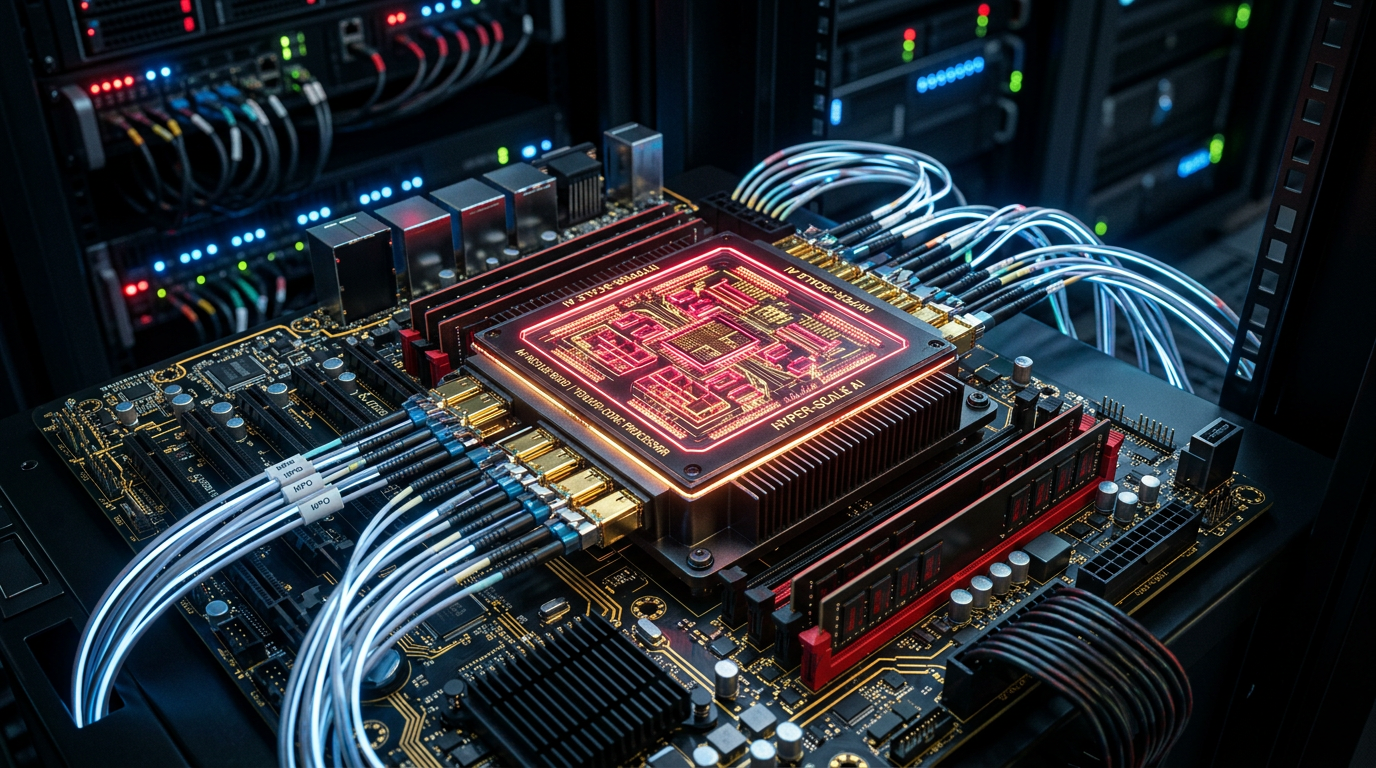
At the bleeding edge of this domestic revolution is Huawei’s Ascend 950PR, an AI processor that has rapidly become the primary procurement target for Chinese hyperscalers like Alibaba, Tencent, and ByteDance. To understand the 950PR’s dominance, one must look past raw compute benchmarks and examine the symbiotic relationship between Huawei’s hardware and the latest wave of Chinese Large Language Models (LLMs). The catalyst for this raging demand was the April release of DeepSeek’s V4 LLM. Unlike previous models that were inherently bound to Nvidia’s ubiquitous CUDA software ecosystem, DeepSeek V4 was engineered from the ground up to exploit Huawei’s Ascend architecture and its proprietary CANN (Compute Architecture for Neural Networks) framework.
DeepSeek V4 is a behemoth, utilizing a Mixture-of-Experts (MoE) architecture boasting up to 1 trillion total parameters. However, the genius of the MoE design is that it only activates roughly 37 billion parameters per inference pass. This architectural choice heavily favors inference-efficient hardware, playing directly to the strengths of the Ascend 950PR. The 950PR is currently the only Chinese-manufactured AI processor that natively supports FP8 (8-bit floating point), a highly compressed numerical format. In the realm of AI inference, FP8 is a game-changer. It drastically reduces memory bandwidth bottlenecks, allows for significantly more operations per second, and fundamentally lowers the per-query compute cost. By collaborating directly with DeepSeek engineers prior to launch, Huawei ensured its Ascend SuperNode product line was hyper-optimized for V4 inference on day one, effectively locking Nvidia out of the optimization loop.
However, the 950PR is not without its architectural compromises. While it reportedly outperforms Nvidia’s export-restricted H20 chip by a factor of 2.8 times—a metric that requires intense scrutiny given that Hopper-era hardware lacks native FP4 support for direct apples-to-apples comparisons—it still trails Nvidia’s flagship H200 in both raw compute power and memory bandwidth. To bridge this gap, Huawei has resorted to brute-force scalability. The company’s CloudMatrix 384 system is a marvel of optical engineering, linking massive arrays of processors via high-speed optical interconnects. By combining twelve racks of Ascend modules into a unified 384-processor fabric, Huawei can deliver roughly 300 PFLOPS of compute. Yet, this architectural workaround comes with a severe physical toll, which brings us to the harsh realities of enterprise deployment.
Enterprise Market Impact & TCO
For Chief Technology Officers and data center architects at China’s largest tech conglomerates, the transition from Nvidia to Huawei is not merely a plug-and-play hardware swap; it is a fundamental recalculation of Total Cost of Ownership (TCO), operational expenditures (OpEx), and data center physics. The $12 billion revenue projection for Huawei is a testament to captive market demand, but it obscures the immense friction occurring at the foundry and facility levels.
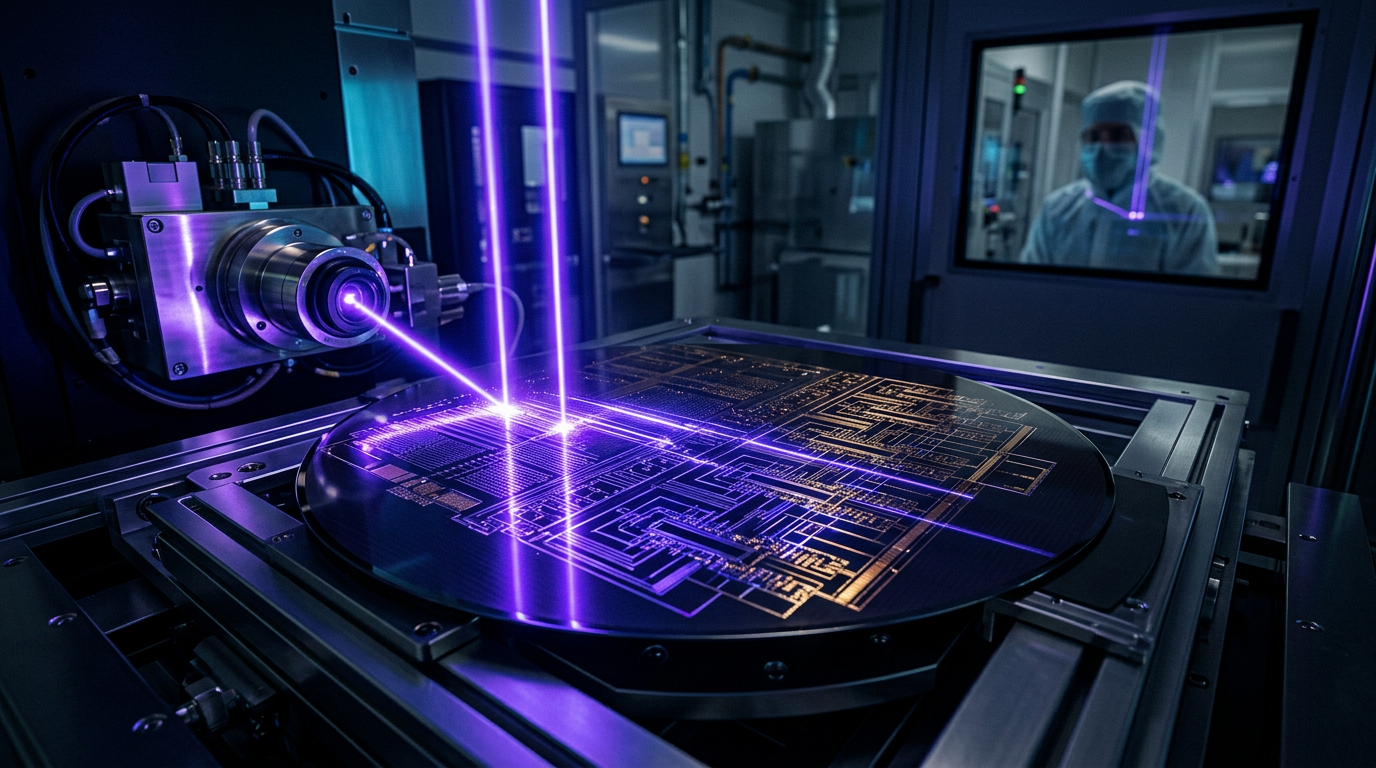
The most glaring bottleneck in Huawei’s empire is manufacturing. The Ascend 950PR is fabricated by SMIC (Semiconductor Manufacturing International Corporation), China’s leading foundry, utilizing its N+3 process. This is a 7nm-class node achieved without the use of Extreme Ultraviolet (EUV) lithography—machinery that is heavily sanctioned and monopolized by the Dutch firm ASML. Without EUV, SMIC is forced to rely on Deep Ultraviolet (DUV) lithography combined with highly complex, error-prone multi-patterning techniques. The enterprise fallout from this is twofold: catastrophic cycle times and suppressed yields.
According to enterprise supply chain estimates, SMIC’s cycle time—the duration from a raw silicon wafer entering the fab to emerging as a finished, packaged Ascend processor—currently sits at an agonizing eight months. For context, equivalent nodes at TSMC (Taiwan Semiconductor Manufacturing Company) boast a cycle time of roughly three months. Furthermore, the 950PR is a massive, monolithic die. In semiconductor manufacturing, larger dies inherently suffer from lower yields, and SMIC’s 7nm-class process already delivers substantially fewer good dies per wafer than TSMC. While Huawei targets the production of 750,000 units this year, the reality of these foundry physics means supply will critically fall short of the voracious demand from Alibaba and Tencent, driving up chip prices by an estimated 20% already.
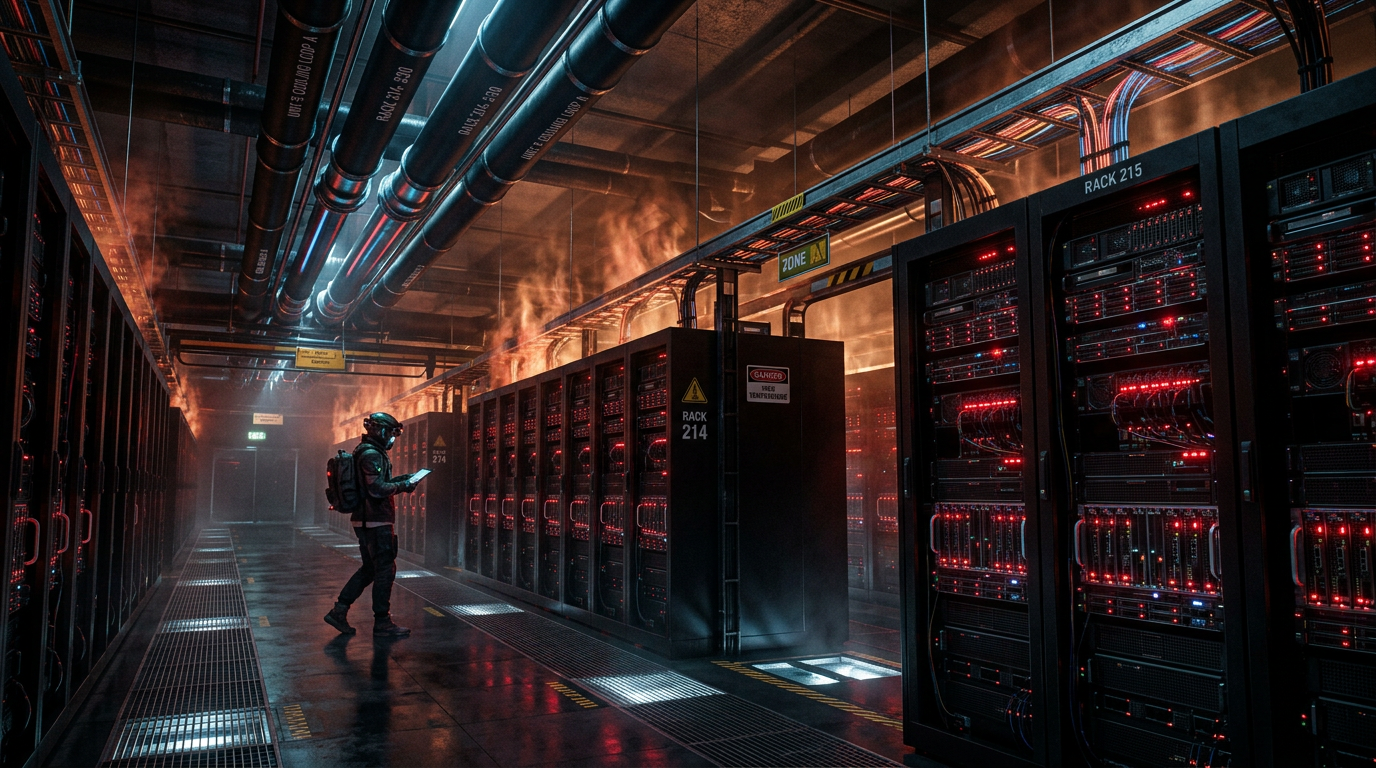
Beyond the foundry, the TCO equation inside the data center is being radically altered by power consumption. Huawei’s brute-force approach to matching Nvidia’s performance—the CloudMatrix 384 system—achieves its 300 PFLOPS at nearly four times the power draw of Nvidia’s comparable GB200-based configurations. In the enterprise IT sector, power is the ultimate currency. A 4x increase in power draw does not just quadruple the electricity bill; it fundamentally breaks existing data center cooling infrastructure. Facilities must be retrofitted with advanced direct-to-chip liquid cooling, and the overall Power Usage Effectiveness (PUE) of Chinese hyperscalers will inevitably degrade. For an enterprise CFO, the capital expenditure (CapEx) of buying the 950PR is only the beginning; the OpEx required to keep it powered and thermally stable over a five-year lifecycle will be astronomical.
Meanwhile, the regulatory stalemate has effectively paralyzed Nvidia. The H200, despite receiving U.S. export licenses earlier this year, has not shipped a single unit to China. A bizarre bureaucratic deadlock has emerged: Washington mandates that H200 chips ordered by Chinese firms must remain physically inside China to prevent military diversion, while Beijing has instructed its domestic tech giants to limit Nvidia hardware strictly to overseas data centers to foster domestic reliance. This contradictory regulatory web has forced Nvidia to officially write off the Chinese data center market in its FY2026 10-K filing, conceding a market that Morgan Stanley estimates will balloon to $67 billion by 2030.
The Consumer Reality: What This Means for You
While the intricacies of 7nm multi-patterning and FP8 inference formats may seem confined to the sterile halls of enterprise IT, this silicon schism has profound, immediate impacts on the global consumer. We are witnessing the birth of the AI “Splinternet”—a reality where the artificial intelligence powering your daily digital life is fundamentally dictated by your geographic location and the underlying hardware it runs on.
For the average consumer, AI is experienced through applications: the recommendation algorithm on TikTok, the generative search results on Alibaba’s e-commerce platforms, or the automated customer service bots on WeChat. Historically, whether you were in New York or Beijing, these services were ultimately trained and inferred on the same underlying Nvidia CUDA architecture. The math was universal. Today, that universality is dead.
As Chinese tech giants like ByteDance and Tencent migrate their infrastructure entirely to Huawei’s Ascend silicon and the CANN software stack, the AI models they produce will begin to diverge in behavior, capability, and optimization from Western models like OpenAI’s GPT-4 or Anthropic’s Claude. Because DeepSeek V4 and subsequent models are being hyper-optimized for the specific memory bandwidth constraints and FP8 capabilities of the 950PR, the very nature of how these models process language, generate images, and serve recommendations will evolve on a separate track. Consumers using Chinese applications may experience faster, highly efficient localized AI features tailored to the MoE architecture, while Western applications will leverage the raw, unbridled compute power of Nvidia’s Blackwell and Hopper generations.
Furthermore, this hardware divide impacts global feature parity. If a Western developer creates a groundbreaking AI application utilizing specific CUDA libraries, porting that application to the Chinese market now requires entirely rewriting the software for Huawei’s CANN ecosystem. While Huawei claims to have over four million developers on CANN, the reality is that translating complex AI workloads across fundamentally different hardware architectures is incredibly resource-intensive. For the consumer, this means that the newest AI features, tools, and generative capabilities may no longer launch globally. You will only have access to the AI innovations that are compatible with your region’s dominant silicon.
There is also a hidden cost that will inevitably be passed down to the consumer. As discussed, the TCO for Chinese cloud providers is skyrocketing due to the massive power requirements of Huawei’s hardware and the 20% premium on chip prices driven by supply shortages. Cloud providers do not absorb these costs out of goodwill. Consumers and small businesses utilizing Chinese cloud infrastructure can expect to see increased subscription fees for AI-powered SaaS products, stricter rate limits on free AI tools, and higher costs for API access as hyperscalers attempt to recoup their massive operational expenditures.
The Industry Ripple Effect
Huawei’s rapid ascension and Nvidia’s forced exodus are sending shockwaves through the broader semiconductor and enterprise IT supply chains, forcing competitors and adjacent industries into a frantic state of reaction. The most immediate ripple effect is the accelerated push for domestic High Bandwidth Memory (HBM). AI processors are useless without memory capable of feeding them data at blistering speeds. Historically, this market has been dominated by South Korea’s SK Hynix and Samsung, alongside the US-based Micron.
Recognizing this critical vulnerability, Huawei has aggressively partnered with domestic memory manufacturer CXMT to develop proprietary HBM solutions, specifically the HiBL 1.0 and HiZQ 2.0 chips, boasting up to 1.6 TB/s bandwidth. While it remains an open question how quickly CXMT can scale production with acceptable yields, the mere existence of a viable Chinese HBM alternative threatens to permanently lock Western and allied memory suppliers out of a $67 billion market. If CXMT succeeds, it will fundamentally alter the global memory pricing dynamics, potentially leading to an oversupply in Western markets as SK Hynix and Micron lose access to massive Chinese hyperscaler contracts.
For Nvidia, the loss of the Chinese market is a strategic blow that transcends immediate revenue. While Nvidia is currently supply-constrained globally—selling every H100 and H200 it can produce to Western hyperscalers like Meta, Microsoft, and Google—this dynamic will not last forever. When the global AI infrastructure build-out eventually normalizes, Nvidia will find itself permanently locked out of the world’s second-largest economy. Bernstein analysts project Nvidia’s share of the China AI GPU market will plummet to a mere 8% in the coming years, down from 66% in 2024. This loss of scale could eventually impact Nvidia’s R&D budget, forcing the company to extract higher margins from its Western customers to maintain its aggressive innovation cadence.
Finally, this shift places immense pressure on AMD and Intel. Both companies have been desperately trying to chip away at Nvidia’s CUDA monopoly with their own open-source frameworks (ROCm and OneAPI). However, Huawei’s CANN ecosystem is now proving that a non-CUDA software stack can achieve massive commercial scale if backed by sufficient domestic necessity. Huawei has inadvertently provided a blueprint for breaking the CUDA monopoly, proving that with enough financial backing and hardware optimization, developers will adapt to new frameworks. This could embolden Western hyperscalers to accelerate their own custom silicon projects (like Google’s TPUs and AWS’s Trainium), further fragmenting the global AI hardware market.
TechNode HQ Verdict: Pros, Cons & Usability
- Pro (Engineering): Native FP8 support on the Ascend 950PR combined with DeepSeek V4’s MoE architecture delivers exceptional inference efficiency, bypassing traditional memory bandwidth bottlenecks found in older hardware.
- Pro (Consumer): The rapid maturation of a domestic AI ecosystem ensures that regional consumers will have uninterrupted, highly optimized access to advanced LLM capabilities despite global trade restrictions.
- Con: The catastrophic 4x power draw of the CloudMatrix 384 system compared to Nvidia’s GB200 destroys data center PUE, requiring massive OpEx increases for liquid cooling and electricity.
- Con: SMIC’s reliance on DUV multi-patterning for its N+3 process results in an agonizing 8-month cycle time and poor yields, creating a severe supply chain bottleneck that will artificially inflate hardware costs.
Enterprise Usability: For CTOs operating within the Chinese domestic market, deploying the Ascend 950PR is no longer optional; it is a strategic imperative. However, infrastructure teams must immediately audit their data center power and cooling capacities. The thermal footprint of the CloudMatrix 384 requires aggressive facility retrofitting. Furthermore, software engineering teams must begin the arduous process of migrating legacy CUDA workloads to the CANN framework, a transition that requires significant upfront developer training and resource allocation. For Western CTOs, this hardware is entirely irrelevant due to sanctions, but the rise of CANN should serve as a warning to avoid total vendor lock-in with CUDA.
Everyday Usability: For the general public, there is no direct hardware to purchase. However, the usability of the software you rely on is changing. If you operate a business that relies on cross-border AI tools, prepare for a fractured ecosystem. You may soon need to maintain separate AI API subscriptions—one for Western markets powered by OpenAI/Nvidia, and one for Eastern markets powered by DeepSeek/Huawei. The era of a single, unified global AI standard is officially over; plan your digital workflows accordingly.
Sources & Citations:
Original Technical Breakdown via: tomshardware
Official Handle: @tomshardware
Topics Explored: Huawei Ascend 950PR, Nvidia H200, SMIC 7nm, DeepSeek V4, AI Infrastructure