The Architectural Shift: From Windows 98 Data Collectors to Modern Edge Nodes
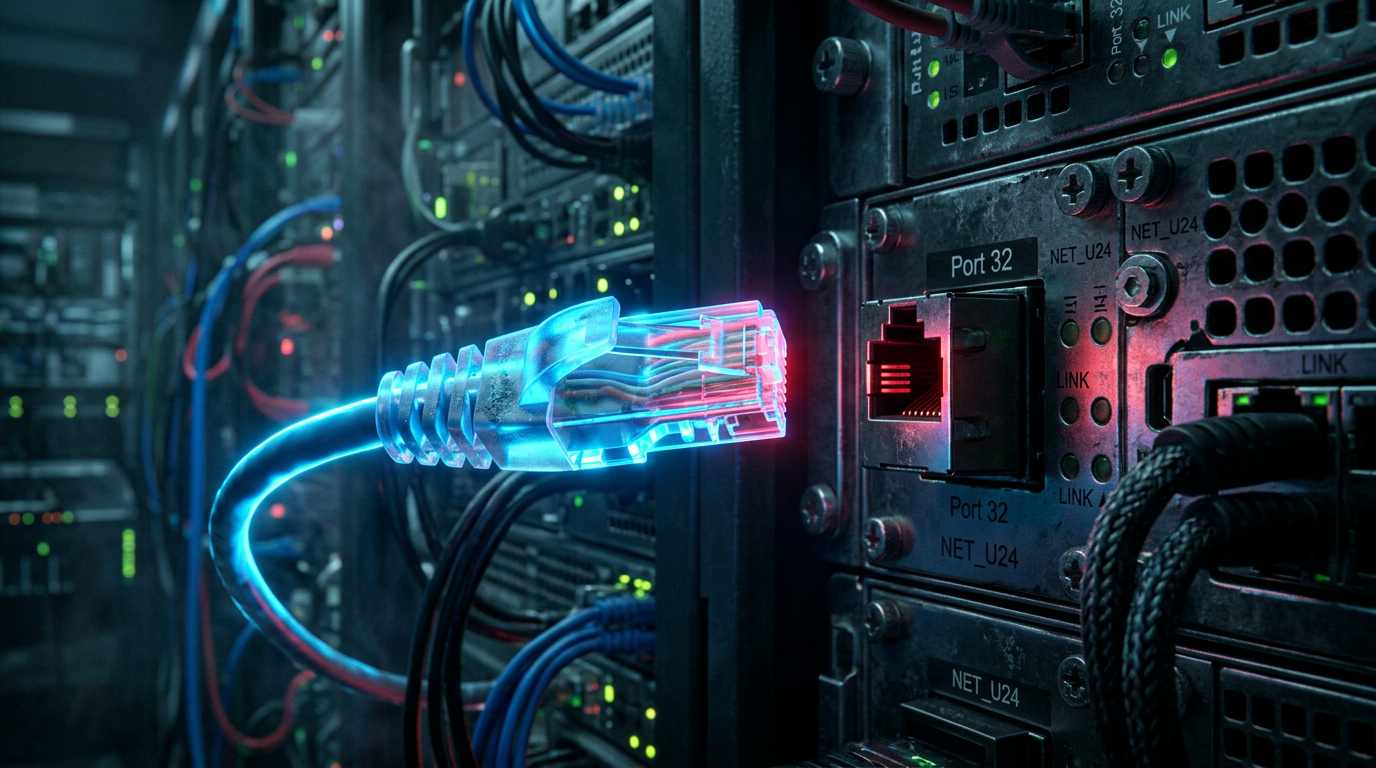
In the high-stakes world of enterprise IT infrastructure, we often obsess over the bleeding edge of technology. We debate the merits of Kubernetes orchestration, the efficiency of agentic AI models, the scalability of multi-cloud architectures, and the cryptographic security of zero-trust networks. Yet, a recent retrospective from the trenches of IT support serves as a humbling reminder of a universal truth: no amount of software sophistication can overcome a failure at the physical layer. The story of a custom-built Windows 98 “data collector” that failed on-site—not due to a kernel panic or a driver conflict, but because the network cable was neatly coiled and taped to a support column—is more than just a humorous anecdote. It is a profound microcosm of the trillion-dollar friction point in global IT deployments: Layer 1 of the OSI model.
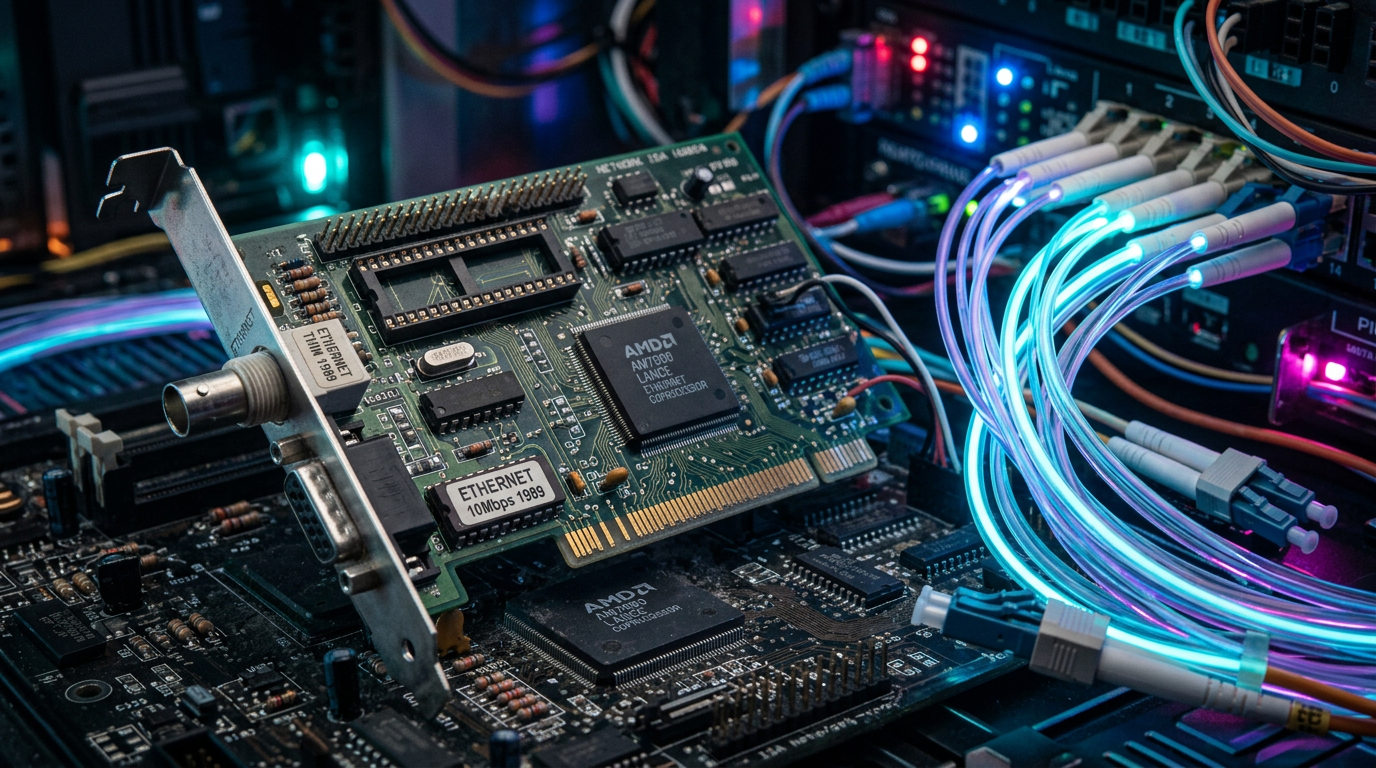
To understand the architectural shift, we must first contextualize the era of the Windows 98 data collector. In the late 1990s and early 2000s, industrial environments were just beginning to embrace the concept of localized telemetry. Before the term “Internet of Things” (IoT) or “Edge Computing” entered the corporate lexicon, businesses relied on standard, off-the-shelf desktop PCs retrofitted with specialized serial cards or early Network Interface Cards (NICs) to pull data from manufacturing floors, point-of-sale systems, and warehouse logistics arrays. These machines were the primordial soup of modern edge computing. They were fragile, prone to the infamous Blue Screen of Death (BSOD), and required meticulous manual configuration of the TCP/IP stack, which was still a relatively new standard for local area networks compared to legacy protocols like IPX/SPX.
When the technician in our case study—let’s call him Gerald—built this machine in the lab, he executed a standard deployment protocol. The machine booted, the OS loaded, and the network connectivity was verified in a controlled environment. However, the transition from the sterile, predictable environment of the IT lab to the chaotic, unpredictable reality of the industrial shop floor is where enterprise deployments historically go to die. The diagnostic steps Gerald took upon arriving at the client site are a textbook execution of OSI model troubleshooting, albeit constrained by the technology of the time.
First, he verified Layer 7 down to Layer 4 by ensuring the operating system was responsive. Next, he checked the Device Manager, verifying that the OS recognized the physical hardware of the NIC—a crucial check of Layer 2 (Data Link). Finally, he executed a loopback ping (pinging 127.0.0.1). In the architecture of network stacks, a successful loopback ping is a definitive test. It proves that the host’s TCP/IP stack is correctly installed, the network driver is functioning, and the software routing is intact. It tells the technician that the brain of the machine is perfectly healthy. What it does not tell you, however, is whether the machine has a physical bridge to the outside world. This is the blind spot of Layer 1 (the Physical Layer).
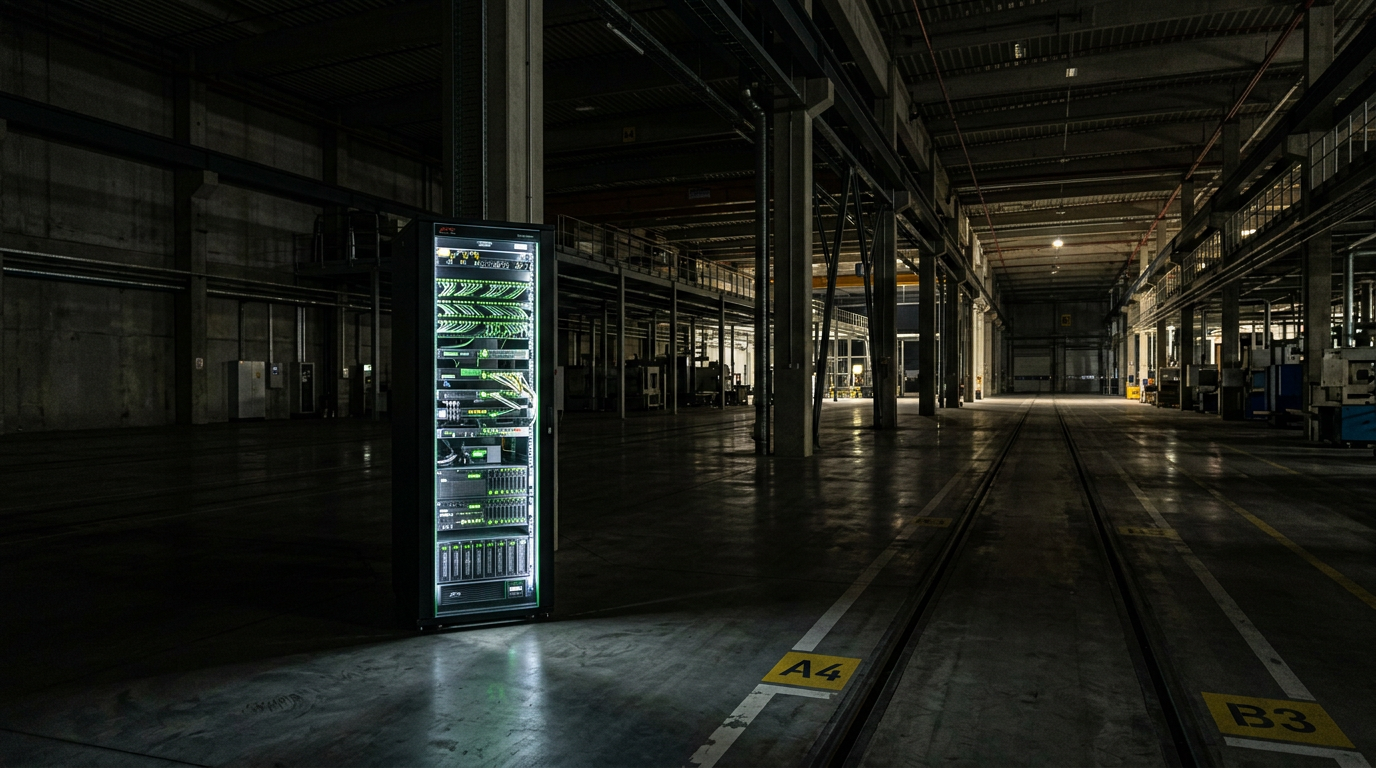
Today, we have replaced Windows 98 data collectors with ruggedized, fanless IoT gateways running stripped-down Linux kernels, deploying containerized microservices via Docker. We have upgraded from 10BASE-T Ethernet to multi-gigabit fiber optics and 5G cellular backhaul. Yet, the architectural vulnerability remains identical. If a modern Kubernetes edge node is deployed to a remote oil rig or a retail branch, and the physical medium—the literal copper or glass—is severed, disconnected, or never plugged in, the most advanced software stack in the world is reduced to an expensive, blinking paperweight. The architectural shift over the last twenty-five years has exponentially increased our software capabilities, but it has not eradicated the human element of physical connectivity.
Enterprise Market Impact & TCO: The Economics of the Truck Roll
The financial implications of this seemingly trivial error are staggering when scaled to the enterprise level. In the anecdote, the technician was forced to drive 100 kilometers (approximately an hour and a half each way) to diagnose a disconnected cable. In the telecom and enterprise IT industries, this physical dispatch of a technician is known as a “truck roll.” Truck rolls are the bane of IT operational expenditure (OpEx). They are the silent killers of profitability in managed service provider (MSP) contracts and enterprise service level agreements (SLAs).
Let us break down the Total Cost of Ownership (TCO) and the immediate financial impact of a single, unnecessary truck roll. First, there is the direct labor cost. A Tier-2 or Tier-3 infrastructure analyst spending three hours driving, plus an hour on-site, represents four hours of lost productivity. If that technician’s fully burdened cost to the company is $100 per hour, that is an immediate $400 loss. Add to this the vehicle depreciation, fuel, and insurance, which can easily add another $100. But the direct costs are merely the tip of the iceberg. The true financial devastation lies in the opportunity cost and the SLA penalties.
While Gerald was driving 100 kilometers to plug in a cable, he was not resolving complex, high-value architectural issues for other clients. Furthermore, the client in this scenario was “literally hopping mad” and claiming their firm was losing money due to the downtime. In modern enterprise environments, downtime is measured in thousands of dollars per minute. If a critical data collector goes offline on a manufacturing floor, it can halt the entire production line. If an SLA dictates a four-hour resolution time, and the travel alone takes three hours round trip, the MSP is operating on a razor-thin margin of error. A single traffic jam could result in thousands of dollars in SLA breach penalties.
This scenario also exposes a catastrophic failure in IT management and triage protocols. The technician’s boss “reamed him out” for allowing a non-functional system to leave the shop, and then immediately dispatched him without performing basic Tier-1 diagnostics. In modern IT Infrastructure Library (ITIL) frameworks, this is a gross violation of incident management. A competent service desk manager must always assume Layer 1 failure until proven otherwise. The simple question, “Can you trace the cable from the back of the PC to the wall port?” or the modern equivalent, “Can you send me a smartphone photo of the back of the machine?” would have saved hundreds of dollars and hours of frustration.
To combat this, modern enterprises invest heavily in Out-of-Band (OOB) management and Zero-Touch Provisioning (ZTP). OOB management utilizes dedicated, secondary network connections (often cellular LTE/5G modems) that allow administrators to access the hardware even if the primary network is down. If Gerald’s Windows 98 machine had a modern equivalent of an OOB cellular console, he could have logged in remotely, checked the interface status, and immediately seen that the physical link state was “DOWN.” He could have then confidently told the client, “The machine is working perfectly, but your on-site staff has not plugged it in.” The TCO of implementing OOB management is often justified by the prevention of just one or two unnecessary truck rolls per year.
The Consumer Reality: What This Means for You
While the terminology of OSI models, truck rolls, and Out-of-Band management belongs to the enterprise IT realm, the underlying friction of this story is intimately familiar to the everyday consumer. We live in an era where technology is marketed as “plug and play,” seamless, and invisible. We are sold the dream of the smart home, where thermostats, refrigerators, security cameras, and voice assistants communicate in a harmonious, wireless ballet. Yet, the consumer reality is often a frustrating nightmare of dead zones, offline devices, and incomprehensible error messages.
When a consumer’s smart TV suddenly refuses to stream Netflix, or their Wi-Fi security camera goes dark, the immediate reaction is often identical to the angry client in our enterprise story: blame the manufacturer, blame the software, or blame the internet service provider. Consumers will spend hours on hold with customer support, furious that their expensive hardware is “broken.” And just like the enterprise IT helpdesk, the first question the exhausted consumer tech support agent will ask is, “Is it plugged in?”
This question feels insulting to the consumer. It feels condescending. But as the story of the taped network cable proves, it is the most statistically probable point of failure. The illusion of our wireless world is just that—an illusion. Every wireless connection eventually relies on a physical wire. Your home Wi-Fi router requires a physical coaxial or fiber optic cable connecting it to the street. Your wireless mesh nodes require physical power from a wall outlet. When a consumer moves a piece of furniture and accidentally nudges a power strip, or a pet chews through an Ethernet cable hidden behind a desk, the resulting network failure looks identical to a catastrophic hardware failure from the software’s perspective.
The consumer reality is that we are increasingly reliant on complex, interconnected systems, but we lack the diagnostic tools to understand them. When a Windows 98 PC failed to connect, a user could at least look at the back of the machine and see if the green link light on the network card was illuminated. Today, consumer devices are designed as impenetrable black boxes. They lack physical Ethernet ports, they lack status LEDs (often removed for aesthetic reasons), and they hide their diagnostic data behind simplified, user-friendly smartphone apps that simply say “Device Offline.”
This design philosophy exacerbates the frustration. By abstracting the physical layer away from the consumer, tech companies have made it harder for the average person to perform basic Layer 1 troubleshooting. The lesson for consumers is to always trust the physical reality before blaming the digital ether. Before you factory reset your router, before you wait on hold for an hour, and before you declare a piece of technology “stupid,” physically trace every wire. Ensure the power is seated firmly. Ensure the Ethernet clicks into place. The most advanced technology in your home is still bound by the laws of physical connectivity.
The Industry Ripple Effect: Engineering Out Human Error
The persistent threat of Layer 1 failures has forced the networking and hardware industries to fundamentally rethink how infrastructure is designed, deployed, and monitored. If human error—like taping a vital network cable to a support column—is inevitable, then the industry’s response must be to engineer systems that can either bypass human error or instantly identify it without human intervention. This has triggered a massive ripple effect across hardware manufacturing, network orchestration, and artificial intelligence.
One of the most significant advancements born from this frustration is the integration of Time Domain Reflectometry (TDR) directly into enterprise network switches. TDR is a technology that sends a signal down a copper cable and measures the reflections caused by faults, breaks, or disconnections. In the past, this required a specialized, expensive handheld tool used by a technician on-site. Today, modern enterprise switches from vendors like Cisco, Juniper, and Arista have TDR capabilities built into the silicon of the switch ports. A remote network administrator can run a diagnostic command from thousands of miles away and the switch will report, “The cable on Port 12 is disconnected exactly 3 meters down the line.” This instantly isolates the problem to the physical layer, eliminating the need for a diagnostic truck roll.
Furthermore, the rise of Software-Defined Wide Area Networking (SD-WAN) is a direct response to the fragility of single-link physical connections. In the era of the Windows 98 data collector, a single severed cable meant total isolation. Today, SD-WAN edge devices are deployed with multiple physical pathways: a primary fiber connection, a secondary broadband connection, and a tertiary 5G cellular link. The software constantly monitors the health of all physical links. If a forklift severs the fiber line, or an employee unplugs the broadband modem, the SD-WAN appliance seamlessly routes traffic over the 5G connection in milliseconds. The client never experiences downtime, they never lose money, and the IT team receives an automated alert to fix the physical cable at their convenience, rather than in a state of emergency.
We are also seeing the integration of Artificial Intelligence for IT Operations (AIOps). AIOps platforms ingest massive amounts of telemetry data from across the network stack. When a device goes offline, the AI correlates logs from the endpoint, the switch, the router, and the firewall. If the AI sees that the endpoint’s OS is healthy, but the switch port suddenly registered a loss of electrical signal, it can automatically generate a highly specific support ticket: “Physical Layer Disconnect at Switch Rack 4, Port 12. Dispatch local hands to verify cable seating.” This removes the emotional, blame-heavy triage process that Gerald and his boss suffered through.
Ultimately, the industry is moving toward a paradigm of “Zero Trust” not just in security, but in physical deployment. Hardware manufacturers are designing edge computing nodes with tamper-evident locking cable shrouds, ensuring that once a device is plugged in, it cannot be accidentally disconnected by a passing worker. The legacy of the taped network cable is a multi-billion dollar industry dedicated to ensuring that the physical bridge between the digital world and the real world remains unbroken.
TechNode HQ Verdict: Pros, Cons & Usability
- Pro (Engineering): Modern Out-of-Band (OOB) management and built-in switch TDR capabilities allow remote administrators to definitively diagnose Layer 1 physical faults without requiring an expensive, time-consuming truck roll.
- Pro (Consumer): The shift toward multi-path connectivity (like dual-WAN routers and cellular failover in smart home hubs) ensures that a single physical cable failure no longer results in catastrophic localized downtime.
- Con: The abstraction of physical hardware in modern design (removing status LEDs and Ethernet ports) makes basic Layer 1 troubleshooting significantly harder for end-users, increasing reliance on tech support.
- Con: Implementing true physical redundancy and OOB management drastically increases the initial Capital Expenditure (CapEx) of edge deployments, requiring complex ROI justifications for enterprise CTOs.
Enterprise Usability: For CTOs and Infrastructure Directors, the lesson is absolute: never deploy an edge node without Out-of-Band management and strict ITIL incident triage protocols. The cost of a cellular OOB modem is negligible compared to the OpEx of a single 100km truck roll and the associated SLA penalties. Mandate that Tier-1 support must verify physical link states via remote switch telemetry before dispatching field engineers.
Everyday Usability: For the general public, this is a reminder to master your physical domain. Before spending hours on the phone with tech support or replacing expensive hardware, physically trace every cable. Understand that “wireless” is an illusion built on a foundation of wires. A simple visual inspection of power and data cables is the most powerful troubleshooting tool in your arsenal.
Sources & Citations:
Original Technical Breakdown via: theregister
Official Handle: @theregister
Topics Explored: Layer 1 Networking, Edge Computing, IT Infrastructure, Tech Support, Total Cost of Ownership