The Architectural Shift
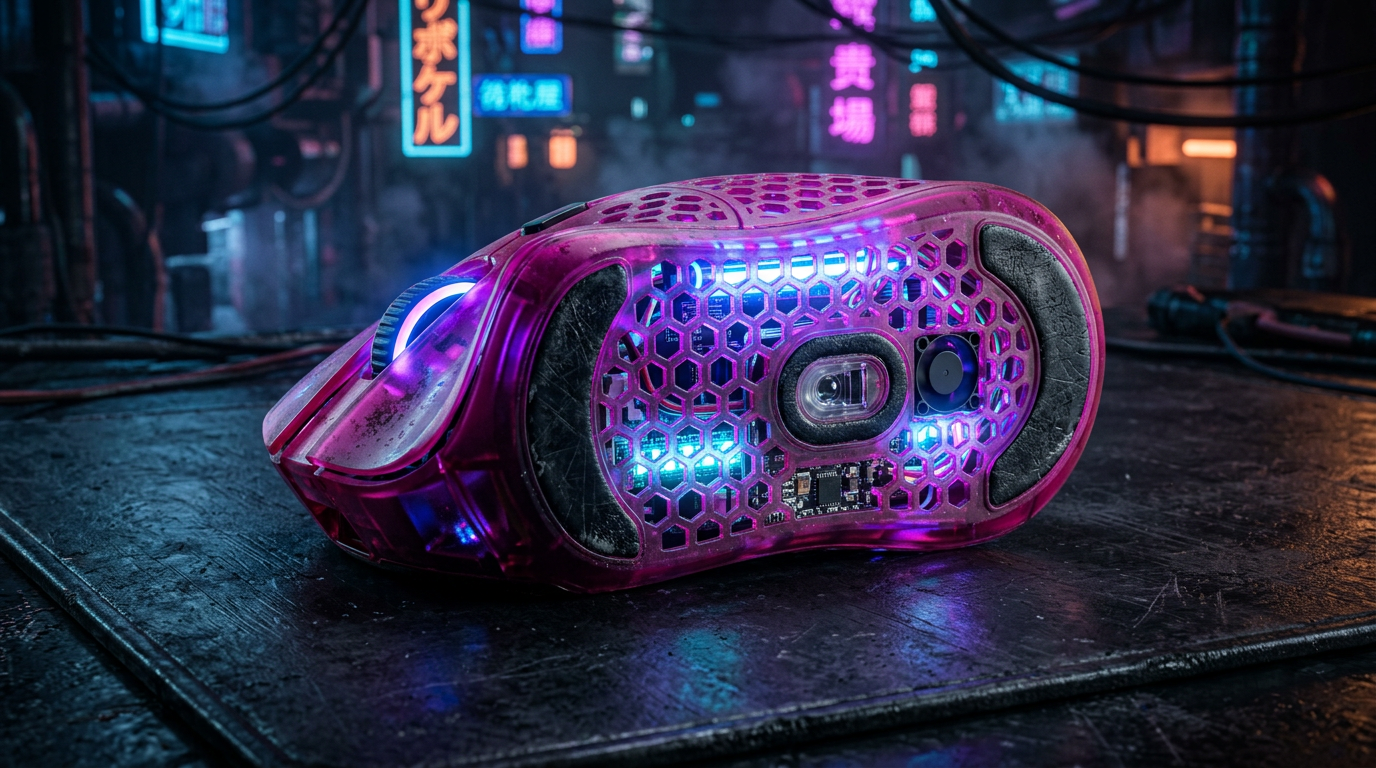
The modern peripheral has evolved far beyond a simple input device; it is now a high-frequency edge-compute node, processing millions of data points per second before transmitting them across congested wireless spectrums. The SteelSeries Aerox 3 Wireless Gen 2 serves as a fascinating, albeit flawed, case study in this architectural shift. Priced at a competitive $110, this device attempts to marry the nostalgic, translucent aesthetics of late-90s hardware with bleeding-edge telemetry capabilities, including a 4,000 Hz polling rate and a 26,000 DPI optical sensor. However, beneath the striking Magenta Haze polycarbonate shell lies a complex web of engineering triumphs and fundamental protocol failures.
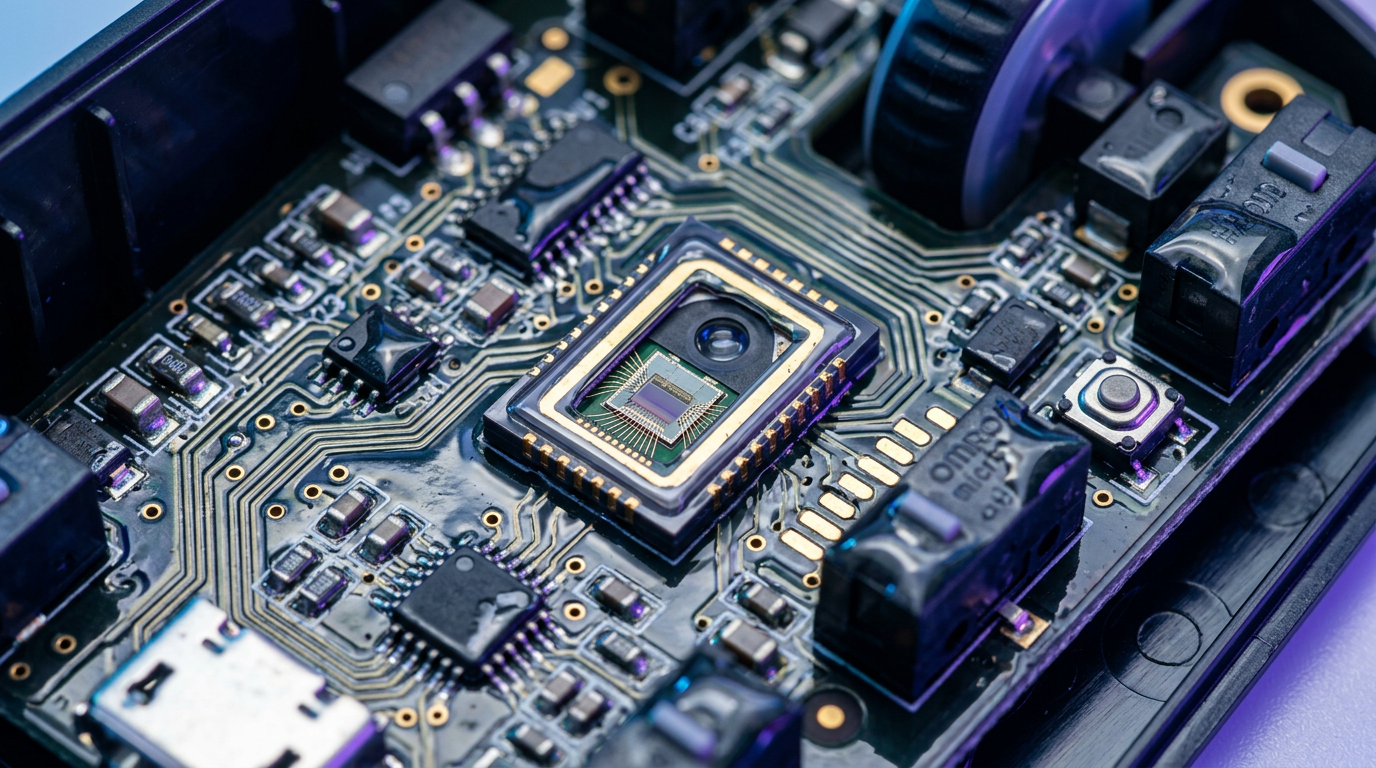
At the heart of the Aerox 3 Gen 2 is the TRUEMOVE 26K optical sensor. In the realm of hardware and silicon, optical sensors operate effectively as hyper-fast, microscopic video cameras. They illuminate the surface beneath the mouse—often using an infrared LED or laser—and capture thousands of images per second. A dedicated Digital Signal Processor (DSP) then analyzes the microscopic differences between these sequential frames to calculate the exact delta of movement (X and Y coordinates). With a maximum sensitivity of 26,000 Dots Per Inch (DPI), a maximum speed of 400 Inches Per Second (IPS), and 40Gs of acceleration tolerance, the TRUEMOVE 26K is engineered to track movements so minute and so rapid that they exceed the biomechanical capabilities of the human hand. This level of precision requires immense computational overhead within the peripheral itself, ensuring that raw data is translated into actionable telemetry without introducing jitter, angle snapping, or artificial smoothing.
To transmit this massive payload of telemetry, SteelSeries has implemented a wireless architecture capable of a 4,000 Hz polling rate via a dedicated 2.4GHz dongle. In standard peripherals, a 1,000 Hz polling rate is the norm, meaning the device reports its position to the host machine every 1 millisecond. By quadrupling this rate to 4,000 Hz, the Aerox 3 Gen 2 reduces the reporting interval to a blistering 0.25 milliseconds. From an engineering standpoint, this requires a highly optimized USB packet transmission protocol and a microcontroller capable of sustaining high-bandwidth throughput without thermal throttling or catastrophic battery drain. Furthermore, this high polling rate places a non-trivial interrupt request (IRQ) burden on the host machine’s CPU, requiring a modern processor to handle the constant influx of positional data without bottlenecking other system processes.
Structurally, the Aerox 3 Gen 2 utilizes a honeycomb-style perforated chassis to achieve its 68-gram weight. While this design philosophy was highly trendy in recent years as a brute-force method for weight reduction, it introduces severe environmental vulnerabilities. To counteract the ingress of dust, skin cells, and liquids through the exposed shell, SteelSeries engineered the “AquaBarrier”—an IP54-rated protection system. In hardware manufacturing, achieving an IP54 rating on an exposed PCB requires the application of a conformal coating. This is a specialized polymeric film applied directly to the circuit board, encapsulating the microcontrollers, resistors, and the base of the mechanical switches (which are rated for a staggering 80 million actuations). This coating ensures that even if a user spills a beverage directly into the honeycomb shell, the liquid will not short-circuit the underlying silicon. It is a brilliant piece of ruggedized engineering hidden within a consumer-grade aesthetic.
Enterprise Market Impact & TCO

While marketed aggressively toward the esports and gaming demographic, high-performance peripherals like the Aerox 3 Gen 2 are increasingly infiltrating the enterprise sector. Chief Technology Officers and IT procurement managers are recognizing that the ergonomics, precision, and macro-programmability of “gaming” mice offer massive productivity dividends for specialized enterprise roles. Financial analysts navigating massive data models, architects utilizing complex CAD software, and video editors scrubbing through 8K timelines require the exact same low-latency, high-DPI telemetry as competitive gamers. Consequently, evaluating the Total Cost of Ownership (TCO) and deployment viability of such devices in a corporate environment is critical.
However, deploying the Aerox 3 Gen 2 in an enterprise setting introduces a severe architectural bottleneck: 2.4GHz Radio Frequency (RF) congestion. The 2.4GHz ISM (Industrial, Scientific, and Medical) band is notoriously crowded, shared by Wi-Fi networks, Bluetooth devices, microwaves, and countless other wireless peripherals. High-end wireless mice utilize Frequency-Hopping Spread Spectrum (FHSS) algorithms to constantly scan and switch to the least congested channels within the 2.4GHz band to maintain a stable connection. During rigorous testing, the Aerox 3 Gen 2 exhibited catastrophic tracking issues over its 2.4GHz connection, resulting in sluggish performance and cursor lock-ups. In a dense enterprise office environment with hundreds of overlapping wireless signals, a failure in the peripheral’s FHSS algorithm or firmware-level packet loss renders the device functionally obsolete. If a $110 peripheral cannot maintain a stable connection in a standard RF environment, its enterprise viability plummets, forcing users to fall back on the higher-latency Bluetooth protocol or a tethered USB-C connection, entirely defeating the purpose of the investment.
Beyond the hardware layer, the software ecosystem required to operate the Aerox 3 Gen 2 presents a significant cybersecurity and Shadow IT concern for enterprise infrastructure. The device is powered by the SteelSeries “GG” software suite, which manages firmware updates, DPI scaling, and RGB lighting profiles. Alarmingly, this software mandates that users create an account and surrender their email address to unlock core functionalities. In an enterprise environment, forcing employees to create third-party accounts to operate basic hardware peripherals is a glaring data privacy risk. It creates unmonitored data silos, violates zero-trust architecture principles, and introduces potential vectors for phishing or credential stuffing attacks if the peripheral manufacturer’s databases are compromised. Furthermore, the GG software includes features like “Sonar” (an audio mixer) and “Moments” (a background video capture tool). For an IT administrator, deploying a mouse driver that secretly installs background screen-recording software is an absolute compliance nightmare, particularly in highly regulated industries like finance or healthcare.
When calculating the TCO, organizations must also weigh the physical durability against battery degradation. The IP54 AquaBarrier conformal coating significantly extends the physical lifespan of the device, protecting the investment from accidental spills that would instantly destroy standard office peripherals. The mechanical switches, rated for 80 million clicks, ensure that the primary input mechanisms will likely outlast the host machine. However, the internal lithium-ion battery is subjected to intense strain. Driving a 4,000 Hz polling rate alongside bright RGB LEDs results in rapid charge-discharge cycles. Over a standard three-year enterprise hardware lifecycle, this aggressive battery degradation will inevitably lead to diminished wireless uptime, increasing the hidden costs of productivity loss and IT support tickets.
The Consumer Reality: What This Means for You
Stepping away from the enterprise server racks and into the consumer reality, the SteelSeries Aerox 3 Wireless Gen 2 is a device defined by stark contrasts. It is a peripheral that demands compromises, asking the user to balance aesthetic joy against functional frustration. For the everyday consumer, the highly technical specifications—like the TRUEMOVE 26K sensor and the 4,000 Hz polling rate—are largely invisible. What is immediately tangible, however, is the design. The Magenta Haze variant is a masterclass in industrial design nostalgia, evoking the era of translucent Nintendo 64 controllers and early Apple iMacs. The semi-translucent shell, combined with incredibly bright, customizable RGB lighting zones, makes the Aerox 3 one of the most visually striking peripherals on the market. It is a statement piece for any desktop setup.
Yet, this visual brilliance comes at a steep cost to usability. The laws of physics dictate that illuminating high-intensity LEDs requires significant power, and in a lightweight wireless mouse, battery capacity is strictly limited by weight constraints. SteelSeries advertises up to 120 hours of battery life on the 2.4GHz connection and 200 hours on Bluetooth. However, these metrics are achieved under sterile, laboratory conditions with the RGB lighting entirely disabled. In real-world consumer testing, with the RGB enabled and the device connected via Bluetooth, the battery depletes at a rate of approximately 10% every three hours. This translates to roughly 30 hours of actual use before requiring a recharge. If the user switches to the high-performance 2.4GHz dongle and increases the polling rate for gaming, that battery life plummets even further. Consumers are forced into a frustrating dichotomy: turn off the beautiful lighting you paid for to achieve acceptable battery life, or leave the lights on and tether the “wireless” mouse to a USB-C cable every few days.
The honeycomb design also presents a polarizing consumer reality. Originally popularized by boutique manufacturers to shave every possible gram off a mouse for competitive esports, the perforated shell has become somewhat of a gimmick. While it successfully brings the Aerox 3 down to a nimble 68 grams, it fundamentally alters the tactile feel of the device. Many users find the textured, hole-filled surface uncomfortable during extended use. Furthermore, despite the IP54 AquaBarrier protecting the internal electronics, the physical holes act as a magnet for dust, pet hair, and skin oils. Cleaning a honeycomb mouse requires compressed air and meticulous detailing, adding a layer of maintenance that solid-shell mice simply do not require.
The most damning consumer reality, however, is the performance inconsistency. A gaming mouse lives and dies by its tracking reliability. During intensive, reaction-based applications—such as tactical first-person shooters like Ready or Not—the sensor must translate human reflex into digital action flawlessly. The reported sluggishness and cursor lock-ups over the primary 2.4GHz wireless connection are unacceptable for a $110 device. While the Bluetooth connection remains stable, Bluetooth inherently introduces latency that is detrimental to fast-paced gaming. Consumers are left hoping that these tracking anomalies are isolated to specific review samples or can be patched via future firmware updates, but out of the box, it represents a significant gamble with consumer capital.
The Industry Ripple Effect
The release and reception of the SteelSeries Aerox 3 Wireless Gen 2 highlight a broader inflection point within the peripheral industry. We are witnessing the twilight of the honeycomb design era. Competitors have realized that advancements in internal structural engineering and thinner, stronger polycarbonate blends can achieve ultra-lightweight form factors without resorting to drilling holes in the chassis. For example, the Logitech G Pro X Superlight 2 achieves an astonishing 60-gram weight with a completely solid shell, while the Razer DeathAdder V3 Pro hits 63 grams. By sticking to the perforated design, SteelSeries is catering to a shrinking niche of consumers who prefer the aesthetic, while the broader industry moves toward sleek, solid, and easier-to-clean designs.
Furthermore, the Aerox 3 Gen 2 underscores the escalating “Polling Rate Wars.” Just as the industry previously fought over who could advertise the highest DPI (a metric that became largely meaningless past 3,200 DPI for human use), manufacturers are now battling over polling rates. With Razer pushing 8,000 Hz wireless technology and Corsair following suit, SteelSeries’ inclusion of a 4,000 Hz dongle is a necessary defensive maneuver to remain relevant on the spec sheet. However, as the Aerox 3’s 2.4GHz tracking issues demonstrate, pushing massive amounts of data through congested wireless spectrums is incredibly difficult to execute flawlessly. The industry is learning that high polling rates look great on the back of a box, but if the underlying RF firmware cannot handle the throughput, the user experience degrades instantly.
Finally, the commoditization of high-end optical sensors is forcing manufacturers to differentiate through software and aesthetics. Because nearly all top-tier mice now feature flawless, spin-out-proof sensors (often manufactured by PixArt and rebranded by the peripheral company), raw tracking performance is no longer a unique selling proposition. SteelSeries is attempting to differentiate through its GG software suite, integrating audio mixing (Sonar) and gameplay clipping (Moments) directly into the mouse driver. While this bloated software approach frustrates purists and IT administrators, it signals an industry-wide shift toward creating “ecosystems” rather than standalone hardware. Competitors will likely continue to bundle adjacent software services with their hardware, attempting to lock consumers into their specific brand architecture.
TechNode HQ Verdict: Pros, Cons & Usability
- Pro (Engineering): The IP54 AquaBarrier conformal coating is a masterclass in ruggedized PCB protection, ensuring internal silicon survives liquid and dust ingress despite the exposed honeycomb shell.
- Pro (Consumer): The semi-translucent aesthetic and ultra-bright RGB lighting zones provide a visually stunning, nostalgic design that stands out in a market saturated with matte black peripherals.
- Con: Severe 2.4GHz RF tracking issues and cursor lock-ups fundamentally compromise the device’s primary wireless functionality, rendering it unreliable for precision tasks.
- Con: The mandatory requirement to surrender an email address and create an account via the SteelSeries GG software to access core hardware features is an unacceptable privacy and Shadow IT risk.
Enterprise Usability: IT Procurement and CTOs should strictly avoid deploying this device in a corporate environment. The 2.4GHz interference issues will generate endless IT support tickets in dense office RF environments, and the mandatory, bloatware-heavy GG software (which includes background screen recording capabilities) violates core enterprise security and compliance protocols.
Everyday Usability: For the general consumer, the Aerox 3 Gen 2 is a difficult recommendation at its $110 MSRP. While it is undeniably beautiful and features satisfying, tactile mechanical switches, the core wireless tracking is too inconsistent, and the battery life drops far too quickly when the RGB is enabled. Consumers should wait for a deep discount or look toward solid-shell competitors in the same price bracket.
Sources & Citations:
Original Technical Breakdown via: tomshardware
Official Handle: @tomshardware
Topics Explored: SteelSeries Aerox 3, Wireless Gaming Mouse, Peripheral Engineering, 2.4GHz Interference, Enterprise Hardware