The Architectural Shift: Engineering the Illusion of Paper
In the hyper-accelerated landscape of 2026 enterprise hardware, the race has largely been defined by OLED refresh rates, neural processing units (NPUs), and spatial computing. Yet, the most disruptive device to enter the corporate workspace this year completely ignores these metrics. The Remarkable Paper Pure is a masterclass in subtractive engineering—a device that strips away the superfluous to achieve a singular, uncompromising goal: the perfect digital simulation of pen and paper. But beneath its minimalist, distraction-free exterior lies a series of calculated architectural shifts that demand rigorous technical analysis.
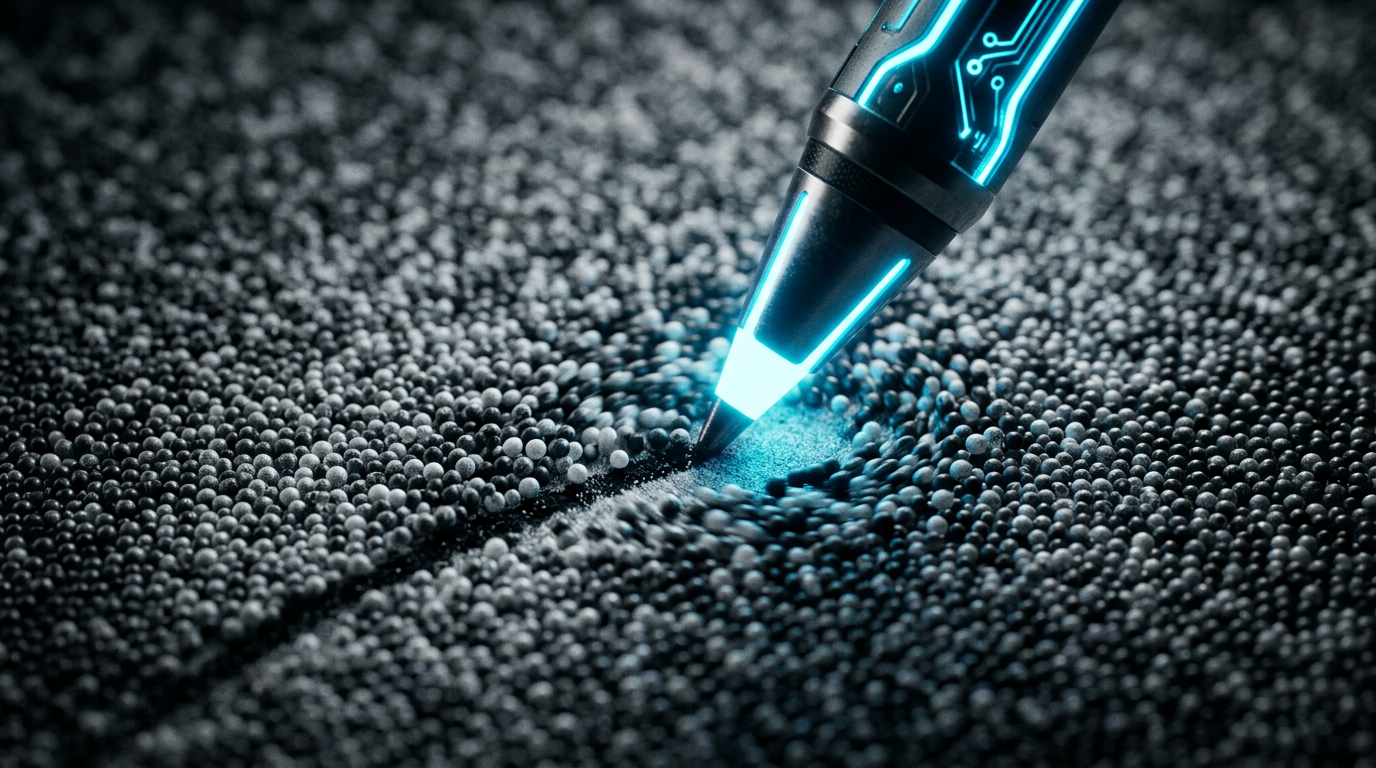
At the heart of the Paper Pure is what Remarkable markets as the “third-generation Canvas screen.” Stripping away the marketing nomenclature, this is a highly customized 10.3-inch implementation of E Ink’s Carta 1300 panel. For hardware analysts, the Carta 1300 represents a significant leap in electrophoretic display technology. Traditional E Ink displays operate by applying electrical charges to microcapsules containing positively charged white particles and negatively charged black particles suspended in a clear fluid. The Carta 1300 architecture optimizes the viscosity of this fluid and the voltage waveforms applied by the display controller, resulting in a 20 percent increase in contrast and a noticeably brighter baseline appearance compared to the second-generation display found in the Remarkable 2.
However, this visual upgrade comes with a controversial engineering compromise. Remarkable has chosen to maintain a resolution of 1,872 x 1,404, translating to 226 pixels per inch (PPI). In an era where Amazon’s Kindle Scribe and various Kobo devices have standardized 300 PPI as the baseline for crisp text rendering, the Paper Pure’s 226 PPI is objectively a bottleneck. Small text remains legible, but it lacks the razor-sharp anti-aliasing found on competing devices. This decision was likely driven by a combination of yield rates for 10.3-inch Carta 1300 panels and the need to maintain ultra-low latency for stylus input. Pushing 300 PPI requires significantly more bandwidth from the display controller, which can introduce micro-stutters during rapid handwriting—a cardinal sin for a device whose entire value proposition is its tactile responsiveness.
To support the heavier software demands of modern workflows, the internal silicon has received a necessary, albeit modest, overhaul. The Paper Pure transitions to a faster dual-core processor, doubles the RAM from 1GB to 2GB, and quadruples the internal storage from 8GB to 32GB. In the context of an iPad Pro, these specs seem archaic, but in the realm of embedded Linux-based E Ink devices, this is a massive expansion of compute overhead. This overhead is not merely for navigating the UI—which is demonstrably snappier, opening massive, layer-heavy PDFs half a second faster than its predecessor—but is a foundational requirement for the device’s new AI-driven optical character recognition (OCR) and document parsing capabilities.
The physical chassis and peripheral ecosystem have also undergone a radical redesign. The Paper Pure abandons the fragile, premium glass-and-metal aesthetic of the Remarkable 2 in favor of a high-density plastic back panel. While some may view this as a downgrade in premium feel, from an engineering and durability standpoint, it is a massive upgrade. The device is 44 grams lighter and significantly more resilient to torsional stress, meaning it can be thrown into a backpack without the anxiety of shattering a glass backplate. Furthermore, the stylus—now a battery-powered active “Marker” that wirelessly charges via a high-strength magnetic attachment on the bezel—represents a shift away from purely passive EMR (Electro-Magnetic Resonance) technology. This active connection ensures a stronger magnetic hold and paves the way for advanced telemetry, such as the dedicated eraser button on the $449 Marker Plus bundle.
Enterprise Market Impact & TCO: The Death of the Legal Pad
For Chief Information Officers (CIOs) and Enterprise IT architects, the Remarkable Paper Pure is not just a consumer gadget; it is a strategic deployment tool designed to combat the massive productivity losses associated with context switching. The modern knowledge worker loses an estimated 20 percent of their cognitive bandwidth to notification fatigue and app-switching on traditional tablets and laptops. The Paper Pure introduces a concept we refer to as “air-gapped focus.” By physically removing the capability to access Slack, Microsoft Teams, or web browsers, the device forces deep work.
The Total Cost of Ownership (TCO) for deploying a fleet of Paper Pures is highly compelling when compared to outfitting a team with iPad Pros. At a base price of $399 (or $449 for the enterprise-preferred Marker Plus bundle), the capital expenditure is less than half of an entry-level Apple tablet setup. Furthermore, the device’s ruggedized plastic chassis significantly reduces the anticipated break/fix lifecycle costs. Because the device runs a heavily locked-down, proprietary Linux distribution, it is virtually immune to the malware and zero-day exploits that plague Android and iOS ecosystems, drastically reducing the burden on Mobile Device Management (MDM) administrators.
The true enterprise value, however, lies in the Paper Pure’s new software integrations. Remarkable has introduced native connectivity with Google Workspace and Microsoft Outlook. This is not a simple calendar view; it is an automated workflow engine. When a user accepts a meeting invite, the Paper Pure automatically generates a dedicated notebook populated with the meeting’s agenda, attendees, and metadata pulled directly from the calendar API. This eliminates the friction of organizing notes and ensures that every meeting has a standardized, searchable digital paper trail.
But the most disruptive—and potentially controversial—feature is the introduction of AI summarization. After a meeting concludes, the Paper Pure can utilize AI to parse handwritten notes, highlight critical action items, and generate a concise summary before sharing it via email. From a productivity standpoint, this is a revelation. It bridges the gap between analog thought processes and digital project management.
However, this feature introduces severe enterprise security and compliance hurdles. Because the Paper Pure’s dual-core processor and 2GB of RAM are insufficient to run a localized Large Language Model (LLM) for advanced summarization, this data must be offloaded to the cloud. For organizations operating under strict regulatory frameworks like HIPAA, GDPR, or ITAR, sending unencrypted, proprietary handwritten meeting notes to a third-party cloud server for AI processing is a massive security violation. CTOs will need explicit documentation from Remarkable regarding their data residency, encryption-in-transit protocols, and whether this AI processing is zero-retention. Until Remarkable offers a fully localized, edge-AI summarization model, highly regulated industries will be forced to disable this feature via MDM policies, neutering one of the device’s primary selling points.
Another glaring omission for the enterprise market is the removal of the edge contact pads (pogo pins) that were present on the Remarkable 2. These pins were used to connect the company’s highly acclaimed Type Folio keyboard case. By removing this hardware interface, Remarkable has effectively killed the hybrid typing/writing workflow that many executives relied upon. While Bluetooth keyboard support may be introduced in the future, the lack of a seamless, physically connected keyboard case is a baffling regression that limits the device’s utility for long-form text generation.
The Consumer Reality: What This Means for You
Beyond the corporate boardroom, the Remarkable Paper Pure taps into a growing consumer movement: digital minimalism. We are witnessing a cultural backlash against the “everything device.” Just as the “dumb phone” movement has gained traction among users desperate to reclaim their attention spans, the Paper Pure serves as the “dumb tablet.” It is a device that does exactly one thing—simulate paper—and it does it better than any other piece of hardware on the planet.
The tactile experience of using the Paper Pure is genuinely remarkable. The textured finish of the display creates a physical friction against the tip of the Marker that perfectly mimics the drag of a graphite pencil on high-quality paper. The latency is practically zero; the digital ink flows directly from the tip of the stylus without the microscopic, immersion-breaking delay found on cheaper Android tablets. This physical feedback loop is crucial for cognitive retention. Studies have consistently shown that the physical act of handwriting engages different neural pathways than typing, improving memory recall and conceptual understanding. For students, writers, and creatives, the Paper Pure is a cognitive enhancement tool.
One of the most debated aspects of the Paper Pure is its lack of a front light or backlight. In a market where even the cheapest Amazon Kindle features an illuminated screen, the Paper Pure remains stubbornly dark. You cannot use it in bed with the lights off. You cannot use it in a dimly lit airplane cabin without an overhead reading light. While critics point to this as a flaw, from a psychological standpoint, it is a profound feature. By relying entirely on ambient light, the Paper Pure respects the natural boundaries of your environment. It does not blast your retinas with blue light, disrupting your circadian rhythm. It enforces a physical boundary between work and rest. When the lights go out, the work stops. In an era of endless connectivity, this physical limitation is a breath of fresh air.
The new software features also dramatically improve the consumer experience. The ability to use a Chrome extension or mobile app to send long-form web articles directly to the Paper Pure, converting them into editable, annotatable notebooks, turns the device into the ultimate reading and research companion. It allows users to step away from the glowing, ad-filled screens of their laptops and engage with long-form content in a focused, tactile manner.
The Industry Ripple Effect
The release of the Remarkable Paper Pure sends a clear message to the rest of the tech industry: the tablet market has permanently bifurcated. On one side, you have the OLED multimedia powerhouses—the Apple iPad Pros and Samsung Galaxy Tabs—designed for video editing, gaming, and content consumption. On the other side, you have the E Ink productivity tools, designed strictly for creation and focus.
This move forces competitors into a difficult position. Amazon’s Kindle Scribe, priced at $429.99, offers a superior 300 PPI display and a built-in backlight, alongside access to the massive Kindle bookstore. However, Amazon’s software experience remains clunky, heavily prioritizing reading over writing, and lacking the seamless cloud synchronization and enterprise integrations that Remarkable has perfected. Amazon will need to drastically overhaul its note-taking software if it hopes to compete for the professional market.
Meanwhile, Onyx Boox continues to flood the market with sub-$500 E Ink tablets that run full Android, granting users access to the Google Play Store. While this sounds appealing on paper, it completely undermines the philosophy of digital minimalism. By allowing users to install Twitter, Spotify, and Gmail on an E Ink device, Boox has recreated the distraction engine of the iPad, just with a slower, black-and-white screen. Remarkable’s strict adherence to a closed, focused ecosystem proves that in the realm of productivity, less is definitively more.
Even within its own product lineup, the Paper Pure clarifies Remarkable’s strategy. While the company offers the more expensive Paper Pro and Paper Pro Move with their impressive color E Ink screens, the Paper Pure remains the superior option for purists. Color E Ink, while visually impressive, often suffers from lower contrast ratios and slower refresh rates. By sticking to a highly optimized, black-and-white Carta 1300 panel, the Paper Pure delivers the most authentic writing experience available today.
TechNode HQ Verdict: Pros, Cons & Usability
- Pro (Engineering): The integration of the custom E Ink Carta 1300 panel delivers a 20% contrast boost and superior fluid dynamics, resulting in an unmatched, zero-latency tactile writing experience that perfectly simulates physical friction.
- Pro (Consumer): The strict adherence to digital minimalism—lacking a backlight, web browser, or app store—forces deep, uninterrupted focus, making it the ultimate tool for cognitive retention and distraction-free work.
- Con: The retention of a 226 PPI resolution is a noticeable bottleneck in 2026, resulting in slightly softer text rendering compared to the 300 PPI standard set by competitors like the Kindle Scribe.
- Con: The removal of the pogo pin contact pads eliminates compatibility with the Type Folio keyboard, severely limiting the device’s utility for hybrid typing workflows and long-form text generation.
Enterprise Usability: For CTOs and IT Directors, the Paper Pure is an excellent deployment for executive teams and project managers suffering from notification fatigue. The Microsoft Outlook and Google Calendar integrations streamline meeting workflows brilliantly. However, strict data governance policies must be established regarding the cloud-based AI summarization feature. Until Remarkable provides SOC2 compliance documentation and zero-retention guarantees for their OCR cloud processing, this specific feature should be restricted via MDM in highly regulated sectors like healthcare and finance.
Everyday Usability: If you are a student, writer, or professional drowning in physical sticky notes and legal pads, the Paper Pure is an immediate buy. The $449 bundle with the Marker Plus is highly recommended, as the dedicated eraser button significantly improves workflow fluidity. Do not buy this expecting an iPad replacement; buy this to replace your paper notebooks and reclaim your attention span.
Sources & Citations:
Original Technical Breakdown via: theverge
Official Handle: @theverge
Topics Explored: E-Ink Technology, Enterprise Productivity, Edge AI, Digital Minimalism, Tablet Hardware