
The Architectural Shift
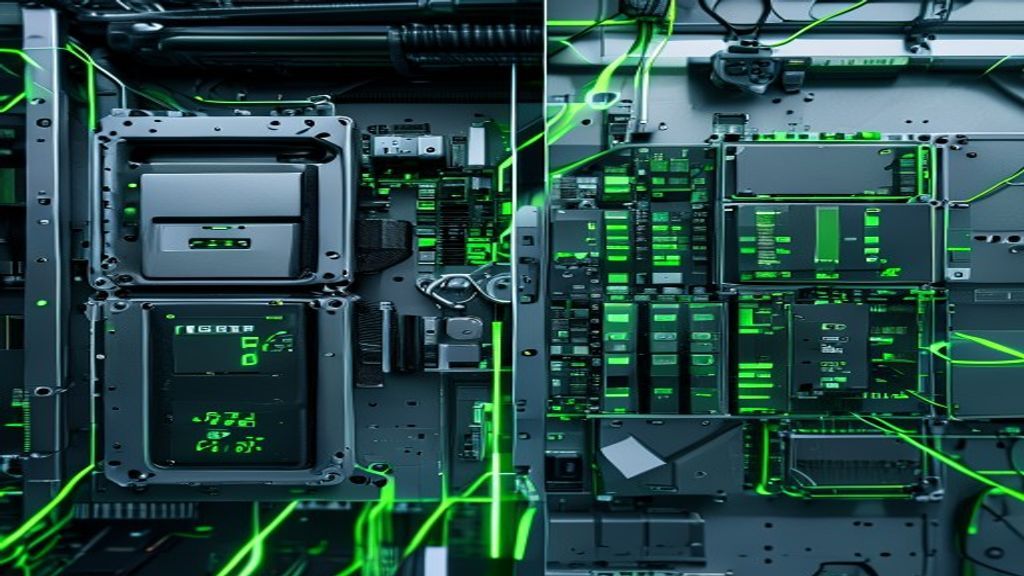
Moment Energy isn’t just recycling EV batteries—it’s rearchitecting the foundation of grid-scale energy storage. At the silicon level, their innovation begins the moment an end-of-life battery pack from a Nissan Leaf or Mercedes EQC arrives at their facility. These packs, typically retired at 70–80% state of health, still hold immense energy potential. But the real engineering bottleneck has always been the OEM battery management system (BMS), a proprietary firmware-hardware stack designed for vehicular dynamics: rapid acceleration, regenerative braking, and thermal spikes during highway driving. When parked in a warehouse or substation, these systems are misaligned with stationary storage needs—leading to inefficiency, safety risks, and integration hell.
Moment’s solution is surgical: they strip out the original BMS entirely. This isn’t a firmware hack or a CAN bus spoof—it’s a full hardware replacement. The OEM BMS is removed, and individual modules are tested for capacity, internal resistance, and thermal stability. Then, they’re reassembled into modular units using Moment’s proprietary software-defined BMS. This system operates at the firmware level with real-time microcontrollers, likely based on ARM Cortex-R or TI Hercules architectures, running a deterministic RTOS to manage charge balancing, thermal throttling, and fault isolation.
What makes this architecture revolutionary is its chemistry-agnostic design. Most BESS vendors standardize on LFP or NMC cells to simplify control. Moment, however, allows mixed chemistries within a single system. Their software abstracts the electrochemical behavior, using machine learning models trained on degradation patterns to predict optimal charge curves for each module. This means a single rack can host modules from different EV models, different ages, and different lithium-ion variants—maximizing reuse and minimizing waste.
But the crown jewel is UL Certification. Achieving UL 9540 compliance isn’t a checkbox—it’s a systems-level mandate. It requires third-party validation of thermal runaway propagation, fire containment, emergency disconnects, and electrical safety under fault conditions. Moment’s design likely includes ceramic fire barriers between modules, pressure-relief vents tied to suppression systems, and redundant isolation relays. Crucially, they use UL-listed components throughout—something many second-life battery startups skip to cut costs. This isn’t just about safety; it’s about insurability. As Edward Chiang pointed out, if a fire occurs and investigators find a hacked Tesla BMS, the liability could fall on the automaker, the storage operator, or both. Moment’s clean-room, certified approach sidesteps this legal minefield.
Enterprise Market Impact & TCO
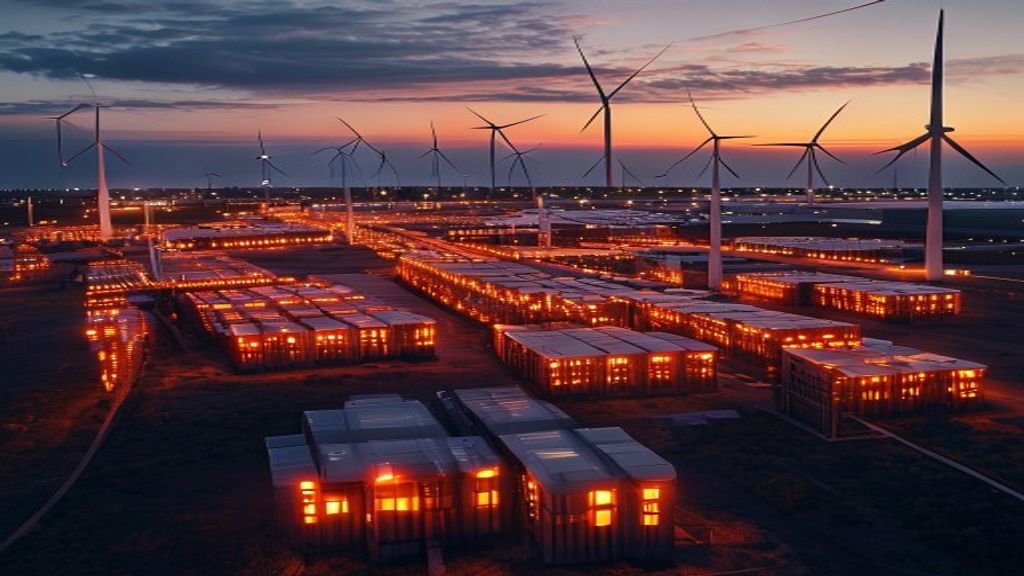
For enterprise IT and utility operators, Moment Energy’s model represents a seismic shift in total cost of ownership (TCO) for energy storage. Traditional BESS deployments rely on new lithium-ion cells, with prices hovering around $130–$150/kWh in 2026. Moment’s repurposed systems, while not publicly priced, could undercut that by 30–40%—a massive saving at grid scale. A single gigawatt-hour installation could save $40–$60 million in upfront capex. When amortized over a 10-year lifespan, that translates to cents per kWh saved—critical in markets where energy arbitrage margins are razor-thin.
But the financial case extends beyond hardware. Insurance is a hidden cost in energy storage. Uninsured or underinsured systems face higher capital costs, stricter permitting, and operational delays. Moment’s UL Certification, coupled with Liberty Mutual’s venture participation, signals to underwriters that risk is quantifiable and contained. This could reduce insurance premiums by 20–30%, further improving ROI. For data centers—among Moment’s fastest-growing customer segments—this is existential. With AI workloads pushing power demands into the tens of megawatts per facility, uptime is non-negotiable. Moment’s modular design allows for hot-swapping failed units without system downtime, a feature that aligns with Tier IV data center SLAs.
Scalability is another advantage. Their gigawatt-scale factory in Austin, Texas, is designed for rapid deployment. Unlike traditional BESS vendors who rely on global supply chains for new cells, Moment’s feedstock—used EV batteries—is growing exponentially. With over 20 million EVs on North American roads by 2026, and average battery life at 12–15 years, the supply pipeline is self-reinforcing. By 2030, BNEF estimates 1.2 million tons of used EV batteries will be available annually in North America alone. Moment’s factory could scale to meet that, avoiding the geopolitical risks tied to lithium, cobalt, and nickel mining.
Yet challenges remain. Supply chain logistics for collecting, transporting, and testing used batteries are complex. Each pack must be discharged, certified, and documented—adding labor and time. Moment’s partnerships with Mercedes and Nissan help, but they’re not exclusive. Competitors could replicate the model if OEMs open their battery recycling programs. And while the DOE loan provides $20 million in low-cost capital, it likely comes with job creation and domestic content requirements—constraints that could slow expansion.
The Consumer Reality: What This Means for You
To the average consumer, Moment Energy’s work might seem abstract—until the lights stay on during a heatwave. North America’s grid is under unprecedented stress. Data centers alone consumed 4.5% of U.S. electricity in 2025, a figure expected to double by 2030 due to AI and cloud computing. At the same time, climate change is driving longer heatwaves and colder winters, spiking demand for HVAC. In California, Texas, and Ontario, grid operators are issuing rolling blackouts not because of generation shortages, but because of storage and distribution bottlenecks.
Moment’s technology helps close that gap. By turning “dead” EV batteries into grid assets, they’re accelerating the transition to renewable energy. Solar and wind are intermittent; storage makes them dispatchable. Cheaper, safer BESS means utilities can build more solar farms without fear of overloading the grid at noon. That, in turn, reduces reliance on natural gas “peaker” plants—dirty, expensive, and often located in low-income communities. Over time, this could stabilize or even lower electricity rates, especially in deregulated markets.
For EV owners, this creates a circular economy. Today, most used EV batteries are either stockpiled or recycled for raw materials—a process that recovers only 50–60% of lithium. Moment’s model extends battery life by 5–10 years in secondary applications, reducing e-waste and the environmental cost of mining. It also strengthens the resale value of EVs: if batteries have a second life, automakers can offer better trade-in incentives, lowering the total cost of ownership for consumers.
Homeowners with solar panels may eventually benefit too. While Moment currently targets utilities and data centers, the modular, software-defined architecture could scale down. Imagine a home BESS unit made from repurposed Tesla Model 3 packs, managed by AI-optimized software, and UL-certified for rooftop installation. It’s not here yet—but the foundational tech is being proven at grid scale.
The Industry Ripple Effect
Moment Energy’s rise is forcing a reckoning across the energy storage sector. For years, the second-life battery market has been a Wild West—filled with startups claiming 80% capacity retention but lacking safety certifications. Moment’s UL stamp sets a new benchmark. Regulators, insurers, and utilities will now demand the same. Companies that rely on “compliance-adjacent” designs may find their products uninsurable or barred from critical infrastructure projects.
Automakers are also on notice. Mercedes and Nissan’s partnerships with Moment suggest they’re embracing circularity—but others lag. Tesla, GM, and Ford have battery recycling programs, but none have announced large-scale second-life initiatives. Moment’s success could pressure them to open their battery supply chains or risk losing value capture to third parties. We may see OEMs designing batteries specifically for reuse—modular packs with standardized connectors, open BMS APIs, and easier disassembly.
Meanwhile, Chinese BESS giants like CATL and BYD dominate 72% of the global market, according to BNEF. Their scale is unmatched, but their reliance on new cells makes them vulnerable to raw material volatility. Moment’s model, rooted in North American supply chains and circular design, offers a strategic alternative—one backed by Amazon, the CIA’s In-Q-Tel, and the U.S. Department of Energy. This isn’t just a tech play; it’s a national security narrative. As Edward Chiang noted, energy independence isn’t just about oil—it’s about storage, resilience, and control over critical infrastructure.
Competitors will respond. Expect new entrants to emerge with UL-certified designs, or for legacy players like Fluence or Tesla Energy to launch second-life product lines. But Moment’s first-mover advantage in certification, combined with their DOE-backed factory, gives them a 2–3 year lead. In the fast-moving world of energy tech, that’s an eternity.
TechNode HQ Verdict: Pros, Cons & Usability
- Pro (Engineering): Proprietary software-defined BMS enables mixed-chemistry integration and hot-swappable modularity with UL 9540 certification.
- Pro (Consumer): Accelerates renewable adoption and grid stability, potentially lowering electricity costs and reducing blackouts.
- Con: Supply chain complexity for collecting and testing used EV batteries at scale remains a logistical bottleneck.
- Con: Limited public data on actual degradation rates, cycle life, and warranty terms for repurposed systems.
Enterprise Usability: CTOs in data centers and industrial facilities should evaluate Moment for non-critical backup and load-shifting applications. Prioritize sites with high uptime requirements and access to EV battery supply chains. Avoid for primary grid support until long-term performance data is public.
Everyday Usability: The general public should not buy into this technology directly—Moment is enterprise-only. However, support policies that promote battery circularity and grid modernization. Wait for residential spin-offs, expected post-2030.
Sources & Citations:
Original Technical Breakdown via: techcrunch
Official Handle: @TechCrunch
Topics Explored: battery storage, BESS, EV recycling, grid resilience, data center power