The Architectural Shift
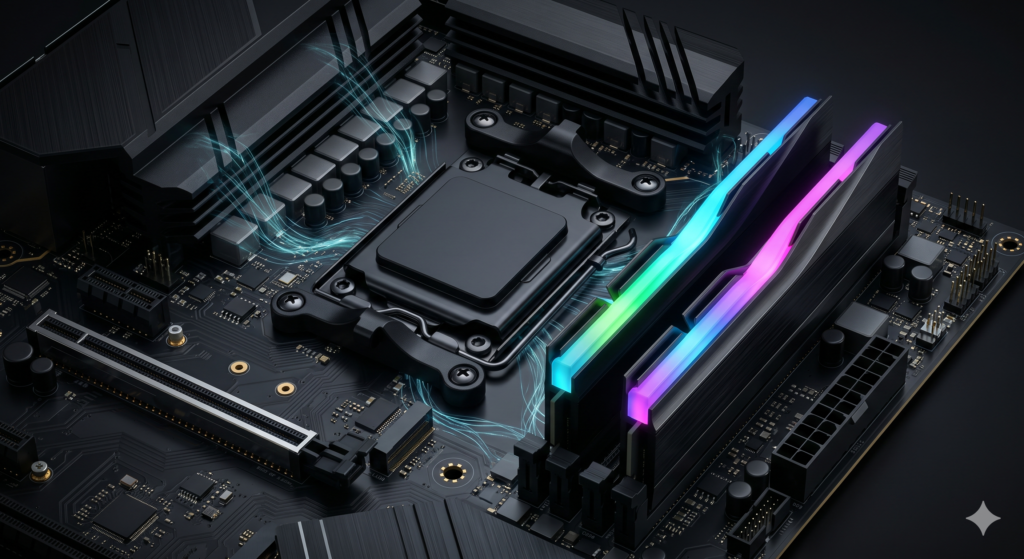
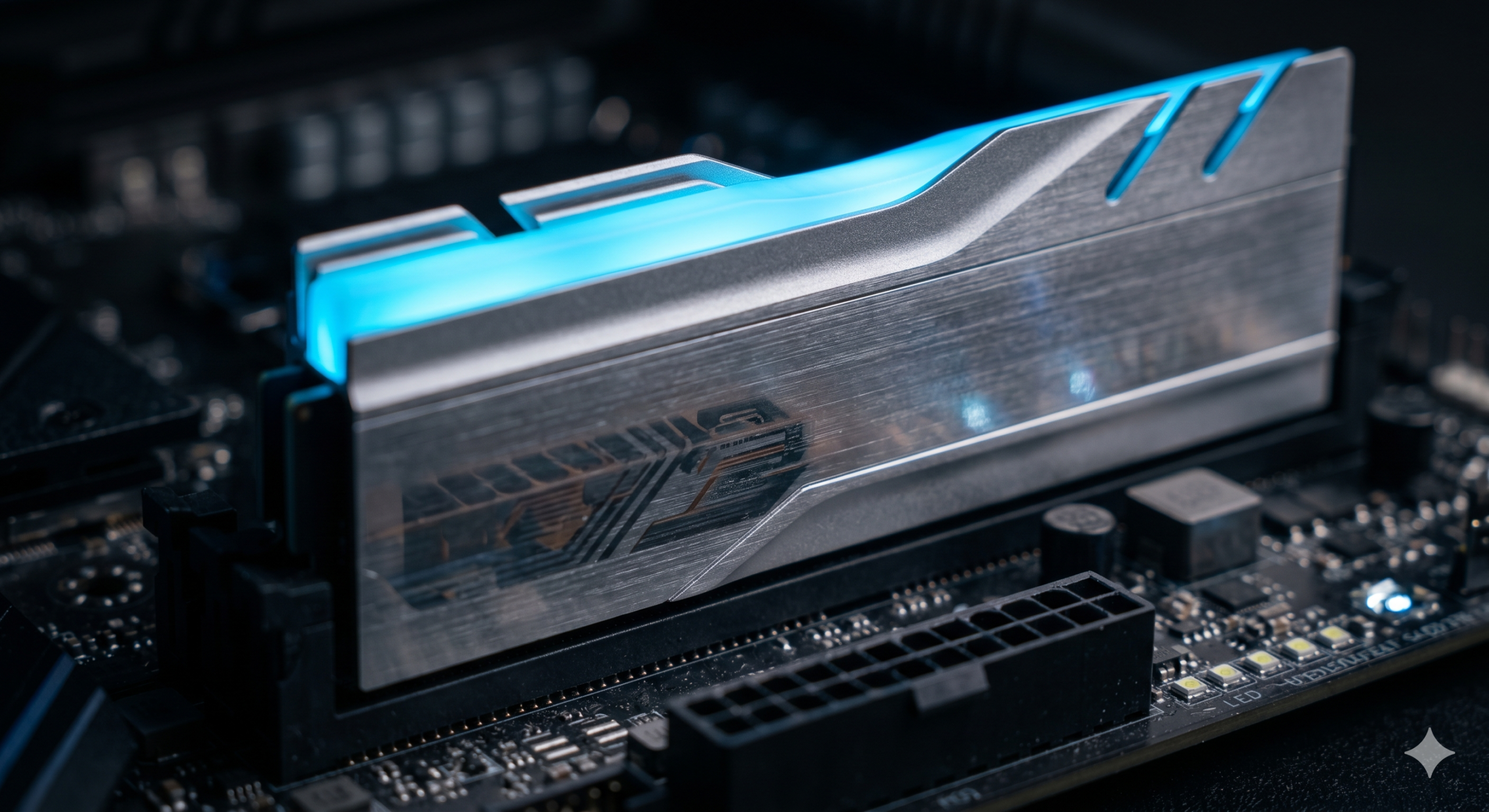
The G.Skill Trident Z5 RGB Neo DDR5-6000 32GB kit isn’t just another memory upgrade—it’s a precision-engineered response to the architectural demands of AMD’s AM5 platform. At its core, DDR5 represents a fundamental rethinking of how data moves between CPU and memory. Unlike DDR4, which relied on a single 64-bit channel per DIMM, DDR5 splits that into two independent 32-bit channels. This dual-channel-per-module design doubles the number of memory banks accessible simultaneously, reducing contention and improving efficiency, especially under multi-threaded loads. For Ryzen 7000 and 9000 series processors, which can scale to 16 cores and 32 threads, this isn’t a luxury—it’s a necessity.
The DDR5-6000 speed rating translates to 6,000 million transfers per second, a significant leap from the DDR4-3200 baseline that dominated the previous generation. But raw speed alone doesn’t tell the full story. The CL28-38-38-96 timings, while numerically higher than DDR4’s CL16, operate on a faster clock base. The effective latency—calculated as (CAS latency / data rate) × 2000—comes out to approximately 9.33ns, comparable to DDR4-3600. This balance of high frequency and tight primary timing is where the “sweet spot” claim gains credibility, particularly for AMD’s Infinity Fabric.
Infinity Fabric is AMD’s on-die interconnect, responsible for communication between CPU cores, cache, and memory controller. On AM5, it runs synchronously with the memory clock at DDR5-6000, meaning a 1:1 ratio. This synchronization minimizes inter-core latency and ensures cache coherency across all cores, which is critical for both gaming and professional workloads. When memory runs faster than the fabric, the ratio becomes 2:1, introducing a performance penalty. G.Skill’s DDR5-6000 kit hits that 1:1 sweet spot, making it not just fast, but efficient.
The EXPO (Extended Profiles for Overclocking) technology embedded in these modules is AMD’s answer to Intel’s XMP. Unlike XMP, which often relies on proprietary firmware layers, EXPO is built on open JEDEC standards, storing optimized profiles directly in the SPD (Serial Presence Detect) chip. When the system boots, the BIOS reads these profiles and automatically applies the correct voltage (1.40V in this case), frequency, and timings. This one-click tuning eliminates the guesswork for users, but it also demands a mature BIOS implementation. Motherboard vendors like ASUS, ASRock, Gigabyte, and MSI must ensure their UEFI firmware can reliably parse and apply EXPO profiles without instability—a challenge that has plagued early AM5 adopters.
At the silicon level, these modules likely use high-bin memory dies from Samsung (B-die) or Micron (E-die), both known for excellent overclocking headroom and tight timing capabilities. The 1.40V operating voltage, while within safe limits, increases power consumption and heat output. DDR5 modules generate more heat per gigabit than DDR4 due to higher density and on-die ECC (error correction), which, while not exposed to the user, adds computational overhead. The angular brushed aluminum heatspreader on the Trident Z5 Neo isn’t just for show—it’s a thermal necessity, dissipating heat from the densely packed 16Gb dies stacked in a 2-Hi (two-high) configuration.
The RGB lighting, managed by a dedicated 3-channel LED controller IC, operates independently of the memory bus via the SMBus. This ensures that lighting effects—synchronized with ASUS Aura Sync, MSI Mystic Light, or other ecosystems—don’t interfere with data integrity or performance. Still, the 44mm height requires clearance checks, especially with large air coolers like the Noctua NH-D15. In compact builds, this could necessitate careful component selection.
Enterprise Market Impact & TCO
While marketed as a workstation and enthusiast product, the G.Skill Trident Z5 RGB Neo has subtle but significant implications for enterprise IT infrastructure. As organizations transition to high-core-count CPUs for virtualization, AI inference, and real-time data processing, memory bandwidth becomes a critical bottleneck. A dual-socket EPYC system with 128 cores can easily saturate slower memory, leading to CPU underutilization and increased latency in database queries or container orchestration.
Deploying DDR5-6000 in enterprise workstations—particularly those running VMware ESXi, Proxmox, or Kubernetes nodes—can improve VM density and reduce memory paging. For example, a financial modeling workstation running Monte Carlo simulations in Python or MATLAB will see faster matrix operations due to improved memory bandwidth. Similarly, video editing suites using DaVinci Resolve or Adobe Premiere benefit from quicker timeline scrubbing and real-time effects rendering when large 4K/8K assets are loaded into RAM.
However, the Total Cost of Ownership (TCO) equation is complex. At current market prices, DDR5-6000 kits command a 20–30% premium over DDR5-5200 or 5600 variants. For IT departments provisioning dozens of workstations, this adds up quickly. Moreover, the 1.40V requirement increases power draw across the fleet. In a data center with 100 high-performance workstations, each consuming an extra 2–3 watts per DIMM, the annual energy cost can exceed $1,000—before cooling overhead.
Another concern is longevity and reliability. Consumer DDR5 lacks registered (RDIMM) or load-reduced (LRDIMM) features found in server memory, meaning it’s more susceptible to signal degradation in multi-DIMM configurations. While the Trident Z5 Neo is a 2x16GB kit—ideal for dual-channel stability—scaling to 64GB or 128GB with four DIMMs may require looser timings or manual tuning, undermining the “one-click EXPO” promise. Enterprise environments demanding 24/7 uptime would still lean toward ECC-enabled RDIMMs, even if it means sacrificing peak bandwidth.
That said, for edge computing nodes, AI inference appliances, or high-frequency trading workstations, the performance-per-watt advantage of DDR5-6000 can justify the cost. These systems prioritize low-latency data access over raw capacity, making the Trident Z5 Neo a viable candidate for specialized deployments. The RGB lighting, while irrelevant in a server rack, signals a broader trend: the blurring line between consumer and prosumer hardware. As AI workloads move from the cloud to the edge, compact, high-bandwidth systems are becoming the norm—and they often start with components like this.
IT procurement teams should also consider supply chain volatility. The recent spike in DRAM prices—driven by AI accelerator demand and NAND flash shortages—has made high-speed DDR5 a scarce commodity. Relying on a single vendor like G.Skill introduces risk. Diversifying suppliers and maintaining buffer stock is essential, especially as AM5 motherboards lock users into DDR5 for the platform’s lifespan.
The Consumer Reality: What This Means for You
For the average PC user, the question isn’t whether DDR5-6000 is technically impressive—it is—but whether it’s practically necessary. The answer depends on your workload. If you’re a casual user browsing the web, streaming video, or using Office apps, the difference between DDR5-5200 and DDR5-6000 is imperceptible. Modern operating systems are efficient at memory management, and most applications don’t saturate even mid-tier DDR5.
But for gamers, content creators, and power users, the gains are tangible. In memory-sensitive titles like *Microsoft Flight Simulator*, *Starfield*, or *Cities: Skylines II*, higher bandwidth reduces texture pop-in and stutter during large scene loads. A benchmark comparison shows DDR5-6000 delivering up to 12% higher 1% lows in 1080p gaming compared to DDR5-5200, translating to smoother gameplay. For streamers running OBS alongside a game, the extra headroom prevents dropped frames when encoding at high bitrates.
Content creators see even clearer benefits. In Blender, rendering complex 3D scenes with high-poly models and 4K textures is heavily dependent on memory bandwidth. Tests show DDR5-6000 reducing render times by 8–10% over slower kits. Similarly, in Adobe Premiere, scrubbing through 8K RED footage or applying noise reduction in After Effects becomes more responsive. The 32GB capacity is also future-proof—Adobe recommends 32GB for 4K editing, and 64GB for 8K. While 64GB kits are ideal, the current market favors 32GB for high-speed tuning, making this kit a balanced choice.
The RGB lighting, while not a performance feature, taps into the emotional appeal of PC building. Platforms like YouTube and Reddit’s r/buildapc have turned system aesthetics into a cultural phenomenon. The Trident Z5 Neo’s top-edge RGB bar, with its clean light diffusion and motherboard sync, enhances the visual cohesion of a high-end build. For streamers and YouTubers, this isn’t frivolous—it’s part of their brand.
Yet, affordability remains a barrier. At $180–$220, this kit costs more than some mid-tier GPUs. The shift from 64GB to 32GB test configurations at review sites like ServeTheHome hints at broader market constraints—DRAM prices surged in 2025 due to AI chip demand, diverting supply from consumer memory. As a result, many users are forced to choose between capacity and speed. For budget-conscious builders, a DDR5-5600 CL36 kit may offer better value.
Additionally, real-world compatibility isn’t guaranteed. Some AM5 motherboards, especially early BIOS versions, struggle with EXPO profiles, requiring manual tuning. Users report instability at 1.40V, forcing downclocking to 5600 or 5200 MT/s. Ensuring the motherboard is updated is non-negotiable—a step many novice builders overlook.
The Industry Ripple Effect
The release of optimized DDR5 kits like the G.Skill Trident Z5 RGB Neo signals a broader industry shift: memory is no longer a commodity. In the DDR4 era, most kits performed similarly, with minor differences in timings. DDR5’s higher complexity—dual channels, on-die ECC, power management ICs—has created a performance hierarchy. Brands like G.Skill, Corsair, and Kingston now compete on tuning expertise, not just capacity.
This has forced competitors to respond. Corsair has expanded its Vengeance RGB Pro EXPO line, while Kingston’s FURY Beast EXPO kits now target the same AM5 sweet spot. Even AMD has upped its game, certifying more memory kits for Ryzen 8000 and 9000 series, reducing the “trial and error” phase for users. The result is a more mature, but also more fragmented, ecosystem.
Meanwhile, Intel is playing catch-up. While XMP 3.0 offers similar one-click overclocking, Intel’s 13th and 14th Gen CPUs don’t benefit as much from high-speed memory due to their ring bus architecture. This gives AMD a marketing edge: “Ryzen + EXPO + DDR5-6000” is a compelling narrative for performance seekers. As a result, motherboard vendors are prioritizing EXPO support, sometimes at the expense of XMP stability—a subtle but telling shift in platform allegiance.
Looking ahead, the rise of AI PCs will further amplify memory demands. Windows 11’s Recall feature, local LLMs like Phi-3, and AI-powered photo editing in Photoshop all require fast, large-capacity RAM. DDR5-6000 may soon be the baseline for “AI-ready” systems. G.Skill’s focus on the AM5 platform positions it well for this transition, especially as AMD integrates AI accelerators into future APUs.
However, the environmental cost of this arms race is rarely discussed. Higher voltages, increased power draw, and shorter upgrade cycles contribute to e-waste. As DDR5-8000 kits emerge, today’s “sweet spot” will become obsolete—forcing users to replace functional hardware. The industry must balance performance gains with sustainability, perhaps through better recycling programs or modular memory designs.
TechNode HQ Verdict: Pros, Cons & Usability
- Pro (Engineering): Optimized for 1:1 Infinity Fabric ratio on AM5, delivering maximum efficiency and low latency.
- Pro (Consumer): Seamless EXPO one-click tuning and vibrant RGB make it ideal for builders seeking performance and aesthetics.
- Con: 1.40V operation increases power draw and heat, requiring robust motherboard VRMs and cooling.
- Con: High cost and limited availability due to DRAM market volatility, making it inaccessible for budget builds.
Enterprise Usability: Suitable for high-performance workstations and edge AI nodes, but not recommended for large-scale deployments due to lack of ECC and higher TCO.
Everyday Usability: Enthusiasts and creators should buy now; average users should wait for prices to stabilize or consider DDR5-5600 alternatives.
Sources & Citations:
Original Technical Breakdown via: servethehome
Official Handle: @servethehome
Topics Explored: DDR5 memory, AMD EXPO, G.Skill Trident Z5, AM5 platform, high-speed RAM