Key takeaways
- corporate clients, the company is leveraging enterprise data gravity to keep AI execution close to transactional data.
- Infrastructure Collaboration: TOTVS is evaluating hardware configurations and joint go-to-market solutions with Dell Technologies to manage compute costs, navigate server supply constraints, and deliver scalable enterprise performance.
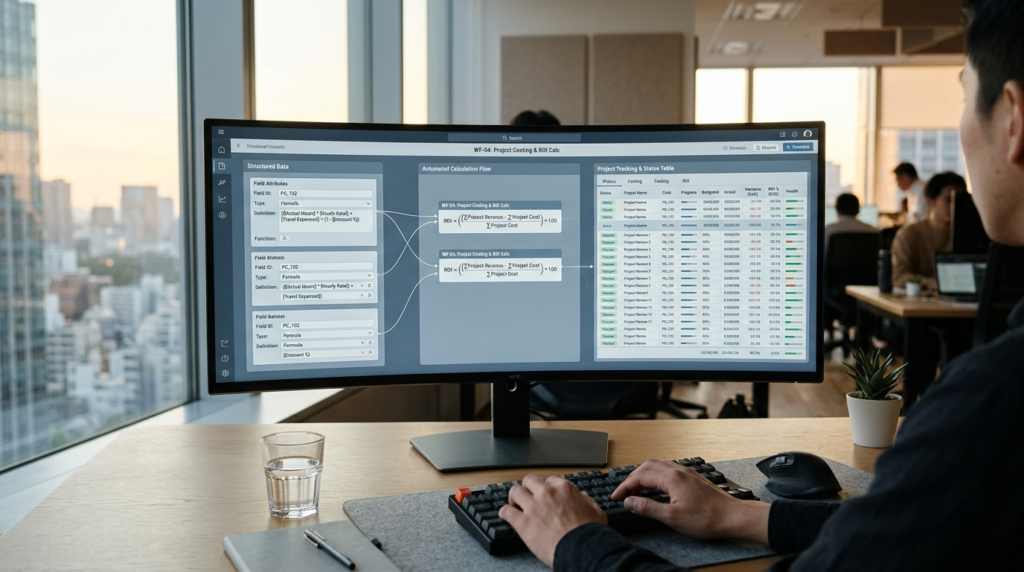
Brazilian enterprise software provider TOTVS S.A. is expanding its enterprise AI foundation beyond business applications into managed infrastructure as a service (IaaS). Anchored by its proprietary “LYNN” technology foundation and supported by an infrastructure collaboration with Dell Technologies Inc., the strategy aims to operationalize specialized AI agents across more than 70,000 enterprise clients. Because roughly 25% of Brazil’s gross domestic product passes through TOTVS systems, the company is using its position at the center of Latin American corporate workflows to ground enterprise AI in proprietary operational data, offering IT leaders a governed, high-performance alternative to generic public cloud models.
Expanding LYNN into full-stack infrastructure
Announced during theCUBE + NYSE Wired: AI Factories – Data Centers of the Future series, the shift marks an evolution in how Latin America’s largest business management software vendor approaches artificial intelligence. Rather than treating AI strictly as an add-on feature inside its enterprise resource planning (ERP) suites, TOTVS is pairing its agentic technology layer, named LYNN, with dedicated hosting and computing infrastructure.
According to Mara Maehara, Chief Information Officer of TOTVS, LYNN provides the core framework for clients to build, deploy, and manage AI agents tailored to specific operational demands. Speaking with theCUBE, Maehara emphasized that generic, off-the-shelf generative models have rapidly become commoditized. Real enterprise value, she argued, stems from applying specialized intelligence to proprietary corporate data that directly improves operational execution or drives revenue.
To support that capability in production, TOTVS is introducing an Infrastructure as a Service (IaaS) offering that extends beyond its traditional software boundary. The new managed infrastructure model is designed to support a customer’s entire operational footprint—including third-party software and legacy workloads—within the same environment. By consolidating operational systems and AI execution under a single infrastructure umbrella, TOTVS intends to deliver consistent performance, tighter security controls, and elastic scalability for data-intensive agentic workflows.
Data gravity and the shift to specialized agents
The architectural foundation of TOTVS’s strategy is built around data gravity. When corporate transactions, supply chain tracking, payroll, and financial ledgers already reside inside an enterprise ERP system, extracting and transmitting that data to external cloud providers introduces latency, bandwidth expenses, and regulatory friction. With one-quarter of the Brazilian national economy running across TOTVS platforms, keeping AI inference and operational agents adjacent to transactional databases provides significant architectural advantages.
This approach reflects a growing consensus among enterprise technology leaders that agentic AI requires direct integration with system-of-record databases rather than disconnected chatbot interfaces. When autonomous or semi-autonomous agents execute tasks—such as reconciling invoices, forecasting inventory, or dispatching logistics orders—they require deep context and fine-grained permissions. Enterprise teams evaluating these deployments must prioritize governance, ensuring that agent actions adhere to strict identity and access management controls to prevent unauthorized data access or automated workflow errors.
Furthermore, maintaining the operational environment alongside AI runtime infrastructure provides verifiable oversight. As organizations transition from passive monitoring to active automation, implementing provable runtime governance becomes essential for auditability and compliance.
| Architectural Dimension | General-Purpose Cloud AI | Foundation-First Enterprise AI (TOTVS LYNN & IaaS) |
|---|---|---|
| Model Focus | Broad, generalized large language models (LLMs) | Specialized narrow intelligence and task-specific business agents |
| Data Proximity | Decoupled; requires external data pipelines and API transmission | Colocated with core ERP and operational systems of record |
| Infrastructure Layer | Shared public hyperscaler cloud or third-party inference endpoints | Dedicated enterprise IaaS spanning complete customer environments |
| Governance Scope | Generic prompt safety filters and API perimeter controls | Native transactional access controls, process auditing, and data isolation |
Hardware realities and the Dell collaboration
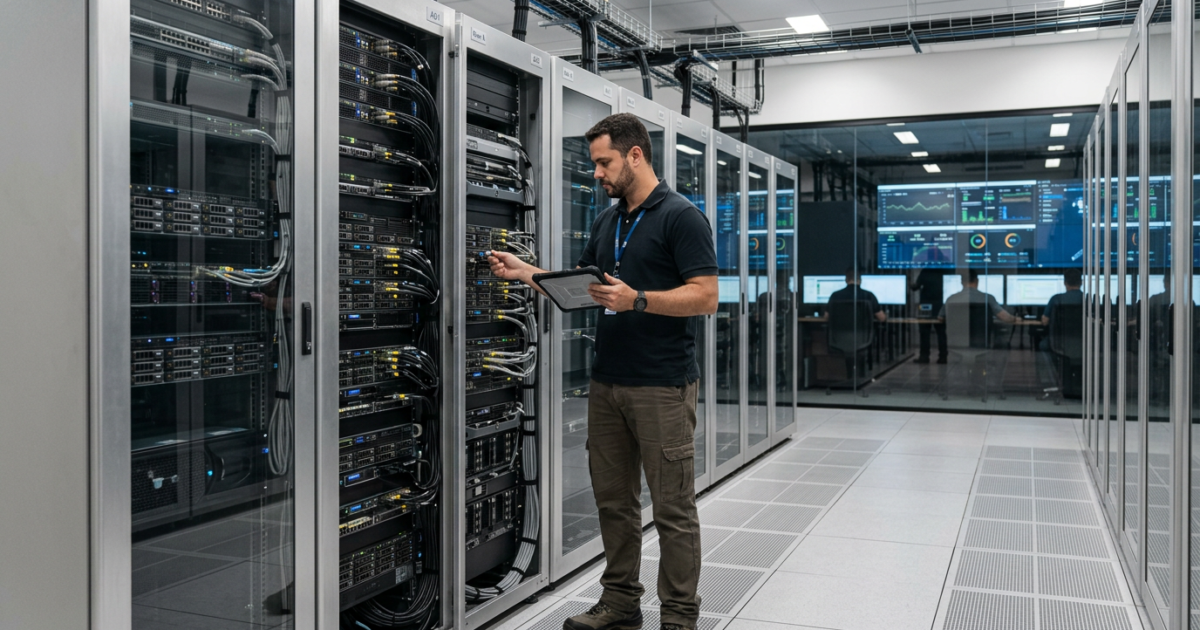
Moving from pure enterprise software into managed infrastructure requires robust physical hardware, particularly as enterprise AI demands specialized compute, high-throughput storage, and low-latency networking. To navigate these capital and technical hurdles, TOTVS is collaborating with Dell Technologies Inc. to evaluate hardware stacks and develop joint go-to-market solutions.
Diego Puerta, General Manager for Dell Technologies in Brazil, acknowledged during the interview that establishing this infrastructure foundation posed significant initial friction. Global supply chain bottlenecks for high-density servers, accelerating hardware costs, and complex integration requirements demanded detailed collaborative engineering between the two companies. Dell is supplying technical breadth across compute, storage, and fabric networking to ensure that TOTVS’s infrastructure can scale predictably under production AI workloads.
For CIOs and IT procurement teams, this collaboration highlights the broader operational realities of deploying enterprise AI. Organizations cannot treat AI as a purely algorithmic software upgrade; it requires a coordinated evaluation of data center capacity, energy constraints, and hardware lifecycle costs. As specialized cloud providers and enterprise vendors manage ongoing GPU supply and infrastructure constraints, partnerships between established enterprise software vendors and hardware providers offer a more predictable deployment path for corporate buyers.
What happens next
As TOTVS and Dell continue testing hardware stacks and refining their combined offering, enterprise technology leaders should monitor three key milestones:
- IaaS Commercial Rollout: TOTVS is bringing its infrastructure offering to commercial availability, allowing clients to migrate both existing ERP installations and non-TOTVS enterprise applications onto its unified infrastructure layer.
- Production Agent Deployment: IT organizations utilizing LYNN will begin testing domain-specific agents on internal transactional datasets, benchmarking task completion accuracy and latency against traditional automation scripts.
- Hardware Sizing Validation: Dell and TOTVS are formalizing reference architectures across compute and storage, clarifying minimum infrastructure specifications and pricing models for mid-market and large enterprise deployments.
For enterprise architects and IT leaders operating in Latin America, the combination of LYNN and dedicated IaaS provides an opportunity to evaluate whether consolidating corporate workloads around transactional data gravity yields superior governance and total cost of ownership compared to fragmented public cloud services.