Key takeaways
-
- Seismora is developing a networking control plane to route agentic AI workloads dynamically across client devices, edge infrastructure, and heterogeneous cloud providers.
- The platform introduces “cognitive routing” to allocate compute tasks based on user intent, device capabilities, latency, operational cost, and policy constraints.
- Founder and CEO Vito Palermo highlights the transition from human-to-system requests to autonomous machine-to-machine transactions as the primary catalyst for multi-tier workload orchestration.
- The architecture aims to abstract routing logic for developers building enterprise AI agents, though detailed latency benchmarks, pricing, and availability schedules remain unannounced.
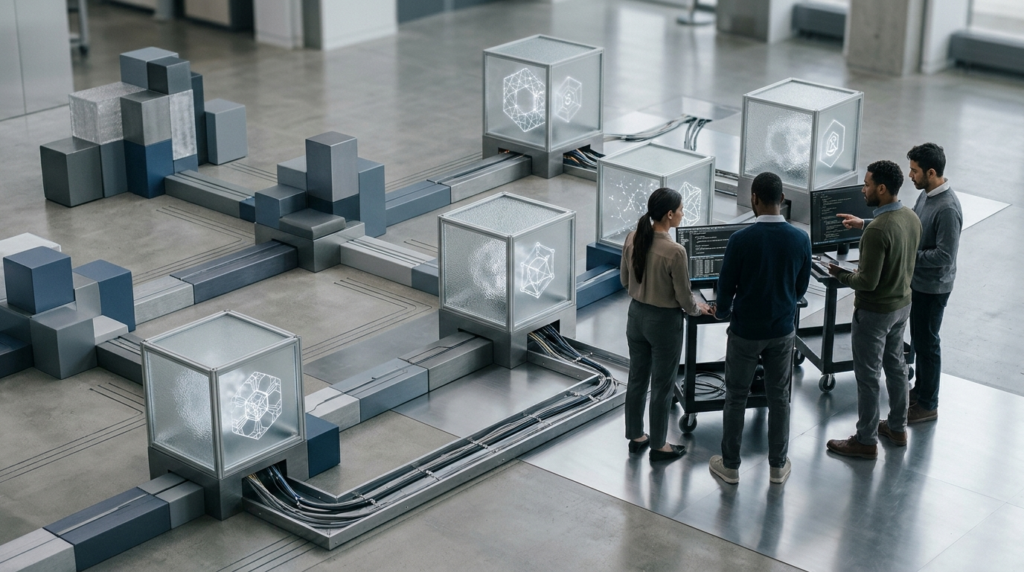
Seismora Inc. is developing an intelligent networking control plane designed to coordinate and route agentic AI workloads dynamically across client devices, edge infrastructure, and heterogeneous cloud providers. Unveiled by founder and CEO Vito Palermo during an interview on theCUBE, the platform introduces what the startup terms “cognitive routing” to distribute tasks based on user intent, hardware capabilities, latency budgets, operational costs, and security policies. Rather than requiring engineering teams to hardcode model selection or hardware placement directly into application logic, Seismora abstracts routing decisions across local mobile processors, specialized neoclouds, and traditional hyperscalers.
The architecture addresses an emerging operational shift: computing demands are transitioning from interactive human-to-system requests to continuous, autonomous machine-to-machine transactions. As agentic applications coordinate multi-step workflows, single-tier deployment models create severe latency, governance, and cost bottlenecks.
Cognitive Routing Across Devices, Edge Nodes, and Clouds
Modern agentic systems require heterogeneous execution environments. A single autonomous workflow may involve local on-device preprocessing, contextual graph queries, and heavy simulation or high-parameter inference in the cloud. Seismora’s control plane dynamically evaluates application intent to dispatch individual sub-tasks to the most suitable infrastructure tier.
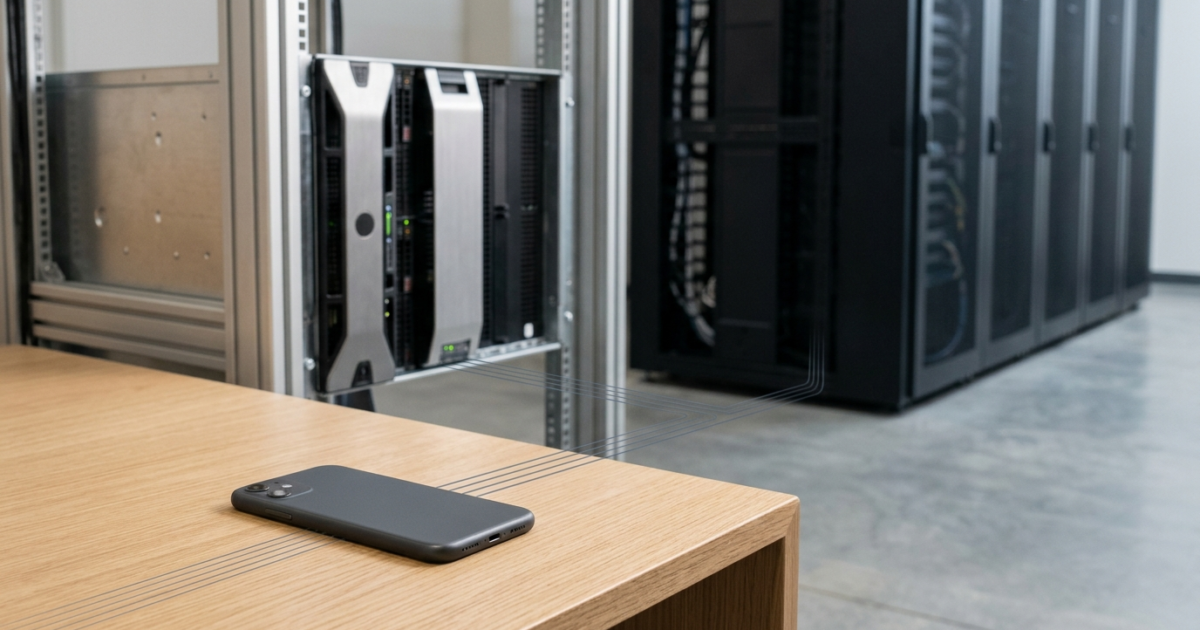
Palermo illustrated this division with a concrete enterprise scenario: an agentic application running on an Apple iPhone can process immediate user intent and lightweight tasks locally on client silicon. When that agent requires structural context, it queries graph databases such as Neo4j or open-weight models hosted through specialized providers like Fireworks.ai Inc. If the task requires running complex digital twin simulations in Nvidia Corp.’s Omniverse, the control plane automatically provisions and routes that sub-workload to a neocloud environment, optimizing for cost and execution speed without developer intervention.
| Execution Tier | Infrastructure Examples | Workload Assignment | Primary Optimization Metric |
|---|---|---|---|
| Client Endpoint | Mobile devices (e.g., iPhone), local workstations | Intent parsing, local state evaluation, lightweight tasks | Latency and user data privacy |
| Enterprise Edge | On-premises servers, distributed edge nodes | Contextual knowledge graphs (Neo4j), intermediate caching | Bandwidth reduction and domain policy compliance |
| Specialized Neocloud | GPU clouds, accelerated infrastructure | Heavy simulations (Nvidia Omniverse), large batch tasks | Compute density and specialized accelerator access |
| Inference Platforms | Fireworks.ai, open-weight model endpoints | Domain-specific model inference, reasoning steps | Per-token execution cost and throughput |
Why Multi-Tier Execution Matters for Autonomous Systems
Enterprise infrastructure strategies are increasingly turning toward multi-provider ecosystems. Organizations rarely standardize on a single foundation model or a solitary hyperscaler; instead, enterprise architects combine multiple inference vendors, specialized neoclouds, and internal compute nodes. When autonomous agents operate across these fragmented systems, hardcoded network paths fail to account for dynamic price fluctuations, provider rate limits, or transient network delays.
Industry capital allocation reflects this growing architectural priority. Palermo cited Stripe Inc.’s August agreement to acquire model-routing platform OpenRouter Inc. for a reported valuation of approximately $7.5 billion as validation that traffic management is becoming a cornerstone of AI operations. While OpenRouter focused primarily on API-level model gateways, Seismora is expanding that abstraction to network-level infrastructure spanning physical devices, local edge clusters, and remote clouds.
This decoupling mirrors prior shifts in distributed systems. Just as Kubernetes decoupled application containers from physical server configurations, an AI control plane decouples agentic task logic from specific hardware accelerators. This multi-tier coordination interacts closely with emerging identity and access management frameworks for AI agents, ensuring that machine-to-machine data movement satisfies corporate compliance boundaries as workloads transition between private edge nodes and public cloud clusters such as specialized AI clouds like CoreWeave.
Targeting Application Developers Rather Than Consumer Endpoints
Seismora is directing its networking technology toward software engineers and platform architects constructing enterprise agents, rather than building consumer-facing products. By embedding routing decisions into the network control plane, developers avoid maintaining bespoke traffic logic, retry protocols, and fallback routing scripts within their own codebases.
This developer-centric approach addresses several operational pain points:
- Policy Enforcement: Sensitive corporate data can be constrained to execute solely on-premises or within approved regional sovereign boundaries, preventing unauthorized data exfiltration during autonomous agent reasoning loops.
- Cost Governance: Non-urgent background processing is systematically routed to lower-cost spot instances or efficient open-weight models, preserving premium frontier models for ambiguous reasoning steps.
- Operational Resilience: If an inference provider encounters elevated latency or service disruption, the control plane can divert requests to equivalent alternate endpoints without requiring code updates.
Managing autonomous agents at scale requires deep observability. Without centralized telemetry, engineering teams struggle to diagnose unexpected token usage spikes or identify where agentic handoffs fail across distributed tiers, reinforcing the necessity for comprehensive agentic AI workload monitoring.
What happens next
While Seismora has articulated its architectural framework, the company has not yet published detailed technical specifications, independent latency benchmarks, or general availability timelines for its platform. Prospective adopters must evaluate how the startup handles state synchronization and data serialization overhead when moving complex agent memory between local endpoints and cloud instances.
Engineering teams should track whether Seismora delivers standardized software development kits, production integrations with major model providers, and verifiable performance data across edge networks. As machine-to-machine AI traffic expands, the viability of autonomous agent orchestration will depend on whether independent control planes can route workloads reliably without introducing latency penalties that offset their cost advantages.