Key takeaways
- percent of total sales in Q3 2026 down from 26 percent in Q3 2025, prompting an NT$37.8 billion CapEx pivot dedicated exclusively to flash memory expansion.
- Japanese fabless firm MegaChips faces immediate commercial exposure, deriving 87.8 percent of its net sales from Nintendo while relying on Macronix for 67.8 percent of outsourced manufacturing purchases.
- Nintendo continues sourcing mask ROM cartridges via ROHM Semiconductor, but reduced fab competition is expected to increase physical manufacturing costs and drive publishers toward digital Game-Key Cards.
- Nintendo Switch 2 cartridges transition from mask ROM to high-speed NAND flash, bypassing legacy ROM supply bottlenecks while competing directly against enterprise AI infrastructure for flash wafer capacity.
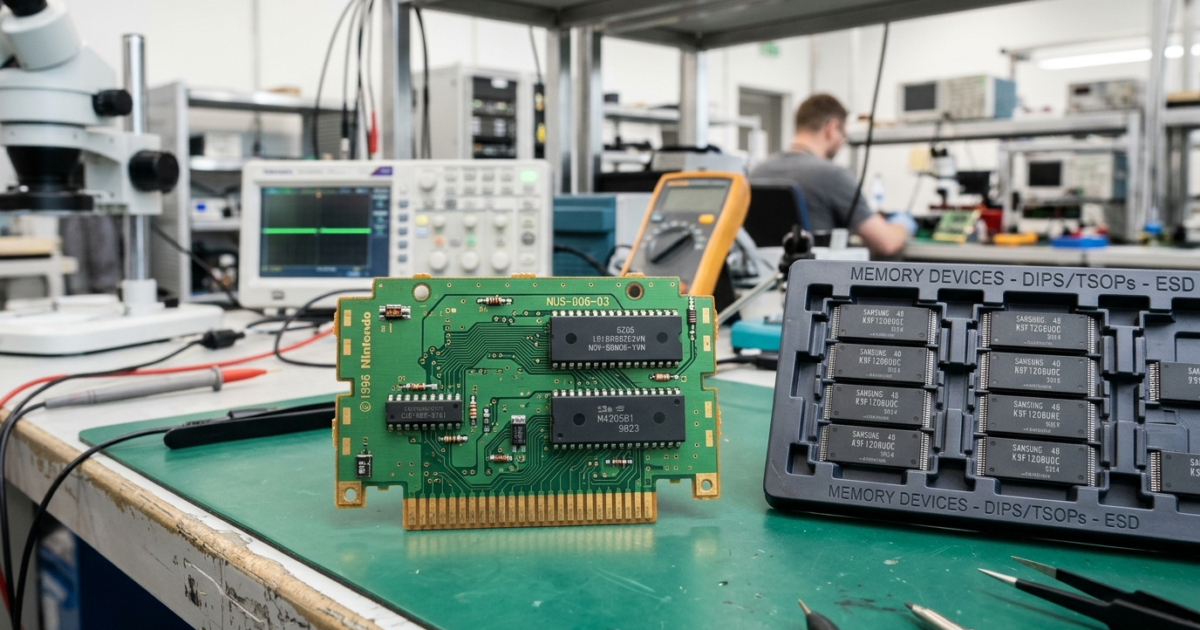
Macronix International, a primary supplier of read-only memory (ROM) chips for Nintendo Switch cartridges, is phasing out its ROM manufacturing business to reallocate fab capacity toward high-margin NOR and NAND flash memory for artificial intelligence data centers. The strategic exit marks a structural shift in consumer semiconductor supply chains: as enterprise AI infrastructure demands surge, silicon fabricators are abandoning mature, low-margin legacy storage formats. While Nintendo retains alternative ROM supply through ROHM Semiconductor and is transitioning next-generation Nintendo Switch 2 software to NAND flash, Macronix’s withdrawal constrains physical manufacturing capacity and threatens intermediary chip designer MegaChips, accelerating physical cartridge cost pressures across the console industry.
Macronix reallocates fab capacity toward AI data center flash
The decision to terminate ROM production reflects a decisive capital reallocation toward server-side AI storage. According to reporting from Taipei Times, Macronix Chairman Miin Wu confirmed that the Taiwanese memory manufacturer is gradually winding down its legacy mask ROM product lines. The financial catalyst is evident in the company’s earnings trajectory: ROM revenue contracted to just 5 percent of Macronix’s total sales in the third quarter of 2026, falling sharply from 26 percent during the same period a year earlier.
As highlighted by MST Financial analyst David Gibson and detailed in coverage by Tom’s Hardware and Eurogamer, the third quarter of 2026 represents the final quarter that Macronix will report ROM sales as an independent business unit. The company has ceased all research and development for new ROM silicon. Instead, Macronix is directing an initial capital expenditure of NT$22 billion ($685 million) to expand manufacturing capacity, followed by a secondary NT$15.8 billion allocation targeting high-density NAND flash used in eMMCs and 3D NAND arrays.
The entirety of this NT$37.8 billion CapEx budget is dedicated to NOR and NAND flash memory to satisfy enterprise hyperscalers building high-density server clusters. With hyperscalers and server vendors consuming unprecedented volumes of high-performance storage—a dynamic highlighted in record data center infrastructure earnings across the semiconductor sector—commodity consumer ROM lines no longer justify dedicated wafer allocation.
MegaChips and the fabless supply chain bottleneck
While Nintendo represents the public face of cartridge gaming, the most acute commercial exposure falls on Osaka-based fabless semiconductor firm MegaChips. Nintendo does not procure ROM silicon directly from foundry operators; instead, MegaChips designs custom memory ICs and cartridge control logic tailored to Nintendo’s hardware, outsourcing wafer fabrication to third-party manufacturing partners.
According to the MegaChips Integrated Report, this single relationship represents an extraordinary concentration of supply chain risk. Nintendo historically accounted for 87.8 percent of MegaChips’ net sales, while Macronix represented 67.8 percent of the Japanese firm’s outsourced manufacturing spend. MegaChips previously warned investors in regulatory filings that any disruption to Macronix’s ROM fabrication capabilities could severely impact operating results. With Macronix formally exiting the sector, MegaChips must either qualify secondary foundry partners on accelerated timelines or absorb substantial revenue contractions as existing customer purchase orders taper off.
| Entity or Platform | Silicon Role | Primary Memory Type | Strategic Status |
|---|---|---|---|
| Macronix | Foundry manufacturer | Legacy Mask ROM, NOR Flash, 3D NAND | Phasing out ROM; reallocating NT$37.8B CapEx to AI data center memory |
| MegaChips | Fabless IC design house | Custom cartridge controller & ROM design | Exposed: 87.8% sales tied to Nintendo, 67.8% fab spend tied to Macronix |
| ROHM Semiconductor | Foundry & IDM manufacturer | Mask ROM, custom logic | Remains active ROM manufacturing supplier for Nintendo Switch hardware |
| Nintendo Switch | Consumer gaming platform | Custom Mask ROM cartridges (up to 32GB) | Facing constrained fab capacity and rising physical unit production costs |
| Nintendo Switch 2 | Next-generation platform | High-speed NAND flash memory | Avoids legacy ROM bottleneck but enters direct competition for flash supply |
Physical cartridge economics and the NAND flash transition
Macronix’s departure does not spell the immediate demise of physical Nintendo Switch cartridges. Nintendo maintains an active second-source manufacturing relationship through ROHM Semiconductor and its subsidiary LAPIS Semiconductor, ensuring uninterrupted production for ongoing Switch releases. However, losing its primary high-volume foundry partner substantially reduces competitive pricing leverage for physical media packaging.
As analyzed in reports by Kotaku and Engadget, fabricating high-capacity mask ROM chips (such as 16GB and 32GB Switch cartridges) has grown increasingly uneconomical compared to digital distribution. To offset mounting bill-of-materials (BOM) costs, publishers are already leaning toward download-only “Game-Key Cards”—physical plastic cases containing activation codes rather than etched silicon storage—and digital eShop storefronts where platform gross margins remain significantly higher.
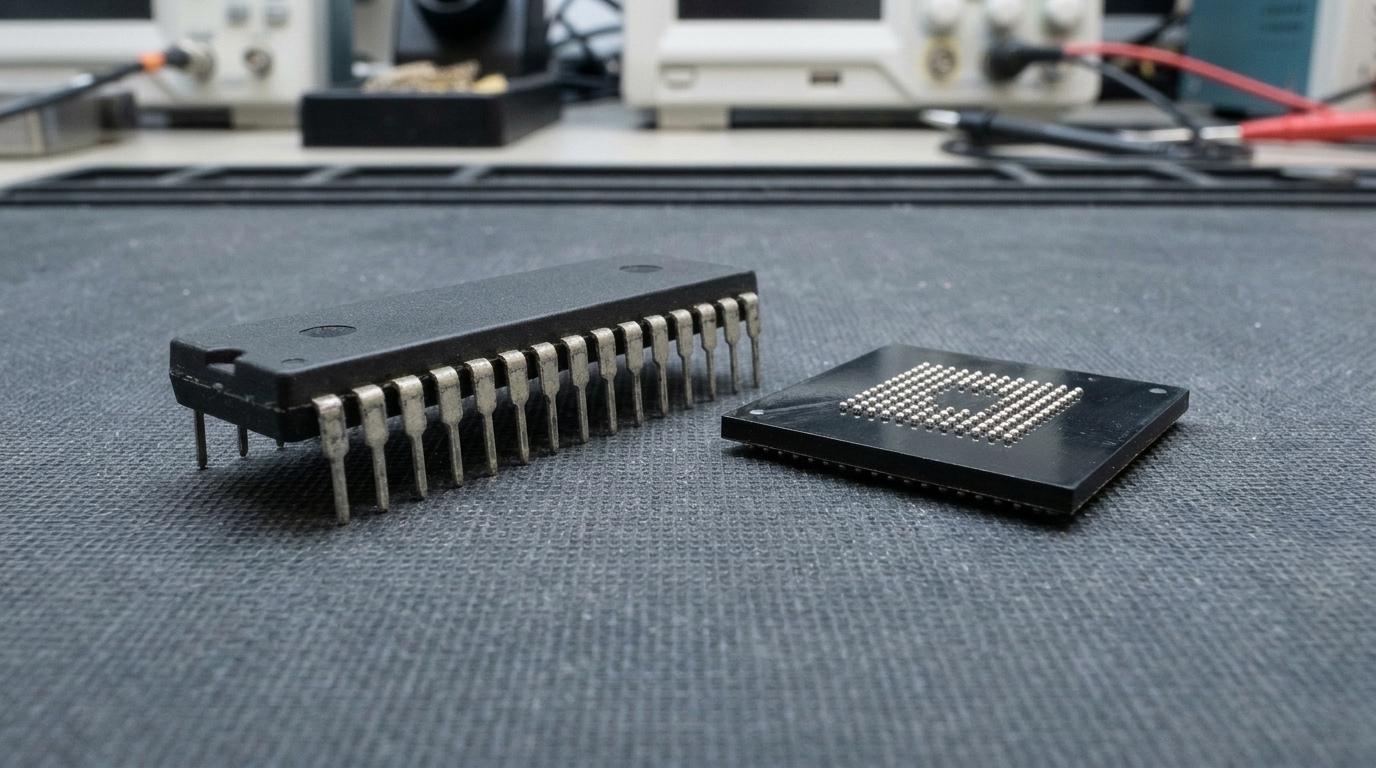
For the forthcoming Nintendo Switch 2, the architectural dynamic shifts entirely. Industry technical documentation indicates that Switch 2 cartridges transition away from legacy mask ROM entirely, adopting proprietary high-speed NAND flash packages to support modern asset-streaming architectures. While this decouples next-generation cartridges from legacy ROM fab closures, it forces Nintendo directly into the broader market for flash memory wafers, where AI enterprise demand continues to drive pricing premiums across global fabs.
What happens next
The phaseout of Macronix ROM fabrication will ripple across console hardware logistics, fabless chip design, and retail distribution over the coming quarters:
- MegaChips Supply Requalification: MegaChips must transition remaining Nintendo ROM design contracts entirely to ROHM Semiconductor or establish secondary foundry relationships at alternative mature-node fabs before Macronix shuts down production lines permanently.
- Proliferation of Game-Key Packaging: Third-party publishers facing higher per-unit mask ROM costs for legacy Switch releases will increasingly substitute physical ROM cartridges with Game-Key download codes in retail boxed copies, minimizing exposure to silicon packaging surcharges.
- Switch 2 Flash Procurement Pressures: While Nintendo Switch 2 avoids legacy mask ROM obsolescence by standardizing on NAND flash cartridges, the platform must compete directly against enterprise AI server procurement for solid-state wafer allocations, influencing retail pricing for premium physical editions.
Sources
- Tom’s Hardware: Nintendo ROM chip supplier Macronix quits to focus on chips for AI data centers
- Taipei Times: Macronix reports record profit in Q3
- Eurogamer: One of Nintendo’s cartridge manufacturers is exiting ROM business
- Kotaku: Another Blow For Physical Media As Switch Cartridge Chip Manufacturer Pivots To Data Centers
- Engadget: Nintendo’s Main Switch Cartridge Supplier Is Leaving The ROM Business
- MegaChips: Integrated Report 2022 Financial Disclosures
Sources
- Nintendo ROM chip supplier Macronix quits to focus on chips for AI data centers, reports indicate — Game-Key cards may increase as large game storage chips become more expensive | Tom’s Hardware
- Macronix reports record profit in Q3 – Taipei Times
- One of Nintendo’s Switch and Switch 2 cartridge manufacturers is exiting the business, which could make physical games more expensive | Eurogamer.net
- Another Blow For Physical Media As Nintendo’s Switch Cartridge Chip Manufacturer Pivots To Data Centers
- Nintendo’s Main Switch Cartridge Supplier Is Leaving The ROM Business
- MegaChips Integrated Report 2022