Key takeaways
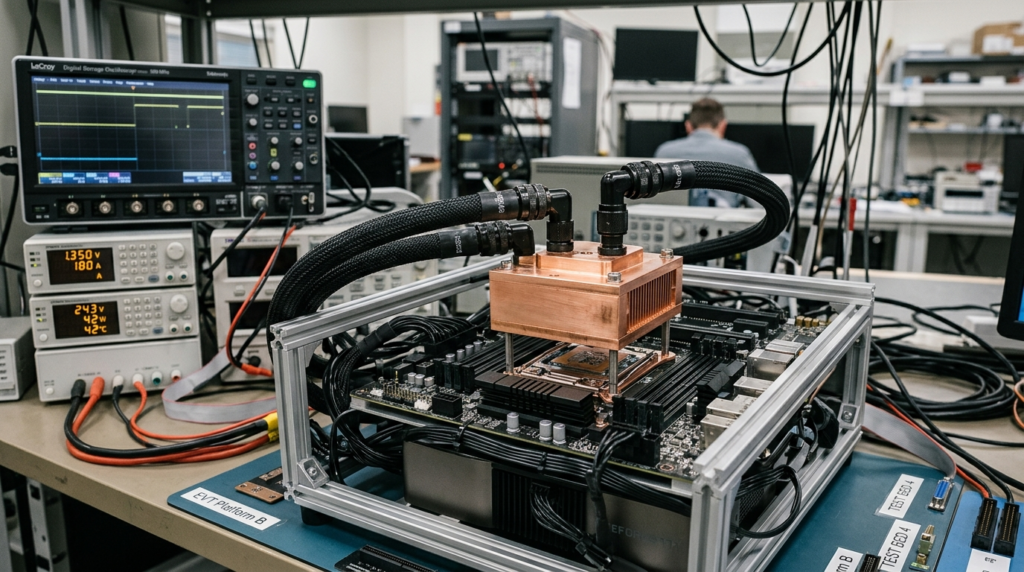
- AMD has commenced the production ramp of its 6th Gen EPYC 9006 “Venice” processor family on TSMC’s 2nm node in Taiwan, representing the first high-performance computing product on the node.
- The architecture features standard Zen 6 CCDs scaling to 96 cores at up to 5.0 GHz, alongside high-density Zen 6c CCDs reaching 256 cores and 1024 MB of L3 cache in the flagship EPYC 9996.
- A redesigned memory and I/O subsystem introduces a dual I/O die on TSMC 6nm, 16-channel DDR5-8000 and MRDIMM-12800 support, 128 lanes of PCIe Gen 6 and CXL 3.1, and cache-coherent xGMI pairing with Instinct MI455X GPUs.
- Thermal design power expands to 600W on 256-core models, balanced by new platform telemetry including Unified Power Provisioning and post-quantum cryptographic security.
AMD has officially detailed its 6th Gen EPYC 9006 server processor family, code-named Venice, introducing the Zen 6 and Zen 6c microarchitectures manufactured on TSMC’s 2nm process technology. The new platform scales up to 256 cores and 1024 MB of L3 cache on dense Zen 6c configurations, expands memory bandwidth via a 16-channel subsystem supporting DDR5-8000 and MRDIMMs at 12,800 MT/s, and incorporates dual I/O dies on TSMC 6nm. Designed to anchor hyperscale infrastructure and agentic AI coordination, Venice establishes cache-coherent xGMI interconnect compatibility with AMD Instinct MI455X accelerators inside Helios rack-scale systems while pushing top-tier thermal envelopes to 600W.
Zen 6 architecture and TSMC 2nm manufacturing
According to an AMD announcement, production silicon for the EPYC 9006 family has begun ramping on TSMC’s 2nm process in Taiwan, establishing Venice as the semiconductor industry’s first high-performance computing product to enter volume production on the advanced node. Long-term fabrication plans also allocate future production to TSMC’s Arizona facilities as regional capacity comes online.
Unlike the preceding 5th Gen EPYC Turin family, which divided manufacturing nodes across core types, Venice fabricates both its high-frequency Zen 6 and high-density Zen 6c core complex dies (CCDs) on the identical TSMC 2nm lithography. This unified process baseline provides uniform transistor scaling across both topologies. Based on architectural disclosures analyzed by ServeTheHome, Venice standard Zen 6 packages integrate 8 CCDs alongside dual I/O dies, indicating that standard CCDs have expanded to 12 cores each, up from 8 cores during the Zen 5 cycle.
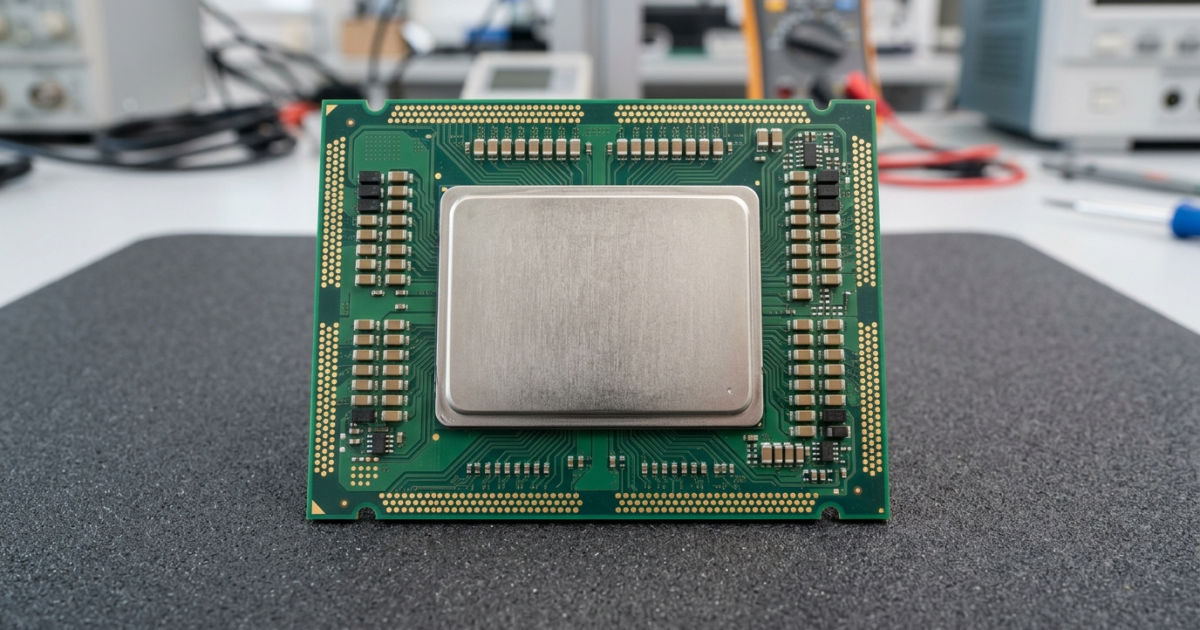
The standard Zen 6 configuration tops out at 96 cores and maintains peak boost frequencies up to 5.0 GHz. For compute-dense enterprise virtualization, the Zen 6c silicon scales to 256 cores—a 33% increase over Turin Dense’s 192-core ceiling. The dense cores also achieve boost clocks up to 4.1 GHz, narrowing the operational frequency delta between regular and dense silicon. Cache distribution is standardized at 4 MB of L3 cache per core across both designs, allowing high-performance SKUs up to 384 MB of shared L3 cache and dense models up to 1024 MB.
| Platform Parameter | Venice Zen 6 (Standard) | Venice Zen 6c (Dense) |
|---|---|---|
| CCD Process Node | TSMC 2nm | TSMC 2nm |
| I/O Die Configuration | Dual IOD on TSMC 6nm | Dual IOD on TSMC 6nm |
| Maximum Core Count | 96 cores (12 cores per CCD) | 256 cores (EPYC 9996) |
| Peak Boost Clock | Up to 5.0 GHz | Up to 4.1 GHz |
| Total Shared L3 Cache | Up to 384 MB (4 MB/core) | Up to 1024 MB (4 MB/core) |
| Memory Interface | 16 channels DDR5 / MRDIMM | 16 channels DDR5 / MRDIMM |
| Peak Memory Throughput | 1.0 TB/s (DDR5-8000) / 1.6 TB/s (MRDIMM) | 1.0 TB/s (DDR5-8000) / 1.6 TB/s (MRDIMM) |
| I/O Connectivity (1P) | 128 lanes PCIe 6 / CXL 3.1 | 128 lanes PCIe 6 / CXL 3.1 |
| Thermal Design Power | Up to 500W | Up to 600W |
16-channel memory, dual IOD, and cache-coherent xGMI
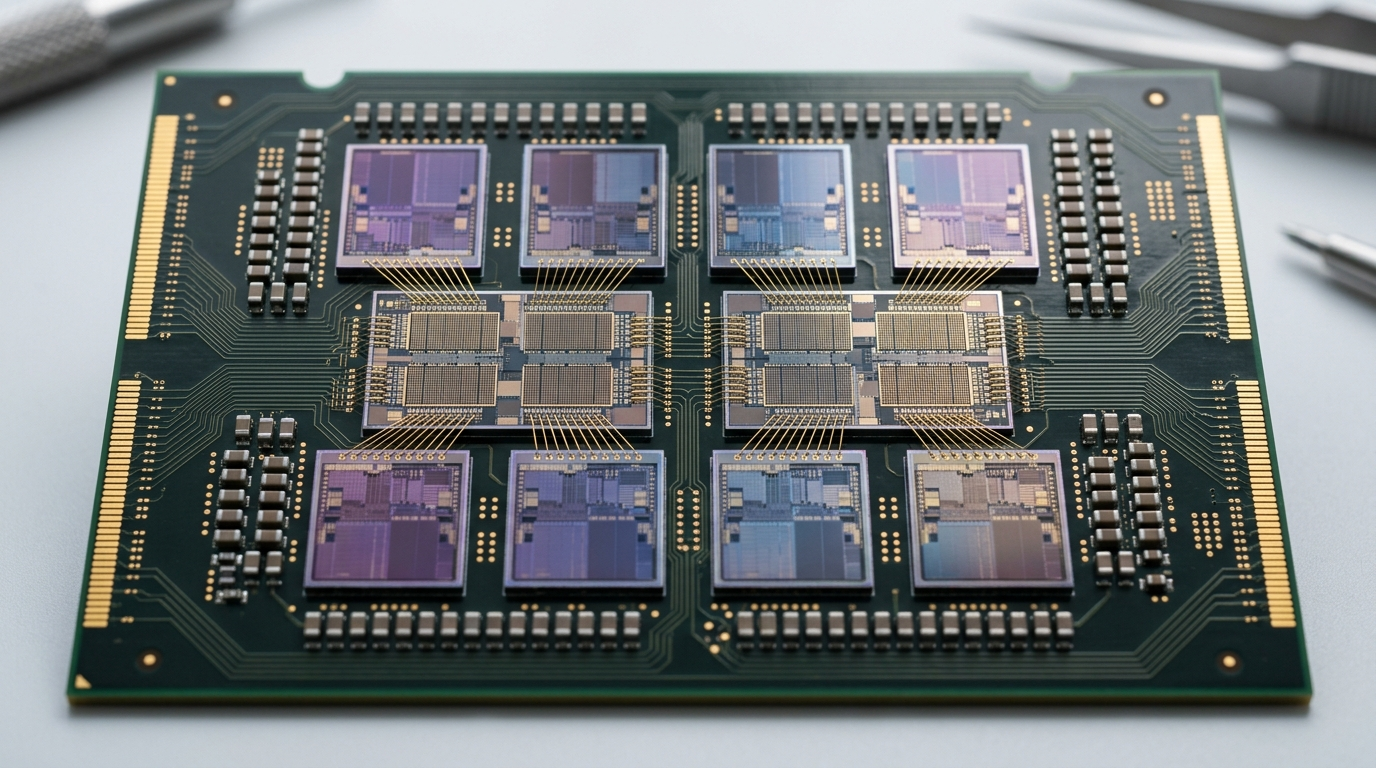
To eliminate memory bus saturation from 256 active cores, AMD overhauled the central I/O subsystem. Venice moves from a single centralized IOD to a dual I/O die arrangement fabricated on TSMC’s mature 6nm node. Retaining 6nm for I/O functions reserves constrained 2nm foundry allocation strictly for compute CCDs while allowing AMD to service multiple platform tiers modularly.
Venice expands memory channels from 12 to 16, supporting DDR5-8000 registered DIMMs to achieve 1.0 TB/s of aggregate memory throughput. The platform also natively integrates Multiplexer Combined Ranks (MRDIMM) support up to 12,800 MT/s, driving theoretical host memory throughput to 1.6 TB/s. Peripheral connectivity transitions fully to PCIe Gen 6 and Compute Express Link (CXL) 3.1, supplying up to 128 lanes per single-socket platform to double raw bidirectional interface bandwidth over PCIe Gen 5.
A central technical shift outlined by TechSpot centers on AMD’s proprietary xGMI interconnect. In prior generations, EPYC CPUs and Instinct GPUs interfaced via standard PCIe paths without unified cache coherency. With Venice and the upcoming Instinct MI455X accelerator family, both processor types speak a common xGMI protocol. This architecture establishes a shared, cache-coherent memory domain inside Helios rack-scale systems, allowing GPUs direct access to the CPU host memory pool without software-managed memory copies.
Platform scalability and data center power budgets
As documented by TechPowerUp, the EPYC 9006 family spans four tailored deployment categories across multiple socket formats:
- Mainline SP7 Processors: Full-featured multi-chip modules leveraging 16 memory channels, high core densities, and extensive PCIe Gen 6 routing for dense cloud virtualization.
- Enterprise SP8 Processors: Balanced designs offering up to 128 cores and 128 PCIe Gen 6 lanes intended for mainstream dual-socket and single-socket enterprise racks.
- Venice-X with 3D V-Cache: Technical computing processors utilizing stacked vertical SRAM to deliver up to 1,152 MB of L3 cache for electronic design automation (EDA) and fluid dynamics workloads.
- Verano EPYC 9006 LP: A specialized low-power variant scheduled for 2027 featuring up to 24 channels of soldered LPDDR5X memory to act as dedicated host nodes for AI acceleration servers.
Vendor benchmarks reported by Tom’s Hardware indicate that the flagship 256-core EPYC 9996 delivers up to a 3.4x performance improvement over current Intel Xeon server processors and a 20% advantage against Nvidia’s Vera architecture. Readers evaluating competitive clusters should review the technical look at AMD’s initial benchmarks against Nvidia Vera to evaluate how specific simulation datasets and memory bandwidth constraints influence those figures.
Operating these density gains requires significant electrical overhead. Flagship Venice SKUs specify a thermal design power of 600W—a 100W increase over Turin’s 500W limit—while 96-core Zen 6 models draw up to 500W. To assist data center power provisioning, AMD’s platform specifications outline new operational controls: Unified Power Provisioning (UPP), Utilization-Based Power Scaling (UBPS), and Frequency-Adaptive Spectrum Technology (FAST). Hardware security has also been upgraded with an enhanced Root of Trust and RSA 4K encryption incorporating Post-Quantum Cryptography (PQC) validation.
What happens next
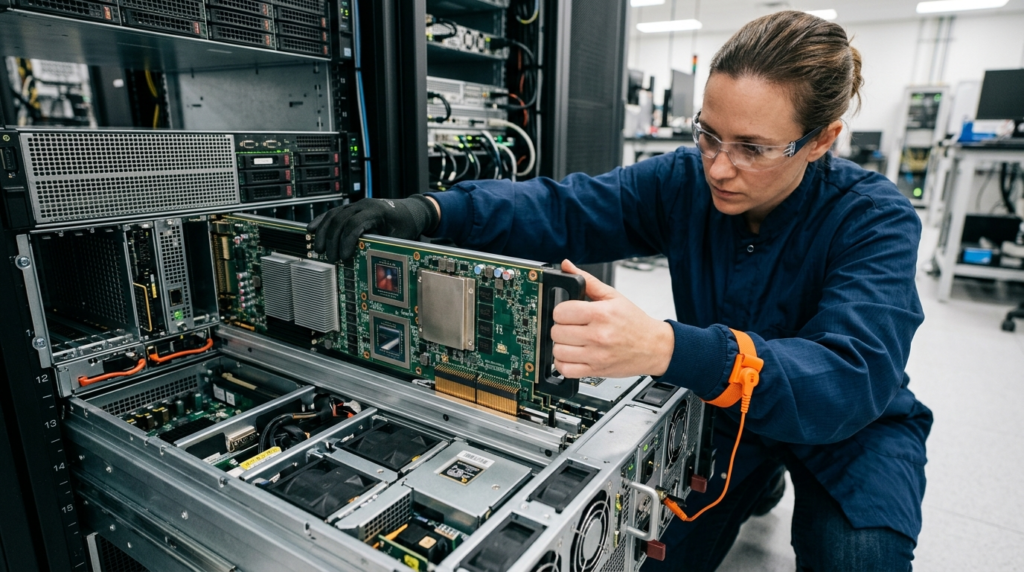
With silicon ramping at TSMC, initial OEM qualification samples of EPYC 9006 SP7 processors will reach server vendors and cloud service providers over the coming quarters. Infrastructure planners face distinct evaluation gates: the shift to 16-channel memory layouts and 600W thermal dissipation requires new server chassis, upgraded socket SP7 motherboard designs, and reassessed rack-level liquid or high-velocity air cooling infrastructures.
On the software tier, AMD’s architecture guidance positions Venice’s 20% per-core performance uplift to manage multi-agent LLM pipelines, prompt parsing, and orchestration tasks alongside accelerated GPUs. Independent cluster validation, production pricing, and final retail availability dates are expected closer to AMD’s formal data center launch event.
Sources
- AMD Takes the Lid off of Next-Gen EPYC 9006 Venice As Zen 6 Comes to Servers – ServeTheHome
- AMD’s 256-core Epyc 9996 ‘Venice’ claims up to a 3.4x jump over Intel Xeon competition, 20% over Nvidia Vera – Zen 6 comes with up to 1024MB of L3, 16-channel memory, and 5GHz+ clock speeds | Tom’s Hardware
- AMD Announces Production Ramp of Next-Generation AMD EPYC – AMD Newsroom
- AMD Announces 6th Gen EPYC Server Processors Powered by “Zen 6” Microarchitecture | TechPowerUp
- AMD’s Zen 6 Epyc chip packs 256 cores, promises up to 1.7x faster AI | TechSpot
- Agentic AI: AMD EPYC™ 9005 CPUs Wins Today, EPYC 9006, formerly code-named “Venice”, Takes It to a New Level
- AMD EPYC™ 9006 Server CPUs for AI-First Data Centers